Terror activities in Jammu & Kashmir had started in right earnest in late 1989 and over the next few years, it was virtual mayhem that prevailed. Pakistan’s terror proxies operated freely in the then state, particularly in Kashmir valley where Hindus were targeted and forced to flee their homes and hearths. Emboldened by the wanton violence and widespread terror activities, Pakistan raised the stakes and started vilifying India on all international forums.
At that juncture, Pakistan Prime Minister Benazir Bhutto of Pakistan People’s Party (PPP) decided to take the `Kashmir issue’ to the United Nations (UN). She mobilised Muslim nations to her cause and things started getting very hot for India around the world capitals. Iran was emerging as a major voice for Islamic causes and Benazir was sure of its backing in the UN when the issue was raised. On February 1, 1994, Pakistan moved a resolution against India at the UN alleging widespread human rights violations in Jammu and Kashmir.
Due to all this, then Prime Minister PV Narasimha Rao decided to turn the tables on our western neighbour. He chose firebrand orator and visionary leader late Atal Behari Vajpayee for the task of taking on Pakistan. Rao made Vajpayee the head of the delegation that was to represent India at the UN. Farooq Abdullah of the National Conference (NC) was then in a sort of political wilderness and he too was roped in on Vajpayee Ji’s recommendation to be a part of the Indian delegation.
It bears mention here that on such vital moments, it is usually the External Affairs Minister (Foreign Minister) who leads the team of fire-fighters. Out of box thinking by Rao and Vajpayee backing him fully, despite in the opposition, took everyone by surprise. It was truly a master stroke as Vajpayee was a veteran when it came to issues pertaining to India’s relations with Pakistan. As Morarji Desai’s External Affairs Minister, Vajpayee had vast experience of dealing with our nasty neighbour.
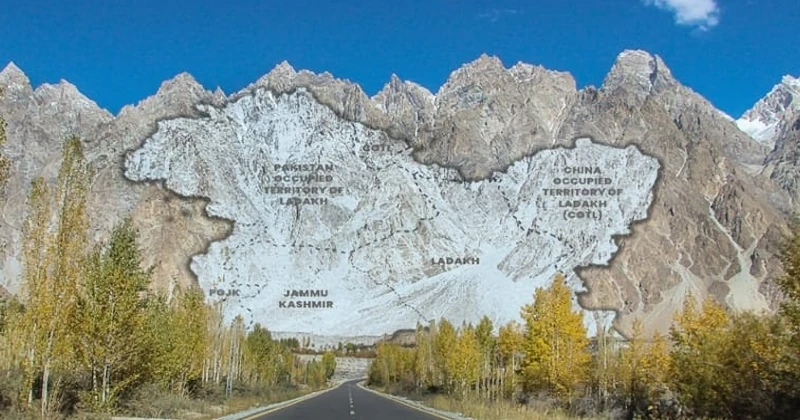
It was basically to pre-empt Pakistan’s motion at the UN scheduled for early March 1994 that the Indian Parliament had passed the unanimous resolution on February 22 on Pakistan Occupied Jammu Kashmir (POJK). Pakistan had moved a motion against India at the UN on February 1 and a vote was likely in the beginning of March. This vote would have been a very serious development and in some ways a setback for the Indian diplomacy.
In the Indian delegation, by Vajpayee’s side, were leaders like Hamid Ansari who was Vice-President later and Salman Khurshid, then Minister of State for External Affairs. The Indian delegation, cutting across party lines, with an opposition veteran leading, presenting a rare sight at the UN. A sight which suggested consensus among all Indian political parties on the issue of Jammu & Kashmir. This helped India win support in many capitals, which Pakistan was counting on.
So much so that Pakistan was forced to withdraw its motion against India from the UN. Benazir then decided that taking back Pakistan’s motion was better than sure defeat at the time of vote as countries like Iran had backed out from going against India. This was no cakewalk for India as deft diplomacy meeting dozens of diplomats of various countries helped it.
The Parliament resolution of February 22, 1994, was a document crisply worded and left no nation in doubt that India was ready to go to war against Pakistan if it did not stop meddling in J&K. The keen intent and unanimity among all political parties of India on the question of defending J&K unnerved many could-be and would-be backers of Pakistan.
Interestingly, the Parliament resolution was not where Rao and Vajpayee stopped as many things happened later too. The 28-page report of the Standing Committee on External Affairs (1994-95), Tenth Lok Sabha, headed by Vajpayee is a testament to India’s resolve to defend J&K by all means at its command. This committee had 45 MPs as members, 30 from the Lok Sabha and 15 from the Rajya Sabha.
Veterans like Chandra Shekhar, Madhav Rao Scindia, Dr Girija Vyas and Syed Shahabuddin were among the 30 Lok Sabha MPs who contributed to the finalisation of this report. From the Rajya Sabha, Sikander Bakht, Vaijayantimala Bali and V N Gadgil were among the prominent members. The report that this committee compiled was titled: Situation Prevailing in Pakistan Occupied Kashmir and Northern Areas. The Committee considered and adopted the report at their sitting held on 20th January, 1995. It was presented in both Houses of Parliament and can be now assessed online too.
The report said: The integrity of the state (read J&K) has been violated several times, first in 1947-49 as a result of the invasion by Pakistani raiders leading to occupation of 2/5th of J&K and then in 1963, when in order to have a strategic alliance with China, Pakistan ceded the Shaksgham Valley to that country in violation of the UN Resolution.
It added: As provided in the UNCIP Resolution of 13 August, 1948, Pakistan was to withdraw its troops from the Pak occupied territory of the State of Jammu & Kashmir. As per the UNCIP Resolution of 5 January, 1949, a plebiscite was to be held in J&K when it was found by the Commission that 3 the ceasefire and the truce arrangements (including Pakistan’s withdrawal from J&K territory) had been carried out. But the plebiscite that was to follow never took place as Pakistan never fulfilled the preconditions set out for the ceasefire and truce.
It also pointed out that “the ‘Kashmir’ issue is now increasingly limited to mean only the Kashmir Valley. The happenings in other parts of Kashmir like the Pakistan occupied” Azad Kashmir” (POK) and Northern Areas (NA) seem to have been entirely overlooked. Pakistan has repeatedly presented before the UN, in the capitals of Western Countries and before the Organisation of Islamic Countries (OIC) a distorted view of the historical developments of Jammu & Kashmir, its accession to India and the position as it exists on other side of the Line of Control.
The Standing Committee also said that “Pakistan’s moral, material and financial help to various terrorist outfits in Kashmir by organising training camps, providing arms and ammunitions and instigating them to carry on violent operations in India.’’
On Sankalp Diwas, the pledge our Parliamentarians had taken on our behalf on February 22 needs to be reaffirmed by every citizen of India, wherever in the world they may be. The two most significant points in that resolution were:
The State of Jammu & Kashmir has been, is and shall be an integral part of India and any attempts to separate it from the rest of the country will be resisted by all necessary means.
India has the will and capacity to firmly counter all designs against its unity, sovereignty and territorial integrity.
All of us must remember these words and never forget that POJK is land area we have to one day take back from Pakistan.