If you interact with Tibetans- in- exile in India or abroad, you are bound to note how inspired they have been by the statehood the Jews came to accomplish in 1948, after about 2000 years of their pursuit for their cause. In May 2015, during a trip to the Jewish State, then Tibetan President-in-exile Lobsang Sangay told The Jerusalem Post, “ If the Jewish people can do it, we Tibetans should be able to do it too.”
Sadly, the Tibetans are far from achieving their independence. Under the spiritual leadership of the Dalai Lama, the Tibetans have so far struggled for genuine autonomy from communist China. They have sought a peaceful, non-violent resolution of their issue and followed the Dalai’s “Middle Way” approach (genuine autonomy for Tibet within the framework of Chinese constitution).
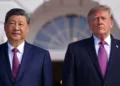
The successive administrations in Washington and London have also been telling Beijing to take a positive approach to solve the Tibetan issue. At a press conference with Chinese President Xi Jinping in Rose Garden on September 25, 2015, then US President Barrack Obama, said: “We continue to encourage Chinese authorities to preserve the religious and cultural identity of the Tibetan people, and to engage the Dalai Lama or his representatives.”
However, all such efforts have so far proved futile. The Tibetan demand even for genuine autonomy is not acceptable to communist China. Apparently, the communist government talks of “one country, two systems” in Hong Kong and Macau. But it continues to maltreat all its national minorities, including the Tibetans.
Reports are the communist state today is keeping tabs on the activities of the Tibetans the world over . China’s secret agents are spying on Tibetans living in- exile in Switzerland. They are systematically observing, photographing and filming them. They target also the Swiss citizens who support the cause of the Tibetans. The Chinese intelligence agents monitor demonstrations organised by the Tibetan diaspora in Switzerland. They operate under diplomatic cover or pass themselves off as journalists, tourists or students.
Observers say Beijing’s approach to the Tibetan struggle is unfortunate. Beijing ought to realize its totalitarian system does not have much future. Democracy has a unique appeal and course to humble tyranny. Beijing ought to bear in mind that China’s demography is changing fast. Today there are over 300 million Chinese Buddhists in the mainland .Besides, there are Falun Gong practitioners, Christians, Chinese dissidents, and minorities, such as Uighurs and Mongols in the country. They all adore the Dalai and his peaceful method of struggle. They might side with the Tibetans cause for independence in future.
Regrettably, even the United Nations and the United States have not been really sincere to the Tibetan cause. Since the mid- 1960s, the UN General Assembly has passed no resolution in support of the Tibetan cause. Washington has accorded too much preference to its economic interest with China to care for the Tibetan cause.
The observers suggest the offices of the US Ambassador to the United Nations, the US Special Coordinator for Tibetan Issues, the US Permanent Representative to the UN Human Rights Council may coordinate better with Tibetan President-in-exile Penpa Tsering and his colleagues and recommend substantial measures in support of the Tibetan cause.