
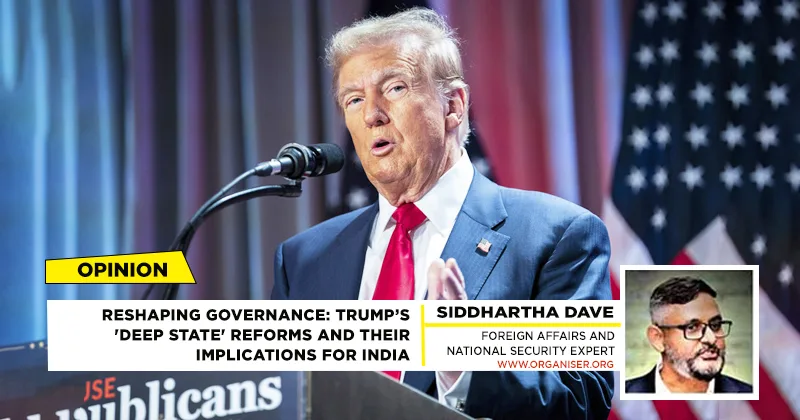
Reshaping Governance: Trump’s 'Deep State' reforms and their implications for India
September 14, 2026
  • Read Ecopy
  • Circulation
  • Advertise
  • Careers
  • About Us
  • Contact Us
Android AppiPhone AppArattai
Organiser
  • ‌
  • Bharat
    • Assam
    • Bihar
    • Chhattisgarh
    • Jharkhand
    • Maharashtra
    • View All States
  • World
    • Asia
    • Europe
    • North America
    • South America
    • Africa
    • Australia
  • Editorial
  • International
  • Opinion
  • RSS @ 100
  • More
    • World Hindu Congress 2026
    • Op Sindoor
    • Analysis
    • Sports
    • Defence
    • Politics
    • Business
    • Economy
    • Culture
    • Special Report
    • Sci & Tech
    • Entertainment
    • G20
    • Azadi Ka Amrit Mahotsav
    • Vocal4Local
    • Web Stories
    • Education
    • Employment
    • Books
    • Interviews
    • Travel
    • Law
    • Health
    • Obituary
  • Subscribe
    • Subscribe Print Edition
    • Subscribe Ecopy
    • Read Ecopy
  • ‌
  • Bharat
    • Assam
    • Bihar
    • Chhattisgarh
    • Jharkhand
    • Maharashtra
    • View All States
  • World
    • Asia
    • Europe
    • North America
    • South America
    • Africa
    • Australia
  • Editorial
  • International
  • Opinion
  • RSS @ 100
  • More
    • World Hindu Congress 2026
    • Op Sindoor
    • Analysis
    • Sports
    • Defence
    • Politics
    • Business
    • Economy
    • Culture
    • Special Report
    • Sci & Tech
    • Entertainment
    • G20
    • Azadi Ka Amrit Mahotsav
    • Vocal4Local
    • Web Stories
    • Education
    • Employment
    • Books
    • Interviews
    • Travel
    • Law
    • Health
    • Obituary
  • Subscribe
    • Subscribe Print Edition
    • Subscribe Ecopy
    • Read Ecopy
Organiser
  • Home
  • Bharat
  • World
  • Operation Sindoor
  • Editorial
  • Analysis
  • Opinion
  • Culture
  • Defence
  • International Edition
  • RSS @ 100
  • Magazine
  • Read Ecopy
Home Bharat

Reshaping Governance: Trump’s ‘Deep State’ reforms and their implications for India

As Donald Trump prepares to assume office in 2025, his plan to dismantle the "deep state" and reshape the US federal government is setting the stage for significant political change. This bold strategy has far-reaching implications, not only for American governance but also for India’s approach to bureaucracy and its geopolitical positioning

Siddhartha DaveSiddhartha Dave
Jan 20, 2025, 05:30 pm IST
inBharat, Opinion
Follow on Google News
Facebook
Twitter
WhatsAppTelegramEmail

Donald Trump, set to assume office on January 20, 2025, is preparing to take bold steps to dismantle the “deep state” and cement control over the federal government.

President Donald Trump’s ongoing efforts to exert unparalleled control over the US federal government represent a dramatic recalibration of governance dynamics. Central to this initiative is his controversial plan to dismantle the so-called “deep state,” a term his administration uses to describe entrenched bureaucratic elements perceived as resistant to his agenda. This ambitious undertaking marks one of the most significant overhauls in the history of US federal governance, with far-reaching implications domestically and internationally.

Redefining Federal Governance: Trump’s Strategy

A cornerstone of Trump’s plan involves the rapid implementation of an executive order aimed at eliminating job protections for approximately 50,000 career federal employees. This measure would pave the way for replacing them with appointees loyal to Trump’s vision, thus embedding his influence within the federal bureaucracy. To accelerate this process, the administration is poised to expedite thousands of political appointments across federal agencies, solidifying its control over policymaking.

This overhaul extends beyond symbolic gestures. The Trump team has signalled its intentions by requesting the resignation of senior career diplomats at the US State Department and proposing “Schedule F,” a framework to reclassify career positions as political appointments. This reclassification empowers agency officials to dismiss career employees without cause, replacing them with individuals aligned with the administration’s ideological goals. Architects of this approach, such as Russell Vought and James Sherk, underscore its necessity, arguing that policymaking roles must be occupied by individuals who fully support the president’s agenda. Sherk’s reports highlight alleged instances of bureaucratic resistance that hindered Trump’s policies during his first term, further justifying this sweeping reform.

Targeting Bureaucratic Resistance

Key appointments for Trump’s prospective second term, including figures like Pam Bondi as Attorney General and Kash Patel as FBI Director, are expected to spearhead efforts to neutralize perceived resistance within the federal government. The administration’s focus extends to departments such as Education, Justice, and the national security apparatus, where entrenched bureaucrats are accused of undermining key initiatives.

Critics challenge the validity of the “deep state” narrative, viewing it as a pretext for consolidating executive power. Workforce experts and union leaders caution that measures like Schedule F could erode trust, suppress constructive dissent, and lower morale within federal agencies. James Eisenmann, a prominent expert on federal workforce policies, warns that such initiatives risk creating a culture of compliance at the expense of innovation and effective governance.

Cultivating a Loyal Bureaucratic Network

The administration’s strategy also includes identifying and sidelining officials whose priorities diverge from Trump’s agenda. Conservative organizations, such as the Heritage Foundation-backed American Accountability Foundation, are actively compiling lists of “problematic” federal employees, targeting individuals focused on diversity initiatives or perceived as obstructive to border security policies. This ideological vetting has sparked opposition from outgoing officials, like Defense Secretary Lloyd Austin, who argue that diversity and inclusion are critical to representing America’s broader societal fabric.

Despite criticism, Trump’s team remains steadfast, emphasising the need to ensure that government employees align with the administration’s principles. Spokesperson Brian Hughes underscores that this effort aims to uphold American values and taxpayer interests, framing it as a corrective measure to align governance with electoral mandates.

Indian Perspectives: Lessons and Strategic Implications

For India, Trump’s bold approach to governance offers valuable lessons and potential opportunities. India, too, has grappled with the challenges posed by bureaucratic inertia, inefficiency, and entrenched interests within its administrative framework. Trump’s strategy, controversial as it may be, demonstrates the impact of decisive leadership in dismantling institutional resistance to reform.

Moreover, the elimination of “deep state” elements within the US bureaucracy could yield indirect benefits for India. Historically, factions within the US government have occasionally supported policies contrary to India’s interests—ranging from backing Pakistan-aligned narratives to fostering instability in South Asia. A streamlined and ideologically aligned US administration might adopt a more consistent and favourable stance toward India, particularly in areas such as counterterrorism, trade, and regional security.

This shift is particularly significant in the context of Bangladesh’s political transition. The new regime’s overtures toward closer alignment with India could be bolstered by a US administration that prioritizes stability in South Asia. By curtailing external influences inimical to regional stability, a reoriented US bureaucracy could enhance India’s efforts to strengthen its partnerships in the neighbourhood.

Navigating Opportunities and Risks

While Trump’s approach underscores the transformative potential of political will, it also highlights the risks associated with undermining institutional safeguards. For Indian policymakers, the challenge lies in striking a balance between pursuing administrative efficiency and preserving democratic principles. Lessons from the US experience suggest that reform efforts must be accompanied by robust oversight mechanisms to prevent the erosion of accountability and transparency.

Conclusion: Implications for India’s Governance

Trump’s efforts to reshape the US federal government serve as both a cautionary tale and a source of inspiration. For India, the implications extend beyond governance reforms, influencing its geopolitical calculus and bilateral relations with the U.S. By leveraging these developments, India can explore innovative strategies to address its own bureaucratic challenges while safeguarding its core democratic values.

As global dynamics continue to evolve, India must remain proactive in adapting to these shifts, ensuring that its national interests are advanced in an increasingly complex and interconnected world. Trump’s governance reforms, while polarizing, offer critical insights into the interplay between leadership, bureaucracy, and national policy, underscoring the enduring relevance of adaptability and resilience in statecraft.


 

Topics: Donald TrumpDeep StateUS-India relationsTrump ReformsUS Governance
Siddhartha Dave
Siddhartha Dave
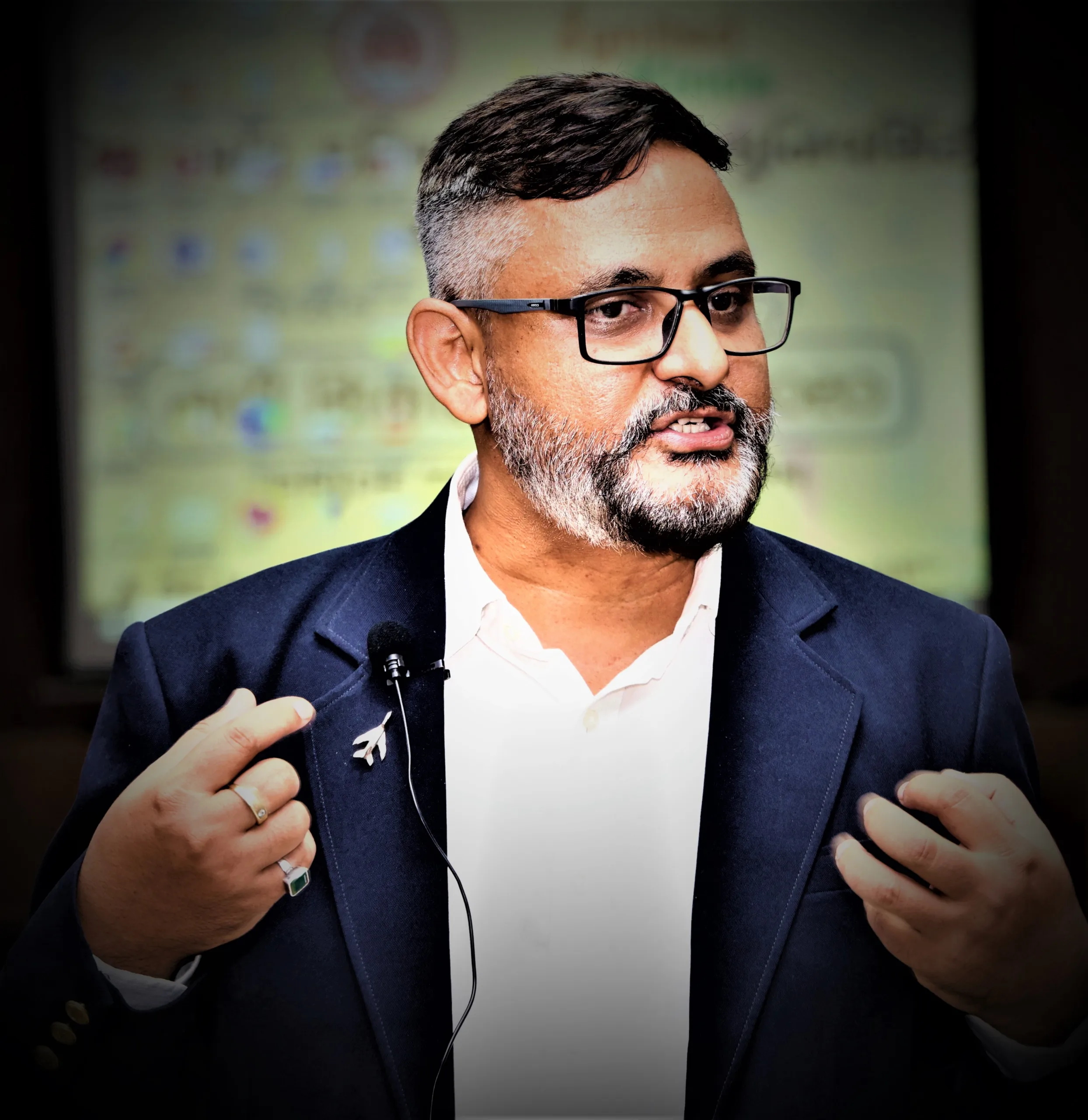
Siddhartha Dave is an alumnus of the United Nations University in Tokyo and a former Lok Sabha Research Fellow. He writes on foreign affairs and national security. [Read more]
Share
Tweet
SendShareSend
✮ Subscribe Organiser YouTube Channel. ✮
✮ Join Organiser's WhatsApp channel for Nationalist views beyond the news. ✮
Previous News

Karnataka: Amidst widening rift, Siddaramaiah’s supporters plan to file complaint against Randeep Surjewala

Next News

How illegal Bangladeshi immigrants dodge deportation and why cases are a boon for them

Related News

Representative Image

Indian Application to US Universities Fall: H-1B hiccup, rising costs, Trump policies hit demand; A risk to US economy?

US President Donald Trump

US President Trump praises India’s election model, cites 646 million voters & mandatory ID in push for SAVE America Act

Representative Image

The Toolkit of Instability: How social media became deep state’s weapon against Bharat

Government of India Must Constitute a High-Level Committee to Ensure Transparency and Institutional Reforms in Competitive Examinations: ABVP

Students will not become instruments for narrow political interests and anti-national conspiracies: ABVP

The Indian Ocean remains the enduring foundation of the India-US strategic partnership, according to Italy's ISPI

China Isn’t the Real Driver: Indian Ocean keeps India-US strategic partnership strong, says report

Prime Minister Narendra Modi with US President Donald Trump

A Handshake, Not a Hug: Why PM Modi must assert India’s strategic red lines in his crucial meeting with Trump

Load More

Latest News

RSS Akhil Bharatiya Sah-Bauddhik Shikshan Pramukh Deepak Vispute addressing the gathering

‘Nation First’ should be the guiding principle for every individual, regardless of their Field: Deepak Vispute

‘India was not poor; it was made poor’: The truth re-emerges through Jema Ferrer’s perspective

Six years after talent manager Disha Salian was found dead, her father Satish Salian on September 11 recorded a detailed statement with the Central Bureau of Investigation (CBI), naming Shiv Sena (UBT) leader Aaditya Thackeray, actors Dino Morea and Sooraj Pancholi, and others.

Disha Salian Murder Case: Father names Aaditya Thackeray in CBI statement; Lawyer claims gang rape, murder cover-up

Release of a book at Vishwa Bandhutva Diwas programme that was organised in Ujjain

Bharat’s youth rooted in sacrifice, service & discipline can give new direction to World: Parag Abhyankar

AI Generated Representative Image

“Let Go” — But only when it suits you? Exposing the double standards of Kashmir’s political leadership

Bharatiya Kisan Sangh distributed free school uniforms, notebooks, pen bundles, bags to 7,000 students in flood-affected areas of Assam

Assam: Bharatiya Kisan Sangh distributes free school uniforms, notebooks & bags to 7,000 flood-affected students

Chinmoy Prabhu

When a Bengali Hindu suffers in Bangladesh, where does ‘Bangali-Prem’ go?

AI Generated Representative Image

BRICS Summit: Not de-dollarisation, but derisking from dollar; India scripts pragmatic shield against external shocks

RSS Sarsanghchalak Dr Mohan Bhagwat, attended the 37th annual prize distribution ceremony ‘Swaraj’ at L.K. Singhania Education Centre

Education must go beyond livelihood and focus on holistic human development: Dr Mohan Bhagwat

(Left) Prime Minister Narendra Modi and Russian President Vladimir Putin (Right) Prime Minister Narendra Modi and Chinese President Xi Jinping in the backdrop of the Rameshwaram temple corridor in the backdrop of the BRICS 2026 summit

Bharat’s civilisational pride at BRICS 2026: Rameswaram temple corridor frames world leaders

Load More
  • Privacy
  • Terms
  • Cookie Policy
  • Refund and Cancellation
  • Delivery and Shipping

© Bharat Prakashan (Delhi) Limited.
Tech-enabled by Ananthapuri Technologies

  • Home
  • Search Organiser
  • Bharat
    • Assam
    • Bihar
    • Chhattisgarh
    • Jharkhand
    • Maharashtra
    • View All States
  • World
    • Asia
    • Africa
    • North America
    • South America
    • Europe
    • Australia
  • Editorial
  • Operation Sindoor
  • Opinion
  • Analysis
  • Defence
  • Culture
  • Sports
  • Business
  • RSS @ 100
  • Entertainment
  • More ..
    • Sci & Tech
    • Vocal4Local
    • Special Report
    • Education
    • Employment
    • Books
    • Interviews
    • Travel
    • Health
    • Politics
    • Law
    • Economy
    • Obituary
  • Subscribe Magazine
  • Read Ecopy
  • Advertise
  • Circulation
  • Careers
  • About Us
  • Contact Us
  • Policies & Terms
    • Privacy Policy
    • Cookie Policy
    • Refund and Cancellation
    • Terms of Use

© Bharat Prakashan (Delhi) Limited.
Tech-enabled by Ananthapuri Technologies