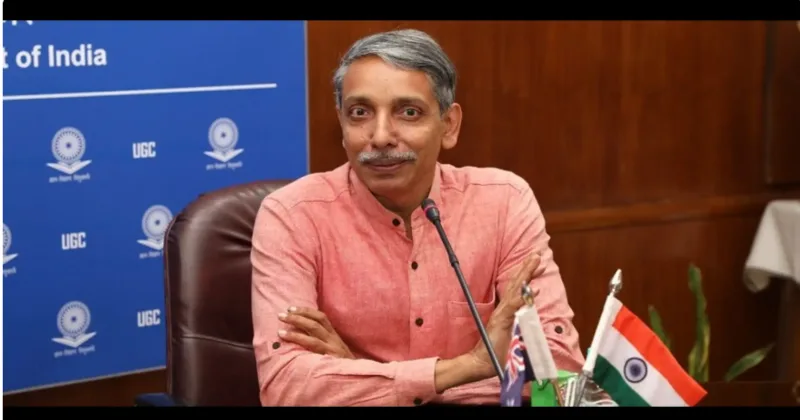
UGC Chairman Prof M Jagadesh Kumar highlights role of universities in building a sustainable future
June 9, 2026
  • Read Ecopy
  • Circulation
  • Advertise
  • Careers
  • About Us
  • Contact Us
Android AppiPhone AppArattai
Organiser
  • ‌
  • Bharat
    • Assam
    • Bihar
    • Chhattisgarh
    • Jharkhand
    • Maharashtra
    • View All States
  • World
    • Asia
    • Europe
    • North America
    • South America
    • Africa
    • Australia
  • Editorial
  • International
  • Opinion
  • RSS @ 100
  • More
    • Op Sindoor
    • Analysis
    • Sports
    • Defence
    • Politics
    • Business
    • Economy
    • Culture
    • Special Report
    • Sci & Tech
    • Entertainment
    • G20
    • Azadi Ka Amrit Mahotsav
    • Vocal4Local
    • Web Stories
    • Education
    • Employment
    • Books
    • Interviews
    • Travel
    • Law
    • Health
    • Obituary
  • Subscribe
    • Subscribe Print Edition
    • Subscribe Ecopy
    • Read Ecopy
  • ‌
  • Bharat
    • Assam
    • Bihar
    • Chhattisgarh
    • Jharkhand
    • Maharashtra
    • View All States
  • World
    • Asia
    • Europe
    • North America
    • South America
    • Africa
    • Australia
  • Editorial
  • International
  • Opinion
  • RSS @ 100
  • More
    • Op Sindoor
    • Analysis
    • Sports
    • Defence
    • Politics
    • Business
    • Economy
    • Culture
    • Special Report
    • Sci & Tech
    • Entertainment
    • G20
    • Azadi Ka Amrit Mahotsav
    • Vocal4Local
    • Web Stories
    • Education
    • Employment
    • Books
    • Interviews
    • Travel
    • Law
    • Health
    • Obituary
  • Subscribe
    • Subscribe Print Edition
    • Subscribe Ecopy
    • Read Ecopy
Organiser
  • Home
  • Bharat
  • World
  • Operation Sindoor
  • Editorial
  • Analysis
  • Opinion
  • Culture
  • Defence
  • International Edition
  • RSS @ 100
  • Magazine
  • Read Ecopy
Home Bharat

UGC Chairman Prof M Jagadesh Kumar highlights role of universities in building a sustainable future

Higher education institutions (HEIs) play a crucial role in promoting sustainability through education, research, and community collaboration, aligning with India's National Education Policy and global SDGs. By adopting eco-friendly practices, engaging local communities, and transforming campuses into carbon-neutral spaces, HEIs can drive meaningful environmental change

WEBDESKWEBDESK
Jan 9, 2025, 09:00 am IST
in Bharat, Education
Follow on Google News
UGC Chairman Prof M Jagadesh Kumar

UGC Chairman Prof M Jagadesh Kumar

FacebookTwitterWhatsAppTelegramEmail

There is no denying that scientific and technological advancements have greatly contributed to economic growth and human progress. However, their unforeseen environmental impacts require immediate action from all sectors of society. Higher education institutions (HEIs), in particular, play a vital role in fostering and implementing solutions for a sustainable future. By combining research, practical application, and community involvement, HEIs can make significant strides in addressing the climate crisis and promoting eco-friendly practices. This view is strongly supported by Prof M Jagadesh Kumar, Chairman of the University Grants Commission (UGC), who emphasizes the critical role of HEIs in leading the way toward sustainability.

HEIs are in a unique position to influence sustainable development through education, research, and the implementation of environmentally friendly practices. India’s National Education Policy (NEP) 2020 stresses aligning the nation’s educational objectives with the United Nations’ Sustainable Development Goals (SDGs). Among these, SDG 11 (Sustainable Cities and Communities) and SDG 13 (Climate Action) are particularly relevant for HEIs aiming to transform their campuses into centers of innovation and environmental consciousness.

For example, HEIs can strive toward carbon-neutral campuses by implementing renewable energy solutions, such as solar power, constructing energy-efficient buildings, and adopting comprehensive waste management systems. These efforts align with SDG 12, which focuses on responsible consumption and production. Such initiatives not only reduce environmental footprints but also create living laboratories where students can observe and contribute to real-world sustainability solutions.

One of the major challenges HEIs face is managing the environmental impact of transportation. With large numbers of students and staff on campus daily, promoting walking, cycling, and the use of electric vehicles can significantly cut down emissions. Adopting sustainable transportation methods helps combat climate change while fostering a culture of environmental responsibility.

Repurposing unused spaces into biodiversity-rich areas is another impactful strategy. Planting native trees and nurturing local ecosystems on campuses can support SDG 15 (Life on Land) and provide practical learning experiences for students. These biodiversity initiatives not only enhance the ecological value of campuses but also motivate students to become advocates for environmental stewardship.

Collaboration with local communities is essential for achieving sustainable development. HEIs should integrate their sustainability initiatives with the environmental challenges faced by local communities. By working together, HEIs can ensure that their efforts are both relevant and sustainable in the long term. Joint projects focusing on sustainable agriculture, waste management, or water conservation can foster a mutually beneficial exchange of knowledge, enriching both students’ education and local residents’ lives.

Such collaborations also bridge the gap between academic research and practical application. Incorporating community-driven perspectives into research can help HEIs develop innovative solutions to pressing environmental issues while empowering local populations.

Integrating sustainability into the curriculum is one of the most effective ways to instill environmental responsibility in students. Prof M. Jagadesh Kumar says that the University Grants Commission (UGC) has already issued guidelines for environmental education in HEIs. By following these guidelines, institutions can offer interdisciplinary programs that address the complex challenges of climate change, biodiversity loss, and resource depletion.

For instance, programs that combine environmental studies with social sciences, economics, philosophy, and psychology can provide students with a comprehensive understanding of sustainability. Offering practical learning opportunities, such as community outreach and sustainability projects, can further prepare students to confront climate-related challenges.

Elaborating further, Prof. M. Jagadesh Kumar said that looking ahead, HEIs should aim to transition into carbon-neutral campuses by 2047, aligning with India’s broader environmental objectives. Achieving this goal will require a multi-faceted approach, including green building practices, incorporating sustainability into campus policies, and promoting environmental awareness among students and faculty.

Building energy-efficient structures, using renewable energy, and minimising resource consumption are key actions HEIs can take. These efforts must be supported by policies that prioritise sustainability across all aspects of campus life, including procurement, operations, curriculum, and extracurricular activities.

Despite the existence of frameworks and guidelines, many HEIs in India have yet to fully integrate sustainability into their core strategies. Limited awareness, resources, and commitment remain obstacles to progress. Overcoming these challenges requires proactive leadership from both HEI administrators and policymakers.

UGC guidelines emphasise the need for interdisciplinary education and aligning academic goals with global environmental agreements, such as the Rio Conventions. By fostering a sense of responsibility and urgency within HEIs, India can unlock the potential of its educational institutions to drive sustainable development.

HEIs are at the forefront of shaping the future, not just for their students but for society as a whole. By prioritizing sustainability in education, research, and community collaboration, HEIs can lead efforts to address the environmental challenges of our time. Through innovative practices, interdisciplinary learning, and community partnerships, these institutions can inspire a new generation of environmental leaders, scientists, and policymakers.

India’s vision for a sustainable future depends on HEIs actively transforming their campuses into models of eco-conscious living. With the right combination of policies, resources, and commitment, HEIs can emerge as key drivers of change, paving the way for a greener, healthier planet.

By embracing their role as sustainability catalysts, HEIs will not only prepare students for a brighter future but also contribute to building a more resilient and sustainable world. This perspective aligns with the UGC Chairman’s call for greater involvement of HEIs in driving sustainability and fostering a culture of environmental responsibility across the country.


Topics: University Grants Commissionhigher education institutionsUGC Chairman Prof M Jagadesh Kumar
ShareTweetSendShareSend
✮ Subscribe Organiser YouTube Channel. ✮
✮ Join Organiser's WhatsApp channel for Nationalist views beyond the news. ✮
Previous News

Tripura: Bangladeshi smugglers backed by villagers attack BSF jawan on duty with sharp weapons, tried to snatch weapon

Next News

UGC opens nominations for PhD excellence citation 2025; Apply before March 31

Related News

UGC Mandates Aadhaar-Based Payment System for Fellowships

UGC mandates Aadhaar-based payment system for fellowships, April 15 set as deadline for completing the seeding process

Representative Image

India’s AI Education Revolution: How policy, research and skilling are building the future workforce

Representative Image

Karnataka: UGC rules violated in faculty recruitment in universities; Minister admits over 9,000 vacancies

UGC names Bengaluru based Global Human Peace University as fake

UGC names Bengaluru based Global Human Peace University as fake; Advises students to stay away from it

From Bharati-Nari to Narayani: UGC Mobilises Universities for International Women’s Day Convention

UGC calls on HEIs to join ‘Bharati-Nari to Narayani’ national convention on March 7–8

ABVP hails stay by Supreme Court on UGC ‘Promotion of Equity in HEIs Regulations, 2026’

ABVP hails Supreme Court’s stay on UGC’s Regulations 2026 aimed at promoting equity in higher educational institutions

Load More

Latest News

India's Permanent Representative to United Nations Ambassador Harish Parvathaneni

India & Afghanistan are “civilisational states”: Indian Envoy at UN reaffirms health, education & humanitarian aid

Bulldozer action on houses linked to drug traffickers in Rourkela's Meenapada area

Odisha: Major crackdown on drug traffickers in Rourkela; Bulldozers demolish houses of Farida, Imran & other accused

Prime Minister Narendra Modi with Agri Minister Shivraj Singh Chouhan

India’s Agricultural Revolution: Rising output, record procurement and expanding farmer support since 2014

Remembering Birsa Munda on his death anniversary

Birsa Munda Death Anniversary: Revisiting the life & enduring legacy of India’s legendary tribal icon Dharti Aaba

A massive 200-kg Shivling recovered from the waters of the Ganga in Varanasi

Hidden Beneath the Ganga for 2,500 Years? 200 kg Shivling discovery draws thousands of devotees in Kashi

A representative image

Four years of Jan Samarth: How India’s digital credit gateway has processed over Rs 3 lakh crore in loan applications

The Ganesha idols are the historical evidence of the Temples of learning at Qutub Complex, part of the broken remains from the 27 Nakshatra Vidya Mandirs that were destroyed by invaders

Why is it important to reclaim the Hindu heritage of the ‘Qutub Complex’?

Uttar Pradesh launches major crackdown on coaching mafia and exam fraud networks

Uttar Pradesh: Paper leak syndicates, solver gangs and fake coaching centres face crackdown by Yogi government in UP

Banda Singh Bahadur

Banda Singh Bahadur Martyrdom Day: Betrayal of Guru Gobind Singh Ji by Mughals and the rise of Madho Das

12 years of Modi Govt: Meaningful philosophy or manufactured phenomenon; Bharat’s tryst with democracy

Load More
  • Privacy
  • Terms
  • Cookie Policy
  • Refund and Cancellation
  • Delivery and Shipping

© Bharat Prakashan (Delhi) Limited.
Tech-enabled by Ananthapuri Technologies

  • Home
  • Search Organiser
  • Bharat
    • Assam
    • Bihar
    • Chhattisgarh
    • Jharkhand
    • Maharashtra
    • View All States
  • World
    • Asia
    • Africa
    • North America
    • South America
    • Europe
    • Australia
  • Editorial
  • Operation Sindoor
  • Opinion
  • Analysis
  • Defence
  • Culture
  • Sports
  • Business
  • RSS @ 100
  • Entertainment
  • More ..
    • Sci & Tech
    • Vocal4Local
    • Special Report
    • Education
    • Employment
    • Books
    • Interviews
    • Travel
    • Health
    • Politics
    • Law
    • Economy
    • Obituary
  • Subscribe Magazine
  • Read Ecopy
  • Advertise
  • Circulation
  • Careers
  • About Us
  • Contact Us
  • Policies & Terms
    • Privacy Policy
    • Cookie Policy
    • Refund and Cancellation
    • Terms of Use

© Bharat Prakashan (Delhi) Limited.
Tech-enabled by Ananthapuri Technologies