Stanford study warns of influenza risks in raw milk, highlights importance of pasteurisation and surveillance
June 6, 2026
  • Read Ecopy
  • Circulation
  • Advertise
  • Careers
  • About Us
  • Contact Us
Android AppiPhone AppArattai
Organiser
  • ‌
  • Bharat
    • Assam
    • Bihar
    • Chhattisgarh
    • Jharkhand
    • Maharashtra
    • View All States
  • World
    • Asia
    • Europe
    • North America
    • South America
    • Africa
    • Australia
  • Editorial
  • International
  • Opinion
  • RSS @ 100
  • More
    • Op Sindoor
    • Analysis
    • Sports
    • Defence
    • Politics
    • Business
    • Economy
    • Culture
    • Special Report
    • Sci & Tech
    • Entertainment
    • G20
    • Azadi Ka Amrit Mahotsav
    • Vocal4Local
    • Web Stories
    • Education
    • Employment
    • Books
    • Interviews
    • Travel
    • Law
    • Health
    • Obituary
  • Subscribe
    • Subscribe Print Edition
    • Subscribe Ecopy
    • Read Ecopy
  • ‌
  • Bharat
    • Assam
    • Bihar
    • Chhattisgarh
    • Jharkhand
    • Maharashtra
    • View All States
  • World
    • Asia
    • Europe
    • North America
    • South America
    • Africa
    • Australia
  • Editorial
  • International
  • Opinion
  • RSS @ 100
  • More
    • Op Sindoor
    • Analysis
    • Sports
    • Defence
    • Politics
    • Business
    • Economy
    • Culture
    • Special Report
    • Sci & Tech
    • Entertainment
    • G20
    • Azadi Ka Amrit Mahotsav
    • Vocal4Local
    • Web Stories
    • Education
    • Employment
    • Books
    • Interviews
    • Travel
    • Law
    • Health
    • Obituary
  • Subscribe
    • Subscribe Print Edition
    • Subscribe Ecopy
    • Read Ecopy
Organiser
  • Home
  • Bharat
  • World
  • Operation Sindoor
  • Editorial
  • Analysis
  • Opinion
  • Culture
  • Defence
  • International Edition
  • RSS @ 100
  • Magazine
  • Read Ecopy
Home World

Stanford study warns of influenza risks in raw milk, highlights importance of pasteurisation and surveillance

A Stanford study reveals that influenza virus can survive in raw milk for up to five days, raising concerns about its potential transmission and emphasising the importance of pasteurisation. The findings also highlight the role of wastewater surveillance in monitoring zoonotic pathogens like bird flu

WEBDESKWEBDESK
Dec 21, 2024, 11:00 pm IST
in World, International Edition
Follow on Google News
Representative Image

Representative Image

FacebookTwitterWhatsAppTelegramEmail

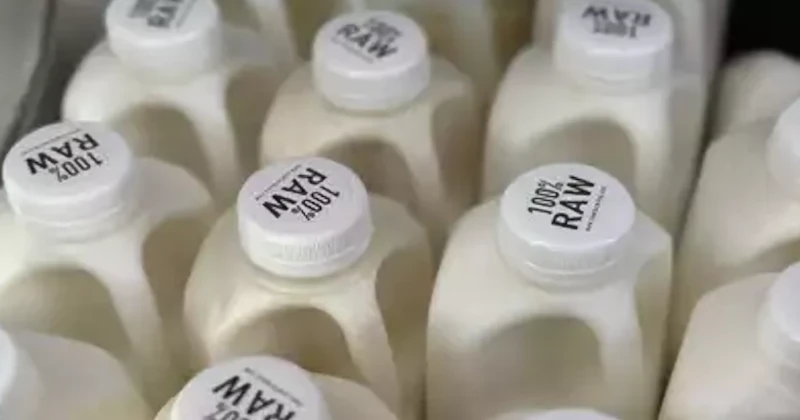
According to a new study, raw milk, which is marketed as a natural and healthful alternative to pasteurised dairy, may contain hidden hazards. The research found that the influenza or flu virus can remain infectious in refrigerated raw milk for up to five days.

The findings come at a time when outbreaks of bird flu in dairy cattle have raised concerns about the potential for a new pandemic. The study was conducted by Stanford University.

“This work highlights the potential risk of avian influenza transmission through consumption of raw milk and the importance of milk pasteurization,” said study senior author Alexandria Boehm, the Richard and Rhoda Goldman Professor of Environmental Studies in the Stanford Doerr School of Sustainability and the Stanford School of Engineering.

More than 14 million Americans consume raw milk annually. Unlike pasteurized milk, raw milk is not heated to kill potentially harmful pathogens. Proponents of raw milk claim that it leaves more beneficial nutrients, enzymes, and probiotics than in pasteurised milk, and can boost immune and gastrointestinal health.

The Food and Drug Administration has tied raw milk to over 200 outbreaks of illnesses, and – together with the Centers for Disease Control and Prevention – warns that germs, such E. coli and Salmonella, in raw milk present “serious” health risks, especially for children, the elderly, pregnant women, and people with weakened immune systems.

The researchers explored the persistence of a strain of human influenza virus in raw cow’s milk at typical refrigeration temperatures. The flu virus, called H1N1 PR8, survived and remained infectious in the milk for up to five days.

“The persistence of infectious influenza virus in raw milk for days raises concerns about potential transmission pathways,” said study co-lead author Mengyang Zhang, a postdoctoral scholar in civil and environmental engineering. “The virus could contaminate surfaces and other environmental materials within dairy facilities, posing risks to animals and humans.”

Additionally, the researchers found that flu virus RNA – molecules that carry genetic information but are not considered a health risk – remained detectable in the raw milk for at least 57 days. By comparison, pasteurization completely destroyed infectious influenza in the milk and reduced the amount of viral RNA by almost 90%, but didn’t eliminate the RNA entirely. Although exposure to influenza virus RNA does not pose a health risk, RNA-based testing methods are often used to conduct environmental surveillance of pathogens like influenza.

“The prolonged persistence of viral RNA in both raw and pasteurized milk has implications for food safety assessments and environmental surveillance, particularly because many of the techniques used in environmental surveillance detect RNA,” said study co-lead author Alessandro Zulli, a postdoctoral scholar in civil and environmental engineering.

The research grew out of an earlier project – funded by the Stanford Woods Institute for the Environment’s Environmental Venture Projects program – focused on human norovirus and the subfamily of viruses responsible for the Covid-19 pandemic.

In the U.S. alone, flu viruses infect more than 40 million people and kill more than 50,000 every year. These types of viruses can spread from animals to humans, as in the case of swine flu, which led to as many as 1.4 billion human infections globally in 2009-2010.

Although bird flu has not proven as dangerous to people yet, it could mutate to become so. Recent detection of bird flu in cattle has raised questions about its potential transmission through milk and other dairy products.

The study’s findings underscore the importance of improving monitoring systems, particularly as bird flu continues to spread among livestock, according to the study’s authors.

The study complements earlier research involving several of the same researchers that pioneered the use of wastewater for detection of avian influenza. That analysis revealed commercial and industrial dairy waste as primary sources. By analyzing wastewater, public health officials could detect virus activity in nearby cattle populations.

“We never thought that wastewater could be used to detect and respond to zoonotic pathogens circulating in the community,” Boehm said. “It has been amazing to watch our work on detection in wastewater scaled across the United States and the world.”

(with inputs from ANI)
Topics: Influenza transmissionPasteurised dairyRaw MilkInfluenzaStanford study
ShareTweetSendShareSend
✮ Subscribe Organiser YouTube Channel. ✮
✮ Join Organiser's WhatsApp channel for Nationalist views beyond the news. ✮
Previous News

India has skill, technology, manpower that ‘New’ Kuwait needs: PM Modi

Next News

‘Jitni abadi utna haq’: Congress’s slogan or a facade to hide anti-reservation history?

Related News

Representative Image

“Winter onset symptoms resemble routine infections; there is no panic over H9N2 in China,” says Specialist

Biological Terrorism: China engineered Covid-19 “bioweapon” to purposely infect people, reveals Wuhan researcher

Load More

Latest News

The Vedic age saw remarkable women sages, known as Rishikas, who composed hymns and shaped India's spiritual and philosophical heritage

Rishikas of Vedic Age: How Gargi, Maitreyi & other women shaped ancient India’s spiritual and philosophical tradition

Police in AAP-Ruled state of Punjab lathi charge sit-in protesters

Punjab: ITI candidates seeking jobs lathi-charged outside PSPCL HQ; opposition slams AAP Govt over police action

From constables to DGP, India's police system follows a structured chain of command that governs law enforcement across the country

From Constable to DGP: Understanding India’s police hierarchy, powers & recruitment system

The terracotta dice that challenges historical assumptions and highlights India's millennia-old civilisational heritage

How a 4,500-year-old terracotta dice is reviving the debate on India’s civilisational continuity & Vedic heritage

The Porumamilla inscription and the ancient science behind a reservoir that survived 650 years

India’s 655-Year-Old Water Policy: The Porumamilla inscription that turned stone into a manual of hydrology

India’s Permanent Representative to the United Nations Ambassador Harish Parvathaneni

India slams Pakistan at UNSC for peddling false narratives on Jammu & Kashmir

Keralam: Pathanamthitta temple property occupied beyond lease period reclaimed by devotees

A series of high-level engagements signals New Delhi's growing focus on building interoperable security networks across the Indo-Pacific

India strengthens Indo-Pacific security architecture with new defence and maritime partnerships

Prime Minister Narendra Modi

“Makes every Indian proud”: PM Modi hails India’s 7.7 per cent GDP growth in FY 2025-26

Once known for maoist violence, Minpa now leads healthcare revolution with telemedicine services in Sukma

From Maoist Stronghold to Healthcare Hub: How Chhattisgarh’s Minpa is transforming through telemedicine & development

Load More
  • Privacy
  • Terms
  • Cookie Policy
  • Refund and Cancellation
  • Delivery and Shipping

© Bharat Prakashan (Delhi) Limited.
Tech-enabled by Ananthapuri Technologies

  • Home
  • Search Organiser
  • Bharat
    • Assam
    • Bihar
    • Chhattisgarh
    • Jharkhand
    • Maharashtra
    • View All States
  • World
    • Asia
    • Africa
    • North America
    • South America
    • Europe
    • Australia
  • Editorial
  • Operation Sindoor
  • Opinion
  • Analysis
  • Defence
  • Culture
  • Sports
  • Business
  • RSS @ 100
  • Entertainment
  • More ..
    • Sci & Tech
    • Vocal4Local
    • Special Report
    • Education
    • Employment
    • Books
    • Interviews
    • Travel
    • Health
    • Politics
    • Law
    • Economy
    • Obituary
  • Subscribe Magazine
  • Read Ecopy
  • Advertise
  • Circulation
  • Careers
  • About Us
  • Contact Us
  • Policies & Terms
    • Privacy Policy
    • Cookie Policy
    • Refund and Cancellation
    • Terms of Use

© Bharat Prakashan (Delhi) Limited.
Tech-enabled by Ananthapuri Technologies