Supreme court stays all suits under Places of Worship Act, igniting debate on Constitutional rights
August 11, 2026
  • Read Ecopy
  • Circulation
  • Advertise
  • Careers
  • About Us
  • Contact Us
Android AppiPhone AppArattai
Organiser
  • ‌
  • Bharat
    • Assam
    • Bihar
    • Chhattisgarh
    • Jharkhand
    • Maharashtra
    • View All States
  • World
    • Asia
    • Europe
    • North America
    • South America
    • Africa
    • Australia
  • Editorial
  • International
  • Opinion
  • RSS @ 100
  • More
    • Op Sindoor
    • Analysis
    • Sports
    • Defence
    • Politics
    • Business
    • Economy
    • Culture
    • Special Report
    • Sci & Tech
    • Entertainment
    • G20
    • Azadi Ka Amrit Mahotsav
    • Vocal4Local
    • Web Stories
    • Education
    • Employment
    • Books
    • Interviews
    • Travel
    • Law
    • Health
    • Obituary
  • Subscribe
    • Subscribe Print Edition
    • Subscribe Ecopy
    • Read Ecopy
  • ‌
  • Bharat
    • Assam
    • Bihar
    • Chhattisgarh
    • Jharkhand
    • Maharashtra
    • View All States
  • World
    • Asia
    • Europe
    • North America
    • South America
    • Africa
    • Australia
  • Editorial
  • International
  • Opinion
  • RSS @ 100
  • More
    • Op Sindoor
    • Analysis
    • Sports
    • Defence
    • Politics
    • Business
    • Economy
    • Culture
    • Special Report
    • Sci & Tech
    • Entertainment
    • G20
    • Azadi Ka Amrit Mahotsav
    • Vocal4Local
    • Web Stories
    • Education
    • Employment
    • Books
    • Interviews
    • Travel
    • Law
    • Health
    • Obituary
  • Subscribe
    • Subscribe Print Edition
    • Subscribe Ecopy
    • Read Ecopy
Organiser
  • Home
  • Bharat
  • World
  • Operation Sindoor
  • Editorial
  • Analysis
  • Opinion
  • Culture
  • Defence
  • International Edition
  • RSS @ 100
  • Magazine
  • Read Ecopy
Home Bharat

Supreme court stays all suits under Places of Worship Act, igniting debate on Constitutional rights

The Supreme Court of India issued an interim order on December 12, 2024, staying all litigation related to the Places of Worship Act, 1991, until its constitutional validity is decided. Critics argue that this move undermines judicial review and suppresses legitimate grievances, prioritising public peace over constitutional principles

WEBDESKWEBDESK
Dec 20, 2024, 07:30 pm IST
inBharat
Follow on Google News
Facebook
Twitter
WhatsAppTelegramEmail

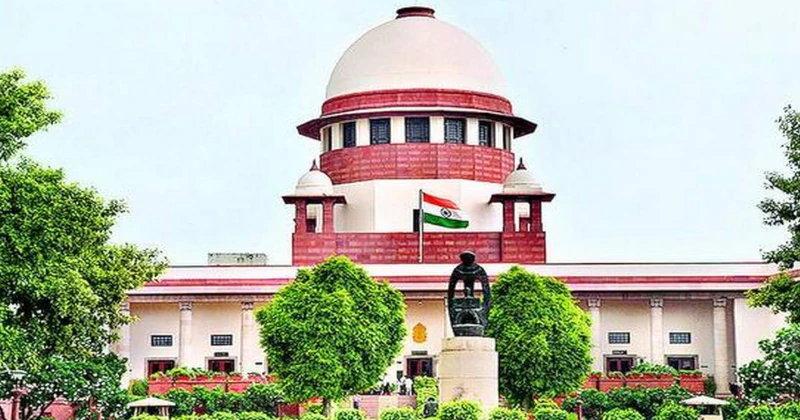
The Supreme Court of India on December 12, 2024, issued an interim order staying all pending and future suits concerning the Places of Worship Act, 1991. This unprecedented directive by a three-judge bench comprising Chief Justice of India (CJI) Sanjiv Khanna and Justices P V Sanjay Kumar and K V Viswanathan bars courts nationwide from entertaining new suits or passing orders to survey religious sites to determine whether temple structures lie beneath mosques. While the decision aims to prevent public disorder, critics argue that it undermines fundamental constitutional principles, sets a precarious precedent, and suppresses legitimate grievances.

The bench’s interim order imposes a sweeping stay on all litigation under the Places of Worship Act until the Supreme Court decides on the constitutional validity of the law. The Act, enacted in 1991 during the PV Narasimha Rao-led Congress government, sought to preserve the religious character of all places of worship as they existed on August 15, 1947, with the exception of the Ayodhya site. This law effectively barred legal disputes concerning the status of religious sites, drawing criticism for allegedly suppressing historical grievances of Hindus.

The immediate impact of the order has been to halt cases filed by Hindu groups seeking the reclamation of sites they claim were altered or destroyed during periods of foreign rule. Solicitor General Tushar Mehta questioned the propriety of staying civil suits between two parties at the behest of a third party, but the bench did not provide a clear answer. Instead, the Court proceeded with a blanket directive, a move seen by many as prioritising public peace over judicial review.

The lack of precise data on the number of pending suits related to disputed religious structures has added to the criticism of the order. Despite this, the bench’s reasoning rested on two main points:

  • A petition seeks enforcement of the Places of Worship Act.
  • Another petition questions whether the Act bars suits seeking to reclaim religious sites.

The 1980 landmark judgment in Minerva Mills Ltd Vs Union of India held judicial review to be integral to the Constitution’s basic structure. The judgment stated: “The power of judicial review is an integral part of our constitutional system, and without it, there will be no government of laws, and the rule of law would become a teasing illusion.” By freezing legal proceedings without examining the Act’s constitutional validity, the Court risks eroding this cornerstone of Indian democracy.

The Supreme Court’s intent to prevent communal unrest is evident in its approach. CJI Khanna’s remarks during the Sambhal case, where he stayed a trial court order permitting a survey of a disputed mosque site, underscore this objective. He emphasised the need to maintain public order and subjected lower court proceedings to higher judicial oversight. However, critics argue that temporary peace achieved by sidelining grievances is unlikely to ensure long-term harmony. True reconciliation requires addressing root causes through lawful and constitutional mechanisms.

The Places of Worship Act, enacted under immense political pressure, was intended to preserve communal harmony. However, many see it as a legislative attempt to suppress historical grievances, particularly those of Hindus. This perception is exacerbated by the Supreme Court’s interim order, which lends judicial legitimacy to a law whose constitutionality remains untested.

The interim order has also raised concerns about the influence of societal pressures on judicial decisions. The intervention applications filed by those opposing the surveys of religious sites cited incidents of violence, such as the attack on a court-appointed committee in Sambhal. Critics argue that the judiciary’s failure to question these assertions risks legitimising the idea that threats of unrest can shape judicial outcomes.

The violence in Sambhal, where a survey committee was attacked, highlights the challenges of upholding the rule of law in the face of societal tensions. Instead of questioning why a court order was met with violence, the judiciary appears to have acquiesced to the notion that suppressing legal claims is a viable path to maintaining peace. This has led to accusations that the interim order emboldens those who leverage threats of unrest to achieve their objectives.

Former Chief Justice DY Chandrachud’s interpretation of the Act during the Gyanvapi case provides a stark contrast to the current order. In May 2022, he observed that determining the religious character of a site is not barred by the Act. His nuanced approach drew criticism from certain sections, reflecting the intense scrutiny that judicial decisions on such matters attract. The current order’s apparent endorsement of a more restrictive interpretation of the Act has only deepened concerns about judicial independence.

Chandrachud’s assertion that judicial independence extends beyond government influence to include freedom from societal and interest group pressures remains a pertinent reminder. Critics argue that the December 12 order undermines this principle by prioritising temporary calm over the enduring pursuit of justice.
Topics: Supreme Courtplaces of worship actCongress GovernmentConstitutional rights
Share
Tweet
SendShareSend
✮ Subscribe Organiser YouTube Channel. ✮
✮ Join Organiser's WhatsApp channel for Nationalist views beyond the news. ✮
Previous News

When Nehru questioned Dr Ambedkar’s patriotism and named his opposition to Congress as ‘alignment with Britishers’

Next News

‘Why not apply sections harming country’s unity and integrity on Zubair?’: AAG in Allahabad HC during the hearing

Related News

Karnataka: Drought deepens across the state; Congress govt delays cabinet sub-committee formation as farmers suffer

Karnataka: BJP alleges cabinet expansion driven by ‘Payment Quota’, slams Congress over Nagendra’s re-induction

Uttar Pradesh Cabinet has approved amendments to the Madrasa Education Act, ending the recognition of Kamil and Fazil degrees

Uttar Pradesh: Yogi government ends recognition of Kamil and Fazil degrees in line with Supreme Court ruling

Tamil Nadu: Supreme Court refuses to stay HC order on Thiruparankundram Deepam; TVK govt faces legal setback

Karnataka's Health Department is facing a severe shortage of field staff as 166 health inspectors continue on deputation (AI-generated Image)

Karnataka: Congress Govt under fire as 166 health inspectors remain on illegal deputation

R. Ashoka (Left), Karnataka Home Minister Priyank Kharge (Right)

Karnataka Police Constable Exam marred by irregularities & glitches; BJP demands resignation of state home minister

Load More

Latest News

Tamil Nadu Assembly - image courtesy- CMO Tamil Nadu

Tamil Nadu Assembly resolution mandates Tamil Thai Vazhthu before other proceedings at State functions

Congress MP Rajmohan with Keralam CM VD Sateeshan (File Photo)

‘Not in this lifetime, even if PM Modi threatens to shoot us down’: Congress MP Rajmohan opposes full Vande Mataram

Former DMK minister M Subramanian (File Photo)

Tamil Nadu: Former DMK minister M Subramanian, wife Kanchana face trial as court frames charges in SIDCO land case

West Asia Conflict: Hormuz reopening hits deadlock as Iran adds conditions; US demands deal with Oman as prerequisite

Akhil Bharatiya Prabandh Samiti Baithak of the Bharatiya Kisan Sangh

Bharatiya Kisan Sangh Prabandh Samiti Baithak concludes in Meerut; focus on village empowerment & Farmers’ Welfare

14TH JPSC Civil Services Exam: Restoring reliability  of recruitment

Ceremonial lamp lighting at a program organised under the aegis of the Vidwat Parishad of Shishu Shiksha Samiti Assam

Vande Mataram is not merely an emotional expression, but declaration of national consciousness: Avneesh Bhatnagar

Our aim is to ensure India ranks among top 10 medal-winning countries at 2036 Olympics: Dr Mansukh Mandaviya

President of the Indian Olympic Association President P. T. Usha holds the Commonwealth Games flag alongside Gujarat Deputy Chief Minister Harsh Sanghavi and Neeraj Chopra during the closing ceremony of the Commonwealth Games 2026 at the OVO Hydro in Glasgow

Commonwealth Games 2026: Over to Amdavad

Turkey’s President Recep Tayyip Erdogan, Saudi Crown Prince Mohammed bin Salman, and Pakistan Prime Minister Shehbaz Sharif

Islamic NATO or Sunni Bloc? Saudi-Pakistan-Turkey pact faces question over Islam and sectarian divide

Load More
  • Privacy
  • Terms
  • Cookie Policy
  • Refund and Cancellation
  • Delivery and Shipping

© Bharat Prakashan (Delhi) Limited.
Tech-enabled by Ananthapuri Technologies

  • Home
  • Search Organiser
  • Bharat
    • Assam
    • Bihar
    • Chhattisgarh
    • Jharkhand
    • Maharashtra
    • View All States
  • World
    • Asia
    • Africa
    • North America
    • South America
    • Europe
    • Australia
  • Editorial
  • Operation Sindoor
  • Opinion
  • Analysis
  • Defence
  • Culture
  • Sports
  • Business
  • RSS @ 100
  • Entertainment
  • More ..
    • Sci & Tech
    • Vocal4Local
    • Special Report
    • Education
    • Employment
    • Books
    • Interviews
    • Travel
    • Health
    • Politics
    • Law
    • Economy
    • Obituary
  • Subscribe Magazine
  • Read Ecopy
  • Advertise
  • Circulation
  • Careers
  • About Us
  • Contact Us
  • Policies & Terms
    • Privacy Policy
    • Cookie Policy
    • Refund and Cancellation
    • Terms of Use

© Bharat Prakashan (Delhi) Limited.
Tech-enabled by Ananthapuri Technologies