Supreme court stays all suits under Places of Worship Act, igniting debate on Constitutional rights
June 27, 2026
  • Read Ecopy
  • Circulation
  • Advertise
  • Careers
  • About Us
  • Contact Us
Android AppiPhone AppArattai
Organiser
  • ‌
  • Bharat
    • Assam
    • Bihar
    • Chhattisgarh
    • Jharkhand
    • Maharashtra
    • View All States
  • World
    • Asia
    • Europe
    • North America
    • South America
    • Africa
    • Australia
  • Editorial
  • International
  • Opinion
  • RSS @ 100
  • More
    • Op Sindoor
    • Analysis
    • Sports
    • Defence
    • Politics
    • Business
    • Economy
    • Culture
    • Special Report
    • Sci & Tech
    • Entertainment
    • G20
    • Azadi Ka Amrit Mahotsav
    • Vocal4Local
    • Web Stories
    • Education
    • Employment
    • Books
    • Interviews
    • Travel
    • Law
    • Health
    • Obituary
  • Subscribe
    • Subscribe Print Edition
    • Subscribe Ecopy
    • Read Ecopy
  • ‌
  • Bharat
    • Assam
    • Bihar
    • Chhattisgarh
    • Jharkhand
    • Maharashtra
    • View All States
  • World
    • Asia
    • Europe
    • North America
    • South America
    • Africa
    • Australia
  • Editorial
  • International
  • Opinion
  • RSS @ 100
  • More
    • Op Sindoor
    • Analysis
    • Sports
    • Defence
    • Politics
    • Business
    • Economy
    • Culture
    • Special Report
    • Sci & Tech
    • Entertainment
    • G20
    • Azadi Ka Amrit Mahotsav
    • Vocal4Local
    • Web Stories
    • Education
    • Employment
    • Books
    • Interviews
    • Travel
    • Law
    • Health
    • Obituary
  • Subscribe
    • Subscribe Print Edition
    • Subscribe Ecopy
    • Read Ecopy
Organiser
  • Home
  • Bharat
  • World
  • Operation Sindoor
  • Editorial
  • Analysis
  • Opinion
  • Culture
  • Defence
  • International Edition
  • RSS @ 100
  • Magazine
  • Read Ecopy
Home Bharat

Supreme court stays all suits under Places of Worship Act, igniting debate on Constitutional rights

The Supreme Court of India issued an interim order on December 12, 2024, staying all litigation related to the Places of Worship Act, 1991, until its constitutional validity is decided. Critics argue that this move undermines judicial review and suppresses legitimate grievances, prioritising public peace over constitutional principles

WEBDESKWEBDESK
Dec 20, 2024, 07:30 pm IST
in Bharat
Follow on Google News
FacebookTwitterWhatsAppTelegramEmail

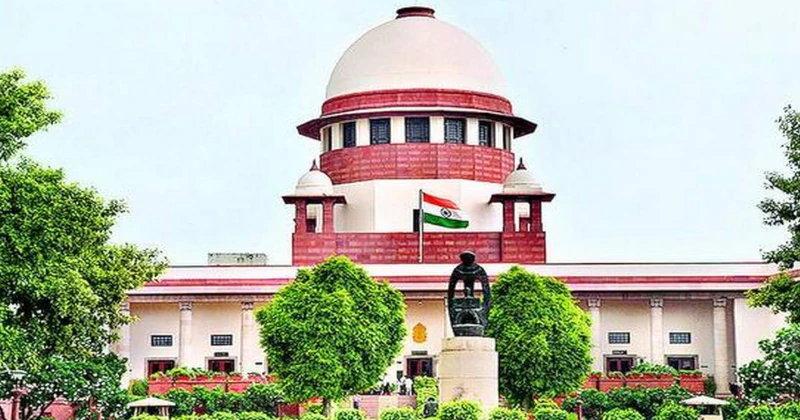
The Supreme Court of India on December 12, 2024, issued an interim order staying all pending and future suits concerning the Places of Worship Act, 1991. This unprecedented directive by a three-judge bench comprising Chief Justice of India (CJI) Sanjiv Khanna and Justices P V Sanjay Kumar and K V Viswanathan bars courts nationwide from entertaining new suits or passing orders to survey religious sites to determine whether temple structures lie beneath mosques. While the decision aims to prevent public disorder, critics argue that it undermines fundamental constitutional principles, sets a precarious precedent, and suppresses legitimate grievances.

The bench’s interim order imposes a sweeping stay on all litigation under the Places of Worship Act until the Supreme Court decides on the constitutional validity of the law. The Act, enacted in 1991 during the PV Narasimha Rao-led Congress government, sought to preserve the religious character of all places of worship as they existed on August 15, 1947, with the exception of the Ayodhya site. This law effectively barred legal disputes concerning the status of religious sites, drawing criticism for allegedly suppressing historical grievances of Hindus.

The immediate impact of the order has been to halt cases filed by Hindu groups seeking the reclamation of sites they claim were altered or destroyed during periods of foreign rule. Solicitor General Tushar Mehta questioned the propriety of staying civil suits between two parties at the behest of a third party, but the bench did not provide a clear answer. Instead, the Court proceeded with a blanket directive, a move seen by many as prioritising public peace over judicial review.

The lack of precise data on the number of pending suits related to disputed religious structures has added to the criticism of the order. Despite this, the bench’s reasoning rested on two main points:

  • A petition seeks enforcement of the Places of Worship Act.
  • Another petition questions whether the Act bars suits seeking to reclaim religious sites.

The 1980 landmark judgment in Minerva Mills Ltd Vs Union of India held judicial review to be integral to the Constitution’s basic structure. The judgment stated: “The power of judicial review is an integral part of our constitutional system, and without it, there will be no government of laws, and the rule of law would become a teasing illusion.” By freezing legal proceedings without examining the Act’s constitutional validity, the Court risks eroding this cornerstone of Indian democracy.

The Supreme Court’s intent to prevent communal unrest is evident in its approach. CJI Khanna’s remarks during the Sambhal case, where he stayed a trial court order permitting a survey of a disputed mosque site, underscore this objective. He emphasised the need to maintain public order and subjected lower court proceedings to higher judicial oversight. However, critics argue that temporary peace achieved by sidelining grievances is unlikely to ensure long-term harmony. True reconciliation requires addressing root causes through lawful and constitutional mechanisms.

The Places of Worship Act, enacted under immense political pressure, was intended to preserve communal harmony. However, many see it as a legislative attempt to suppress historical grievances, particularly those of Hindus. This perception is exacerbated by the Supreme Court’s interim order, which lends judicial legitimacy to a law whose constitutionality remains untested.

The interim order has also raised concerns about the influence of societal pressures on judicial decisions. The intervention applications filed by those opposing the surveys of religious sites cited incidents of violence, such as the attack on a court-appointed committee in Sambhal. Critics argue that the judiciary’s failure to question these assertions risks legitimising the idea that threats of unrest can shape judicial outcomes.

The violence in Sambhal, where a survey committee was attacked, highlights the challenges of upholding the rule of law in the face of societal tensions. Instead of questioning why a court order was met with violence, the judiciary appears to have acquiesced to the notion that suppressing legal claims is a viable path to maintaining peace. This has led to accusations that the interim order emboldens those who leverage threats of unrest to achieve their objectives.

Former Chief Justice DY Chandrachud’s interpretation of the Act during the Gyanvapi case provides a stark contrast to the current order. In May 2022, he observed that determining the religious character of a site is not barred by the Act. His nuanced approach drew criticism from certain sections, reflecting the intense scrutiny that judicial decisions on such matters attract. The current order’s apparent endorsement of a more restrictive interpretation of the Act has only deepened concerns about judicial independence.

Chandrachud’s assertion that judicial independence extends beyond government influence to include freedom from societal and interest group pressures remains a pertinent reminder. Critics argue that the December 12 order undermines this principle by prioritising temporary calm over the enduring pursuit of justice.

Topics: Supreme Courtplaces of worship actCongress GovernmentConstitutional rights
ShareTweetSendShareSend
✮ Subscribe Organiser YouTube Channel. ✮
✮ Join Organiser's WhatsApp channel for Nationalist views beyond the news. ✮
Previous News

When Nehru questioned Dr Ambedkar’s patriotism and named his opposition to Congress as ‘alignment with Britishers’

Next News

‘Why not apply sections harming country’s unity and integrity on Zubair?’: AAG in Allahabad HC during the hearing

Related News

CAG Flags Rs 225 Crore worth of scam in Gruha Lakshmi scheme in Karnataka; BJP seeks CBI probe

Karnataka: Gruha Lakshmi scheme under scanner after CAG flags scam worth Rs 225 Crore; BJP seeks CBI probe

Representative Image

Karnataka’s fake teacher salary scam: RTI exposes closure of departmental inquiry against tainted officials

ABVP protests at Telangana School Education Directorate over closure of 24,000 government schools

Supreme Court of India

‘RTI activism has become business’: SC denies anticipatory bail, questions activist’s authority to monitor road project

Karnataka | Rs.108 Crore Government Land Scam: Criminal action approved against 15 officials after five-month delay

The AMU Judgment: Why the Supreme Court must revisit Article 30

Load More

Latest News

Operation Amistad: India airlifts BHISHM hospital to Venezuela; Reflects healthcare innovation & humanitarian diplomacy

16th-century Vijayanagara inscription found in Seshachalam forest

Historic Discovery in Tirupati: Two Vijayanagara-era inscriptions reveal secrets of 16th-century mandir administration

Birth Anniversary of Bankim Chandra Chattopadhyay: A life dedicated to awakening national identity & self-respect

The alleged missionary-Maoist nexus has raised concerns over foreign funding, radicalisation and national security in India's tribal regions

From Foreign Funds to Red Terror: Investigating alleged missionary-Maoist nexus operating in India’s tribal heartlands

Tamil Nadu: Hindu Munnani objects to portraits of Vijay being placed inside temple sanctums

(Left) Damage to Beijing's CITIC Tower (Right) Aircraft wreckage (right) after a small plane crashed into the city's tallest skyscraper.

Aircraft Crashes into China’s highly secured CITIC Tower: Residents question Beijing’s air defence radar system

CAG Flags Rs 225 Crore worth of scam in Gruha Lakshmi scheme in Karnataka; BJP seeks CBI probe

Karnataka: Gruha Lakshmi scheme under scanner after CAG flags scam worth Rs 225 Crore; BJP seeks CBI probe

Functionaries of the Akhil Bharatiya Baithak of Vidya Bharati

Vidya Bharati charts vision 2030 roadmap at national meet, focuses on educational expansion practices

Union Home Minister Amit Shah releases "Drug Control Vision Document 2026-2029"

‘Detect, disrupt, and destroy’: Modi government’s new mantra for a drug-free India

Arrested Bangladeshis in Keralam (File Photo)

Keralam: Six illegal Bangladeshi migrants arrested near Kochi; probe into suspected network

Load More
  • Privacy
  • Terms
  • Cookie Policy
  • Refund and Cancellation
  • Delivery and Shipping

© Bharat Prakashan (Delhi) Limited.
Tech-enabled by Ananthapuri Technologies

  • Home
  • Search Organiser
  • Bharat
    • Assam
    • Bihar
    • Chhattisgarh
    • Jharkhand
    • Maharashtra
    • View All States
  • World
    • Asia
    • Africa
    • North America
    • South America
    • Europe
    • Australia
  • Editorial
  • Operation Sindoor
  • Opinion
  • Analysis
  • Defence
  • Culture
  • Sports
  • Business
  • RSS @ 100
  • Entertainment
  • More ..
    • Sci & Tech
    • Vocal4Local
    • Special Report
    • Education
    • Employment
    • Books
    • Interviews
    • Travel
    • Health
    • Politics
    • Law
    • Economy
    • Obituary
  • Subscribe Magazine
  • Read Ecopy
  • Advertise
  • Circulation
  • Careers
  • About Us
  • Contact Us
  • Policies & Terms
    • Privacy Policy
    • Cookie Policy
    • Refund and Cancellation
    • Terms of Use

© Bharat Prakashan (Delhi) Limited.
Tech-enabled by Ananthapuri Technologies