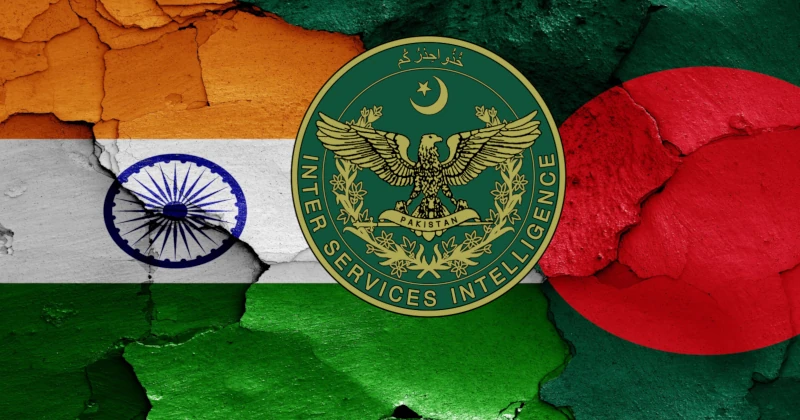
The shadowy hand of Pakistan’s Inter-Services Intelligence (ISI) has once again found fertile ground for sowing chaos, this time within the Bihari camps scattered across Bangladesh. These camps, notorious for harbouring criminal enterprises, have transformed into breeding grounds for anti-Hindu and anti-India terrorism. Leveraging the deep-seated grievances and radical ideologies within these communities, the ISI has orchestrated a sinister campaign aimed at destabilising Bangladesh and igniting regional unrest. As this covert operation unfolds, its implications threaten reverberating across South Asia, demanding immediate attention and action.
In the early hours of March 25, 1971, during the infamous “Operation Searchlight”, Pakistani forces unleashed a reign of terror on Bengalis. Thousands of Biharis in Dhaka’s Mohammadpur and Mirpur areas joined in the atrocities, which included lynching, looting, and raping Bengalis. This community’s actions during Bangladesh’s liberation war cemented their infamy as collaborators of the occupying forces. After Bangladesh’s independence, these individuals, who had fervently opposed liberation and sought repatriation to Pakistan, became known as “Stranded Pakistanis”.
Today, Bihari camps scattered across Dhaka and 13 other districts in Bangladesh are infamous for illegal activities, including drug trafficking, arms dealing, and human trafficking. While official statistics estimate the Bihari population in Bangladesh to be 300,000, the figure may exceed 500,000. These individuals trace their roots to regions like Bihar, West Bengal, Orissa, Madhya Pradesh, Andhra Pradesh, and Uttar Pradesh in India, where they migrated to East Pakistan after the partition of 1947.
The Bihari community’s refusal to assimilate into Bengali has created an enduring divide. Most do not speak Bangla and harbour deep-seated animosity toward Bengalis, particularly non-Muslims. A significant portion views Hindus and India with open hostility, perpetuating a narrative of hate.
After the contested 2018 general elections in Bangladesh, the opposition parties, particularly the Bangladesh Nationalist Party (BNP) and Jamaat-e-Islami, sought alternative methods to destabilise Sheikh Hasina’s government. By 2021, several Islamist leaders initiated discussions with Pakistan’s Inter-Services Intelligence (ISI) in Saudi Arabia, Dubai, and London. They lobbied for ISI support to orchestrate anti-government movements in Bangladesh.
BNP’s engagement extended to hiring Hunter Biden as a lobbyist and securing connections with US political figures such as Obama, Hillary Clinton, and George Soros. By 2023, these efforts culminated in a coordinated blueprint involving ISI and local Islamist forces. Central to this plan was the recruitment of Biharis from camps across Bangladesh to carry out violent activities, including attacks on law enforcement, Hindu communities, and members of the ruling Awami League.
Under the supervision of ISI operatives, groups of Biharis were sent to Pakistan for training in explosives and weaponry. Meanwhile, within the camps, ISI-funded initiatives distributed food and essentials, fostering loyalty and resentment against the Bangladeshi government. Local cable operators began airing Urdu documentaries highlighting the alleged persecution of Muslims in India alongside jihadist propaganda from Pakistan-occupied Kashmir. These efforts fueled anti-Hindu and anti-India sentiments within the camps.
By mid-2023, over 5,000 trained Biharis had been deployed across Bangladesh, surging to 50,000 by late July. Armed with explosives and automatic weapons, they launched attacks on police stations and organised jailbreaks. The ensuing chaos saw widespread looting of police armouries, theft of bulletproof vests, and grenade seizures.
On August 5, 2023, amidst escalating unrest, Sheikh Hasina reportedly fled Bangladesh. Seizing the opportunity, local ISI handlers distributed cash among Biharis, directing them to unleash a wave of violence. They targeted Awami League supporters, Hindus, and temples, engaging in arson, looting, and sexual violence. The unrest spilt onto the streets as demonstrators openly waved flags of Al-Qaeda and ISIS. Radical groups like Hizb ut-Tahrir and Hefazat-e-Islam joined the fray, further exacerbating the crisis.
Intelligence sources reveal that Jashimuddin Rahmani, the kingpin of Ansarullah Bangla Team (ABT), now rebranded as Ansar Al-Islam, has capitalised on this unrest. Following his release from prison, Rahmani has focused on recruiting Biharis fluent in Hindi, Oriya, and other Indian languages for terrorist operations inside India. He has also established links with Rohingya militants in Chittagong and the Arakan Rohingya Salvation Army (ARSA), seeking to expand terror activities across South Asia.
Rahmani’s strategy involves building sleeper cells in Indian states like Bihar, West Bengal, and Uttar Pradesh while maintaining communication with terror outfits in Jammu and Kashmir. This cross-border nexus highlights the growing regional security threat emanating from Bangladesh’s Bihari camps.
The involvement of Muhammad Yunus, a Nobel laureate with alleged ties to global elites such as the Clintons and George Soros, underscores this crisis’s international dimension. Yunus has reportedly sought advice on countering potential punitive actions from a re-elected Donald Trump administration.
According to another source, Muhammad Yunus requested Ric Grenell, an old friend and former Acting Director of National Intelligence of the United States, to “somehow ensure” his participation at President Trump’s inauguration on January 20 and a “brief meeting”. Accordingly, Grenell made several attempts, though all failed because he was already flagged as belonging to the anti-Trump bloc. At this junction, a nervous Yunus is making all-out efforts to somehow boost his team members’ morale – mostly through blank words. At the same time, he has maintained regular communications with Bill Clinton, Hillary Clinton and George Soros, seeking their advice about possible steps if there is a genuine signal from Trump of punitive measures following January 20.
Additionally, at the request of Muhammad Yunus, Indian political leader Raul Vinci is also using his channels to normalise relations between Trump and Yunus.
Intelligence suggests that if all efforts to normalise relations between Donald Trump and Yunus fail, Yunus might leverage ISI-trained Biharis and Rohingya militants to provoke conflicts in the region, including a possible Bangladesh-Myanmar confrontation.
The ISI’s exploitation of Bangladesh’s Bihari community for anti-Hindu and anti-India activities poses a grave threat to regional stability. The international community must recognise the urgency of this situation and support Bangladesh in dismantling these terror networks. Effective measures are needed to neutralise ISI’s influence, rehabilitate the Bihari community, and foster integration into mainstream Bangladeshi society. Failure to act will allow these extremist networks to grow, endangering peace across South Asia.
The exploitation of Bangladesh’s Bihari community by ISI to fuel anti-Hindu and anti-India terrorism is a ticking time bomb with dire consequences for regional security. If left unchecked, these extremist networks will continue to grow, posing an existential threat to communal harmony and peace in South Asia. The international community must rise to the occasion, supporting Bangladesh’s efforts to dismantle these terror infrastructures and rehabilitate marginalised communities. The stakes are high, and failure to act decisively now could pave the way for greater instability and violence, leaving the entire region vulnerable to the ambitions of state-sponsored terror.