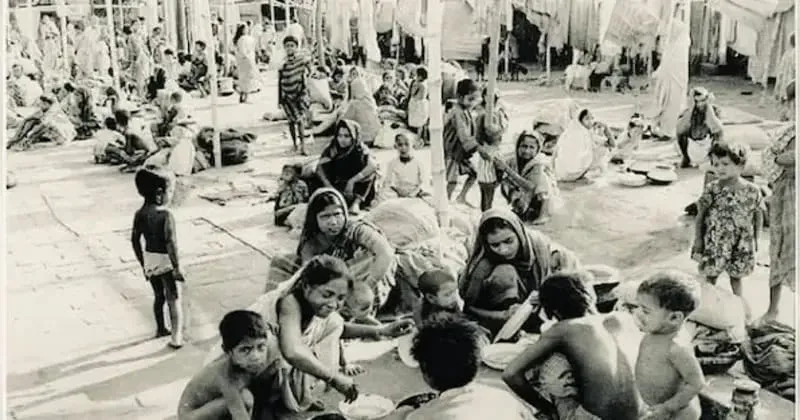
In the same year that December 10 was declared the International Human Rights Day by the United Nations, East Bengal had the highest number of human rights violations worldwide. The entire East Bengal was flooded with the blood of minorities, Dhaka, Sylhet, Barisal, and Rajshahi; none of the districts were spared that day.
As time progressed, the level of torture also increased. Not a temporary tension but a planned ‘ethnic cleansing’. Every Hindu, Buddhist and Christian will be expelled from East Pakistan.
In August 1949, the police and the Ansara also joined the massacres at Biyani Bazar and Baralekha in Sylhet, along with the fundamentalists. The Pakistani police started mass-raping Hindu women in Barisal’s Bhandaria that year. Father Thomas Cattonio said from Rajshahi that fundamentalists and Pakistani police are jointly raping Santal girls.
Puntia Rajbari of Rajshahi was captured by fundamentalists on December 10. The anniversary of the declaration of International Human Rights Day! Just ten days after that, in Kalshira village of Bagerhat’s Mollahat police station, the police came to the house of a communist leader Jaydev Bromha and tried to rape his wife. The local Hindus united and resisted the woman’s screams. The next day, the Superintendent of Police led a large force and indiscriminately killed Hindus in the village of Kalshira and its adjoining areas. After the tiger goes hunting, the hyena comes. This is the rule of the jungle. After the police left, Hindu property was looted.
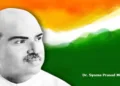
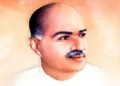
When the East Pakistan police administration was playing a heinous role, the Nehru Liaquat Agreement was signed in New Delhi on April 8, 1950. The governments of India and Pakistan took responsibility for protecting the lives of the minorities of the two countries. Dr Shyamaprasad Mukhopadhyay who knew the situation of ground zero, strongly objected to leaving the fate of Hindus of East Bengal at the mercy of the Pakistani government. As his objections were not heeded, he left Nehruji’s cabinet.
Due to this agreement, India did not become a member of the 1951 Geneva Refugee Convention. According to the Geneva Convention in 1951 and the Uruguay Protocol of 1967, the United Nations High Commission for Refugees arranges refugee welfare around the world. As per UNHRC, India does not have a single refugee from East Pakistan or Bangladesh. However, in 1951, the percentage of Hindus was 24 in East Pakistan. They had been continuously persecuted and expelled from the land of their forefathers. At present, the number has come down to 8 percent. No international human rights forum has discussed such a large holocaust and exodus.
Attacking minorities by spreading false rumours was suddenly a daily occurrence. There was massive lawlessness at this stage in 1964. In 1964, Hindus were massacred with the help of the Pakistani government because of rumours that the holy hair had been stolen from the “Hazrat Bal” mosque in Kashmir.
Before leaving for Islamabad, President Ayub Khan opined at Dhaka Airport that the government will not be held responsible for the aftermath. Pakistan Convention Muslim League declared ‘Kashmir Day’ on January 3 of that year. Brutal torture was organised everywhere in Khulna, Dhaka, Narayanganj, Sylhet and Mymensingh. Dhakeshwari temple in Dhaka was also attacked by the goons.
After partition, no step was taken in Pakistan for land reform over there. Ila Mitra led the peasant movement in Rajshahi. The torture of Ela Mitra in an East Pakistan jail after her arrest in 1950 is a disgrace to humanity in terms of the torture of a female prisoner. In 1954, she was brought on parole to Calcutta Medical College in a very ill condition. She could never return to her country.
Today, on Human Rights Day, it is necessary to remember one of the darkest chapters in the history of human civilisation. It is the tyranny of Pakistan’s Khan army before the war of liberation in East Pakistan.
The then-American consul general in Dhaka was Archer Kent Blood. He sent his daily horror experience to the US as a “Blood Telegram”. It is proof of all-time horrific human rights violations in the world. People all over the world were shocked to see that any government could carry out a brutal operation like Operation Searchlight. Pakistan’s army killed about 30,00,000 people. 4,00,000 women were raped.
Most of the unfortunate people were Hindus. The government of Pakistan issued a fatwa declaring Hindu property and women as objects of Ganimat (booty of Jihad).
Jamaat activists formed a peace committee in East Pakistan. They took the Razakar Bahini, Al Badr Bahini, Al Shams Bahini along with the Pakistani army and tortured Hindus together.
On May 20, 1971, Khan Sena killed 12,000 Bengali Hindus who wanted to flee to India at the Chuknagar border in Dumuria of Khulna district. In the months of September, October and November 1943, Nazi forces were used to kill 14,000 Jews in one day. Probably the Chuknagar massacre is immediately after the toll.
The persecution of minorities did not stop even after the independence of Bangladesh. The Enemy Property Act was the law that expropriated the property of Hindus. In independent Bangladesh, it was changed to “The Vested Property Act”. Only eight years after Bangladesh’s independence, the word secularism disappeared from the country’s constitution. Since the declaration of the Islamic state in 1988, the human rights of the minority people in that country have been violated again. Even the unity of Hindu, Buddhist and Christian communities could not save Bengalis from this inhuman torture.
In every city of Bangladesh, you will see some leaders occupying the property of Bengali Hindus. Owner of a palace-like homestead ends his days in a small room at the Ramakrishna Mission or a rented house, as he will be forced to sign at gunpoint to claim the house. There have been thousands of cases in the past fifty years of presenting an unknown person as the owner of a Hindu land or house and making a “Khara Dalil”.
Minorities remained despite these daily tortures, yet sometimes the violence escalated. In 2001, when the four-party government led by BNP-Jamaat came to power in Bangladesh, indescribable tyranny descended again.
Gopalkrishna Muhuri, principal of Chittagong’s Nazir Hat College, was brutally murdered in broad daylight. In Sirajganj’s Ullapara, a 12-year-old girl was gang-raped by 12/14 people overnight in front of her mother. The strange thing is that no progressive party or organisation in Kolkata took out any protest march against the atrocities in Bangladesh. Even today, when the farce of punishing innocent monks of ISKCON is happening, their voices are still silent.
In fact, it is only for a section of educated people of the Bengali Hindu community that this series of terrible human rights violations did not come to the international level. Novels have been written about the hardships of refugee life, and movies have been made, but why the people became refugees, only that act of the play has not been told.
Stephen Spielberg’s “Schindler’s List” was banned in many Muslim countries, but Hollywood’s proverbial Jewish director didn’t think his seat would budge. No Jewish Nobel laureate seems to be sectarian to inaugurate a Holocaust museum in Berlin or anywhere else in the world. The people of Kashmir have never hesitated to speak on the international stage about the violation of the human rights of Kashmiri Pandits.
Indiscriminate killing of Hindus started in Noikhali on the day of Kojagari Laxmi Puja in 1946. Mahatma Gandhi came running. The destruction of human rights continues.
The sad story of the extinction of the Bengali Hindus of East Bengal in this subcontinent is nowhere shown.
” Annay je kore aar annay je sahe, taba ghrina tare jeno trino samo dahe”, as stated by Gurudev Rabindranath, “one who commits an offense and the person who passively tolerates that offense are both equally culpable and deserving of condemnation.” The suicidal Bengali did not pay heed to those words.