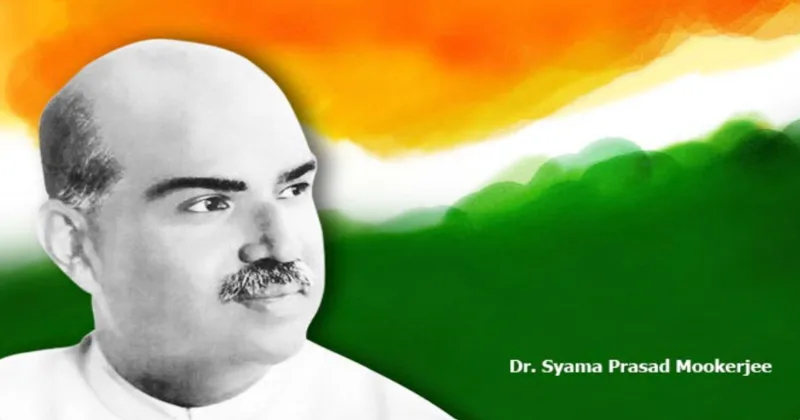
Kolkata is currently the capital of West Bengal, a state in India; however, it could well have become the capital of East Pakistan. There is a vast difference between Kolkata of that era and the city as it stands today. Back then, Kolkata was the most prosperous city in Asia—a far cry from the economically destitute city that it has since become. Jinnah had long coveted a city of such stature. In particular, after the 1937 elections—when the Muslim League came to power in undivided Bengal due to the incompetence of the Congress leadership—the Muslim League leadership, including Jinnah and Suhrawardy, developed an intense desire to incorporate the whole of Bengal, including Calcutta, into Pakistan. In his autobiography ‘Aat Dashak’ (Eight Decades), the renowned professor of economics Bhabatosh Dutta writes that while he was teaching at Islamia College (now Maulana Azad College), the staff were asked to opt for either India or Pakistan. All his Muslim colleagues wrote: “Pakistan, preferably Calcutta.” A Muslim colleague consoled him by saying, “Howrah will remain with you after all.” This implies that even shortly before the Partition, the Muslim League was confident that Calcutta would become part of Pakistan. One man stood as an obstacle to this dream of incorporating West Bengal and Calcutta into Pakistan—Dr. Syama Prasad Mookerjee.
Under Jinnah’s leadership, the Muslim League called for ‘Direct Action Day’ on August 16, 1946. In accordance with a pre-arranged plan by Suhrawardy—the then ‘Premier’ of undivided Bengal—a wholesale slaughter of Hindus was organized in Calcutta on that day. Suhrawardy himself remained stationed at Lalbazar, ensuring the entire police administration remained inactive. However, defying the Muslim League’s calculations, the Hindus exucted a fierce retaliation on August 18 and 19. In total, over 10,000 people lost their lives. The Muslim League orchestrated another genocide of Hindus in the Noakhali district of East Bengal. On October 10, 1946—the day of Kojagari Lakshmi Puja—Muslim goons led by Maulana Ghulam Sarwar unleashed a reign of terror upon the district’s Hindu population (who constituted only 18% of the total). More than 10,000 Hindus were perished during this ethnic cleansing campaign, which lasted for about a week. Moreover, thousands of Hindus were forcibly converted and a vast number of Hindu women were raped and abducted. Witnessing this, the Bengali Hindu intellectuals of the time realized the necessity of dividing Bengal otherwise the Bengali Hindus would, in entirety of Bengal, become part of Pakistan—especially considering that, across the two Bengals combined, the Bengali Hindus constituted a minority. According to the 1941 census, the Hindu population in undivided Bengal stood at 45 per cent. Although that figure has dropped below 30% since then—but that is a separate matter. In this situation, Syama Prasad Mookerjee, the former Vice-Chancellor of Calcutta University, stepped into the arena to safeguard the interests of the Bengali Hindus. He argued that since India was inevitably going to be partitioned, the province of Bengal must also be partitioned. He entered the arena to unite Bengali Hindu public opinion, guided by the axiom: “When faced with total ruin, then wise sacrifice half.” Prominent intellectuals of the time—including renowned historians Jadunath Sarkar, Romesh Chandra Majumdar and Surendranath Sen, eminent scientist Meghnad Saha and celebrated linguist Suniti Kumar Chatterji—came forward to support Syama Prasad Mookerjee’s demand for the partition of Bengal and the creation of a separate homeland for the Bengali Hindus: West Bengal.
Meanwhile, a different game was being played under the leadership of Suhrawardy. Realizing that incorporating the whole of Bengal into Pakistan was impossible, the Muslim League leader—a staunch religious zealot—suddenly adopted the guise of a champion of Bengali identity. He proposed the creation of an independent, undivided Bengal comprising both parts of the region—a state that would join neither India nor Pakistan. However, even in such an undivided Bengal, the Bengali Hindus would have remained a minority. Jinnah also consented to this proposal. From this, one might surmise that this undivided Bengal could potentially have joined Pakistan at a later stage. Be that as it may, two veteran Congress leaders—Sarat Chandra Bose and Kiran Shankar Roy—fell into the trap laid by Suhrawardy. By then, the leadership of the Bengal Congress had already passed from their hands to Dr. Bidhan Chandra Roy, Nalini Ranjan Sarkar and Nirmal Chandra Chunder. It is likely that by supporting the proposal for an independent Bengal, Sarat Babu and Kiran Babu were dreaming of regaining their lost power. Kiran Shankar Roy was also a prominent landlord of the Dhaka district. Consequently, he feared that the partition of Bengal would cause him to lose his estate. They forgot Suhrawardy’s role in the Calcutta riots and the Noakhali massacre that had occurred just a few months earlier.
Sarat Bose and Abul Hashim also drafted a constitution for an independent, sovereign Bengal. Abul Hashim—who hailed from Bardhaman and served as the Secretary of the Bengal Muslim League—had, prior to the Calcutta riots, explicitly incited the killing of the Hindus. Under this draft constitution, the Prime Minister of independent Bengal was to be a Muslim, and more than half (16 out of 30) of the members of the constituent assembly were to be Muslims. In other words, a full-proof arrangement was put in place to relegate the Hindus to the status of second-class citizens in an independent, sovereign Bengal.
The moment Dr Syama Prasad Mookerjee realized that partitioning Bengal was the only way to ensure the survival of the Bengali Hindu community, he dedicated all his energy to build public opinion by explaining the issue to them. In February 1947, he formed a committee under the leadership of the Hindu Mahasabha and began traversing the length and breadth of Bengal with great vigour, addressing large public meetings to convince people of the necessity of the partition. He appealed to the Congress to support this demand as well. On March 15, 1947, the Hindu Mahasabha organized a two-day conference in Kolkata. Many individuals with no formal affiliation to the Hindu Mahasabha—such as Romesh Chandra Majumdar, Suniti Kumar Chatterji, Bhavatosh Ghatak, Ishwar Das Jalan, and Hemendra Chandra Ghosh—also attended the event. A resolution was unanimously adopted at the meeting, calling for the formation of a separate province comprising the Hindu-majority areas of the Bengal province. A committee was also formed at this meeting, tasked with preparing a memorandum to be submitted to the government.
The ‘Poush’ 1353 BS issue of ‘Shanibarer Chithi’, edited by Sajanikanta Das, stated, “Recently, several leaders from Bengal have been striving to resolve this issue by forming a separate province named West Bengal—because, under the League administration in Bengal, the wealth, lives, health, education, culture, religion, and the dignity of women among Bengali Hindus are in jeopardy. The conference is demanding the formation of a separate West Bengal province.” Dr. Syama Prasad, Major General A.C. Chatterjee, Dr. Pramathanath Banerjee and others are members of the executive committee of this movement; therefore, no effort will be spared.
Renowned historian Amalendu De writes in his research-based book, ‘Swadhin Bangabhumi Gothoner Porikolpona: Proyash o Porinoti’ (The Plan to Form an Independent Bengal: Efforts and Outcome), that the conference of the Bengal Hindu Mahasabha was held at Tarakeswar for three days (April 4–6), starting on Friday, April 4, 1947, under the Presidency of Nirmal Chandra Chatterjee, the Working President of the Bengal Provincial Hindu Mahasabha. On April 4, Nirmal Chandra Chatterjee stated in his speech that since the Muslim League was determined to establish Pakistan in Bengal, Hindus would also form a separate province under a strong government. For Bengali Hindus, this was a matter of life and death; if a constitution to their liking was not established, they would be forced to live a life of servitude under an anti-Hindu, communal regime. In his long speech, he stated very clearly, “We want a separate homeland for Hindus through the partition of Bengal.” He said—“Let us declare today that as the Muslim League persists in its fantastic idea of establishing Pakistan in Bengal, the Hindus of Bengal must constitute a separate Province under a strong National Government. This is not a question of partition. It is a question of life and death for us, the Bengalee Hindus. Unless you can have an administration of your own choice, you shall be serfs under an anti-Hindu communal regime and you can never protect your oppressed brother and sister.”
On April 5, at the Hindu Mahasabha conference in Tarakeswar, Dr. Syama Prasad Mookerjee said, “I can conceive of no other solution of the communal problem in Bengal than to divide the province and let to major communities residing herein live in peace and freedom.” Dr. Syama Prasad Mookerjee also welcomed the decision taken by the Bengal Provincial Congress Committee regarding the partition of Bengal. Approximately 400 delegates from various parts of Bengal participated in the conference and over 50,000 people gathered on the final day, April 6, to hear the speeches and resolutions. The main resolution of the conference was adopted at the grand public meeting held in Tarakeswar on April 6; the resolution was moved by Sanat Kumar Roychowdhury and seconded by Surya Kumar Basu of Dhaka. According to this proposal, the whole of Bengal would not go to Pakistan; instead, the western part would remain in India as a separate state—a homeland for the Bengali Hindus. Syama Prasad Mookerjee was entrusted with the responsibility of forming a committee and devising a plan of action to achieve this objective. It was decided that 100,000 volunteers would be mobilized by June.
Burrows, the Governor of Bengal, believed that by exploiting the vulnerability of Kiran Shankar Roy’s ‘zamindari’ interests in Dhaka and stoking Sarat Bose’s ambition for political rehabilitation, he could bring about an independent Bengal and thereby safeguard British commercial interests. However, as Syama Prasad Mookerjee actively set out to safeguard the interests of the Bengali Hindus—thereby thwarting this cherished plan of his—Burrows wrote a secret letter to Mountbatten on April 12, 1947. In it, he discussed the Hindu Mahasabha’s vigorous agitation regarding the partition of Bengal, the massive Hindu conference held at Tarakeswar and the decision to entrust the leadership of the movement to Syama Prasad Mukherjee by stating- ‘‘The movement for partitioning Bengal…. Continues to gather strength. A conference convened at Tarakeswar (Hooghly District) during the Easter holidays was attended by a very large and enthusiastic audience. A resolution was passed authorizing Dr. Syamaprasad Mookerjee to constitute a council of action to establish a separate homeland for the Hindus of Bengal; 1,00,000 volunteers are to be enrolled by the end of June, the Constituent Assembly are to be asked to appoint a Boundary Commission; and as soon as the area of the new Provinces has been settled, the Hindu members of the Legistative Assembly in this area are to demand that it should be constituted into a province; if necessary leaving the Bengal Assembly and forming themselves into a separate legislative body. It was emphasized that the new province should be constituted before the British Govt. transferred power. Another resolution demanded the formation of two regional ministries as an immediate step to restore peace and order in the province.’’ Burrows’s letter to Mountbatten further reveals: “On the same day as the Tarakeswar Committee, the Executive Committee of the Bengal Provincial Congress Committee also urged the immediate setting up of two regional Ministries and resolved that if His Majesty’s Government contemplated handing over its power to the existing Government of Bengal, such portion of Bengal as wished to remain in India should be formed into a separate province.”
In the context of whether Bengal should be partitioned, the ‘Amrita Bazar Patrika’ conducted a survey between March 23 and April 15, 1947. The results were announced on April 23. A total of 534,249 responses were received; of these, 1.1% were disqualified. Among the remaining responses, 98.3% favoured the partition of Bengal, while 0.6% opposed it. Only 0.4% of the respondents were Muslim. This indicates that, at the time, the Bengali Hindus were almost unanimously in favour of the partition of Bengal. On April 23, 1947, Syama Prasad Mookerjee met with Viceroy Lord Mountbatten and explained to him why the partition of Bengal was necessary. He had prepared extensive documentation and maps to illustrate this plan and handed them over to Lord Ismay, the Viceroy’s personal aide. In May 1947, the Hindu Mahasabha and the Congress jointly convened a public meeting presided over by the renowned historian and former Vice-Chancellor of Calcutta University, Sir Jadunath Sarkar. On May 2, 1947, Syama Prasad wrote a long letter to Mountbatten. In this fact-based letter, he articulated arguments in favour of the partition of Bengal. Advocating for the partition, Syama Prasad stated unequivocally, “Sovereign undivided Bengal will be a virtual Pakistan.”
On April 24, 1947, the British-owned Kolkata daily ‘The Statesman’ published a report titled “Twilight of Bengal,” noting that over the preceding ten weeks, the movement to partition Bengal had escalated from a small cloud into a massive storm sweeping across the entire province—though its epicenter remained Kolkata. This storm had been initiated by the Hindu Mahasabha.
When he spoke to Gandhi and Nehru in early May 1947 in favour of the partition of Bengal, they did not express any definite views on the matter. On May 13, 1947, Syama Prasad met Gandhi at Sodepur and sought his opinion on Suhrawardy’s plan for a United Bengal; Gandhi replied that he had not yet made up his mind. When Syama Prasad asked Gandhi, ‘Whether he could envision an India without Bengal, Gandhi, in his characteristic manner, offered no response.’
However, Vallabhbhai Patel firmly assured Syama Prasad in a letter that there was no cause for concern and that he could place his trust in the central leadership. As long as the Hindus of Bengal remained conscious of their own interests and did not waver from that stance, there was nothing to fear. The call for an independent, sovereign Bengal was nothing more than a trap laid by the Muslim League and Bengal could never be separated from India.
As the Hindu Mahasabha became vocal in its demand for the partition of Bengal, Congress members realized that their own voter base—the Hindus (since the Muslims of Bengal were almost entirely supporters of the Muslim League)—was rallying under the banner of the Hindu Mahasabha, frustrated by the Congress’s perceived spinelessness. It was then that the Bengal Congress finally stirred into action. Disregarding the views of the indecisive central Congress leadership, they too—following the Hindu Mahasabha’s proposal—demanded the formation of two separate ministries for the Hindu-majority and Muslim-majority regions of Bengal on April 4, 1947. Influenced by Syama Prasad Mookerjee and other prominent figures, the regional Congress leadership in Bengal committed itself to safeguard the interests of the Bengali Hindus.
Seventy-six large meetings were held to achieve the objective regarding West Bengal. Of these, the Bengal Congress Committee organized 59, the Hindu Mahasabha organized 12, and five were organized jointly. It is worth noting that, initially, central Congress leaders were unable to decide whether to partition Bengal and bring West Bengal into India or to allow the entirety of Bengal to go to Pakistan. At that juncture, the Bengal Congress Committee—influenced by Syama Prasad Mookerjee and other eminent figures—took up the cause of safeguarding the interests of the Bengali Hindus without waiting for a decision from the All-India Congress leadership. As a result of this concerted effort, on June 20, 1947, the members of the Bengal Legislative Assembly representing the western region passed the proposal for a Bengali Hindu homeland—West Bengal—by a vote of 58 to 21. Consequently, West Bengal was formed, and the Bengali Hindus secured a safe haven they could call their own. Subsequently, West Bengal also became a sanctuary for the waves of refugees fleeing due to religious persecution in East Bengal—an influx that continues to this day—as well as for their descendants. According to his biographer Tathagata Roy, this achievement of Syama Prasad Mookerjee (regarding the formation of West Bengal) stands as the greatest accomplishment of his life. Nehru once remarked to Syama Prasad, “You, too, had supported the Partition of the country.” …did it.” In response, Syama Prasad said, “You partitioned India and I partitioned Pakistan.”