Mahaparinirvan Diwas: Dr Ambedkar rejected communism, marxism, violence & false narratives and embraced Buddhism
September 3, 2026
  • Read Ecopy
  • Circulation
  • Advertise
  • Careers
  • About Us
  • Contact Us
Android AppiPhone AppArattai
Organiser
  • ‌
  • Bharat
    • Assam
    • Bihar
    • Chhattisgarh
    • Jharkhand
    • Maharashtra
    • View All States
  • World
    • Asia
    • Europe
    • North America
    • South America
    • Africa
    • Australia
  • Editorial
  • International
  • Opinion
  • RSS @ 100
  • More
    • Op Sindoor
    • Analysis
    • Sports
    • Defence
    • Politics
    • Business
    • Economy
    • Culture
    • Special Report
    • Sci & Tech
    • Entertainment
    • G20
    • Azadi Ka Amrit Mahotsav
    • Vocal4Local
    • Web Stories
    • Education
    • Employment
    • Books
    • Interviews
    • Travel
    • Law
    • Health
    • Obituary
  • Subscribe
    • Subscribe Print Edition
    • Subscribe Ecopy
    • Read Ecopy
  • ‌
  • Bharat
    • Assam
    • Bihar
    • Chhattisgarh
    • Jharkhand
    • Maharashtra
    • View All States
  • World
    • Asia
    • Europe
    • North America
    • South America
    • Africa
    • Australia
  • Editorial
  • International
  • Opinion
  • RSS @ 100
  • More
    • Op Sindoor
    • Analysis
    • Sports
    • Defence
    • Politics
    • Business
    • Economy
    • Culture
    • Special Report
    • Sci & Tech
    • Entertainment
    • G20
    • Azadi Ka Amrit Mahotsav
    • Vocal4Local
    • Web Stories
    • Education
    • Employment
    • Books
    • Interviews
    • Travel
    • Law
    • Health
    • Obituary
  • Subscribe
    • Subscribe Print Edition
    • Subscribe Ecopy
    • Read Ecopy
Organiser
  • Home
  • Bharat
  • World
  • Operation Sindoor
  • Editorial
  • Analysis
  • Opinion
  • Culture
  • Defence
  • International Edition
  • RSS @ 100
  • Magazine
  • Read Ecopy
Home Bharat

Mahaparinirvan Diwas: Dr Ambedkar rejected communism, marxism, violence & false narratives and embraced Buddhism

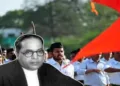
Dr BR Ambedkar, on Mahaparinirvan Diwas, stands as a beacon of resistance against caste, communism, and violence. He choose Buddhism as the true path of liberation for Bharat. His rejection of Marxism and its false narratives is a powerful call to reject divisiveness and embrace unity, equality, and peace

Adv Karan ThakurAdv Karan Thakur
Dec 6, 2024, 06:30 pm IST
inBharat
Follow on Google News
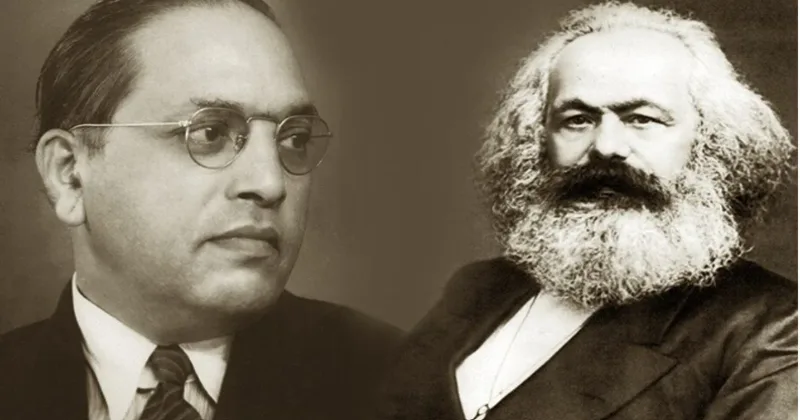
Dr BR Ambedkar rejected communism and marxism

Dr BR Ambedkar rejected communism and marxism

Facebook
Twitter
WhatsAppTelegramEmail

On the Mahaparinirvan Diwas, we honour the life and legacy of Dr Bhimrao Ambedkar, a visionary who sought to uplift the oppressed and champion justice, equality, and fraternity for all. His profound understanding of Bharat’s socio-cultural landscape led him to reject foreign ideologies that did not align with the country’s spiritual heritage. Among these, Marxism and Communism stood out as ideologies that Dr Ambedkar wisely identified as unsuitable for Bharat’s unique context. His choice to embrace Buddhism over these ideologies was not just a personal decision but a revolutionary one that reshaped the future of millions, offering a path of peace, dignity, and social harmony.

Dr Ambedkar, deeply aware of the limitations of Marxism, rejected its foundation in class struggle and its emphasis on economic revolution as the sole means of achieving social justice. While Marxism’s focus on overthrowing capitalist structures may have worked in European contexts, Dr. Ambedkar understood that Bharat’s struggle was fundamentally different. The issues of caste-based discrimination, social hierarchy, and cultural alienation required a more holistic, peaceful solution rooted in Bharat’s own civilizational wisdom.

Dr Ambedkar’s rejection of Marxism was grounded in his belief that Buddhism, with its teachings of equality, non-violence, and compassion, provided the only suitable path for social transformation in Bharat. Marxism, focused primarily on class struggle and economic revolution, failed to address the deeper issues of social injustice ingrained in the caste system. Dr Ambedkar saw that true liberation could not be achieved by merely altering economic systems; it required a fundamental shift in the mindset and spiritual framework of society. Buddhism, with its emphasis on inner transformation, was the perfect vehicle for such a shift.

Dr Ambedkar realised that class struggle and violent revolution, central to Marxist thought, risked creating more division in a society already fractured by caste and social inequalities. Buddhism, on the other hand, called for a peaceful transformation—a revolution of the mind, where every individual could live in harmony, free from the shackles of social hierarchy and discrimination.

The Relevance of Buddhism in Bharat’s Future

By embracing Buddhism, Dr Ambedkar set forth a vision that transcended the limitations of Marxism. In contrast to the violent class warfare promoted by Marxists, Buddhism offered a compassionate, inclusive framework for social justice. Dr Ambedkar’s path was one of peaceful reformation, grounded in the principles of equality and fraternity—values that could only thrive in Bharat through the wisdom of the Buddha.

Dr Ambedkar himself encapsulated his belief in Buddhism with the following words:

“Buddhism is the greatest gift that India has given to the world. It teaches us that the cure for inequality is not through violence, but through peace, love, and understanding.”

This statement underscores Dr. Ambedkar’s vision of a society where true liberation could only be achieved when individuals are empowered not by economic revolutions, but by spiritual awakening—the very essence of Buddhism.

Buddha Over Marx: The Path to True Liberation

Dr. Ambedkar’s decision to prioritize Buddhism over Marxism was not merely ideological; it was a strategic vision for Bharat’s future. Marxist doctrines, rooted in European contexts, could never address the deep-seated social inequalities that defined Bharat. On the other hand, Buddhism offered a unifying philosophy, advocating for the elimination of social divisions and the promotion of universal equality.

Dr. Ambedkar saw in Buddhism the key to breaking the chains of caste and achieving a truly egalitarian society—a vision that could not be realized through the violent revolution that Marxism proposed.

On this Mahaparinirvan Diwas, we remember Dr. B.R. Ambedkar’s life and ideas as a profound blueprint for Bharat’s future. His rejection of Marxist and Communist ideologies, coupled with his embrace of Buddhism, offers a path that is peaceful, inclusive, and transformative. Dr. Ambedkar’s vision of social justice was not limited to economic change—it was about a fundamental shift in the mindset of society, based on the timeless principles of equality, non-violence, and fraternity.

As we honour Dr Ambedkar, let us renew our commitment to his vision—a Bharat where every individual, irrespective of caste or creed, can live with dignity, and where fraternity is not just a word but a living principle. Dr. Ambedkar’s legacy is not just about fighting for equality in the material world but also about spiritual awakening through the path of Buddhism—the true path to liberation for Bharat.


Topics: BuddhismDr BR AmbedkarmarxismMahaparinirvan Diwas
Share1
Tweet
SendShareSend
✮ Subscribe Organiser YouTube Channel. ✮
✮ Join Organiser's WhatsApp channel for Nationalist views beyond the news. ✮
Previous News

UP: Hindu activists remove “Christian Missionary Church” board from dalit family’s house amid conversion allegations

Next News

UP: Swati converts to become Nargis after meeting Safique Khan on social media, abandoned after years of exploitation

Related News

Islamist insurgency in Southern Thailand

Thailand: Islamists torch Buddhist homes in Narathiwat, demand Sharia rule; Insurgency fuels cultural & security crisis

Road politics and street-driven pressure are increasingly challenging India’s constitutional institutions and democratic framework

Democracy or Mobocracy? How road politics is challenging India’s constitutional institutions

India–Myanmar Civilisational Connect: Significance of President U Min Aung Hlaing’s visit to India

Sacred relics of Buddha’s disciples return to India from Mongolia; Historic 10-day expo echoed civilisational ties

Sacred relics of Buddha's chief disciples reach Mongolia from Sanchi

Sacred Relics of Buddha’s chief disciples reach Mongolia from Sanchi; Reflect India’s spiritual & civilisational legacy

Historical Records Reveal Ambedkar’s Admiration for RSS Discipline

Unveiling History: Revisiting Dr BR Ambedkar’s historic 1939 visit to shakha of RSS in Pune

Load More

Latest News

Mathura glows in Krishna’s divine radiance ahead of Janmashtami

Janmashtami 2026: Mathura glows in Krishna’s divine radiance as devotees flood Janmabhoomi

Ponnani Man's second wife held with 1.78 Kg gold hidden in baby’s diaper

Nikah turns smuggling route? Ponnani Man’s second wife held with 1.78 Kg gold hidden in baby’s diaper

Shri Milind Parande, VHP Organising General Secretary , addressing the gathering in Chennai

Tamil Nadu: VHP to mark 62nd anniversary with social harmony outreach, grassroots mobilisation in the state

A representative image

India Post Payments bank launches DakPay sound box, digital insurance and mutual fund platforms on 9th foundation day

AI Generated Representative Image

Japan Credit Agency Upgrades India to “A” Rating: Strong institutional reforms drive growth despite global headwinds

4-Year-Old Odisha Girl Elena Mishra creates history

4-year-old Odisha girl Elena Mishra becomes youngest female player to hold official FIDE rating

Book Review: The enduring promise of collective enterprise

‘Gerua Gundagiri’ FIR: Calcutta HC Refuses Urgent Hearing

Calcutta HC refuses urgent hearing in ‘Gerua Gundagiri’ FIR case, tells journalists to follow regular course

A representative image

Districts as export hubs initiative takes local products from more than 770 districts to global markets

China’s new legal framework deepens CCP oversight of lawyers, extending political control over legal practice and law firms

How China Controls Rights Activist Lawyers? CCP’s new law makes political loyalty test mandatory before court practice

Load More
  • Privacy
  • Terms
  • Cookie Policy
  • Refund and Cancellation
  • Delivery and Shipping

© Bharat Prakashan (Delhi) Limited.
Tech-enabled by Ananthapuri Technologies

  • Home
  • Search Organiser
  • Bharat
    • Assam
    • Bihar
    • Chhattisgarh
    • Jharkhand
    • Maharashtra
    • View All States
  • World
    • Asia
    • Africa
    • North America
    • South America
    • Europe
    • Australia
  • Editorial
  • Operation Sindoor
  • Opinion
  • Analysis
  • Defence
  • Culture
  • Sports
  • Business
  • RSS @ 100
  • Entertainment
  • More ..
    • Sci & Tech
    • Vocal4Local
    • Special Report
    • Education
    • Employment
    • Books
    • Interviews
    • Travel
    • Health
    • Politics
    • Law
    • Economy
    • Obituary
  • Subscribe Magazine
  • Read Ecopy
  • Advertise
  • Circulation
  • Careers
  • About Us
  • Contact Us
  • Policies & Terms
    • Privacy Policy
    • Cookie Policy
    • Refund and Cancellation
    • Terms of Use

© Bharat Prakashan (Delhi) Limited.
Tech-enabled by Ananthapuri Technologies