Researchers discover potential new treatment for liver fibrosis
June 7, 2026
  • Read Ecopy
  • Circulation
  • Advertise
  • Careers
  • About Us
  • Contact Us
Android AppiPhone AppArattai
Organiser
  • ‌
  • Bharat
    • Assam
    • Bihar
    • Chhattisgarh
    • Jharkhand
    • Maharashtra
    • View All States
  • World
    • Asia
    • Europe
    • North America
    • South America
    • Africa
    • Australia
  • Editorial
  • International
  • Opinion
  • RSS @ 100
  • More
    • Op Sindoor
    • Analysis
    • Sports
    • Defence
    • Politics
    • Business
    • Economy
    • Culture
    • Special Report
    • Sci & Tech
    • Entertainment
    • G20
    • Azadi Ka Amrit Mahotsav
    • Vocal4Local
    • Web Stories
    • Education
    • Employment
    • Books
    • Interviews
    • Travel
    • Law
    • Health
    • Obituary
  • Subscribe
    • Subscribe Print Edition
    • Subscribe Ecopy
    • Read Ecopy
  • ‌
  • Bharat
    • Assam
    • Bihar
    • Chhattisgarh
    • Jharkhand
    • Maharashtra
    • View All States
  • World
    • Asia
    • Europe
    • North America
    • South America
    • Africa
    • Australia
  • Editorial
  • International
  • Opinion
  • RSS @ 100
  • More
    • Op Sindoor
    • Analysis
    • Sports
    • Defence
    • Politics
    • Business
    • Economy
    • Culture
    • Special Report
    • Sci & Tech
    • Entertainment
    • G20
    • Azadi Ka Amrit Mahotsav
    • Vocal4Local
    • Web Stories
    • Education
    • Employment
    • Books
    • Interviews
    • Travel
    • Law
    • Health
    • Obituary
  • Subscribe
    • Subscribe Print Edition
    • Subscribe Ecopy
    • Read Ecopy
Organiser
  • Home
  • Bharat
  • World
  • Operation Sindoor
  • Editorial
  • Analysis
  • Opinion
  • Culture
  • Defence
  • International Edition
  • RSS @ 100
  • Magazine
  • Read Ecopy
Home World

Researchers discover potential new treatment for liver fibrosis

Researchers have identified a potential new treatment for liver fibrosis, a serious condition characterised by scar tissue formation in the liver. Their study highlights the enzyme CYP1B1 as a key biomarker and suggests that trehalose and its analogues may offer effective therapeutic options

WEBDESKWEBDESK
Sep 27, 2024, 11:00 pm IST
in World, Health
Follow on Google News
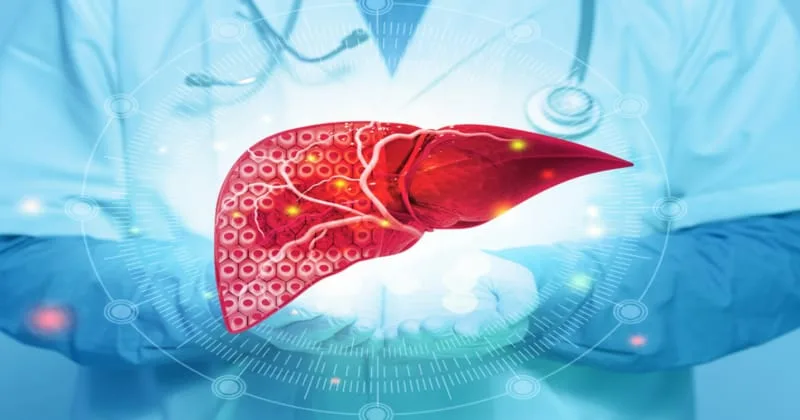
Representative image

Representative image

FacebookTwitterWhatsAppTelegramEmail

A new study from the University of Pittsburgh School of Pharmacy provides light on the processes that contribute to liver fibrosis and proposes a unique therapy method for this prevalent and serious disorder.
The work, led by senior author Wen Xie, M.D., Ph.D., professor and Joseph Koslow endowed chair of the Department of Pharmaceutical Sciences, and co-first authors Hung-Chun Tung, graduate student, and Jong-Won Kim, Ph.D., postdoctoral associate, was published today in Science Translational Medicine.

In this Q&A, Xie expands on the study’s findings and discusses why new diagnostic tools and therapy options for liver fibrosis are critically needed. Liver fibrosis is the formation of tissue scars in the liver due to chronic inflammation and injury. Over time, fibrosis can impair liver function and may lead to cirrhosis or even liver cancer. Those at risk include individuals with chronic viral hepatitis, obesity, diabetes and excessive alcohol use. Early detection and intervention are crucial to prevent progression to more severe liver disease.

Currently, there are no FDA-approved drugs that specifically treat liver fibrosis. The only treatment option is to treat diseases that cause liver fibrosis in the first place, such as hepatitis, obesity, type 2 diabetes and alcoholic liver disease. Preventive measures include avoiding excessive alcohol, maintaining a healthy body weight and early screening for liver diseases to prevent fibrosis from advancing to cirrhosis or liver failure.
HSCs are a unique cell type in the liver. When the liver is injured or inflamed, HSCs become activated and produce excess collagen and other extracellular matrix proteins. The accumulation of collagen and other extracellular matrix proteins leads to scar tissue formation and liver fibrosis.

This study identified the enzyme CYP1B1 as a biomarker and predictor of HSC activation and liver fibrosis in both patients and mice. Inhibition of CYP1B1 led to the accumulation of a sugar called trehalose, which we showed for the first time that trehalose has anti-fibrotic activity.

Moreover, treatment of mice with trehalose, its analog lactotrehalose or CYP1B1 inhibitor protected mice from getting liver fibrosis. It was surprising to identify a liver function of CYP1B1, an enzyme traditionally known for its functions outside the liver. Although the concentration of CYP1B1 in the whole liver is not high, this enzyme is uniquely and abundantly present in HSCs and thus plays an important role in HSC activation and liver fibrosis.

Also Read: Ayurveda and Stress: Nature’s remedies for modern challenges

Liver fibrosis is a common, potentially deadly and costly liver disease that lacks FDA-approved drugs. Our findings are clinically important because we identified CYP1B1 as a predictor of HSC and liver fibrosis in patients, which may help with the early diagnosis of this disease. More importantly, we found that trehalose and lactotrehalose are potential novel drugs that could be used to treat liver fibrosis in the future.

(with inputs from ANI)

Topics: LiverLiver fibrosisliver fibrosis treatmentFibrosis
ShareTweetSendShareSend
✮ Subscribe Organiser YouTube Channel. ✮
✮ Join Organiser's WhatsApp channel for Nationalist views beyond the news. ✮
Previous News

Karnataka: FIR names CM Siddaramaiah as accused 1 followed by his wife in MUDA scam ; RTI worker moves HC for CBI probe

Next News

Historic first ascent of unclimbed peak in Arunachal Pradesh Named “Tsangyang Gyatso Peak” in honour of 6th Dalai Lama

Related News

Representative image

Researchers discover potential new treatment for liver fibrosis

Representative image

Researchers reveals ways of preventing cancer cells from colonising liver

Researchers find how liver cells control biological clock

Load More

Latest News

Freedom Fighter Durga Devi Vohra

Durga Bhabhi: The fearless revolutionary who helped Bhagat Singh outsmart the British & fought for India’s freedom

‘We Wanted Him to Serve the Nation, Not Get Caught in Political Drama’: Parents Rebuke Abhijit Dipke

‘This is not what we raised him for,’ say disappointed parents over Cockroach Janata Party Abhijit Dipke’s activism

Strait of Hormuz Crisis: Why India cannot afford to be a spectator

India & Israeli billionaires in the US: How immigrants from Asian countries are powering the growth of American economy

Beneath the Minaret: The Hindu and Jain legacy burried under Qutub Minar

How Ramrajya and Kautilya’s Saptang model can build a prospering civilisation

Why invading empires hated them?

A representative image generated using AI

Hindu Hate Watch-A Weekly Tracker: 46 Incidents of violence, religious persecution, conversion recorded this week

Beyond NEET & CUET: The growing crisis of trust in India’s entrance tests; Decoding lasting solutions

West Bengal Set for Bullet Train Project, Says Railways Minister

Massive Rail Boost for West Bengal: Bullet train, 60 new metro rakes and Rs 14,205 crore allocation announced

Load More
  • Privacy
  • Terms
  • Cookie Policy
  • Refund and Cancellation
  • Delivery and Shipping

© Bharat Prakashan (Delhi) Limited.
Tech-enabled by Ananthapuri Technologies

  • Home
  • Search Organiser
  • Bharat
    • Assam
    • Bihar
    • Chhattisgarh
    • Jharkhand
    • Maharashtra
    • View All States
  • World
    • Asia
    • Africa
    • North America
    • South America
    • Europe
    • Australia
  • Editorial
  • Operation Sindoor
  • Opinion
  • Analysis
  • Defence
  • Culture
  • Sports
  • Business
  • RSS @ 100
  • Entertainment
  • More ..
    • Sci & Tech
    • Vocal4Local
    • Special Report
    • Education
    • Employment
    • Books
    • Interviews
    • Travel
    • Health
    • Politics
    • Law
    • Economy
    • Obituary
  • Subscribe Magazine
  • Read Ecopy
  • Advertise
  • Circulation
  • Careers
  • About Us
  • Contact Us
  • Policies & Terms
    • Privacy Policy
    • Cookie Policy
    • Refund and Cancellation
    • Terms of Use

© Bharat Prakashan (Delhi) Limited.
Tech-enabled by Ananthapuri Technologies