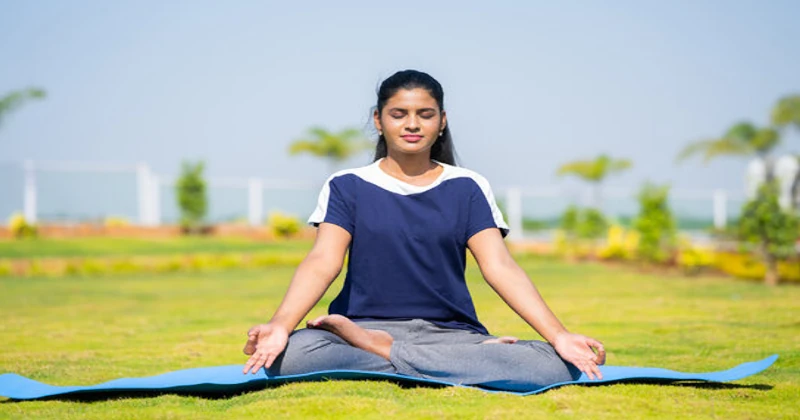
Low-impact yoga, exercise can help older women manage urinary incontinence
August 5, 2026
  • Read Ecopy
  • Circulation
  • Advertise
  • Careers
  • About Us
  • Contact Us
Android AppiPhone AppArattai
Organiser
  • ‌
  • Bharat
    • Assam
    • Bihar
    • Chhattisgarh
    • Jharkhand
    • Maharashtra
    • View All States
  • World
    • Asia
    • Europe
    • North America
    • South America
    • Africa
    • Australia
  • Editorial
  • International
  • Opinion
  • RSS @ 100
  • More
    • Op Sindoor
    • Analysis
    • Sports
    • Defence
    • Politics
    • Business
    • Economy
    • Culture
    • Special Report
    • Sci & Tech
    • Entertainment
    • G20
    • Azadi Ka Amrit Mahotsav
    • Vocal4Local
    • Web Stories
    • Education
    • Employment
    • Books
    • Interviews
    • Travel
    • Law
    • Health
    • Obituary
  • Subscribe
    • Subscribe Print Edition
    • Subscribe Ecopy
    • Read Ecopy
  • ‌
  • Bharat
    • Assam
    • Bihar
    • Chhattisgarh
    • Jharkhand
    • Maharashtra
    • View All States
  • World
    • Asia
    • Europe
    • North America
    • South America
    • Africa
    • Australia
  • Editorial
  • International
  • Opinion
  • RSS @ 100
  • More
    • Op Sindoor
    • Analysis
    • Sports
    • Defence
    • Politics
    • Business
    • Economy
    • Culture
    • Special Report
    • Sci & Tech
    • Entertainment
    • G20
    • Azadi Ka Amrit Mahotsav
    • Vocal4Local
    • Web Stories
    • Education
    • Employment
    • Books
    • Interviews
    • Travel
    • Law
    • Health
    • Obituary
  • Subscribe
    • Subscribe Print Edition
    • Subscribe Ecopy
    • Read Ecopy
Organiser
  • Home
  • Bharat
  • World
  • Operation Sindoor
  • Editorial
  • Analysis
  • Opinion
  • Culture
  • Defence
  • International Edition
  • RSS @ 100
  • Magazine
  • Read Ecopy
Home World

Low-impact yoga, exercise can help older women manage urinary incontinence

A study from Stanford Medicine and UC San Francisco found that low-impact exercises like yoga can reduce urinary incontinence episodes in older women by approximately 65 per cent over 12 weeks. The results are comparable to incontinence medications and offer a safe, affordable, and accessible alternative

WEBDESKWEBDESK
Sep 9, 2024, 11:00 pm IST
inWorld, Health
Follow on Google News
Facebook
Twitter
WhatsAppTelegramEmail

Older women suffering from urine incontinence can benefit from frequent, low-impact exercise, including yoga, stretching, and strengthening, according to a new study. The research, led by scientists at Stanford Medicine and the University of California, San Francisco, is part of a bigger attempt to develop low-risk, low-cost treatments for one of the most frequent health concerns that women encounter as they age.

After 12 weeks of a low-impact yoga exercise, study participants experienced approximately 65 per cent fewer incontinence episodes. Women in a control group who did stretching and strengthening activities saw similar results over the same period. According to the researchers, the benefits are comparable to the effects of incontinence medications.

“Our study was testing the kind of yoga that just about anyone can do, with modifications for different physical abilities,” said the study’s senior author, Leslee Subak, MD, chair of obstetrics and gynaecology at Stanford Medicine. “What I love about it is that it’s safe, inexpensive, doesn’t require a doctor and is accessible wherever you live.” Because the trial was conducted partly during the COVID-19 pandemic, many participants received their yoga or exercise instruction via online meetings, exercising in their own homes, she noted.

The study’s lead author is Alison Huang, MD, professor of medicine, urology, and epidemiology and biostatistics at UCSF.

Urinary incontinence, which affects more than half of middle-aged women and up to 80 per cent of 80-year-olds, can lead to a variety of other problems, from social isolation to bone fractures caused by falls. But there is help.

“Part of the problem is that incontinence is stigmatized; we don’t talk about it,” said Subak, the Katharine Dexter McCormick and Stanley McCormick Memorial Professor III. “Or we hear folklore about this being normal when you get older. In fact, it’s very common but it’s not inevitable, and we have very effective ways of treating it.”

Incontinence deserves good treatment because of the many ways it interferes with people’s lives.

“It takes away independence,” Subak said. “My patients will say, ‘I can’t stay with my kids or grandkids because I’m afraid I’ll wet the bed, and I can’t talk about it; it’s too embarrassing.'”

Patients may avoid activities that could boost their well-being, such as exercising and seeing friends. They are more likely to be admitted to a nursing home and to suffer certain serious medical problems such as hip fractures.

“Incontinence and overactive bladder are among the biggest risk factors for falls and fractures among older women,” Subak said. “You’re rushing to the bathroom at night — with the lights off — tripping and falling, and breaking a hip.”

Some factors that contribute to risk for incontinence can’t be changed, such as aging or having had children. But others are modifiable.

“A lot of my research has focused on weight loss and physical activity, which in fact are effective treatments,” Subak said. She became interested in studying yoga as a treatment after some of her patients told her it helped them.

The study compared two 12-week exercise programs: 121 participants were randomly assigned to yoga, and 119 to a physical conditioning control group. The participants were women with urinary incontinence that caused symptoms at least once a day. They were 45 to 90 years old, with a mean age of 62.

In the yoga program, participants learned 16 hatha yoga poses intended to strengthen the pelvic floor, via two 90-minute sessions per week. The pelvic floor consists of the muscles that form the base of the pelvis and hold its organs — including the bladder and urethra — in place. Participants were also asked to practice yoga for at least one hour per week outside of class and to maintain a practice log.

Participants in the control group spent an equal amount of time in exercise classes, but their classes focused on nonspecific stretching and strengthening exercises that did not engage the pelvic floor. They were also asked to practice for an additional hour per week and keep a practice log.

The study began with in-person classes, then transitioned to a videoconference format when the COVID-19 pandemic lockdowns began.

Participants recorded when they leaked urine and classified whether each episode was urgency incontinence, when an overactive bladder causes a person to feel the need to urinate more often than usual, or stress incontinence, in response to pressure in the abdomen, such as from coughing or sneezing. They also answered standard questionnaires about their bladder function.

At the beginning of the study, the participants had an average of 3.4 episodes of urinary incontinence per day, including 1.9 urgency-type episodes and 1.4 stress-type episodes.

By the end of the 12-week programs, participants in the yoga group were experiencing 2.3 fewer episodes of incontinence per day, on average. Those in the physical conditioning group were experiencing 1.9 fewer episodes per day.

The two treatments are about equally effective, with both approaches reducing episodes of incontinence by around 60%, and the benefits from both treatments are meaningful, Subak said. Patients who would like to try these approaches can search for low-impact Iyengar yoga or low-impact exercise classes in their communities or online, she said, adding that instructors should be able to adapt the activity to participants’ physical limitations.

“I’m impressed that exercise did so well and impressed that yoga did so well,” Subak said. “One of the take-home messages from this study is ‘Be active!'” Other nonsurgical treatments for incontinence, including medications, typically result in a 30 per cent to 70 per cent improvement in symptoms, she noted.

If a patient asked whether yoga could help with incontinence, “I would say that I think it’s a great idea to try it if you’re interested,” Subak said. “It’s very low risk, and there’s potential for benefit not only for incontinence but also for your general well-being.”

(with inputs from ANI)

Topics: Low-impact yogaUrinary incontinenceStanford MedicineYogaHealth
Share49
Tweet
SendShareSend
✮ Subscribe Organiser YouTube Channel. ✮
✮ Join Organiser's WhatsApp channel for Nationalist views beyond the news. ✮
Previous News

J&K Polls: “BJP means ‘Rahat’ while NC-Cong combine means ‘Aafat’ in Jammu & Kashmir,” says Anurag Thakur

Next News

Rahul Gandhi again defames Bharat on foreign soil, hails the enemies & tries to incide Telugu people; BJP hits back 

Related News

Dr Suresh Hanagavadi conferred with Padmashri

Dr Suresh Hanagavadi: The remarkable journey of a doctor who revolutionised haemophilia care & patient advocacy

Representative Image

Loneliness: A social problem or a cultural challenge?

(Left) Protesters at Jantar Mantar (Right) Mana sitting in a police van

CJP Protest in Delhi: Who is Mana? Know all about her as she incites mob to lynch police, uses extremely foul language

German Bundestag hosted its first-ever Yoga and Meditation session, marking a milestone in global celebration of the International Day of Yoga

German Parliament hosts first-ever Yoga and Meditation session to mark International Day of Yoga

How Saurabh Bothra built Rs 112 crore worth wellness empire & sparked global yoga revolution

Indian Navy performs yoga underwater

International Yoga Day: From Siachin to Indian Ocean, Dal Lake to Brahmaputra; India celebrated yoga in a unique way!

Load More

Latest News

A viral social media post claiming a WHO warning about milk adulteration causing cancer in 87 per cent of Indians by 2035 has been debunked as fake by PIB.

Fact Check: PIB debunks fake post claiming WHO warned 87 per cent of Indians will get Cancer from milk adulteration

‘Who brought a 12 year old to protest?’: POCSO complaint slams CJP organisers over Jantar Mantar NEET agitation

Former Bangladesh Prime Minister Sheikh Hasina's son Sajeeb Wazed

‘August 5 was a conspiracy’: Sheikh Hasina’s son vows Awami League will reclaim Bangladesh’s democratic path

India gets 101st Ramsar Site in Arunachal Pradesh's Glaw Lake

India Crosses 100 Ramsar Sites: Arunachal Pradesh’s Glaw Lake becomes country’s 101st wetland of global importance

Centre proposes drug-free campuses, 500-metre zones and consent-based student screening under its 2026–2029 narcotics roadmap

Drug-Free Campuses in Focus: Centre proposes 500-metre safety zone and consent-based screening for students

MSV Faize Noore Oliya, sank off Yemen after being hit by a projectile, but all 13 Indian nationals aboard were safely rescued

“All 13 Indian nationals have been rescued”: MEA after Indian vessel sinks off Yemen after attack

Ex-JNU Prof Nivedita Menon continues her anti-Bharat rant

Bharat is a “manhus desh”: Ex-JNU Professor Nivedita Menon continues her anti-India rants, sparking massive outrage

August 5 Milestones: Article 370 revocation and Ram Mandir Bhoomi Pujan

Kashmir Unbound: A New Dawn After Article 370

Representative Image

Pakistan’s UNSC push on Indus Waters Treaty faces legal dead end as India stands firm on bilateral framework

Load More
  • Privacy
  • Terms
  • Cookie Policy
  • Refund and Cancellation
  • Delivery and Shipping

© Bharat Prakashan (Delhi) Limited.
Tech-enabled by Ananthapuri Technologies

  • Home
  • Search Organiser
  • Bharat
    • Assam
    • Bihar
    • Chhattisgarh
    • Jharkhand
    • Maharashtra
    • View All States
  • World
    • Asia
    • Africa
    • North America
    • South America
    • Europe
    • Australia
  • Editorial
  • Operation Sindoor
  • Opinion
  • Analysis
  • Defence
  • Culture
  • Sports
  • Business
  • RSS @ 100
  • Entertainment
  • More ..
    • Sci & Tech
    • Vocal4Local
    • Special Report
    • Education
    • Employment
    • Books
    • Interviews
    • Travel
    • Health
    • Politics
    • Law
    • Economy
    • Obituary
  • Subscribe Magazine
  • Read Ecopy
  • Advertise
  • Circulation
  • Careers
  • About Us
  • Contact Us
  • Policies & Terms
    • Privacy Policy
    • Cookie Policy
    • Refund and Cancellation
    • Terms of Use

© Bharat Prakashan (Delhi) Limited.
Tech-enabled by Ananthapuri Technologies