Row over mentioning Harappan Civilisation as 'Sindhu Sarasvati' in NCERT books -- All you need to know
September 20, 2026
  • Read Ecopy
  • Circulation
  • Advertise
  • Careers
  • About Us
  • Contact Us
Android AppiPhone AppArattai
Organiser
  • ‌
  • Bharat
    • Assam
    • Bihar
    • Chhattisgarh
    • Jharkhand
    • Maharashtra
    • View All States
  • World
    • Asia
    • Europe
    • North America
    • South America
    • Africa
    • Australia
  • Editorial
  • International
  • Opinion
  • RSS @ 100
  • More
    • World Hindu Congress 2026
    • Op Sindoor
    • Analysis
    • Sports
    • Defence
    • Politics
    • Business
    • Economy
    • Culture
    • Special Report
    • Sci & Tech
    • Entertainment
    • G20
    • Azadi Ka Amrit Mahotsav
    • Vocal4Local
    • Web Stories
    • Education
    • Employment
    • Books
    • Interviews
    • Travel
    • Law
    • Health
    • Obituary
  • Subscribe
    • Subscribe Print Edition
    • Subscribe Ecopy
    • Read Ecopy
  • ‌
  • Bharat
    • Assam
    • Bihar
    • Chhattisgarh
    • Jharkhand
    • Maharashtra
    • View All States
  • World
    • Asia
    • Europe
    • North America
    • South America
    • Africa
    • Australia
  • Editorial
  • International
  • Opinion
  • RSS @ 100
  • More
    • World Hindu Congress 2026
    • Op Sindoor
    • Analysis
    • Sports
    • Defence
    • Politics
    • Business
    • Economy
    • Culture
    • Special Report
    • Sci & Tech
    • Entertainment
    • G20
    • Azadi Ka Amrit Mahotsav
    • Vocal4Local
    • Web Stories
    • Education
    • Employment
    • Books
    • Interviews
    • Travel
    • Law
    • Health
    • Obituary
  • Subscribe
    • Subscribe Print Edition
    • Subscribe Ecopy
    • Read Ecopy
Organiser
  • Home
  • Bharat
  • World
  • Operation Sindoor
  • Editorial
  • Analysis
  • Opinion
  • Culture
  • Defence
  • International Edition
  • RSS @ 100
  • Magazine
  • Read Ecopy
Home Bharat

Row over mentioning Harappan Civilisation as ‘Sindhu Sarasvati’ in NCERT books — All you need to know

The new NCERT Class 6 social science textbook's use of "Sindhu-Sarasvati" for the Harappan Civilisation has sparked controversy, with critics alleging a Hindutva agenda. However, Michel Danino, who chaired the textbook committee, defends the terminology as grounded in established archaeological scholarship

WEBDESKWEBDESK
Aug 21, 2024, 02:30 pm IST
inBharat, Education, Books
Follow on Google News
Facebook
Twitter
WhatsAppTelegramEmail

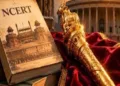
The introduction of the new Class 6 social science textbook Exploring Society: India and Beyond by the National Council of Educational Research and Training (NCERT) has sparked widespread debate, centering on the decision to refer to the Harappan Civilisation using alternative names such as “Sindhu-Sarasvati” and “Indus-Sarasvati.” This shift in nomenclature has drawn sharp criticism from left-wing academics and political commentators, who argue that these changes reflect an underlying Hindutva agenda rather than academic rigor. However, Michel Danino, the French-born Indian scholar who led the NCERT committee responsible for drafting the textbook, has robustly defended the terminology, asserting its legitimacy and grounding in established archaeological research.

The controversy stems from the textbook’s adoption of the terms “Sindhu-Sarasvati” and “Indus-Sarasvati” as alternatives to the more commonly known “Harappan Civilisation” or “Indus Valley Civilisation.” Critics, particularly those aligned with left-leaning academic circles, argue that these terms are being promoted to align with the ideological leanings of the current government, which has been accused of pushing a Hindutva-driven narrative in various aspects of Indian society, including education. They assert that the renaming serves to emphasise a cultural continuity from the ancient Sarasvati River, mentioned in the Vedas, to present-day Hindu civilisation, thereby intertwining historical and religious narratives.

In response to the uproar, Michel Danino, a respected scholar of Indian history and culture, has come forward to clarify the rationale behind the use of these alternative names. In an exclusive interview, Danino explained that the decision was based on long-standing archaeological evidence and academic scholarship, not on any political or ideological influence.

“The decision to include alternative names like ‘Sindhu-Sarasvati’ and ‘Indus-Sarasvati’ for the Harappan civilisation is neither new nor driven by any political agenda,” Danino stated. “This terminology has been used by several prominent archaeologists and scholars over the years. For instance, Professor Jonathan Mark Kenoyer of the University of Wisconsin, British archaeologist Jane McIntosh, and the late Raymond Allchin, one of the foremost authorities on the archaeology of the Indian subcontinent, have all referred to these terms in their scholarly works.”

Danino also pointed to the contributions of French archaeologist Jean-Marie Casal, who referenced the Sarasvati River in the context of the Harappan Civilisation. Furthermore, Gregory Possehl, a renowned American archaeologist, dedicated several chapters to the Sarasvati River in his seminal book The Indus Age. “This terminology is based on established archaeological scholarship, not on any recent political influence,” Danino emphasised. “So, this is not a Hindutva thing. Moreover, we have included all alternative names to ensure that students receive a well-rounded understanding of the civilisation.”

Also Read: NCERT dismisses claims of Preamble removal from textbooks, emphasises comprehensive constitutional education

The new textbook represents a significant shift in how social sciences are taught to young students in India. Unlike previous editions, which had separate textbooks for History, Political Science, and Geography, the new Class 6 textbook integrates these subjects into a single comprehensive volume. The textbook is organised around five key themes: ‘India and the World: Land and People,’ ‘Tapestry of the Past,’ ‘Our Cultural Heritage and Knowledge Traditions,’ ‘Governance and Democracy,’ and ‘Economic Life Around Us.’

Danino described the inclusion of alternative names for the Harappan Civilisation as a “good first step” in the direction of providing students with a more accurate portrayal of India’s ancient history. He hinted at future expansions of the textbook, with additional chapters that will further delve into the complexities of the civilisation and its broader cultural impact.

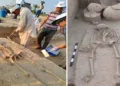
The debate over the textbook coincides with recent groundbreaking archaeological discoveries that challenge the traditional timeline of the Harappan Civilisation. In July 2023, a team of researchers from Deccan College Pune and the Archaeological Survey of India (ASI) uncovered human remains at the ancient site of Rakhigarhi in Haryana’s Hisar district. These remains, dating back approximately 8,000 years, suggest that the Harappan Civilisation could be significantly older than previously thought.

Rakhigarhi, recognised as one of the largest Harappan sites, has yielded evidence of an advanced urban settlement that included large, multi-roomed houses, courtyards, and an intricate drainage system. The excavations also uncovered textiles, including a shawl and a skirt, providing insights into the clothing and lifestyle of the ancient inhabitants.

“This research has found strong evidence that the Harappan civilisation is 7,000 to 8,000 years old,” stated Dr. Prabhodh Shirwalkar, an assistant professor at Deccan College Pune who was part of the excavation team. “It is agreed that there was human habitation or civilisation in our country 8,000 years ago, and the people back then were as advanced as they are in present times.”

The inclusion of terms like “Sindhu-Sarasvati” and “Indus-Sarasvati” in the NCERT textbook, alongside these new archaeological discoveries, may have far-reaching implications for how India’s ancient history is perceived and taught. By emphasising the Sarasvati River, a river that has held significant cultural and religious importance in India, the textbook appears to align historical discourse with a broader narrative that acknowledges the deep-rooted connections between ancient civilisations and modern India.

Topics: NCERTHarappan civilisationNCERT booksMichel DaninoNCERT committeeSindhu Sarasvati
Share3
Tweet
SendShareSend
✮ Subscribe Organiser YouTube Channel. ✮
✮ Join Organiser's WhatsApp channel for Nationalist views beyond the news. ✮
Previous News

Remembering Gopal Mukherjee on ‘Aitihasic Pratirodh Diwas’ who saved Hindus on direct action day

Next News

Islamisation of educational institution in Bangladesh: Islamists force 100s of Hindu teachers & professionals to resign

Related News

Representative Image

NCERT CIET Recruitment 2026: Register now for contractual posts under PAB projects; Last date is July 30

For the first time, NCERT adds Emergency to class 9 curriculum, highlights suspension of rights and democratic struggles

NCERT refutes claims of dropping preamble from class 9 textbook, says reports are misleading

For the first time, NCERT adds Emergency to class 9 curriculum, highlights suspension of rights and democratic struggles

NCERT includes Emergency chapter in class 9 textbook, describes 1975-77 period as a major challenge to Indian democracy

ASI transfers Rakhigarhi skeletal remains to Anthropological Survey of India for detailed examination

Rakhigarhi’s ancient secrets to be unveiled as human skeletal remains reach AnSI for advanced scientific analysis

NCERT orders replacing correct image of Mohenjo-Daro dancing girl

NCERT orders immediate correction of modified Mohenjo-Daro ‘Dancing Girl’ illustration

The terracotta dice that challenges historical assumptions and highlights India's millennia-old civilisational heritage

How a 4,500-year-old terracotta dice is reviving the debate on India’s civilisational continuity & Vedic heritage

Load More

Latest News

What Rahul Gandhi’s ‘Chhatron Ki Goonj’ and CJP Protests Meant for Campus Politics?

Three posts for ABVP, zero for NSUI: DUSU verdict puts Rahul Gandhi’s ‘Chhatron Ki Goonj’ & CJP impact under scanner

A representative image

LPG subsidy rule change from October 1: Aadhaar biometric authentication mandatory

NITI Aayog Focuses over the Strategies for Empowering Caregivers in the path of Viksit Bharat@2047

Reimagining Caregiving: Bharat’s action for empowering the hands that hold us

BMS launches National Organisation for Digital Employees (NODE) for IT workforce; aims to strengthen employee welfare

GalaxEye’s US patent for OptoSAR marks a major boost for India’s private space sector, advancing its global Earth-observation ambitions

GalaxEye secures US patent for OptoSAR technology, boosting India’s private space and deep-tech ambitions

The arrested Bangladeshi national

Keralam: Series of Bangladeshi arrests raises questions over alleged support ecosystem of fake IDs, jobs and shelter

The Indian Army has launched AASHVAST to detect hidden software and electronic vulnerabilities in military drones

Indian Army strengthens drone security with AASHVAST lab to detect software vulnerabilities & Chinese components

Nileema Mishra’s grassroots work empowered women and helped transform more than 200 villages across Maharashtra

Nileema Mishra: The woman who transformed more than 200 villages across rural Maharashtra

Shree Stambheshwar Mahadev Mandir in Gujarat

Shiva Mandir that disappears into the sea and returns with the tide: The fascinating story of Stambheshwar Mahadev

Vishwa Hindu Parishad (VHP) spokesperson Surendra Jain (file photo0

VHP condemns Hamid Ansari over remarks citing Nehru on Hindu right-wing communalism

Load More
  • Privacy
  • Terms
  • Cookie Policy
  • Refund and Cancellation
  • Delivery and Shipping

© Bharat Prakashan (Delhi) Limited.
Tech-enabled by Ananthapuri Technologies

  • Home
  • Search Organiser
  • Bharat
    • Assam
    • Bihar
    • Chhattisgarh
    • Jharkhand
    • Maharashtra
    • View All States
  • World
    • Asia
    • Africa
    • North America
    • South America
    • Europe
    • Australia
  • Editorial
  • Operation Sindoor
  • Opinion
  • Analysis
  • Defence
  • Culture
  • Sports
  • Business
  • RSS @ 100
  • Entertainment
  • More ..
    • Sci & Tech
    • Vocal4Local
    • Special Report
    • Education
    • Employment
    • Books
    • Interviews
    • Travel
    • Health
    • Politics
    • Law
    • Economy
    • Obituary
  • Subscribe Magazine
  • Read Ecopy
  • Advertise
  • Circulation
  • Careers
  • About Us
  • Contact Us
  • Policies & Terms
    • Privacy Policy
    • Cookie Policy
    • Refund and Cancellation
    • Terms of Use

© Bharat Prakashan (Delhi) Limited.
Tech-enabled by Ananthapuri Technologies