Tamil Nadu: Madras High Court orders reopening of temples, decries closure as 'imprisonment of deity'
June 6, 2026
  • Read Ecopy
  • Circulation
  • Advertise
  • Careers
  • About Us
  • Contact Us
Android AppiPhone AppArattai
Organiser
  • ‌
  • Bharat
    • Assam
    • Bihar
    • Chhattisgarh
    • Jharkhand
    • Maharashtra
    • View All States
  • World
    • Asia
    • Europe
    • North America
    • South America
    • Africa
    • Australia
  • Editorial
  • International
  • Opinion
  • RSS @ 100
  • More
    • Op Sindoor
    • Analysis
    • Sports
    • Defence
    • Politics
    • Business
    • Economy
    • Culture
    • Special Report
    • Sci & Tech
    • Entertainment
    • G20
    • Azadi Ka Amrit Mahotsav
    • Vocal4Local
    • Web Stories
    • Education
    • Employment
    • Books
    • Interviews
    • Travel
    • Law
    • Health
    • Obituary
  • Subscribe
    • Subscribe Print Edition
    • Subscribe Ecopy
    • Read Ecopy
  • ‌
  • Bharat
    • Assam
    • Bihar
    • Chhattisgarh
    • Jharkhand
    • Maharashtra
    • View All States
  • World
    • Asia
    • Europe
    • North America
    • South America
    • Africa
    • Australia
  • Editorial
  • International
  • Opinion
  • RSS @ 100
  • More
    • Op Sindoor
    • Analysis
    • Sports
    • Defence
    • Politics
    • Business
    • Economy
    • Culture
    • Special Report
    • Sci & Tech
    • Entertainment
    • G20
    • Azadi Ka Amrit Mahotsav
    • Vocal4Local
    • Web Stories
    • Education
    • Employment
    • Books
    • Interviews
    • Travel
    • Law
    • Health
    • Obituary
  • Subscribe
    • Subscribe Print Edition
    • Subscribe Ecopy
    • Read Ecopy
Organiser
  • Home
  • Bharat
  • World
  • Operation Sindoor
  • Editorial
  • Analysis
  • Opinion
  • Culture
  • Defence
  • International Edition
  • RSS @ 100
  • Magazine
  • Read Ecopy
Home Bharat

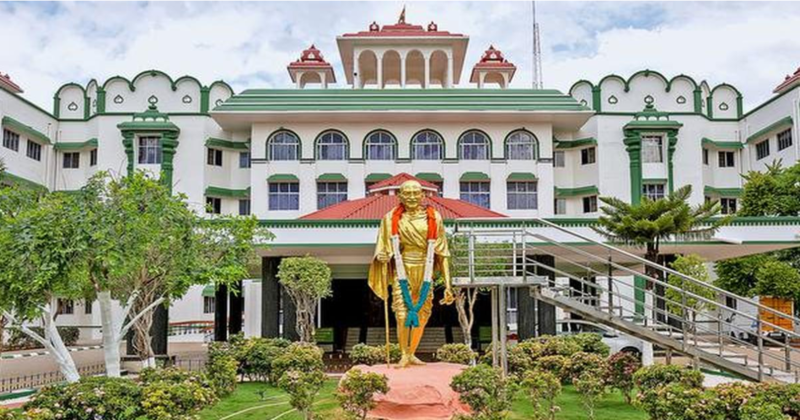
Tamil Nadu: Madras High Court orders reopening of temples, decries closure as ‘imprisonment of deity’

In a landmark ruling, Justice GR Swaminathan of the Madras High Court has ordered the reopening of the Sri Muthalamman and Sri Mariyamman temple in Uthapuram village, Madurai district, which has been closed for over a decade due to disputes between different community groups

TS VenkatesanTS Venkatesan
Aug 9, 2024, 12:45 pm IST
in Bharat, Law, Culture, Tamil Nadu
Follow on Google News
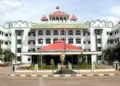
Madras High Court

Madras High Court

FacebookTwitterWhatsAppTelegramEmail

In a significant ruling, the Madras High Court has ordered the reopening of Sri Muthalamman and Sri Mariyamman temples in Uthapuram village, Madurai district, which have been closed for over 10 years. Justice G.R. Swaminathan, delivering the verdict on July 30, emphasized that the closure of temples without conducting customary poojas is akin to imprisoning the deity. He compared this to the treatment of prisoners, who are at least provided with proper food and basic necessities.

The petitioner, Pandi, had approached the court seeking directions to the District Collector, Revenue Divisional Officer (RDO), Tahsildar, and Inspector of Police to reopen the temples and resume daily poojas and festival celebrations. In his ruling, Justice Swaminathan highlighted that in legal terms, an idol is considered a “juristic personality,” capable of holding property and being sued or suing in its name. The judge argued that this concept should now be expanded to ensure that deities are not deprived of their rights to worship and proper care.

To underline his point, Justice Swaminathan cited an incident from the book “The Life and Times of HH Sri Chandrasekhara Bharati” by Prof. N. Nanjunda Sastry. The book recounts an event where a disciple presented a puja basket to Sri Chandrasekhara Bharati. Upon examining a Saligrama (a sacred stone representing the deity), the saint observed that the deity had been deprived of its required daily worship for seven years. The saint instructed the disciple to perform the special worship and offerings that the deity deserved, highlighting the importance of treating each deity according to its specific needs.

The case of the Uthapuram temple closure stems from a dispute that arose in 2010 between the Pillaimar and Pallar (Scheduled Caste) communities over what became known as the “untouchability wall.” The conflict led to legal battles, with writ petitions being filed and eventually settled through an agreement between the parties. Following this, the temple consecration was performed, but the temples remained closed for regular worship.

Justice G.R. Swaminathan, in his detailed 11-page order, emphasized that closing a temple without performing its customary poojas is akin to imprisoning the deity, which is considered a living entity under law.

The case was brought to the court by a petitioner named Pandi, who sought to prevent local authorities from stopping the Pillaimar community from reopening the temple and resuming traditional worship. The temple had been closed since 2014 following a dispute when members of the Scheduled Caste community attempted to introduce new forms of worship, leading to tensions and the registration of a criminal case (Crime No. 64 of 2014) at the Elumalai police station.

In his ruling, Justice Swaminathan noted that the temple has traditionally been managed by the Pillaimar community, though it remains open to worshippers of all castes. The judge questioned the logic behind closing the temple, especially when the practice of untouchability and caste discrimination had been abandoned. He emphasized that temples are the abodes of deities, which, according to long-standing legal interpretations, should be treated as living beings.

Citing the 1922 case of Rambrama Chatterjee vs. Kedar Nath Banerjee and others, Justice Swaminathan explained that a deity is treated as a living person, with daily rituals and offerings carried out as if the deity were the master of the house. He stressed that just as prison inmates are provided with basic necessities, the deity must also receive its due offerings and rituals. The judge stated that denying the deity these rituals for an extended period amounts to deprivation and is equivalent to imprisonment.

The judge further remarked that an murti is considered a juristic personality in law, capable of holding property and being involved in legal proceedings. He suggested that the legal understanding of a deity’s rights needs to be expanded to ensure that the rituals and worship practices are maintained without interruption.

https://www.verdictum.in/pdf_upload/downloaded-1644477.pdf (  order copy)

Justice Swaminathan stated that unless there is evidence of untouchability or infringement of others’ rights, a temple cannot be indefinitely closed. He highlighted that the right of devotees to worship is as significant as the deity’s right to the observance of customary rituals. He pointed out that courts must exercise parens patriae jurisdiction, especially when the interests of minors, the mentally ill, or idols are at stake.

The judge asserted that it is the duty of the administration to ensure that daily religious rituals are performed without obstruction. He cautioned against the easy, yet unconstitutional, option of closing temples, stressing that such an action would violate Articles 14 and 25 of the Indian Constitution, which guarantee equality before the law and freedom of religion.

Justice Swaminathan described the current condition of the temple as “pathetic” and ordered it to be reopened immediately and kept open during regular worship hours. He also directed the police to register FIRs and prosecute any offenders if law and order issues arise, ensuring that the temple remains open for worship. The judge reaffirmed that all parties must adhere to the previously established agreements regarding the temple’s operations, ensuring the rights of both the deity and devotees are respected.

Topics: Madras High CourtJustice Swaminathan
Share9TweetSendShareSend
✮ Subscribe Organiser YouTube Channel. ✮
✮ Join Organiser's WhatsApp channel for Nationalist views beyond the news. ✮
Previous News

Odisha intensifies coastal vigilance to prevent unauthorised entry from Bangladesh amid political turmoil

Next News

Amid violence, Bangladeshi national Humayun Kabir arrested in Assam while trying to procure cows for smuggling

Related News

Madras High Court quashes case against RSS swayamsevaks linked to centenary celebrations in Ambur on Vijayadashami 2025

Temple Funds in TNPFC: Tamil Nadu govt offers sovereign guarantee for Rs 2,700 crore deposits after HC Scrutiny

Tamil Nadu: Madras HC backs Tamil Nadu govt’s move to shut 717 TASMAC shops

Tamil Nadu: Madras HC issues notice to ECI, Joseph, Stalin, EPS over plea alleging use of children in TVK campaign

Petition Seeks Special Relaxation for Churches; TVK Govt Faces Tough Test

Tamil Nadu Church Approval Row: Plea for DTCP exemption for building small churches sparks outrage

Rajiv Gandhi Assasination: Madras HC Issues Notice to Bar Council on convict Perarivalan’s enrolment as advocate

Load More

Latest News

Jameer Khan and Alla Bhakshu arrested in Pakistan-linked terror probe

Karnataka: Digital jihad trail exposed: Jameer Khan and Alla Bhakshu arrested, links traced to Pakistan

Union Home Minister Amit Shah addressing BSF personnel at the Lankamura Border Outpost along the India-Bangladesh border in West Tripura district on June 5, 2026

Amit Shah at Bangladesh Border: “India will have an impregnable security grid soon”

India slams Pakistan’s bid to hold elections in Gilgit-Baltistan, demands end to illegal occupation

Maharashtra government approves central wage structure for Pune Metro Contract Workers; Major victory for BMS

India seals robust 7.7% GDP Growth in FY26: Reflects economic resilience amid West Asia crisis & other global headwinds

A representative image

After TCS, Corporate Jihad allegations reach SBI: Married Hindu employee conversion claims trigger FIR in Mumbai

MEA spokesperson Randhir Jaiswal highlights India's resolve to deport illegal Bangladeshi migrants via bilateral mechanisms

India reiterates strong resolve to deport illegal Bangladeshis; Flags delay of bilateral procedures from Dhaka

Kerala HC rejects CMRL appeal, clears way for ED probe against Pinarayi Vijayan’s daughter in money laundering case

Uttar Pradesh leads in Bharat's green transformation

World Environment Day 2026: On his birthday, Yogi Adityanath’s green vision powers Uttar Pradesh’s transformation

As Khalistani networks seek new platforms beyond the West, Azerbaijan has emerged as a key venue for conferences, campaigns and narratives aligned with the Pakistan-Turkey axis against India.

Khalistan’s New Grazing Ground: Azerbaijan emerges as new hub for Turkey-Pakistan backed anti-India networks

Load More
  • Privacy
  • Terms
  • Cookie Policy
  • Refund and Cancellation
  • Delivery and Shipping

© Bharat Prakashan (Delhi) Limited.
Tech-enabled by Ananthapuri Technologies

  • Home
  • Search Organiser
  • Bharat
    • Assam
    • Bihar
    • Chhattisgarh
    • Jharkhand
    • Maharashtra
    • View All States
  • World
    • Asia
    • Africa
    • North America
    • South America
    • Europe
    • Australia
  • Editorial
  • Operation Sindoor
  • Opinion
  • Analysis
  • Defence
  • Culture
  • Sports
  • Business
  • RSS @ 100
  • Entertainment
  • More ..
    • Sci & Tech
    • Vocal4Local
    • Special Report
    • Education
    • Employment
    • Books
    • Interviews
    • Travel
    • Health
    • Politics
    • Law
    • Economy
    • Obituary
  • Subscribe Magazine
  • Read Ecopy
  • Advertise
  • Circulation
  • Careers
  • About Us
  • Contact Us
  • Policies & Terms
    • Privacy Policy
    • Cookie Policy
    • Refund and Cancellation
    • Terms of Use

© Bharat Prakashan (Delhi) Limited.
Tech-enabled by Ananthapuri Technologies