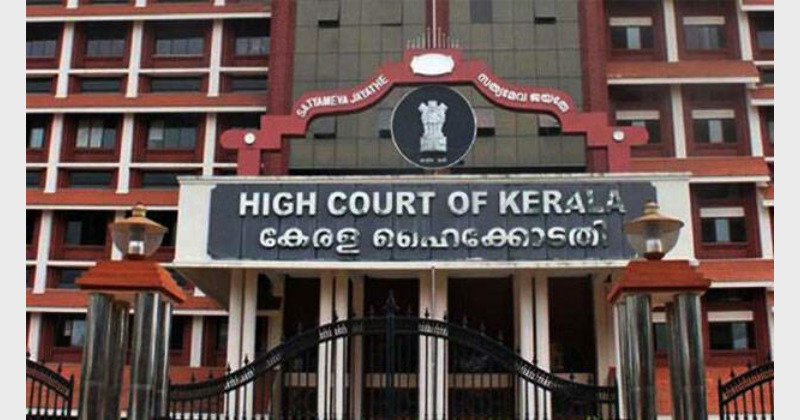
The Kerala High Court has dismissed a case filed against the newspaper Malayala Manorama following a complaint from the Bharatiya Janata Party (BJP). The complaint was related to a cartoon published by the newspaper depicting Mahatma Gandhi and the Indian flag, which was intended to commemorate the 70th Independence Day of India.
The cartoon featured the saffron section of the flag outlined in black, which led the BJP’s Area Committee General Secretary to file a complaint. Malayala Manorama then approached the High Court to have the FIR and the final report set aside.
The Court ruled that cartoonists are entitled to freedom of expression as an integral part of the press and media.
The ruling emphasised, “The cartoonists are also part and parcel of the press and media, and the cartoonists are also entitled to the freedom of expression guaranteed by Article 19(1)(a) of the Constitution. The fundamental right allows them to express their opinions, ideas, and creativity through cartoons, caricatures, and other forms of visual art.”
The Court clarified that this freedom is subject to reasonable restrictions under Article 19(2) of the Constitution, which permits limitations on freedom of expression in the interests of the sovereignty and integrity of India, security of the State, public order, decency or morality, and other considerations.
The Kerala High Court also addressed the definition of “insult” as required under the Prevention of Insult to National Honour Act, 1971.
The Court stated, “The Act 1971 is to prevent insults to national honour, which means the intention on the part of a person to insult the national honour is the main ingredient to attract the provisions of Act 1971. Unless there is a deliberate action to insult the national honour, the provisions of the Act 1971 is not attracted.”
In its judgment, the Court noted that a cartoon, by its nature, exaggerates or manipulates certain traits to achieve a humorous, satirical, or critical effect. The Court concluded that the cartoon in question, published by Malayala Manorama, was intended to celebrate Independence Day and did not constitute an insult to the national flag or Mahatma Gandhi.
The Court further highlighted that the complaint was overly critical and did not consider the overall context of the Independence Day celebration edition of the newspaper. It stressed that only actions with intent to defame the national flag would be considered unlawful.
In its final remarks, the Court stated, “Hence, the offence is attracted when a person in any public place or in any other place within public view burns, mutilates, defaces, defiles, disfigures, destroys, tramples upon or otherwise shows disrespect to or brings into contempt whether by words, either spoken or written or by acts the Indian National Flag or the Constitution of India or any part thereof to insult it. The Act itself is made to prevent insults to national honour.”
As a result, the proceedings against Malayala Manorama and its management were dismissed by the Kerala High Court. Judge P.V. Kunhikrishnan praised the cartoonist’s work, emphasising its contribution to celebrating the spirit of independence.
Despite the ruling, Malayala Manorama has faced previous controversies, including a June 2022 incident where it was criticised for publishing a distorted photo of Prime Minister Narendra Modi. The newspaper, which began publication in 1888, continues to play a significant role in Kerala’s media landscape under the leadership of Mammen Mathew.
Flag codes in India and punishments provisioned in the Constitution
In India, disrespecting and violating the flag code is considered a serious offence and is punishable under various sections of the law. The primary legal framework governing the use of the Indian flag is the Prevention of Insults to National Honour Act, 1971, and the Flag Code of India, 2002.
Prevention of Insults to National Honour Act, 1971
This act deals with the prevention of insults to national honour and prescribes punishments for various offences involving disrespect to the Indian flag.
Section 2 of the Act states:
Insult to the Indian National Flag and Constitution of India: Whoever in any public place or any other place within public view burns, mutilates, defaces, defiles, disfigures, destroys, tramples upon, or otherwise shows disrespect to or brings into contempt (whether by words, either spoken or written, or by acts) the Indian National Flag or the Constitution of India or any part thereof, shall be punished with imprisonment for a term which may extend to three years or with fine, or with both.
Explanation: As per the Act, disrespect to the Indian National Flag means and includes:
- A gross affront or indignity offered to the Indian National Flag.
- Dipping the Indian National Flag in salute to any person or thing.
- Flying the Indian National Flag at half-mast except on occasions on which the flag is flown at half-mast on public buildings in accordance with the instructions issued by the Government.
- Using the Indian National Flag as a drapery in any form whatsoever, except in State funerals or armed forces or other paramilitary forces funerals.
- Using the Indian National Flag as a portion of costume, uniform, or accessory of any description that is worn below the waist of any person or in embroidery thereon (except on the National Flag).
- Putting any kind of inscription upon the Indian National Flag.
- Using the Indian National Flag as a covering for a statue, monument, or plaque, or as a drapery in any form whatsoever, except in State funerals or in armed forces or other paramilitary forces funerals.
- Using the Indian National Flag to cover a speaker’s desk, drape a platform, or for any decoration in general (using the flag in the form of a banner, festoon, rosette, or bunting is allowed).
Flag Code of India, 2002
The Flag Code of India, 2002, consolidates all laws, conventions, practices, and instructions for the display of the National Flag. The code is divided into three parts:
Part I: General description of the National Flag.
Part II: Rules for display by members of the public, private organisations, educational institutions, etc.
Part III: Rules for display by government and government bodies.
Violations of the Flag Code are considered offenses under the Prevention of Insults to National Honour Act, 1971, and punishments for such violations are the same as those specified under the Act.
Key Provisions under the Flag Code of India
- The flag shall not be used as a drapery in any form whatsoever except in state/military/central paramilitary forces funerals hereinafter provided.
- The flag shall not be intentionally allowed to touch the ground or the floor or trail in water.
- The flag shall not be displayed or fastened in any manner as may damage it.
- The flag shall not be used as a covering for a building.
- The flag shall not be intentionally displayed with the “saffron” down.
Enforcement and Penalties
The enforcement of these rules is the responsibility of various government authorities. Violation of these provisions is subject to legal penalties under the Prevention of Insults to National Honour Act, 1971, as mentioned above.
Individuals or organisations found guilty of disrespecting or violating the flag code may face legal action, including imprisonment for up to three years, fines, or both, depending on the nature and severity of the offence.