Kargil War 25 Anniversary: Pakistan confused about identity, can’t behave like normal state and uses jihadist methods
July 14, 2026
  • Read Ecopy
  • Circulation
  • Advertise
  • Careers
  • About Us
  • Contact Us
Android AppiPhone AppArattai
Organiser
  • ‌
  • Bharat
    • Assam
    • Bihar
    • Chhattisgarh
    • Jharkhand
    • Maharashtra
    • View All States
  • World
    • Asia
    • Europe
    • North America
    • South America
    • Africa
    • Australia
  • Editorial
  • International
  • Opinion
  • RSS @ 100
  • More
    • Op Sindoor
    • Analysis
    • Sports
    • Defence
    • Politics
    • Business
    • Economy
    • Culture
    • Special Report
    • Sci & Tech
    • Entertainment
    • G20
    • Azadi Ka Amrit Mahotsav
    • Vocal4Local
    • Web Stories
    • Education
    • Employment
    • Books
    • Interviews
    • Travel
    • Law
    • Health
    • Obituary
  • Subscribe
    • Subscribe Print Edition
    • Subscribe Ecopy
    • Read Ecopy
  • ‌
  • Bharat
    • Assam
    • Bihar
    • Chhattisgarh
    • Jharkhand
    • Maharashtra
    • View All States
  • World
    • Asia
    • Europe
    • North America
    • South America
    • Africa
    • Australia
  • Editorial
  • International
  • Opinion
  • RSS @ 100
  • More
    • Op Sindoor
    • Analysis
    • Sports
    • Defence
    • Politics
    • Business
    • Economy
    • Culture
    • Special Report
    • Sci & Tech
    • Entertainment
    • G20
    • Azadi Ka Amrit Mahotsav
    • Vocal4Local
    • Web Stories
    • Education
    • Employment
    • Books
    • Interviews
    • Travel
    • Law
    • Health
    • Obituary
  • Subscribe
    • Subscribe Print Edition
    • Subscribe Ecopy
    • Read Ecopy
Organiser
  • Home
  • Bharat
  • World
  • Operation Sindoor
  • Editorial
  • Analysis
  • Opinion
  • Culture
  • Defence
  • International Edition
  • RSS @ 100
  • Magazine
  • Read Ecopy
Home International Edition News

Kargil War 25 Anniversary: Pakistan confused about identity, can’t behave like normal state and uses jihadist methods

Pakistani policy-makers must decide what type of a state they want their country to become: 1. Jinnah’s Pakistan 2. Jamaat-e-Islami’s Pakistan or 3. Lashkar-e-Taiba’s (LeT) Pakistan. Apparently, the issue is still undecided, leaving Pakistan eternally confused and confounded about its identity

Sant Kumar SharmaSant Kumar Sharma
Jul 1, 2024, 09:30 am IST
in News, Bharat, South Asia, World, International Edition
Follow on Google News
Representative Image

Representative Image

FacebookTwitterWhatsAppTelegramEmail

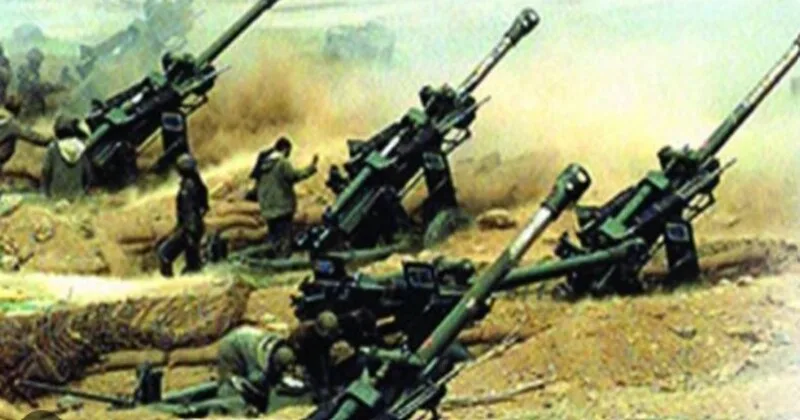
The Rand Corporation, a US Think Tank, carried out an analytical study on the Kargil war which was published in the year 2001. The study was conducted by Ashley J. Tellis, C. Christine Fair and Jamison Jo Medby. The authors used Indian and Pakistani sources for trying to understand what lessons the two countries may have drawn from this war, limited to one vast district of Jammu & Kashmir. Incidentally, Kargil is now a district of the Union Territory (UT) of Ladakh which came into being on October 31, 2019.

This decision to not allow the war to expand and spill over beyond Kargil has essentially to be attributed in a very large measure to Atal Behari Vajpayee. As Prime Minister of India in 1999, Vajpayee very astutely judged correctly that world opinion will turn against Pakistan for its transgressions. During those days, he said on every available opportunity that the Indian troops were just trying to dislodge Pakistanis from positions they had captured by stealth.

As part of this decision, Vajpayee imposed a tough condition on the fighting Indian troops: Don’t cross Line of Control (LoC). The LoC that had come into being in January 1949, after the bloody war between the two neighbours in late 1947 and 1948. This condition of treating the LoC as sacrosanct proved to be masterstroke as many world leaders agreed that Pakistan’s violation has turned it into a Line of Crisis.

This policy of “strategic restraint of not crossing LoC’’ gave rich dividends and thus the blame for creating the Kargil crisis was entirely laid on Pakistan’s doors. Of course, it created its own problems at the operational level, perhaps far more for the Indian Air Force (IAF) aircraft involved in the Kargil war.

Pakistan grabbed Indian positions by stealth and forced India to retaliate to get back land it had held for 50 years is the narrative that Atal successfully built, and projected all over. On its part, Pakistan said it was mujahideen from Kashmir which had grabbed the icy heights in Kargil. It refused to acknowledge that regulars from Northern Light Infantry (NLI), a part of the Pakistani Army, were there in Kargil. Or that the Pakistani Army was involved at every step of the way in execution of plans to capture Indian posts.

Incidentally, Pakistan disowning its own soldiers and using them as cannon fodder is its consistent policy. Right since October 1947 when it claimed that the attacks on Jammu & Kashmir were the handiwork of kabailis (tribals). The Gulf war between two neighbouring nations of Iraq and Kuwait late in 1990 was the first televised war. Closer home, Kargil was the first war images from which were available in affluent offices, homes and even private clubs via cable TVs.

The media’s televised depiction of India’s war dead helped in galvanizing domestic support against Pakistan. “This was watched with interest in Pakistan, according to our interlocutors, who read these depictions as a deliberate effort to instigate a frenzied consensus in favour of attacking Pakistan,’’ the study says.

At one place, the study points out that the “Kargil conflict has shaped Pakistan’s and India’s conceptions of their future choices’’. Pakistan now knows the costs it had to endure as a result of Kargil: Economic vulnerability, politically instability and international isolation. At present, it is widely viewed as a “precarious, decaying, and increasingly Islamist state’’.

The study made an interesting point as it said that “many in the political classes (in Pakistan) have come to recognize that they must decide among themselves what kind of a state they want to become: 1. Jinnah’s Pakistan 2. Jamaat-e-Islami’s Pakistan or 3. Lashkar-e-Taiba’s (LeT) Pakistan’’. Apparently, Pakistan continues to tread along this path of eternal confusion and knows not whether it wants to be 1, 2 or 3.

“On its part, India is not likely to give Pakistan a chance to flirt with Kargil-like scenarios again. New Delhi will watch the border in J&K and elsewhere carefully. It will also redouble its efforts to prevent infiltration of the sort that occurred at Kargil. India understands that the most likely strategy for Pakistan will be increasing its support for insurgency and for terrorist attacks throughout India,’’ the study noted.

“New Delhi also appreciates that this strategy is to Pakistan’s own disadvantage and further confirms Islamabad as a sponsor of Islamist terrorism. Despite the episodic temptation to bloody the Pakistani nose, India will continue to exhibit restraint,’’ the study predicted. The “episodic temptation’’ the study pointed out to came to fore in “Surgical Strikes’’ (of late 2016 after Uri attack) and the Balakot strikes of Februay 2019.

These episodes of Indian retaliation contrast sharply with “strategic restraint’’ imposed by Vajpayee on the Indian troops.

The study concluded that “ugly stability”, the persistence of unconventional conflicts, will probably endure in the region. State-sponsored terrorism will remain an attractive mode of operation in large part because conventional conflicts remain risky. “Pakistan’s evaluation of Kargil’s consequences is still ambiguous … Nevertheless, Islamabad remains passionately focused on resolving Kashmir, and its support for the insurgency is unlikely to dissipate any time soon,’’ the study predicted correctly.

“The very nature of the jihadi activities besmirches Pakistan’s already poor reputation and reinforces the image of India as a front-line state against Islamic terrorism,’’ the study pointed out. “Pakistan’s reliance upon mujahideen and jihadi tanzeems to pursue its low-intensity war with India creates its own set of problems both domestically and abroad.’’ Even today, 25 years after the Kargil conflict, this 108-page study of the Rand Corporation can prove to be helpful in gaining insights into this limited conventional war.
Topics: Rand CoporationChristine FairPakistanIndiaKargil WarJihadis
ShareTweetSendShareSend
✮ Subscribe Organiser YouTube Channel. ✮
✮ Join Organiser's WhatsApp channel for Nationalist views beyond the news. ✮
Previous News

Know how new criminal laws will ensure speedy justice in India

Next News

Bharatiya Nyaya Sanhita: Death penalty for gang rape of minors, criminalises sex through deceitful means – Read Details

Related News

Hindu leader Sagar Beg (Left), Pakistan-based gangster Shahzad Bhatti (Right)

Maharashtra: Pakistan based terror gangster syndicate publicly marks Hindu leader Sagar Beg for assassination

Representative Image

PoJK protests hit White House as Kashmiri diaspora shouts anti-Pakistan slogans; Muzaffarabad rises against abuse

The people in Pakistan-occupied Jammu Kashmir (PoJK) are rising against Pakistan's brutality

POJK Unrest: Azad or gulam

Commerce and Industry Minister Piyush Goyal

Fact Check: Piyush Goyal rejects Reuters report on India-US trade deal as “false & misleading”; Reaffirms balanced pact

Great Nicobar is emerging as a strategic gateway that strengthens India's maritime reach while increasing pressure on China's Malacca Dilemma

Great Nicobar Project to boost India’s Indo-Pacific leverage, deepen China’s Malacca Dilemma: Report

PoJK Freedom Struggle: Uprising against illegal occupation

Load More

Latest News

The organisers of the 'Melbourne Meets Modi' community have issued a strongly worded open letter to Rahul Gandhi

Don’t insult Indian-Australians: Melbourne Meets Modi organisers demand apology from Rahul Gandhi over paid crowd claim

Tiruvananthapuram Mayor Adv. V.V. Rajesh administers oath to BJP councillor R. Sugatan at Viyyoor Central jail, Thrissur

Keralam: Tiruvananthapuram BJP Councillor R Sugatan retakes oath in Viyyoor Central Jail after Kerala HC intervention

Bhojshala Case: Supreme Court Declines Muslim Plea, No Namaz Allowed on Premises

Bhojshala: SC refuses to stay Madhya Pradesh HC order; No namaz allowed within premises, Bars structural changes by ASI

Tamil Nadu: Supreme Court stays Madras HC order directing state govt to ensure no cow slaughter

Pahalgam Terror Attack: NIA Court Issues Non-Bailable Warrant Against LeT Chief Hafiz Saeed

Pahalgam Terror attack: NIA court issues non-bailable warrant against LeT chief Hafiz Saeed, who resides in Pakistan

Akhil Bharatiya Karyakarini Sadasya Bhaiyyaji Joshi addressing the gathering

Pride of being a Hindu represents a life based on peace, truth and justice: Bhaiyyaji Joshi

India’s Minerva Academy wins Helsinki Cup in Finland

India’s Minerva Academy scripts history, beats defending champions HJK to win Helsinki Cup in Finland

Hindu leader Sagar Beg (Left), Pakistan-based gangster Shahzad Bhatti (Right)

Maharashtra: Pakistan based terror gangster syndicate publicly marks Hindu leader Sagar Beg for assassination

Indian Women Cricket Team beat England in test match at Lords

India scripts history at Lord’s, crushes England by 270 runs in first Women’s Test

PIB clarifies PM Modi said "wheat producer," not "beef producer"

Fact Check: Viral clip falsely claims PM Modi called India Beef producer; in original speech he said wheat producer

Load More
  • Privacy
  • Terms
  • Cookie Policy
  • Refund and Cancellation
  • Delivery and Shipping

© Bharat Prakashan (Delhi) Limited.
Tech-enabled by Ananthapuri Technologies

  • Home
  • Search Organiser
  • Bharat
    • Assam
    • Bihar
    • Chhattisgarh
    • Jharkhand
    • Maharashtra
    • View All States
  • World
    • Asia
    • Africa
    • North America
    • South America
    • Europe
    • Australia
  • Editorial
  • Operation Sindoor
  • Opinion
  • Analysis
  • Defence
  • Culture
  • Sports
  • Business
  • RSS @ 100
  • Entertainment
  • More ..
    • Sci & Tech
    • Vocal4Local
    • Special Report
    • Education
    • Employment
    • Books
    • Interviews
    • Travel
    • Health
    • Politics
    • Law
    • Economy
    • Obituary
  • Subscribe Magazine
  • Read Ecopy
  • Advertise
  • Circulation
  • Careers
  • About Us
  • Contact Us
  • Policies & Terms
    • Privacy Policy
    • Cookie Policy
    • Refund and Cancellation
    • Terms of Use

© Bharat Prakashan (Delhi) Limited.
Tech-enabled by Ananthapuri Technologies