Sino-Indian Relations: Here is how PM Modi’s geopolitical strategy ‘rattles’ China in Tibet, Taiwan
June 26, 2026
  • Read Ecopy
  • Circulation
  • Advertise
  • Careers
  • About Us
  • Contact Us
Android AppiPhone AppArattai
Organiser
  • ‌
  • Bharat
    • Assam
    • Bihar
    • Chhattisgarh
    • Jharkhand
    • Maharashtra
    • View All States
  • World
    • Asia
    • Europe
    • North America
    • South America
    • Africa
    • Australia
  • Editorial
  • International
  • Opinion
  • RSS @ 100
  • More
    • Op Sindoor
    • Analysis
    • Sports
    • Defence
    • Politics
    • Business
    • Economy
    • Culture
    • Special Report
    • Sci & Tech
    • Entertainment
    • G20
    • Azadi Ka Amrit Mahotsav
    • Vocal4Local
    • Web Stories
    • Education
    • Employment
    • Books
    • Interviews
    • Travel
    • Law
    • Health
    • Obituary
  • Subscribe
    • Subscribe Print Edition
    • Subscribe Ecopy
    • Read Ecopy
  • ‌
  • Bharat
    • Assam
    • Bihar
    • Chhattisgarh
    • Jharkhand
    • Maharashtra
    • View All States
  • World
    • Asia
    • Europe
    • North America
    • South America
    • Africa
    • Australia
  • Editorial
  • International
  • Opinion
  • RSS @ 100
  • More
    • Op Sindoor
    • Analysis
    • Sports
    • Defence
    • Politics
    • Business
    • Economy
    • Culture
    • Special Report
    • Sci & Tech
    • Entertainment
    • G20
    • Azadi Ka Amrit Mahotsav
    • Vocal4Local
    • Web Stories
    • Education
    • Employment
    • Books
    • Interviews
    • Travel
    • Law
    • Health
    • Obituary
  • Subscribe
    • Subscribe Print Edition
    • Subscribe Ecopy
    • Read Ecopy
Organiser
  • Home
  • Bharat
  • World
  • Operation Sindoor
  • Editorial
  • Analysis
  • Opinion
  • Culture
  • Defence
  • International Edition
  • RSS @ 100
  • Magazine
  • Read Ecopy
Home Bharat

Sino-Indian Relations: Here is how PM Modi’s geopolitical strategy ‘rattles’ China in Tibet, Taiwan

Under the leadership of Prime Minister Narendra Modi who through his strategic statecraft and shrewd diplomacy has transformed the current landscape of India-China relations in such a way that the former is challenging, giving the Peoples Republic of China a run for its money in contested arenas such as Tibet, Taiwan and Indo-Pacific to name a few

WEBDESKWEBDESK
Jun 28, 2024, 05:30 pm IST
in Bharat, Asia, Defence
Follow on Google News
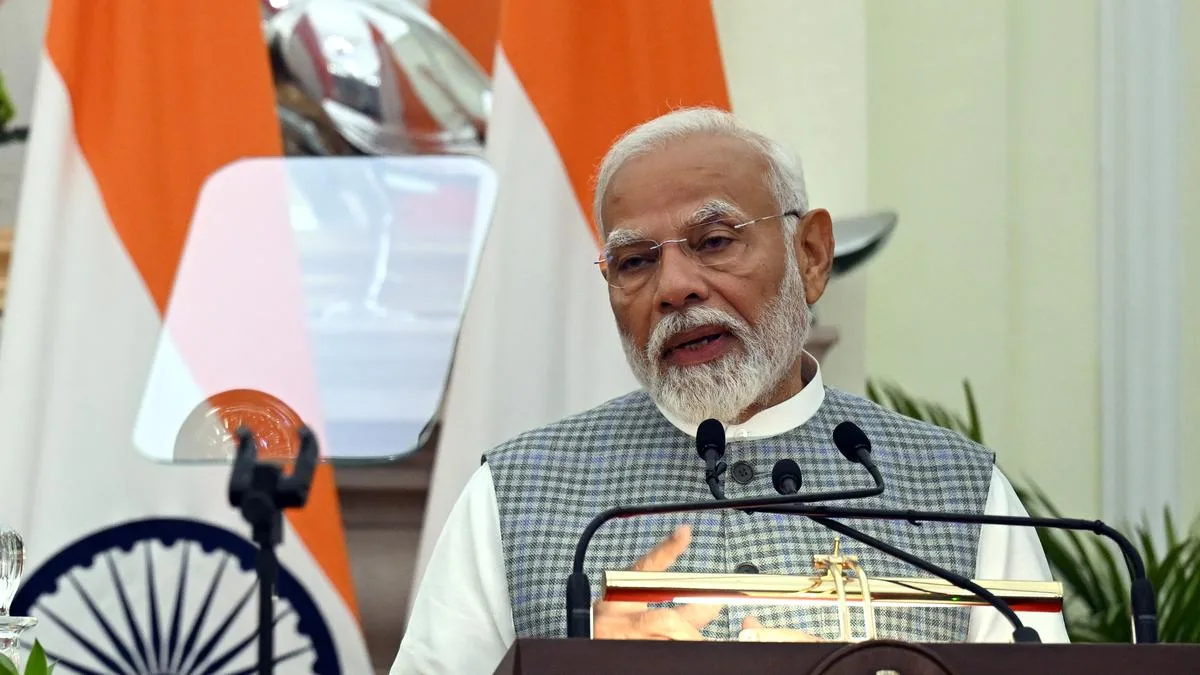
India's Prime Minster Narendra Modi

India's Prime Minster Narendra Modi

FacebookTwitterWhatsAppTelegramEmail

The return of Prime Minister Narendra Modi for a third consecutive time despite a reduced mandate marks a pivotal moment in India’s geopolitical strategy. Additionally, the continuity of Cabinet positions with the External Affairs Minister and National Security Advisor Ajit Doval retaining their posts, underscores India’s unwavering foreign policy stance, particularly towards China.

The Sino-Indian relations under PM Modi are evolving. Sensing an opportunity in Modi’s narrower mandate China has escalated its aggressive rhetoric. Despite Nehru’s longstanding adherence to the One China Policy since 2008, causing discomfort in Beijing. The ongoing four-year standoff at the Line of Actual Control (LAC) has further solidified India’s resolve to counter Chinese aggression.

Relations between India and China appear frosty as Modi begins his third term. While global leaders swiftly congratulated Modi on his coalition government, Xi Jinping’s delayed response, conveyed through his foreign ministry spokesperson and later the Chinese premier, starkly contrasted with previous terms, highlighting the growing rift between the two leaders.

The newly elected Taiwanese President extended congratulations to Modi on social media, to which Modi responded with diplomatic caution avoiding terms like President, Taiwan and Indo-Pacific. This interaction though restrained marked the first public engagement between leaders of India and Taiwan signalling a subtle yet bold move by PM Modi.

Beijing officially and immediately protested India’s engagement with Taiwanese president and then with Global Times, the official newspaper of the CCP, warned that Modi’s actions could make India pay a price. Nonetheless, Modi 3.0 appears committed to maintaining strategic approach towards China evidenced by the retention of the key ministers and ongoing military buildup at the Himalayan borders.

A week after Modi’s swearing in, reports emerged of his administration preparing a stronger stance against Chinese aggression by reigniting the Tibet independence debate. The Indian government has approved the renaming of 30 places in Tibet which includes 12 mountains, 11 villages and a lake based on old Tibetan names sourced from historical texts.

This move is not seen by experts as merely tit for tat response to China’s nomenclature of renaming Arunachal Pradesh, but sees it as well researched effort to assert historical, genetic and cultural ties with reference taken from original Tibetan and Indian texts. Historically, India and Tibet were peaceful neighbours with stronger cultural, genetic and religious connections and serving as a buffer between the two countries until it was forcibly annexed by the Chinese in 1950.

This new development could garner global support and signifies India’s strategic shift from its adherence of the One China Policy, a move which will certainly provoke China. Under Modi’s leadership, India has become a significant challenger to Chinese aggression, not only in the LAC but also in wider Indo-Pacific Region.

China now faces a delicate balancing act between potential hostility and diplomatic engagement evidenced by lack of Xi’s congratulatory dialogues to India’s new government and Global Times soft urge to India to send positive signals towards improving Sino-Indian relations, but maintains that the bilateral ties cannot progress as long as the border standoff is unresolved. This deadlock poses a strategic dilemma for China as backing down could embolden India in other areas of bilateral relations.

The recent visit of a US delegation to India after the US Congress passed the bill Resolve Tibet Act included a meeting with Dalai Lama underscores active stance of India despite understanding the sensitivities involved particularly for India given its extensive border with China. Unsurprisingly the strong protest and criticism from China was immediate and called this act an interference in its internal matters.

India’s recent strategic moves and the US planned visit with India’s agreement indicate a delicate opening of the Tibet Front to distract China from Taiwan. The inclusion of Nancy Pelosi in the US delegation visiting the Dalai Lama highlights the intensifying focus on Tibet.

China’s aggressive response to former US House Speaker Nancy Pelosi visit to Taiwan in 2022 sparked tensions following Pelosi departure, China initiated military exercises encircling Taiwan leading to a frosty phase in US-China relations and without any surprise similar response can be anticipated in the future, and India’s willingness to let USA use its territory for this theatre demonstrates its assertiveness to counter Chinese aggression. Now, the focus shifts to China’s reaction, as the stakes are high for India. However, whatever the outcome, it will be potentially critical for regional dynamics.

India is strategically employing a systematic approach to challenge the One China policy. This includes reigniting Tibet’s non-violent independence movement on the global stage, coinciding with the U.S. delegation’s visit and their agreement to meet the Dalai Lama on Indian soil. However, the moves are warmly being welcomed by Tibetans in India.

India’s strategic shift signals a refusal to be intimidated and readiness to challenge China’s ambitions through diplomacy and global partnerships. This move could recalibrate regional power dynamics, positioning India as a pivotal player in fostering stability and advocating for oppressed regions like Tibet, while also expanding its diplomatic space with Taiwan.

The global reaction will be crucial in determining the success of this strategy. If major powers and international organizations back these actions, it could lead to a significant diplomatic victory for New Delhi. Conversely, a lukewarm response might necessitate a reassessment of India’s approach.

Ultimately, India’s decision to spotlight Tibet’s independence movement is a calculated maneuver to counter China’s aggression on a broader scale, with the potential for substantial diplomatic gains.

Topics: ChinaTaiwanTibetCCPUSAPM ModiLAC
ShareTweetSendShareSend
✮ Subscribe Organiser YouTube Channel. ✮
✮ Join Organiser's WhatsApp channel for Nationalist views beyond the news. ✮
Previous News

Row eruptted in Bareilly as Hindu Mandirs taxed while mosques are exempted; Error rectified after outrage

Next News

How Akhilesh Yadav-led Samajwadi Party during its tenure promoted cheating culture in UP

Related News

PM Narendra Modi disguised as a Sardar during 1975 Emergency (This is an AI generated image)

Emergency 1975: How young Narendra Modi worked underground to support families of jailed satyagrahis

Mounting debt and shrinking revenues are forcing Beijing to rethink the size and structure of its sprawling bureaucracy

China’s Economic Crisis Reaches the Bureaucracy: Beijing downgrades officials amid debt and fiscal strain

Prime Minister Narendra Modi

‘Maoism is breathing its last’: PM Modi highlights crackdown on red terror in last 12 years and growth in tribal areas

Prime Minister Narendra Modi

Viksit Bharat: PM Modi slams Congress — ‘Blocks development, claims credit’

United States Trade Representative Jamieson Greer and Union Commerce and Industry Minister Piyush Goyal

India-US Trade Agreement: Historic deal enters final stretch as USTR Jamieson Greer heads to New Delhi

Chinese President Xi Jinping

China Back to Mao Era? Xi unveils new doctrine of party supremacy over state and people

Load More

Latest News

Viral Video of Crane-Hoisted Van Explosion During Muharram Procession Sparks Nationwide Outrage

MP: Van suspended 40 feet by crane, blown up during Muharram procession; NSA invoked against four

AI Image

Tamil Nadu: BJP cites 10 sexual assault cases in a day, alleges worsening law and order under TVK government

Operation Amistad: India sends relief, medical aid to earthquake hit Venezuela; Death toll rises to 235 & 4,300 injured

Chief Minister Shri Mohan Charan Majhi at CII Eastern Regional Council meeting organised at May Fair convention on 26 June 20

Odisha: CM Mohan Majhi launches ‘Go East’ initiative, announces sweeping industrial policy reforms

Over 6 crore UP citizens can fetch family ID on DigiLocker

UP Family ID on DigiLocker: Yogi government brings paperless welfare access to over 6 crore citizens

CoHNA explains of Hindu temples are repeatedly vandalised in the US as anti-Hindu hate soars

CoHNA Slams Yashica Dutt’s Anti-Hindu Propaganda: Upholds Georgia’s bill & Indian American unity against polarisation

Uttar Pradesh's growth story gains global backing as IBM, Cognizant and embassy group praise Yogi government reforms

Global firms back UP growth story at Bengaluru roadshow; IBM, Cognizant announce major expansion plans

Tamil Nadu: Zoho’s Sridhar Vembu recounts alleged bribery demands for school NOC approvals during DMK regime

Dr Nadeem allegedly told the patient that the incident was “Allah’s will.”

Delhi Shocker: Islamist doctor says “‘Allah’s Will’ after severing patient’s vein during gall bladder surgery

PM Narendra Modi disguised as a Sardar during 1975 Emergency (This is an AI generated image)

Emergency 1975: How young Narendra Modi worked underground to support families of jailed satyagrahis

Load More
  • Privacy
  • Terms
  • Cookie Policy
  • Refund and Cancellation
  • Delivery and Shipping

© Bharat Prakashan (Delhi) Limited.
Tech-enabled by Ananthapuri Technologies

  • Home
  • Search Organiser
  • Bharat
    • Assam
    • Bihar
    • Chhattisgarh
    • Jharkhand
    • Maharashtra
    • View All States
  • World
    • Asia
    • Africa
    • North America
    • South America
    • Europe
    • Australia
  • Editorial
  • Operation Sindoor
  • Opinion
  • Analysis
  • Defence
  • Culture
  • Sports
  • Business
  • RSS @ 100
  • Entertainment
  • More ..
    • Sci & Tech
    • Vocal4Local
    • Special Report
    • Education
    • Employment
    • Books
    • Interviews
    • Travel
    • Health
    • Politics
    • Law
    • Economy
    • Obituary
  • Subscribe Magazine
  • Read Ecopy
  • Advertise
  • Circulation
  • Careers
  • About Us
  • Contact Us
  • Policies & Terms
    • Privacy Policy
    • Cookie Policy
    • Refund and Cancellation
    • Terms of Use

© Bharat Prakashan (Delhi) Limited.
Tech-enabled by Ananthapuri Technologies