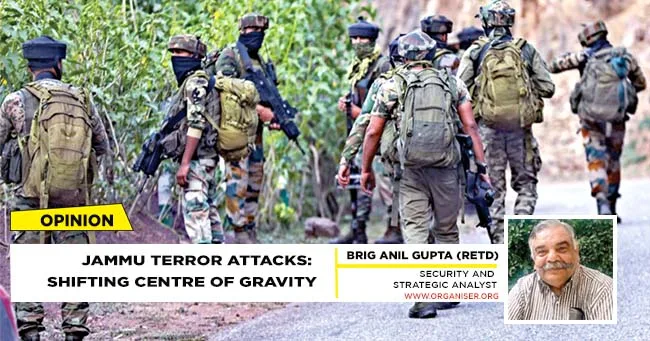
The spurt of terror activities in the Jammu region, South of the Pir Panjal, synchronised with the beginning of the third tenure of Prime Minister Modi, popularly referred to as Modi 3.0, is the manifestation of the frustration among the deep state in Pakistan, which felt humiliated and marginalised post August 5, 2019. The sudden act of the then Modi government not only took the Deep State by surprise but also exposed it as the perpetrator of terror in the Kashmir Valley. The Pakistani deep state has been simmering in anger since then and looking for an opportune moment to seize back the initiative to keep the Kashmir issue alive.
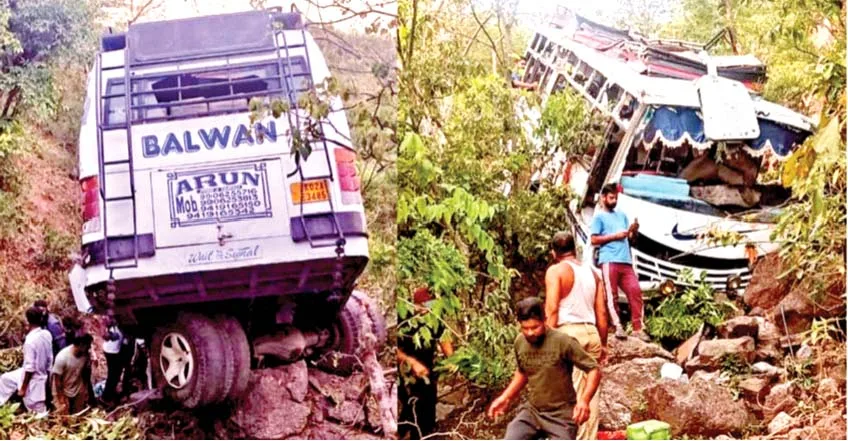
Subsequent to the abrogation of Article 370, it tried to make some cosmetic changes through changes in the nomenclature of the terror outfits active in the Valley to portray to the world that the turmoil in Kashmir was home-grown and a manifestation of the dissatisfaction and anger of the local Kashmiris with the Indian establishment. However, the strong measures taken by the Modi government to cleanse the Kashmir Valley of foreign as well as local terrorists by targeting the terrorist leadership and launching Operation All Out made a severe dent in Pakistan’s ambition. Thereafter, the government shifted its focus to address the terror ecosystem prevalent in the Valley. This was also successful to a large extent, but a lot must be achieved to eliminate the last gun from the Valley. Coupled with all this was the unprecedented all-round development undertaken by the government and the creation of an environment for the successful revival of tourism, the lifeline of a common Kashmiri and the backbone of its economy. This created a “Feel Good Factor” among the local populace that began to appreciate the dividends of peace and normalcy. The normal life began in the Valley with the people feeling happy to see their children going to schools regularly, the Universities bubbling with activities and gradually the social life returning to normal with the threat of fear and violence reducing with each passing day. The successful hosting of a G20 summit, followed by the unprecedented rise in the number of domestic tourists and the return of foreign tourists, put the last nail in the coffin of the evil designs of Pakistan. It realised that any more attempts by it to counter the normalcy in the Valley may boomerang and it may lose whatever sympathy was left for it among the Kashmiris. The Kashmiri public is happy with the return of peace and the consequent improvement in their lifestyle. They are no longer ready to be misguided or led to the situation that prevailed there for three decades. The Deep State is faced with a quandary.
Deep State
The Deep State is unwilling to give up or concede defeat so easily. While it wants to honour the Kashmiri sentiments yet it wants to keep the pot boiling as well as keep the Proxy War simmering to keep the “Kashmir Issue” alive. It therefore has decided to shift its focus and Area of Interest to the South of Pir Panjal and shift the Centre of Gravity of Jihadi terrorism from the Kashmir Valley to the Jammu region by exploiting its diversity and communal fault lines.
There is a need to act fast to reconfigure and redeploy the CT grid based on the RR and regular army units. This has to be the main focus of the local police, RR and regular units
The vacuum created by the weakening of the Counter Terrorism (CT) grid South of the Pir Panjal and making public the government’s intention to pull out Rashtriya Rifles (RR) and regular army units from the grid provided a fertile ground to the Pakistani Deep State led by the ISI. It grabbed the opportunity by both hands and began to infiltrate well-trained teams of 3-4 terrorists to establish bases in the hinterland. Large-scale infiltrations were avoided to ensure that the security forces did not get alerted or alarmed. While the police made tall claims of making the area terrorist-free, ISI continued to build up the strength of its teams, which were initially tasked to lie low and build sleeper cells. A few encounters here and there were not taken very seriously by the administration, and hardly any effort was made to re-jig the security grid or the intelligence apparatus, thus further emboldening the ISI and its local sympathizers, which also included the members of the status quo lobby and the conflict beneficiaries. The failure of the police to keep an eye on them, including the surrendered terrorists, proved costly since many of them were re-cycled. The ground-level intelligence inputs were completely dried up, which helped the terrorist teams sustain themselves logistically and wander freely.
The successful completion of the recently held Lok Sabha elections and formation of the government by Modi for the third time, much against the wishes of the Deep State, has not been taken well by it. By engulfing Jammu region with terror, it wants to send a message that normalcy has not returned and also expose Modi Government in its failure to curb terrorism in Jammu & Kashmir. The opposition will use this as a weapon to target and bash the Modi-Shah duo. Apart from regular jibes and taunts, it may also resort to agitations, leading to law and order problems as well. It is likely to increase the pressure on the government to resume talks with Pakistan, an agenda that suits the global deep state.
To my mind, the Pak design to shift the Centre of Gravity of militancy and religious terrorism to the South of Pir Panjal is also supported by the status quo lobby and the conflict beneficiaries. They do not want the South of Pir Panjal to develop and pose a direct threat to Kashmir tourism. Poverty and underdevelopment in the region will also ensure the continuous hold of the mullahs and maulvis over the local Muslim populace which will be used as the support base for sustaining militancy in the region.
Measures to deal with the menace
Hindus and the security forces (other than police) are being targeted deliberately. It is messaging to the local police that the terrorists are so powerful that they are confronting the Army directly, hence demoralising the police and keep the police force confined to their thanas and bases. Thus preventing the area domination since the CT grid has been weakened due to the pull out of RR units and replacing RR units with police. Because of the lack of area domination, the terrorists are able to strike at will. There are also inputs that each group operating in the region has up to two SSG commandos of the Pak Army, a few retired and a few on long leave. They are well equipped with the latest weaponry, including night vision equipment, satellite phones and steel core bullets. They are also equipped with the GPS for navigation. Their knowledge of the terrain is also good, indicating that they have been in the area for quite some time. The targets and locations have been very carefully chosen to gain moral ascendancy and create an atmosphere of fear. In case our response is not pro-active, quick and effective the terrorists will soon gain an upper hand leading to further demoralisation and desperation among the minority population staying in remote and scattered areas leading to migration.
There is a need to act fast to reconfigure and redeploy the CT grid based on the RR and regular army units. Ground-level intelligence has virtually dried up in the area. This has to be the main focus of the local police apart from the RR and regular units which are deployed in the area by creating their own intelligence network. Like the fish out of water, the terrorists cannot survive without the local support. Most of the local support comes through fear and loss of confidence in the local police and administration. For this the visibility of the security forces in the area is necessary. It not only acts as a tonic, it also helps in regaining the confidence in the administration by the harassed and scared local populace. Apart from establishing posts in the vulnerable areas, the security forces will need to dominate the area through patrolling, laying of ambushes, location and destruction of hideouts, neutralisation of terror sympathisers and elimination of logistics support to the terrorists. The flow of information will also begin once the CT grid is in place. The HQs and operating bases or posts should be so sited that they are not vulnerable to suicide attacks or remote rocket attacks.
Our most vulnerable area is the IB sector. It’s the major route of infiltration. Yet we have not paid much attention in stopping infiltration along these approaches. The terrorists manage to cross the IB at will because of a very strong narco-terror network which provides them the local support. While there is deployment on the border which is linear in nature and not difficult to penetrate due to the nature of the terrain, the terrorists have a free run after crossing the IB and till they reach the area between IB- DHAR UDHAMPUR ROAD and the hilly area of Shivaliks onto the Chenab valley hideouts because of the absence of any worthwhile deployment in the area. The terrorists who manage to infiltrate need to be intercepted in this area. I have been advocating raising a rear area security force based on ex-servicemen and para-military personnel. This will not only guard the area and dominate the infiltration routes but also provide employment to the local people. It needs a serious consideration. This force needs to be placed under the command of the Army and deployed in a proper grid in the intermediate zone between the IB and the hinterland. Last but not the least, the Village Defence Guards need to be made functional and effective by issuing them minimum the self-loading rifles and one machine gun per VDG. Their training should be handed over to the Army and not the police as of now. They also need to be paid well and regularly to keep them motivated.
Offensive measures also need to be planned but I will not dwell about them here. The use of armed drones to attack launch pads across the LOC needs serious consideration. The time is not yet ripe for a repeat operation like Sarp Vinash. Presently, the terrorist groups are scattered over a vast area. The first and foremost is to identify their hideouts and neutralise them there. The combing operations like Sarp Vinash can be launched only when they are concentrated and localised in a particular area. The unified HQ in JK needs to be made more proactive and effective. The coordination between the forces and agencies needs to be strengthened with a unified command and control. A security advisor is needed to be appointed. The challenge posed by the enemy by shifting the centre of gravity of jihadi terrorism to the South of Pir Panjal is a grave threat to national security. It needs to be addressed on priority without giving any more leeway to the terrorists.