Indira Gandhi's Reign of Repression: Snehalata Reddy and Maharani Gayatri Devi unveiled the horrors of emergency
June 17, 2026
  • Read Ecopy
  • Circulation
  • Advertise
  • Careers
  • About Us
  • Contact Us
Android AppiPhone AppArattai
Organiser
  • ‌
  • Bharat
    • Assam
    • Bihar
    • Chhattisgarh
    • Jharkhand
    • Maharashtra
    • View All States
  • World
    • Asia
    • Europe
    • North America
    • South America
    • Africa
    • Australia
  • Editorial
  • International
  • Opinion
  • RSS @ 100
  • More
    • Op Sindoor
    • Analysis
    • Sports
    • Defence
    • Politics
    • Business
    • Economy
    • Culture
    • Special Report
    • Sci & Tech
    • Entertainment
    • G20
    • Azadi Ka Amrit Mahotsav
    • Vocal4Local
    • Web Stories
    • Education
    • Employment
    • Books
    • Interviews
    • Travel
    • Law
    • Health
    • Obituary
  • Subscribe
    • Subscribe Print Edition
    • Subscribe Ecopy
    • Read Ecopy
  • ‌
  • Bharat
    • Assam
    • Bihar
    • Chhattisgarh
    • Jharkhand
    • Maharashtra
    • View All States
  • World
    • Asia
    • Europe
    • North America
    • South America
    • Africa
    • Australia
  • Editorial
  • International
  • Opinion
  • RSS @ 100
  • More
    • Op Sindoor
    • Analysis
    • Sports
    • Defence
    • Politics
    • Business
    • Economy
    • Culture
    • Special Report
    • Sci & Tech
    • Entertainment
    • G20
    • Azadi Ka Amrit Mahotsav
    • Vocal4Local
    • Web Stories
    • Education
    • Employment
    • Books
    • Interviews
    • Travel
    • Law
    • Health
    • Obituary
  • Subscribe
    • Subscribe Print Edition
    • Subscribe Ecopy
    • Read Ecopy
Organiser
  • Home
  • Bharat
  • World
  • Operation Sindoor
  • Editorial
  • Analysis
  • Opinion
  • Culture
  • Defence
  • International Edition
  • RSS @ 100
  • Magazine
  • Read Ecopy
Home Bharat

Indira Gandhi’s Reign of Repression: Snehalata Reddy and Maharani Gayatri Devi unveiled the horrors of emergency

The Emergency period from 1975 to 1977 under Prime Minister Indira Gandhi's rule is a stark reminder of India's authoritarian past. It saw fundamental rights suspended, dissent suppressed, and individuals like actress Snehalata Reddy and Maharani Gayatri Devi of Jaipur subjected to severe persecution

WEBDESKWEBDESK
Jun 25, 2024, 01:00 pm IST
in Bharat
Follow on Google News
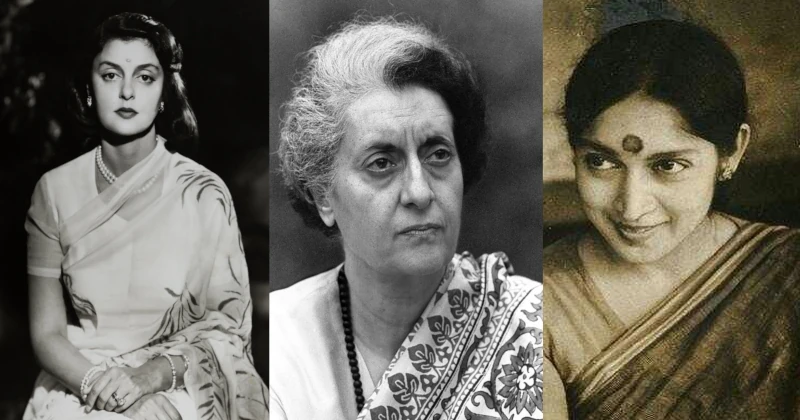
Maharani Gayatri Devi (Left), Indira Gandhi (Center), Snehalata Reddy (Right)

Maharani Gayatri Devi (Left), Indira Gandhi (Center), Snehalata Reddy (Right)

FacebookTwitterWhatsAppTelegramEmail

India’s period from 1975 to 1977 is often recalled as the darkest phase of its democratic history—the Emergency. This authoritarian regime, imposed by Prime Minister Indira Gandhi, suspended fundamental rights, silenced dissent, and subjected countless individuals to unimaginable atrocities. Among the many victims of this period were Snehalata Reddy, a noted actress, and Maharani Gayatri Devi of Jaipur, both of whom endured severe persecution under the guise of maintaining internal security.

On June 25 1975, Indira Gandhi’s announcement on All India Radio shocked the nation as she declared a state of Emergency, citing threats to internal stability. What followed was a systematic clampdown on civil liberties, with arrests of political opponents, journalists, activists, and anyone perceived as a threat to her rule.

Snehalata Reddy: From Stardom to Squalor

Snehalata Reddy, a prominent actress in the Kannada film industry, was trapped in the political web during the Emergency. Known for her talent and accolades, she was targeted solely for her association with George Fernandes, a prominent socialist leader at odds with the Congress government. Falsely accused of involvement in a conspiracy to detonate explosives, Snehalata was arrested on May 2, 1976, under the draconian Maintenance of Internal Security Act (MISA).

Snehalata’s imprisonment unfolded in a nightmarish sequence of events. Initially held in solitary confinement in Bangalore Jail, she endured a cell meant for one person, where basic amenities were a luxury. Reports detailed the inhumane conditions—overcrowded cells, inadequate sanitation, and systematic psychological and physical abuse. Despite suffering from asthma, she was denied proper medical care, exacerbating her health conditions.

During her incarceration, Snehalata’s spirit remained unbroken. Alongside political prisoners like Atal Bihari Vajpayee and Lal Krishna Advani, she endured unimaginable torture, including constant surveillance, solitary confinement, and physical violence. Despite these hardships, she found the strength to protest against the injustice, even going on hunger strikes to protest the inhumane treatment meted out to fellow inmates.

The charges against Snehalata and many others arrested during the Emergency were never substantiated. The legal system, manipulated under Emergency provisions, failed to provide justice. Instead, it became a tool for political persecution and suppression of dissent.

Maharani Gayatri Devi: A Royal Target

Similarly targeted was Maharani Gayatri Devi of Jaipur, renowned for her beauty, social activism, and outspoken criticism of governmental policies. Maharani Gayatri Devi, erstwhile princess and later politician, was targeted not for political dissent but under dubious financial charges. After receiving medical treatment in Mumbai, she was abruptly detained in Delhi by orders traced directly to Indira Gandhi herself. Alongside her brother Bhavani Singh, she was incarcerated in Tihar Jail—a place notorious for its harsh conditions and overcrowded cells.

Inside Tihar, conditions were deplorable. Maharani Gayatri Devi, accustomed to a life of luxury and dignity, was confined to a room barely large enough for two cots. The toilet facilities were unsanitary—a mere pit overflowing with filth. In this environment, she faced verbal abuse and threats from fellow inmates, including sex workers who menaced her with a blade, threatening to disfigure her.

As months passed, Maharani Gayatri Devi’s health deteriorated rapidly. The squalid conditions exacerbated her physical ailments, prompting her eventual transfer to a hospital. Even there, conditions were grim, with rats infesting her room. Under immense pressure from the authorities, including relentless interrogation and threats, she was coerced into signing a statement endorsing the Emergency and announcing her retirement from politics—a move designed to break her spirit and stifle her voice.

Beyond personal persecution, Indira Gandhi’s regime orchestrated the looting of the royal family’s treasures, dispatching military trucks to Jaipur to seize their wealth—a blatant act of intimidation and confiscation.

The stories of Snehalata Reddy and Maharani Gayatri Devi epitomize the widespread human rights abuses perpetrated during the Emergency. Their testimonies, alongside those of countless others, shed light on the dark underbelly of political repression and state-sponsored cruelty.

The end of the Emergency in 1977 marked a turning point in Indian politics, but its scars remain. Indira Gandhi’s Emergency period is a sad reminder of the fragility of democratic institutions and the lengths to which power can corrupt. The stories of Snehalata Reddy and Maharani Gayatri Devi serve as poignant reminders of the need to safeguard civil liberties and uphold the principles of justice and democracy in India and beyond.

Topics: India's emergencyCongressIndira GandhiMaharani Gayatri DeviEmergency PeriodSnehalata Reddy
Share27TweetSendShareSend
✮ Subscribe Organiser YouTube Channel. ✮
✮ Join Organiser's WhatsApp channel for Nationalist views beyond the news. ✮
Previous News

“New faces, same authoritarian Congress”: UP CM Yogi Adityanath on Emergency

Next News

1975 Emergency: Amit Shah, Rajnath Singh, Nadda, Jaishankar others recall “dark chapter” of Indian democracy

Related News

(Left) BJP leaders R Ashok (Right) BY Vijayendra

Karnataka: Guarantee schemes revision exposes Congress failure; BJP alleges secret plan to slash beneficiaries

12 years of Modi Govt: Meaningful philosophy or manufactured phenomenon; Bharat’s tryst with democracy

Kochi IPL Mystery: Why Did Sunanda Pushkar Surrender Stake Amid Benami Claims Tied to Shashi Tharoor, Sonia Gandhi?

Kochi IPL Mystery: Why Did Sunanda Pushkar Surrender Stake Amid Benami Claims Tied to Shashi Tharoor, Sonia Gandhi?

AAP’s New Front? CJP Emerges as Congress’s Biggest Narrative Challenger

Congress Protests, CJP Trends: AAP harvests through CJP on ground tilled by Congress

MK Stalin with Sonai Gandhi; MK Stalin with Rahul Gandhi (File Photos) (Left to Right)

Tamil Nadu: DMK says no to INDIA Alliance meet in Delhi, blames Congress for political backstabbing

From Partition to the National Advisory Council in 2004, Congress-led decisions are seen as having lasting impacts on India’s territorial integrity

Dark Chapter of Congress: How partition, territorial concessions and political decisions shaped India’s troubled legacy

Load More

Latest News

Prime Minister Narendra Modi

G7 Summit 2026: PM Modi says Global South wants partnership, not assistance

ED summons hoteliers in Gulmarg Land Scam

J&K: ED cracks down on Gulmarg land scam: 9 hoteliers including Mushtaq Chaya summoned in Roshni scheme probe

U.S. Consulate General Hyderabad Office
(Inside box- Telangana CM Revanth Reddy)

BJP Telangana questions Congress and CM Revanth Reddy over renaming a road in Hyderabad as ‘Donald Trump Avenue’

ABVP protests at Telangana School Education Directorate over closure of 24,000 government schools

Rabindranath Tagore

Rabindranath Tagore and the revival of Hindu civilisational pride

Representative Image

Viksit Bharat Shiksha Adhishthan Bill 2025: Mandate to promote Bharatiya ‘Gyan’ & ‘Bhasha’

Uttar Pradesh: Digital democracy dialogue ‘Triveni’ concludes; Focused on inclusive growth & cultural discourses

RSS Pune organises workshop on “Preparing for the AI Era”; Experts stress on AI literacy and Atmanirbharata in AI

Assam Governor Lakshman Prasad Acharya leads sacred Buddha relics mission to Mongolia

India- Mongolia Relations: Celebrating the spiritual neighbourhood

The AN-32: Service, sacrifice and the search for a successor

Load More
  • Privacy
  • Terms
  • Cookie Policy
  • Refund and Cancellation
  • Delivery and Shipping

© Bharat Prakashan (Delhi) Limited.
Tech-enabled by Ananthapuri Technologies

  • Home
  • Search Organiser
  • Bharat
    • Assam
    • Bihar
    • Chhattisgarh
    • Jharkhand
    • Maharashtra
    • View All States
  • World
    • Asia
    • Africa
    • North America
    • South America
    • Europe
    • Australia
  • Editorial
  • Operation Sindoor
  • Opinion
  • Analysis
  • Defence
  • Culture
  • Sports
  • Business
  • RSS @ 100
  • Entertainment
  • More ..
    • Sci & Tech
    • Vocal4Local
    • Special Report
    • Education
    • Employment
    • Books
    • Interviews
    • Travel
    • Health
    • Politics
    • Law
    • Economy
    • Obituary
  • Subscribe Magazine
  • Read Ecopy
  • Advertise
  • Circulation
  • Careers
  • About Us
  • Contact Us
  • Policies & Terms
    • Privacy Policy
    • Cookie Policy
    • Refund and Cancellation
    • Terms of Use

© Bharat Prakashan (Delhi) Limited.
Tech-enabled by Ananthapuri Technologies