Supreme Court questions validity of Uttar Pradesh Anti-Conversion Law: Seem to be violating Article 25 of Constitution
June 9, 2026
  • Read Ecopy
  • Circulation
  • Advertise
  • Careers
  • About Us
  • Contact Us
Android AppiPhone AppArattai
Organiser
  • ‌
  • Bharat
    • Assam
    • Bihar
    • Chhattisgarh
    • Jharkhand
    • Maharashtra
    • View All States
  • World
    • Asia
    • Europe
    • North America
    • South America
    • Africa
    • Australia
  • Editorial
  • International
  • Opinion
  • RSS @ 100
  • More
    • Op Sindoor
    • Analysis
    • Sports
    • Defence
    • Politics
    • Business
    • Economy
    • Culture
    • Special Report
    • Sci & Tech
    • Entertainment
    • G20
    • Azadi Ka Amrit Mahotsav
    • Vocal4Local
    • Web Stories
    • Education
    • Employment
    • Books
    • Interviews
    • Travel
    • Law
    • Health
    • Obituary
  • Subscribe
    • Subscribe Print Edition
    • Subscribe Ecopy
    • Read Ecopy
  • ‌
  • Bharat
    • Assam
    • Bihar
    • Chhattisgarh
    • Jharkhand
    • Maharashtra
    • View All States
  • World
    • Asia
    • Europe
    • North America
    • South America
    • Africa
    • Australia
  • Editorial
  • International
  • Opinion
  • RSS @ 100
  • More
    • Op Sindoor
    • Analysis
    • Sports
    • Defence
    • Politics
    • Business
    • Economy
    • Culture
    • Special Report
    • Sci & Tech
    • Entertainment
    • G20
    • Azadi Ka Amrit Mahotsav
    • Vocal4Local
    • Web Stories
    • Education
    • Employment
    • Books
    • Interviews
    • Travel
    • Law
    • Health
    • Obituary
  • Subscribe
    • Subscribe Print Edition
    • Subscribe Ecopy
    • Read Ecopy
Organiser
  • Home
  • Bharat
  • World
  • Operation Sindoor
  • Editorial
  • Analysis
  • Opinion
  • Culture
  • Defence
  • International Edition
  • RSS @ 100
  • Magazine
  • Read Ecopy
Home Bharat

Supreme Court questions validity of Uttar Pradesh Anti-Conversion Law: Seem to be violating Article 25 of Constitution

Justice Misra, reviewing the Act, noted, “Conversion by itself is not an offence, but when it is brought about by undue influence, misrepresentation, coercion, etc. So in such circumstances, only the victim can say that he has been illegally converted and no other person”

WEBDESKWEBDESK
May 17, 2024, 12:00 pm IST
in Bharat, Law, Uttar Pradesh
Follow on Google News
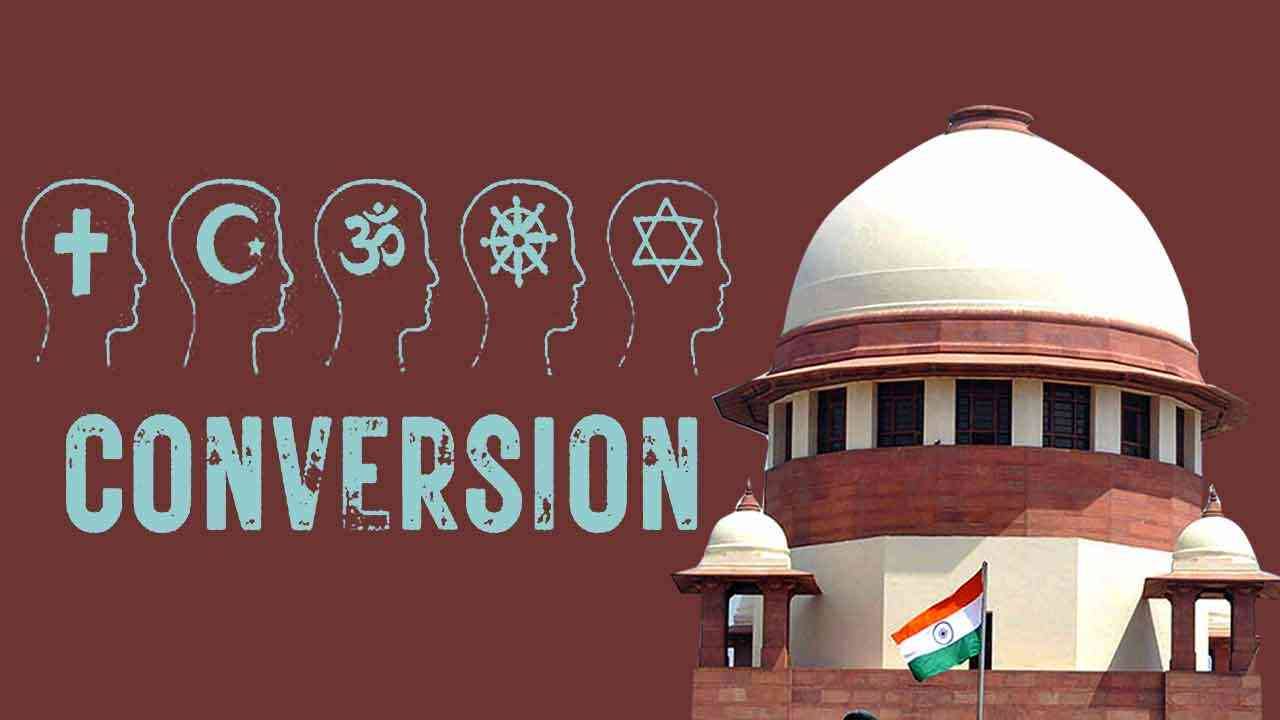
A representative image (Source: Global Governance News)

A representative image (Source: Global Governance News)

FacebookTwitterWhatsAppTelegramEmail

On May 16, the Supreme Court of India made a significant observation regarding the Uttar Pradesh Prohibition of Unlawful Conversion of Religion Act, 2021. During a hearing, the bench, consisting of Justices J. B. Pardiwala and Manoj Misra, suggested that certain provisions of the law might infringe upon the fundamental right to freedom of religion guaranteed under Article 25 of the Constitution.

The case under consideration involved Dr Rajendra Bihari Lal, the Vice Chancellor of Sam Higginbottom University of Agriculture, Technology and Sciences (SHUATS), along with several other accused individuals. They were implicated in a case involving allegations of forceful religious conversions. Dr Lal and the others faced charges under various sections of the Indian Penal Code (IPC), including Section 307 (attempt to murder), Section 504 (intentional insult with an aim to provoke a breach of peace), and Section 386 (extortion). Additionally, they were booked under specific provisions of the UP Anti-Conversion law.

The proceedings began with the bench questioning the nature of the alleged conversions. “When you say conversion, what sort of conversion was it here?” asked Justice Pardiwala. Representing the accused, Senior Advocate Siddharth Dave explained that the conversions in question were from Hindu Dharma to Christianity.

“Was this forced? This was an actual conversion?” the bench further inquired.

Dave responded that there were FIRs (First Information Reports) lodged, claiming the conversions were coerced. However, he pointed out that these FIRs were not filed by the supposed victims but rather by co-accused individuals. According to Section 4 of the UP Anti-Conversion law, only the aggrieved person, their immediate family, or a close relative by blood, marriage, or adoption could register an FIR for an offence under the Act.

The bench explored this aspect further, questioning, “What if some third person is aware of such-and-such happening? Can they file an FIR?” Dave clarified that the Act does not envision such a provision, meaning investigations cannot proceed based on reports from unrelated third parties.

Justice Misra, reviewing the Act, noted, “Conversion by itself is not an offence, but when it is brought about by undue influence, misrepresentation, coercion, etc. So in such circumstances, only the victim can say that he has been illegally converted and no other person.”

The bench scrutinised the FIR details, asking, “What is meant by 420 and forgery here?” Dave explained that these pertained to allegations of allurement and modifications of names in personal documents. The bench then questioned the validity of claims regarding a ritual in a church led by a ‘Father,’ asking for witness statements about luring and coercion. Dave responded that no specifics were provided about the church or the sections involved, indicating a lack of evidence for any committed offence.

Senior Advocate Mukta Gupta, representing other accused, argued that the FIRs did not show the presence of the alleged victims at the scene of the purported offence. She highlighted that the accused were themselves named as victims in the FIRs, suggesting a malicious intent behind the delayed and vague allegations.

The bench then discussed Section 10 of the Act, which attaches vicarious liability to institutions. They asked, “What about your organisation? If they were there, you could be connected?” Dave responded that his institution was not involved in the offence.

Senior Advocate Rebecca John, representing the additional accused, sought the quashing of the FIRs, pointing out that the first FIR was registered five months before the others, indicating possible mala fide intentions. She argued that only one FIR should be sustained per transaction, and subsequent FIRs should be dismissed if the first is quashed.

The bench then delved into the distinction between individual and mass conversions, asking, “How is conversion different from mass conversions?” John explained that the Act prescribes more severe punishments for mass conversions. The bench noted, “So mass conversion would automatically mean that conversion is taking place?” John confirmed, stating that anyone aggrieved by a mass conversion could file an FIR.

Justice Misra then asked if the provisions of the Act were under challenge, to which Senior Advocate Siddharth Aggarwal confirmed they were, although not in the present petitions. Justice Misra observed, “This anti-conversion law in some part may seem to be violative of Article 25.”

The bench, treating the current petitions as part-heard, ordered a stay on further proceedings in the FIRs until the next hearing date on August 2. They noted that under the UP law, prior sanction from the District Magistrate is required for any religious conversion.

Earlier, the Uttar Pradesh Police had described Dr Lal and the other accused as the main perpetrators of a mass religious conversion program, allegedly funded by organisations from around 20 countries. The police claimed that about 90 Hindus were influenced, coerced, and lured into converting to Christianity at the Evangelical Church of India in Hariharganj, Fatehpur, with promises of easy money. Lal was depicted as a notorious criminal involved in 38 cases over the last two decades.

The increasing interference of the judiciary in executive matters raises concerns, especially amidst the surge in cases of grooming jihad and forced religious conversions, not only in Uttar Pradesh but across the whole of India. The law, originally enacted to address the serious issue of mass religious conversions, risks being undermined if significant changes are made. Such alterations could be unjust to the victims. The ongoing hearings will play a crucial role in determining the future course of this legislation and its impact on combating forced conversions.

Topics: Supreme CourtForced Religious ConversionsUttar Pradesh Anti Conversion LawUP Anti Conversion Lawreligious freedom granted by Article 25Validity of anti conversion law
ShareTweetSendShareSend
✮ Subscribe Organiser YouTube Channel. ✮
✮ Join Organiser's WhatsApp channel for Nationalist views beyond the news. ✮
Previous News

Amit Shah hails increased voter turnout in J&K as proof of Article 370 success; clears air on North-South divide

Next News

Jharkhand: Six-day remand for arrested Jharkhand’s minister Alamgir Alam, ED labels serious charges in remand petition

Related News

Supreme Court remarks have revived the UAPA bail debate, with supporters citing national security concerns

UAPA Bail Debate: Striking a delicate balance between individual liberty and national security

Supreme Court invokes Article 142, issues strict timelines to curb delay in High Court judgments

Supreme Court invokes Article 142, orders strict timelines for High Court judgments to end delays in justice delivery

SIR and Article 324: Supreme Court strengthens the constitutional spine of Indian Democracy; Reaffirms ECI’s authority

Andhra Pradesh cancels Pastor Anand’s SC certificate following Apex Court’s verdict on SC/ST Act on Christian converts

Supreme Court - DMK leader MK Stalin

Tamil Nadu: After reserving judgment, SC Bench recuses from delivering verdict in Stalin’s 2011 Kolathur election case

Akhil Bharatiya Adhivakta Parishad explores India’s early constitutional battles over free speech and judicial review

The First Amendment at 75: Revisiting Organiser’s historic free speech battle against the Nehru government

Load More

Latest News

Union Defence Minister Rajnath Singh

Uttar Pradesh: Defence land goes green; Rajnath Singh clears 250 MW solar project in Sitapur

Afghanistan Foreign Minister Amir Khan Muttaqi and External Affairs Minister Dr. S. Jaishankar(File Photo)

India extends gratis long-term business visas to Afghan traders; Slams Pakistan for “trade & transit terrorism”

How Modi's Zero-tolerance doctrine reshaped India's anti-terror policy (This is an AI generated image)

Twelve Years of Modi Government and the rise of India’s zero-tolerance doctrine against terrorism

Press Conference organised by Janjati Suraksha Manch at the Press Club, Ranchi, National Convener Dr Raj Kishore Hansda

Success of Janjati Sanskritik Samagam symbolises unity and cultural pride: Dr Raj Kishore Hansda

India delivered a historic performance at the inaugural World Yogasana Championships, finishing at the top of the medal tally with an astounding 114 medals, including 102 golds

World Yogasana Championships: India scripts historic triumph with 114 medals and 102 gold medal wins

Protest erupts in POJK

Why is PoJK protesting? JAAC ban, anti-Pakistan slogans and public anger against Pakistan Army — Read here

India slams Pakistan over its Fatna al Hindustan narrative

India tears Pakistan at UN over ‘Fitna al Hindustan’ narrative; Exposes Islamabad as an ‘organised factory of hate’

India's Permanent Representative to United Nations Ambassador Harish Parvathaneni

India & Afghanistan are “civilisational states”: Indian Envoy at UN reaffirms health, education & humanitarian aid

Bulldozer action on houses linked to drug traffickers in Rourkela's Meenapada area

Odisha: Major crackdown on drug traffickers in Rourkela; Bulldozers demolish houses of Farida, Imran & other accused

Prime Minister Narendra Modi with Agri Minister Shivraj Singh Chouhan

India’s Agricultural Revolution: Rising output, record procurement and expanding farmer support since 2014

Load More
  • Privacy
  • Terms
  • Cookie Policy
  • Refund and Cancellation
  • Delivery and Shipping

© Bharat Prakashan (Delhi) Limited.
Tech-enabled by Ananthapuri Technologies

  • Home
  • Search Organiser
  • Bharat
    • Assam
    • Bihar
    • Chhattisgarh
    • Jharkhand
    • Maharashtra
    • View All States
  • World
    • Asia
    • Africa
    • North America
    • South America
    • Europe
    • Australia
  • Editorial
  • Operation Sindoor
  • Opinion
  • Analysis
  • Defence
  • Culture
  • Sports
  • Business
  • RSS @ 100
  • Entertainment
  • More ..
    • Sci & Tech
    • Vocal4Local
    • Special Report
    • Education
    • Employment
    • Books
    • Interviews
    • Travel
    • Health
    • Politics
    • Law
    • Economy
    • Obituary
  • Subscribe Magazine
  • Read Ecopy
  • Advertise
  • Circulation
  • Careers
  • About Us
  • Contact Us
  • Policies & Terms
    • Privacy Policy
    • Cookie Policy
    • Refund and Cancellation
    • Terms of Use

© Bharat Prakashan (Delhi) Limited.
Tech-enabled by Ananthapuri Technologies