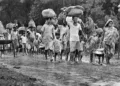
Every time a terrorist attack with Islamic links takes place in the country, a familiar narrative machine springs into action. Predictably, it insists the violence has “nothing to do with religion”—a line repeated so often it’s lost all meaning. From the 1990 exodus of Kashmiri Pandits to the horrific attack on Hindu pilgrims in Pahalgam on April 22, 2025, this narrative is unfailingly attached to every such incident, especially in J&K.
These apologists often try to soften public outrage by portraying terrorists as misguided youths shaped by poverty or personal trauma. They highlight isolated instances of local Muslims condemning the violence or holding candle marches, using them to project an image of harmony and downplay the ideological motivations behind the attacks. But the pattern is too consistent to ignore: for decades, J&K has seen a string of communally driven terror attacks that overwhelmingly target Hindus. A simple review of this history reveals that these acts of violence are not random, nor devoid of religious motivation—they are deeply rooted in ideological extremism.
Here is a list of attacks that directly challenge and expose the hollow claims of this terror-apologist narrative:
1993- Kishtwar Terrorist Attack
On August 14, 1993, terror struck the Sarthal area of Kishtwar district in J&K when three armed terrorists hijacked a bus carrying Hindu passengers. Brandishing AK-47s, they forced the women and children off the bus and took the male passengers hostage. The men were taken to a remote location, divided into two groups, and then executed in cold blood—shot at point-blank range. None of the male passengers survived. This brutal, targeted massacre of Hindus marked a dark turning point, signalling the spread of Islamist terrorism into the Jammu region and sparking a fresh wave of Hindu migration from the area in fear for their lives.
1998- Wandhama Massacre
On January 25, 1998, terror returned to the Kashmir Valley when terrorists in Wandhama, a town in Ganderbal district of J&K brutally massacred 23 Kashmiri Pandits from a single family. These were among the few Pandits who had chosen to remain in the valley after the mass exodus of Hindus in the early 1990s. According to locals who rushed to the scene after hearing gunfire, the sight was harrowing—23 members of the family lay lifeless, their bodies strewn in a pool of blood, while a nearby temple had been set on fire. One family member miraculously escaped the carnage. This cold-blooded attack was not just a tragedy—it was a deliberate, calculated act aimed at wiping out the remnants of a community that had already endured so much. The survivor later said that the terrorists entered the family’s house dressed like Indian Army soldiers carrying AK-47s. They talked to the family members and gathered them in a place and shot them.
1998- Prankote and Dakikote Massacre
Just months after the Wandhama massacre, J&K witnessed yet another horrific act of terror targeting Hindus. On the night of April 17, 1998, Islamic terrorists stormed the villages of Prankote and Dakikote in the Udhampur district (now part of Reasi district) and brutally slaughtered 29 Hindus, including 13 women and children. Many of the victims were beheaded, and their homes were set ablaze. These remote villages were situated along a route commonly used by Pakistani terrorists to infiltrate the region. According to a survivor’s account, the terrorists had tried to force the villagers to convert to Islam and consume beef. When they refused, they were mercilessly executed. One woman managed to escape her burning home but later died from severe burn injuries; her body was discovered in a nearby gorge. The atrocity remained unknown to authorities for nearly 10 hours. Security forces arrived the following day, and it took the J&K Police almost 48 hours to reach the massacre site. A police official described the scene as a “ghost area,” with beheaded bodies strewn across the landscape. In the aftermath, surviving Hindu families fled the villages in fear, abandoning their ancestral homes in a mass exodus.
2000- Chittisinghpura Massacre
On March 20, 2000, just hours before US President Bill Clinton’s visit to India, a horrific terrorist attack took place in Chittisinghpora, a Sikh-majority village in south Kashmir’s Anantnag district. Around 15–20 Islamic terrorists, dressed in Indian Army uniforms, entered the village and carried out a cold-blooded massacre of 36 Sikh men.
The attackers split into two groups and stormed two Gurudwaras—Shaukeen Mohalla Gurudwara and Singh Sabha Sumandri Hall Gurudwara—located about 150 meters apart. There, they rounded up Sikh men under the pretence of a security inquiry, allegedly asking for information about supposed militants in the area. Once gathered, the terrorists opened indiscriminate fire, killing 36 men on the spot. Survivors, including Nanak Singh, recounted how the terrorists posed as soldiers and lured the villagers into a trap. The Indian government later attributed the attack to Pakistan-backed terrorist groups Lashkar-e-Toiba and Hizbul Mujahideen.
2001- Terrorist Attacks on the Amarnath Yatra
The Amarnath Yatra, one of the most sacred Hindu pilgrimages, has repeatedly been the target of brutal terrorist attacks aimed at instilling fear among devotees and disrupting communal harmony. On August 1 and 2, 2000, a series of coordinated attacks were carried out by Islamic terrorists in the Anantnag and Doda districts of J&K. Over 89 people—media reports suggesting up to 105—were killed across five targeted assaults. At the Nunwan base camp in Anantnag, 32 Hindu pilgrims and 7 security personnel were gunned down in a two-hour-long attack. On the same day, 27 migrant Hindu labourers were killed in Mirbazar-Qazigund and Sandoo-Acchabal, and 11 more civilians were massacred in Doda. The Hizbul Mujahideen terrorist group was responsible for the carnage.
Terror struck again during the Amarnath Yatra in July 2001, when terrorists infiltrated the security perimeter at Sheshnag Lake, launching grenades and IEDs. The attack killed 8 Hindu pilgrims and 2 security personnel.
On August 6, 2002, terrorists from al-Mansuriyan, a front for Lashkar-e-Taiba, attacked the Nunwan base camp once more, killing 9 Hindu pilgrims.
The most recent major attack occurred on July 10, 2017, when terrorists ambushed a bus carrying Hindu pilgrims to the shrine. Eight pilgrims lost their lives and 19 others were injured in the assault. These attacks, carried out by Pakistan-backed terrorist groups like Hizbul Mujahideen and Lashkar-e-Taiba, underscore the ongoing threat to religious pilgrims in the region and the persistent targeting of Hindus in Jammu and Kashmir.
2003- Nandimarg Massacre
On March 23, 2003, the village of Nandimarg in Pulwama district witnessed one of the most brutal targeted killings of Kashmiri Pandits. In a chilling act of terror, 24 members of the minority community—including 11 men, 11 women, and 2 young boys—were gunned down by Lashkar-e-Taiba terrorists disguised as Indian Army personnel. The attackers entered the village at night, forced the victims out of their homes, and executed them in cold blood. This massacre sent shockwaves across the country and further deepened the fear and displacement faced by the dwindling Kashmiri Pandit population in the Valley.
2006- Doda Massacre
On April 30, 2006, one of the deadliest communal attacks in J&K unfolded when Lashkar-e-Taiba terrorists brutally murdered 54 Hindus in two separate incidents in Doda and Udhampur districts. In the first attack, terrorists disguised as Indian Army personnel entered Thawa village in the Kulhand area of Doda district. They lined up 22 Hindu villagers—mostly shepherds and their families—and opened fire at point-blank range. Among the victims was a 3-year-old girl. The brutality was so extreme that the doctor called in for postmortems reportedly suffered a heart attack upon seeing the condition of the bodies.
On the same day, in a coordinated strike, terrorists abducted 35 Hindu shepherds from Lalon Galla village in Udhampur’s Basantgarh area and executed them. The twin attacks were a calculated attempt to instil fear, spark communal tension, and drive Hindus out of the region.
2021- Killing of a School Principal and a Teacher in Srinagar
On October 7, 2021, terrorists carried out a targeted attack inside the Government Boys Higher Secondary School in the Idgah area of Srinagar, killing Principal Satinder Kaur and teacher Deepak Chand. Kaur belonged to the Sikh community, while Chand was a Kashmiri Pandit—both minorities in the region. According to eyewitnesses, the terrorists separated the Hindu and Sikh staff from their Muslim colleagues before executing the two educators at point-blank range. This chilling act of selective killing was not an isolated incident—it followed a grim pattern of religiously motivated attacks in J&K. Despite the clear communal targeting, the religious motivations behind such terror attacks are routinely downplayed or ignored in public and political discourse. The focus often shifts to the logistics of the attack—the how—while the why, rooted in radical ideology and hatred, remains unaddressed. The recent terrorist attack in Pahalgam is yet another grim reminder of this ongoing trend, where the perpetrators and their motives are overshadowed by superficial debates and selective outrage.