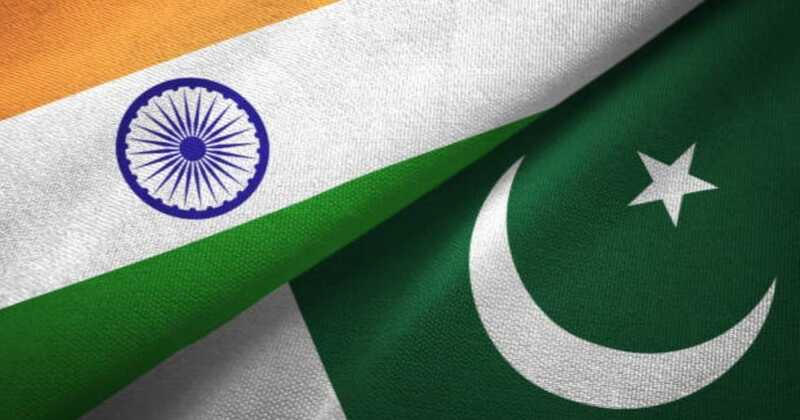
On March 23, Pakistan’s Foreign Minister Muhammad Ishaq Dar said that the country will “seriously examine” the question of resuming ties with India. Post making constitutional changes to Jammu & Kashmir in 2019, trade between India and Pakistan has nosedived since then. Consequently, India stripped Pakistan of its “Most Favoured Nation” (MNF) status, effectively placing a 200 per cent duty on Pakistani imports.
Bilateral relations have been impacted by Islamabad’s hardline on Kashmir and the Pakistani soil harbouring terrorism on its lap. The tattered state of Pakistan’s economy, however has changed the tune and attitude. India is holding thumbs and contemplating as the situation unravels further.

What prompted Pakistan’s Foreign Minister Muhammad Ishaq Dar to issue such statements on the Indo-Pak bilateral trade relations? The apparent reason is the catastrophic economic condition of Pakistan and Muhammad Ishaq Dar’s involvement in the negotiations with the International Monetary Fund (IMF) for financial assistance to end Pakistan’s economic woes.
Secondly, the constant push from the business community within is intensifying. IMF has put forth the condition to increase energy prices, but this will adversely impact production within the country. Imports have decreased as the Pakistani rupee has depreciated. The Pakistani Foreign Minister mentioned that the trade between India and Pakistan is taking place through Dubai and other countries. Thus, this augments the costs and logistical burden, consequently demanding to resume the trade directly between the two nations. The GDP of Pakistan is almost ten times smaller than India’s GDP, and that gap is widening. Moreover, scholarly experts have observed that Pakistan’s security issues range from Baloch secessionist sentiments to the contentious Western front, i.e., Afghanistan and Iran have strained over a period of time. Pakistan is looking towards India to seek at least a stable front.
Furthermore, Muhammad Ishaq Dar has been viewed as a dove in Pakistan who aspires to build good ties with neighbours. His comments show that Pakistan wants to improve economically and elevate itself. In 2021, Pakistan allowed the trade of sugar and cotton to continue since India was in a position to supply it, and Pakistan was in need of it. Erstwhile PM Imran Khan supported the proposal but retracted it when it was proffered to the Cabinet after he was lambasted by the hardliners. Thus, no consensus. Therefore, it remains to be seen whether Dar’s olive branch for India has the backing of Rawalpindi.
The path that Muhammad Ishaq Dar wants to go down is full of complexities. The leaders of the newly constituted coalition Government in Pakistan have mixed opinions. President Asif Ali Zardari of the Pakistan People’s Party (PPP) and Prime Minister Shahbaz Sharif of the Pakistan Muslim League-Nawaz (PML-N) have given the green signal to do trade with India. However, the PPP chairman, Bilawal Bhutto Zardari, has expressed his critical Opposition towards India in recent years. Further, the stakeholders also involve the military. Well, their stance is vague. Thus, it is not clear where they stand currently.
Additionally, Pakistan has put forth some preconditions vis a vis discussing trade with India. The most ardent one is demanding the restoration of Article 370, which has the zilch scope of getting translated into reality. India has clearly stated that Pakistan has to make some real efforts to resume the dialogue, especially where the issue is terrorism. External Minister Dr S Jaishankar has reiterated India’s stance on multiple occasions that trade and terrorism cannot go hand in hand. Therefore, if Pakistan is trying to reform its image, then they have a lot of work cut out for themselves.
Albeit, India has a good chance to play the hardball and get the dice rolling, as New Delhi too wants to have a stable and prosperous neighbourhood. But for now the onus is on Pakistan’s shoulders to reconcile its economic and political senses together to work with India.
This trade hiatus is not the first between the two neighbours. Even post 1965 and 1971 wars, the bilateral trade faced a huge setback. Borders were shut and were heavily fortified and militarised, thus becoming a major reason why the trade between the two could never flourish. Even after the SAARC Preferential Trade Agreement was signed, Pakistan never took it seriously and displayed its disinterest in doing trade with India. Kashmir was again the bone of contention. However, from India’s side, it is now a closed chapter. In 2010, during Manmohan Singh’s administration, the World Bank was assisting in negotiations over a petroleum and electricity agreement. However, the real masters, Pakistan’s Army, would quash it. Members of the FICCI in 2012 travelled to Pakistan to sort out a serious and mutual path for trade. Zardari Government intent to give India the MNF status, again was thwarted by Pakistan’s army.
In 2014, during the SAARC Summit, all the members concurred to open borders to facilitate logistical movements, Pakistan’s military intervened and blocked the proposal. Hence, the real power is concentrated in the hands of the military; thus, before convincing India, the new Government has to get the army on board with its strategy. Hence, perhaps the biggest challenge for Pakistan is to prove that it can keep its parochial political rhetoric separate from its economic sphere. It is a task for Islamabad to climb down the horse without losing face.
Meanwhile, Pakistan’s parroting over Kashmir has become redundant. Contrarily, India’s position on Kashmir has concretised. The former is still unable to digest the shock. Its effort to even bring China in the picture through the UN Security Council failed miserably. Pakistan has also lost its buddies in the West Asian region. Regional leaders in Saudi Arabia and the UAE have abstained from saying anything about the matter. In fact they have been sustaining and evolving relations with India. Pakistan knows it has been isolated and has been cornered by the world order.
Quite recently, Pakistan witnessed three major attacks over its strategic sites. One incident took place near Besham in Khyber Pakhtunkhwa province, where the suicide bomber drove a vehicle filled with explosives into a convoy. Five Chinese workers from a huddle power project in Dasu were also killed.
Another incident took place when the Baloch Liberation Army (BLA) targeted a naval airbase in Turbat Balochistan. Before this, the BLA attacked Gwadar Port, which is a major part of the China-Pakistan Economic Corridor (CPEC). It is a flagship and lynchpin of Beijing’s ambitious Belt and Road Initiative. However, this points out the fault lines in Pakistan’s political economy. In an expected response, Chinese quarters have reiterated their ties with Pakistan. The so-called iron-clad relationship between the two are not withstanding the strategic costs which CPEC demands. Reportedly, outfits like TTP and ISIS-K have distastefully shown anti-China sentiment, and BLA views CPEC as pernicious towards their goals. It seems that Pakistan has placed more than the required eggs into the CPEC basket.
With the Indian general elections just a couple of days away, New Delhi’s focus is preoccupied. Therefore, there would be no action on this front for now. Islamabad has to wait in the queue because New Delhi has its plate full and is busy dousing fires in various other neighbouring countries.
The reboot of trade relations will benefit both nations. For this to happen, Pakistan has to break free from its past policies (which it is not clearly letting go of) and records of betraying trust. Should they be able to overcome this challenge, India may consider discussing and resuming trade links.
New Delhi will have to meticulously discern Pakistan’s situation, which is coupled with over-reliance on China and prolonged political and economic crises, which has created scepticism around Islamabad’s perils. Pakistan requires systematic remodelling of its policy framework and, diversify itself and eliminate terrorism. Opening up of trade ties is a much needed signal from Islamabad and Rawalpindi, but the veracity is yet to be checked.