What differentiates the festival of Bhai Dooj from Raksha Bandhan
June 27, 2026
  • Read Ecopy
  • Circulation
  • Advertise
  • Careers
  • About Us
  • Contact Us
Android AppiPhone AppArattai
Organiser
  • ‌
  • Bharat
    • Assam
    • Bihar
    • Chhattisgarh
    • Jharkhand
    • Maharashtra
    • View All States
  • World
    • Asia
    • Europe
    • North America
    • South America
    • Africa
    • Australia
  • Editorial
  • International
  • Opinion
  • RSS @ 100
  • More
    • Op Sindoor
    • Analysis
    • Sports
    • Defence
    • Politics
    • Business
    • Economy
    • Culture
    • Special Report
    • Sci & Tech
    • Entertainment
    • G20
    • Azadi Ka Amrit Mahotsav
    • Vocal4Local
    • Web Stories
    • Education
    • Employment
    • Books
    • Interviews
    • Travel
    • Law
    • Health
    • Obituary
  • Subscribe
    • Subscribe Print Edition
    • Subscribe Ecopy
    • Read Ecopy
  • ‌
  • Bharat
    • Assam
    • Bihar
    • Chhattisgarh
    • Jharkhand
    • Maharashtra
    • View All States
  • World
    • Asia
    • Europe
    • North America
    • South America
    • Africa
    • Australia
  • Editorial
  • International
  • Opinion
  • RSS @ 100
  • More
    • Op Sindoor
    • Analysis
    • Sports
    • Defence
    • Politics
    • Business
    • Economy
    • Culture
    • Special Report
    • Sci & Tech
    • Entertainment
    • G20
    • Azadi Ka Amrit Mahotsav
    • Vocal4Local
    • Web Stories
    • Education
    • Employment
    • Books
    • Interviews
    • Travel
    • Law
    • Health
    • Obituary
  • Subscribe
    • Subscribe Print Edition
    • Subscribe Ecopy
    • Read Ecopy
Organiser
  • Home
  • Bharat
  • World
  • Operation Sindoor
  • Editorial
  • Analysis
  • Opinion
  • Culture
  • Defence
  • International Edition
  • RSS @ 100
  • Magazine
  • Read Ecopy
Home Bharat

What differentiates the festival of Bhai Dooj from Raksha Bandhan

Bhai Dooj is a festival celebrated by Hindus on the second lunar day of Shukla Paksha in the Vikram Samvat Hindu calendar or of Shalivahan Shaka calendar month of Kartika

WEBDESKWEBDESK
Nov 15, 2023, 08:00 am IST
in Bharat, Culture
Follow on Google News
FacebookTwitterWhatsAppTelegramEmail

As the festivities for Diwali concluded with much pomp and glory, millions of Hindus across India will soon be celebrating the bond between brothers and sisters on Bhai Dooj, which will fall on November 6, just two days after Deepawali.

As mentioned, Bhai Dooj is celebrated annually to mark the bond between brothers and sisters. Sounds familiar, right? That’s because while there are festivals of different importance all over the world but those that celebrate the sacred and auspicious bond of brothers and sisters are few like, Bhai Dooj and Raksha Bandhan.

What many might find puzzling is that when there already is Raksha Bandhan, what makes Bhai Dooj so significant when celebrating sibling love? And also, what’s the difference between Raksha Bandhan and Bhai Dooj?

For starters, both occasions have different origins in holy texts.

The origins of Rakshabandhan can be found during the events of the Mahabharata. Legend dictates that when Lord Krishna accidentally nicked his finger on his ‘sudarshan chakra’, Princess Draupadi tore a piece of her saree and tied it to his finger to stop the bleeding. Lord Krishna was so touched by this gesture that he vowed to protect and cherish her.

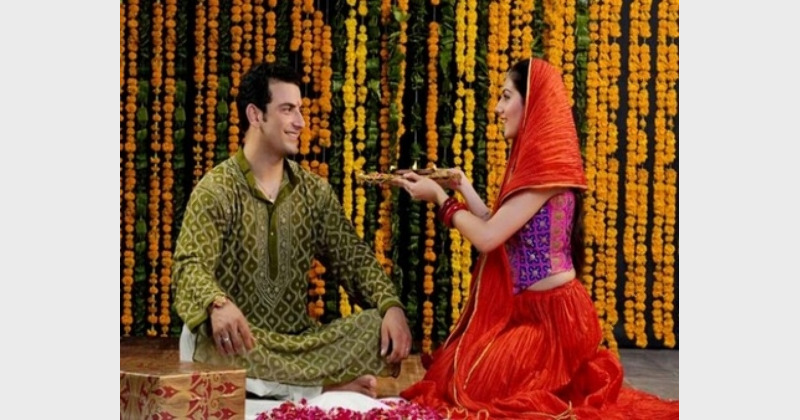
Whereas Bhai Dooj has two origin stories. The first legend narrates that after slaying the evil demon Narakasura, Lord Krishna visited his sister Subhadra, who warmly welcomed him with sweets and flowers. She also affectionately applied tilak on Krishna’s forehead. The other story is that Yamraj, God of Death, visited his twin sister, Yamuna. In return, she welcomed him with a tilak ceremony, garlanded him and fed him special dishes. They dined together after a long time and exchanged gifts.

Hence on Bhai Dooj, the aarti and tika play a huge part, whereas, on Raksha Bandhan, a sacred thread is tied on the brother’s hand.

The tying of Rakhi symbolizes the promise of a brother to protect and safeguard his sister from all evil forces. While on Bhai Dooj, with the tika put on the brother’s forehead, the sister vows to protect her brother from any evil at all costs.

Though the application of tilak is a common ritual in both Bhai Dooj and Rakhi celebrations, it holds a special significance during Bhai Dooj.

Further, while Raksha Bandhan is not limited to celebrating only between brothers and sisters. It can be performed between sisters, only brothers, and friends as well. On the other hand, Bhai Dooj is especially for the brother-sister duo.

Another key difference among the festivals is that Raksha Bandhan is celebrated on the full moon of the Savan month of the Hindu year as per the Hindu calendar. The month of Savan is considered an auspicious period among the Hindus, and Bhagwan Shiv is worshipped every Monday during this entire time.

Bhai Dooj, also known as Sodara Bidige in Karnataka, Bhai Phota in Bengal, Bhai-Beej in Gujarat and Bhau Beej in Maharashtra, is observed on the second lunar day of the Shukla Paksha (bright fortnight) of the Kartika month of Vikram Samvat Hindu calendar. The occasion marks the last day of the five-day-long celebrations of Diwali or the Tihar festival.

With all these stories, rituals, facts, and legends associated with Raksha Bandhan and Bhai Dooj, you should be able to distinguish between the two festivals. With only a day left for Bhai Dooj, choose the best and truly special present for your siblings or cousins and surprise them with memories to cherish for a lifetime.

Topics: Bhai DoojHinduCulturehindu festivalHindu calendar
ShareTweetSendShareSend
✮ Subscribe Organiser YouTube Channel. ✮
✮ Join Organiser's WhatsApp channel for Nationalist views beyond the news. ✮
Previous News

Bhai Dooj 2023: Date, Significance, Shubh Muhurat; everything you need to know

Next News

Union Power Minister RK Singh stands firm against developed nations’ environmental regulations

Related News

PM Modi’s Gift to Global Leaders: Kalamkari Mahabharat, Charaka Samhita reflects India’s timeless artistic heritage

Uttar Pradesh: Digital democracy dialogue ‘Triveni’ concludes; Focused on inclusive growth & cultural discourses

Prime Minister Narendra Modi and his Slovakian counterpart Prime Minister Robert Fico

India-Slovakia elevate ties to Comprehensive Partnership; PM Modi hails cultural bond, Upanishads translation to Slovak

Germany: Sri Ganesha temple opens in Berlin: Europe’s largest Hindu Mandir reflects India’s cultural & dharmic spirit

Beneath the Minaret: The Hindu and Jain legacy burried under Qutub Minar

Forced to Remove the “Faith”: How Hindu students are targeted at exam centres

Load More

Latest News

OTT Platforms and their influence on India’s culture, values and social identity

The Ideological Industry of Toxic OTT: A cultural war against India and Hindu society

Shivaji Maharaj's Coronation (This is an AI generated image)

Hindu Samrajya Diwas: Coronation of Chhatrapati Shivaji Maharaj—Timeless symbol of swarajya & civilizational resurgence

Metropolitan Yuhanon Mar Diascoros (File Photo)

Keralam: Church, CM VD Satheesan oppose FCRA amendments; BJP says rules target violations, not religion or charity

PM Modi emplanes for Seychelles: Maritime security, tourism ties in focus; Island nation backs India’s UNSC seat

Amid rising global conflicts and uncertainty, the idea of ‘Swa’ offers Bharat a foundation for self-reliance, resilience, and civilisational confidence

The Geopolitics of Selfhood: Why the idea of ‘Swa’ is emerging as Bharat’s strategic compass in a turbulent world

Operation Amistad: India airlifts BHISHM hospital to Venezuela; Reflects healthcare innovation & humanitarian diplomacy

16th-century Vijayanagara inscription found in Seshachalam forest

Historic Discovery in Tirupati: Two Vijayanagara-era inscriptions reveal secrets of 16th-century mandir administration

Birth Anniversary of Bankim Chandra Chattopadhyay: A life dedicated to awakening national identity & self-respect

The alleged missionary-Maoist nexus has raised concerns over foreign funding, radicalisation and national security in India's tribal regions

From Foreign Funds to Red Terror: Investigating alleged missionary-Maoist nexus operating in India’s tribal heartlands

Tamil Nadu: Hindu Munnani objects to portraits of Vijay being placed inside temple sanctums

Load More
  • Privacy
  • Terms
  • Cookie Policy
  • Refund and Cancellation
  • Delivery and Shipping

© Bharat Prakashan (Delhi) Limited.
Tech-enabled by Ananthapuri Technologies

  • Home
  • Search Organiser
  • Bharat
    • Assam
    • Bihar
    • Chhattisgarh
    • Jharkhand
    • Maharashtra
    • View All States
  • World
    • Asia
    • Africa
    • North America
    • South America
    • Europe
    • Australia
  • Editorial
  • Operation Sindoor
  • Opinion
  • Analysis
  • Defence
  • Culture
  • Sports
  • Business
  • RSS @ 100
  • Entertainment
  • More ..
    • Sci & Tech
    • Vocal4Local
    • Special Report
    • Education
    • Employment
    • Books
    • Interviews
    • Travel
    • Health
    • Politics
    • Law
    • Economy
    • Obituary
  • Subscribe Magazine
  • Read Ecopy
  • Advertise
  • Circulation
  • Careers
  • About Us
  • Contact Us
  • Policies & Terms
    • Privacy Policy
    • Cookie Policy
    • Refund and Cancellation
    • Terms of Use

© Bharat Prakashan (Delhi) Limited.
Tech-enabled by Ananthapuri Technologies