Researchers shed light into how traumatic memories can rewire brain
June 5, 2026
  • Read Ecopy
  • Circulation
  • Advertise
  • Careers
  • About Us
  • Contact Us
Android AppiPhone AppArattai
Organiser
  • ‌
  • Bharat
    • Assam
    • Bihar
    • Chhattisgarh
    • Jharkhand
    • Maharashtra
    • View All States
  • World
    • Asia
    • Europe
    • North America
    • South America
    • Africa
    • Australia
  • Editorial
  • International
  • Opinion
  • RSS @ 100
  • More
    • Op Sindoor
    • Analysis
    • Sports
    • Defence
    • Politics
    • Business
    • Economy
    • Culture
    • Special Report
    • Sci & Tech
    • Entertainment
    • G20
    • Azadi Ka Amrit Mahotsav
    • Vocal4Local
    • Web Stories
    • Education
    • Employment
    • Books
    • Interviews
    • Travel
    • Law
    • Health
    • Obituary
  • Subscribe
    • Subscribe Print Edition
    • Subscribe Ecopy
    • Read Ecopy
  • ‌
  • Bharat
    • Assam
    • Bihar
    • Chhattisgarh
    • Jharkhand
    • Maharashtra
    • View All States
  • World
    • Asia
    • Europe
    • North America
    • South America
    • Africa
    • Australia
  • Editorial
  • International
  • Opinion
  • RSS @ 100
  • More
    • Op Sindoor
    • Analysis
    • Sports
    • Defence
    • Politics
    • Business
    • Economy
    • Culture
    • Special Report
    • Sci & Tech
    • Entertainment
    • G20
    • Azadi Ka Amrit Mahotsav
    • Vocal4Local
    • Web Stories
    • Education
    • Employment
    • Books
    • Interviews
    • Travel
    • Law
    • Health
    • Obituary
  • Subscribe
    • Subscribe Print Edition
    • Subscribe Ecopy
    • Read Ecopy
Organiser
  • Home
  • Bharat
  • World
  • Operation Sindoor
  • Editorial
  • Analysis
  • Opinion
  • Culture
  • Defence
  • International Edition
  • RSS @ 100
  • Magazine
  • Read Ecopy
Home Bharat

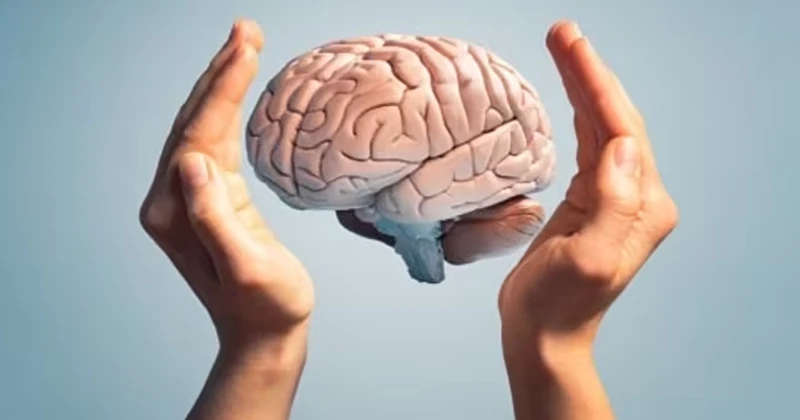
Researchers shed light into how traumatic memories can rewire brain

The research team succeeded in detecting the brain neuronal networks involved in trauma memory by using a novel method that combines optical and machine-learning-based approaches

WEBDESKWEBDESK
Oct 13, 2023, 11:00 pm IST
in Bharat
Follow on Google News
Representative Image

Representative Image

FacebookTwitterWhatsAppTelegramEmail

Scientists have long wondered about the physical changes in the brain that occur when a new memory is formed. The National Institute for Physiological Sciences (NIPS) has now thrown light on this enthralling neurological conundrum.

The research team succeeded in detecting the brain neuronal networks involved in trauma memory by using a novel method that combines optical and machine-learning-based approaches, capturing the complex changes that occur during memory formation and uncovering the mechanisms by which trauma memories are created, according to a study recently published in Nature Communications.

Animals learn to adapt to changing environments for survival. Associative learning, which includes classical conditioning, is one of the simplest types of learning and has been studied intensively over the past century. During the last two decades, technical developments in molecular, genetic, and optogenetic methods have made it possible to identify brain regions and specific populations of neurons that control the formation and retrieval of new associative memories. For instance, the dorsal part of the medial prefrontal cortex (dmPFC) is critical for the retrieval of associative fear memory in rodents. However, the way in which the neurons in this region encode and retrieve associative memory is not well understood, which the research team aimed to address.

“The dmPFC shows specific neural activation and synchrony during fear-memory retrieval and evoked fear responses, such as freezing and heart rate deceleration,” explains lead author Masakazu Agetsuma. “Artificial silencing of the dmPFC in mice suppressed fear responses, indicating that this region is required to recall associative fear-memory. Because it is connected with brain systems implicated in learning and associated psychiatric diseases, we wanted to explore how changes in the dmPFC specifically regulate new associative memory information.”

The research team used longitudinal two-photon imaging and various computational neuroscience techniques to determine how neural activity changes in the mouse prefrontal cortex after learning in a fear-conditioning paradigm. Prefrontal neurons behave in a highly complex manner, and each neuron responds to various sensory and motor events. To address this complexity, the research team developed a new analytical method based on the ‘elastic net,’ a machine-learning algorithm, to identify which specific neurons encode fear memory. They further analyzed the spatial arrangement and functional connectivity of the neurons using graphical modeling.

“We successfully detected a neural population that encodes fear memory,” says Agetsuma. “Our analyses showed us that fear conditioning induced the formation of a fear-memory neural network with ‘hub’ neurons that functionally connected the memory neurons.”

Importantly, the researchers uncovered direct evidence that associative memory formation was accompanied by a novel associative connection between originally distinct networks, i.e., the conditioned stimulus (CS, e.g., tone) network and the unconditioned stimulus (US, e.g., fearful experience) network. “We propose that this newly discovered connection might facilitate information processing by triggering a fear response (CR) to a CS (i.e., a neural network for CS-to-CR transformation).”

Memories have long been thought to be formed by the enhancement of neural connections, which are strengthened by the repeated activation of groups of neurons. The findings of the present study, which were based on both real-life observations and model-based analysis, support this. Furthermore, the study demonstrates how combined methods (optics and machine learning) can be used to visualize the dynamics of neural networks in great detail. These techniques could be used to uncover additional information about the neurological changes associated with learning and memory.

(with inputs from ANI)

Topics: ResearchHealthTraumatic memoriesBrain functions
ShareTweetSendShareSend
✮ Subscribe Organiser YouTube Channel. ✮
✮ Join Organiser's WhatsApp channel for Nationalist views beyond the news. ✮
Previous News

India moved from women empowerment to women-led development: Lok Sabha speaker Om Birla

Next News

Tamil Nadu Police arrests social media activist for criticising DMK, raising concern about freedom of speech

Related News

Kwality Walls shifts from palm oil to milk-based ice creams in India; Did the food giant prioritise profit over health?

Abrupt shift in the measle vaccine procurement policy by the Yunus regime led to death of hundreds of children

A ‘Man-Made’ Crisis in Bangladesh? How the Yunus Regime’s UNICEF bypass left millions of children vulnerable to measles

India finds new molecular mechanism in mycobacterium tuberculosis: A catalyst to realise the vision of TB Mukt Bharat

A Decline in Child Mortality in India: A nation moving in the right direction for children’s welfare

Ayush Ministry launches Yoga for Air Travel: An initiative to transform flight journey into a space for rejuvenation

Ayushman Bhava Holistic Healthcare Confluence 2026: Crafting an inclusive ecosystem & advancing Atmanirbharta in health

Load More

Latest News

RSS Sarsanghchalak Dr Mohan Bhagwat

The time of Bharat has arrived; we need to expedite our preparation: Dr Bhagwat at RSS Karyakarta Vikas Varg 2

Padma Bhushan awardee and noted industrialist Kumar Mangalam Birla Kumar Mangalam Birla addressing the Samapana Samaroh (Valedictory Function) of the Rashtriya Swayamsevak Sangh Karyakarta Vikas Varg – Dwitiya at Nagpur, on June 4, 2026

“RSS always stood by the society and nation”, Kumar Mangalam Birla at RSS Karyakarta Vikas Varg 2 in Nagpur

Arunachal Pradesh seals all 15 illegal Mosques; Bandh called off by APIYO

MK Stalin with Sonai Gandhi; MK Stalin with Rahul Gandhi (File Photos) (Left to Right)

Tamil Nadu: DMK says no to INDIA Alliance meet in Delhi, blames Congress for political backstabbing

Union Finance Minister Nirmala Sitharaman

Karnataka: All-Women team powers Yadgir’s groundnut revolution; Nirmala Sitharaman inaugurates NABARD Unit

Keralam: Jamaat-e-Islami event features Hamas and Muslim Brotherhood ideologues, raises concerns over Political Islam

Representative Image (This is an AI Generated image)

Uttar Pradesh CM Abhyudaya Scheme: Apply for free civil services, JEE and NEET coaching from June 5

House worth Rs 2 crore of drug peddler bulldozed in J&K

Anti-narcotics campaign in J&K: Police demolish Rs 2 crore residential property linked to drug peddler Sheikh Tasaduq

As fuel shortages rippled across Asia, New Delhi expanded supplies to its neighbours while Beijing sought to turn energy security into strategic influence.

The Hormuz Test: How India’s energy assistance outshines China’s conditional approach

Demographic changes in Bharat’s border districts have raised concerns about migration, security, and social cohesion

Demographic Shift in Border Areas of Bharat: The dangerous design

Load More
  • Privacy
  • Terms
  • Cookie Policy
  • Refund and Cancellation
  • Delivery and Shipping

© Bharat Prakashan (Delhi) Limited.
Tech-enabled by Ananthapuri Technologies

  • Home
  • Search Organiser
  • Bharat
    • Assam
    • Bihar
    • Chhattisgarh
    • Jharkhand
    • Maharashtra
    • View All States
  • World
    • Asia
    • Africa
    • North America
    • South America
    • Europe
    • Australia
  • Editorial
  • Operation Sindoor
  • Opinion
  • Analysis
  • Defence
  • Culture
  • Sports
  • Business
  • RSS @ 100
  • Entertainment
  • More ..
    • Sci & Tech
    • Vocal4Local
    • Special Report
    • Education
    • Employment
    • Books
    • Interviews
    • Travel
    • Health
    • Politics
    • Law
    • Economy
    • Obituary
  • Subscribe Magazine
  • Read Ecopy
  • Advertise
  • Circulation
  • Careers
  • About Us
  • Contact Us
  • Policies & Terms
    • Privacy Policy
    • Cookie Policy
    • Refund and Cancellation
    • Terms of Use

© Bharat Prakashan (Delhi) Limited.
Tech-enabled by Ananthapuri Technologies