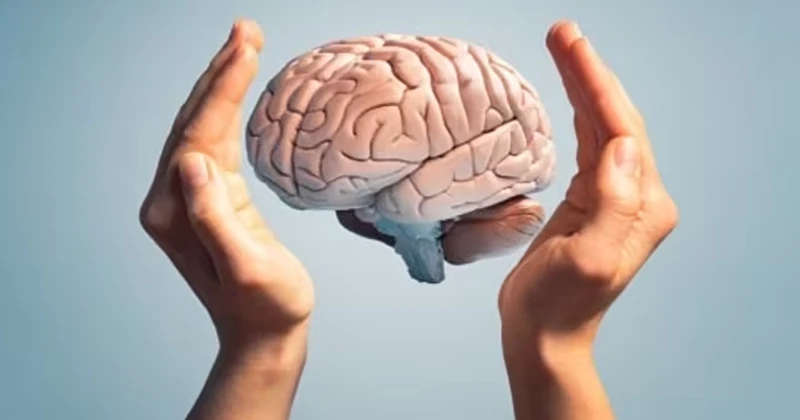
Researchers shed light into how traumatic memories can rewire brain
August 31, 2026
  • Read Ecopy
  • Circulation
  • Advertise
  • Careers
  • About Us
  • Contact Us
Android AppiPhone AppArattai
Organiser
  • ‌
  • Bharat
    • Assam
    • Bihar
    • Chhattisgarh
    • Jharkhand
    • Maharashtra
    • View All States
  • World
    • Asia
    • Europe
    • North America
    • South America
    • Africa
    • Australia
  • Editorial
  • International
  • Opinion
  • RSS @ 100
  • More
    • Op Sindoor
    • Analysis
    • Sports
    • Defence
    • Politics
    • Business
    • Economy
    • Culture
    • Special Report
    • Sci & Tech
    • Entertainment
    • G20
    • Azadi Ka Amrit Mahotsav
    • Vocal4Local
    • Web Stories
    • Education
    • Employment
    • Books
    • Interviews
    • Travel
    • Law
    • Health
    • Obituary
  • Subscribe
    • Subscribe Print Edition
    • Subscribe Ecopy
    • Read Ecopy
  • ‌
  • Bharat
    • Assam
    • Bihar
    • Chhattisgarh
    • Jharkhand
    • Maharashtra
    • View All States
  • World
    • Asia
    • Europe
    • North America
    • South America
    • Africa
    • Australia
  • Editorial
  • International
  • Opinion
  • RSS @ 100
  • More
    • Op Sindoor
    • Analysis
    • Sports
    • Defence
    • Politics
    • Business
    • Economy
    • Culture
    • Special Report
    • Sci & Tech
    • Entertainment
    • G20
    • Azadi Ka Amrit Mahotsav
    • Vocal4Local
    • Web Stories
    • Education
    • Employment
    • Books
    • Interviews
    • Travel
    • Law
    • Health
    • Obituary
  • Subscribe
    • Subscribe Print Edition
    • Subscribe Ecopy
    • Read Ecopy
Organiser
  • Home
  • Bharat
  • World
  • Operation Sindoor
  • Editorial
  • Analysis
  • Opinion
  • Culture
  • Defence
  • International Edition
  • RSS @ 100
  • Magazine
  • Read Ecopy
Home Bharat

Researchers shed light into how traumatic memories can rewire brain

The research team succeeded in detecting the brain neuronal networks involved in trauma memory by using a novel method that combines optical and machine-learning-based approaches

WEBDESKWEBDESK
Oct 13, 2023, 11:00 pm IST
inBharat
Follow on Google News
Representative Image

Representative Image

Facebook
Twitter
WhatsAppTelegramEmail

Scientists have long wondered about the physical changes in the brain that occur when a new memory is formed. The National Institute for Physiological Sciences (NIPS) has now thrown light on this enthralling neurological conundrum.

The research team succeeded in detecting the brain neuronal networks involved in trauma memory by using a novel method that combines optical and machine-learning-based approaches, capturing the complex changes that occur during memory formation and uncovering the mechanisms by which trauma memories are created, according to a study recently published in Nature Communications.

Animals learn to adapt to changing environments for survival. Associative learning, which includes classical conditioning, is one of the simplest types of learning and has been studied intensively over the past century. During the last two decades, technical developments in molecular, genetic, and optogenetic methods have made it possible to identify brain regions and specific populations of neurons that control the formation and retrieval of new associative memories. For instance, the dorsal part of the medial prefrontal cortex (dmPFC) is critical for the retrieval of associative fear memory in rodents. However, the way in which the neurons in this region encode and retrieve associative memory is not well understood, which the research team aimed to address.

“The dmPFC shows specific neural activation and synchrony during fear-memory retrieval and evoked fear responses, such as freezing and heart rate deceleration,” explains lead author Masakazu Agetsuma. “Artificial silencing of the dmPFC in mice suppressed fear responses, indicating that this region is required to recall associative fear-memory. Because it is connected with brain systems implicated in learning and associated psychiatric diseases, we wanted to explore how changes in the dmPFC specifically regulate new associative memory information.”

The research team used longitudinal two-photon imaging and various computational neuroscience techniques to determine how neural activity changes in the mouse prefrontal cortex after learning in a fear-conditioning paradigm. Prefrontal neurons behave in a highly complex manner, and each neuron responds to various sensory and motor events. To address this complexity, the research team developed a new analytical method based on the ‘elastic net,’ a machine-learning algorithm, to identify which specific neurons encode fear memory. They further analyzed the spatial arrangement and functional connectivity of the neurons using graphical modeling.

“We successfully detected a neural population that encodes fear memory,” says Agetsuma. “Our analyses showed us that fear conditioning induced the formation of a fear-memory neural network with ‘hub’ neurons that functionally connected the memory neurons.”

Importantly, the researchers uncovered direct evidence that associative memory formation was accompanied by a novel associative connection between originally distinct networks, i.e., the conditioned stimulus (CS, e.g., tone) network and the unconditioned stimulus (US, e.g., fearful experience) network. “We propose that this newly discovered connection might facilitate information processing by triggering a fear response (CR) to a CS (i.e., a neural network for CS-to-CR transformation).”

Memories have long been thought to be formed by the enhancement of neural connections, which are strengthened by the repeated activation of groups of neurons. The findings of the present study, which were based on both real-life observations and model-based analysis, support this. Furthermore, the study demonstrates how combined methods (optics and machine learning) can be used to visualize the dynamics of neural networks in great detail. These techniques could be used to uncover additional information about the neurological changes associated with learning and memory.

(with inputs from ANI)

Topics: ResearchHealthTraumatic memoriesBrain functions
Share
Tweet
SendShareSend
✮ Subscribe Organiser YouTube Channel. ✮
✮ Join Organiser's WhatsApp channel for Nationalist views beyond the news. ✮
Previous News

India moved from women empowerment to women-led development: Lok Sabha speaker Om Birla

Next News

Tamil Nadu Police arrests social media activist for criticising DMK, raising concern about freedom of speech

Related News

PM POSHAN Model: Serving nutrition, strengthening the nation and the roadmap for inclusive governance

Dr Suresh Hanagavadi conferred with Padmashri

Dr Suresh Hanagavadi: The remarkable journey of a doctor who revolutionised haemophilia care & patient advocacy

Representative Image

Loneliness: A social problem or a cultural challenge?

Prime Minister Narendra Modi at the Yoga Day celebrations in Kolkata

International Yoga Day: PM Modi hails Bengal’s spiritual heritage; Advocates yoga for healthy ageing & mental wellness

The wisdom of sattvik food: Nourishing inner balance

Dr. Fauci and US DNI Tulsi Gabbard

Tulsi Gabbard releases declassified records on Dr. Fauci funded Wuhan labs; Sparks speculations over origin of covid-19

Load More

Latest News

Maoist weapons recovered from Maoist dump in Chhattisgarh’s Bijapur

Chhattisgarh: Security forces recover Maoist dumps containing explosives, weapons in Sukma, Bijapur and Narayanpur

AI Generated Representative Image

UPI in Uzbekistan as India leads global digital revolution; Tashkent to deepen defence industrial ties with New Delhi

Sah Sarkaryawah Dr Krishna Gopal lighting the ceremonial lamp

“Dharma is the element that binds diversity together”: Dr Krishna Gopal, RSS Sah Sarkaryawah

PM Modi recieved a warm welcome by the Indian diaspora in Kyrgyzstan

SCO Summit: PM Modi gets warm diaspora welcome; Manas, Mahabharata, yoga echoes India-Kyrgyztan civilisational connect

A representative image

Indore: Health officer Sohail accused of raping woman officer at hospital, threatened her with knife

Prime Minister Narendra Modi highlighted the Amarnath Yatra 2026’s scientific waste management and sanitation efforts in ‘Mann Ki Baat’

Mann Ki Baat: PM Modi highlights Amarnath Yatra’s scientific waste management and sanitation efforts

The Vishva Hindu Parishad’s (VHP) Satsang Department began its two-day Akhil Bharatiya meeting in Bhopal

VHP leaders emphasise need for Bal Sanskar Kendras; calls for Promoting service, values & youth empowerment

China-linked networks have used fake accounts and coordinated propaganda to influence political debate worldwide

X uncovers 200,000 Chinese fake accounts as Google, Microsoft and Meta track CCP’s global propaganda network

A special NIA court has sentenced Syed Fasiyur Rehman to seven years in the Bengaluru Al-Hind ISIS case

Bengaluru Al-Hind ISIS Case: NIA court sentences key accused Syed Fasiyur Rehman to 7 years’ rigorous imprisonment

PM Modi visits Gandhi Centre in Tashkent & interacts with students; Pays homage to Lal bahadur Shastri

PM Modi visits Gandhi Centre in Uzbekistan, Hails work on Mahatma, Tamil literature; Pays homage to Lal Bahadur Shastri

Load More
  • Privacy
  • Terms
  • Cookie Policy
  • Refund and Cancellation
  • Delivery and Shipping

© Bharat Prakashan (Delhi) Limited.
Tech-enabled by Ananthapuri Technologies

  • Home
  • Search Organiser
  • Bharat
    • Assam
    • Bihar
    • Chhattisgarh
    • Jharkhand
    • Maharashtra
    • View All States
  • World
    • Asia
    • Africa
    • North America
    • South America
    • Europe
    • Australia
  • Editorial
  • Operation Sindoor
  • Opinion
  • Analysis
  • Defence
  • Culture
  • Sports
  • Business
  • RSS @ 100
  • Entertainment
  • More ..
    • Sci & Tech
    • Vocal4Local
    • Special Report
    • Education
    • Employment
    • Books
    • Interviews
    • Travel
    • Health
    • Politics
    • Law
    • Economy
    • Obituary
  • Subscribe Magazine
  • Read Ecopy
  • Advertise
  • Circulation
  • Careers
  • About Us
  • Contact Us
  • Policies & Terms
    • Privacy Policy
    • Cookie Policy
    • Refund and Cancellation
    • Terms of Use

© Bharat Prakashan (Delhi) Limited.
Tech-enabled by Ananthapuri Technologies