58 Years of Tibet Autonomous Region - Epitome of Chinese Colonisation
June 9, 2026
  • Read Ecopy
  • Circulation
  • Advertise
  • Careers
  • About Us
  • Contact Us
Android AppiPhone AppArattai
Organiser
  • ‌
  • Bharat
    • Assam
    • Bihar
    • Chhattisgarh
    • Jharkhand
    • Maharashtra
    • View All States
  • World
    • Asia
    • Europe
    • North America
    • South America
    • Africa
    • Australia
  • Editorial
  • International
  • Opinion
  • RSS @ 100
  • More
    • Op Sindoor
    • Analysis
    • Sports
    • Defence
    • Politics
    • Business
    • Economy
    • Culture
    • Special Report
    • Sci & Tech
    • Entertainment
    • G20
    • Azadi Ka Amrit Mahotsav
    • Vocal4Local
    • Web Stories
    • Education
    • Employment
    • Books
    • Interviews
    • Travel
    • Law
    • Health
    • Obituary
  • Subscribe
    • Subscribe Print Edition
    • Subscribe Ecopy
    • Read Ecopy
  • ‌
  • Bharat
    • Assam
    • Bihar
    • Chhattisgarh
    • Jharkhand
    • Maharashtra
    • View All States
  • World
    • Asia
    • Europe
    • North America
    • South America
    • Africa
    • Australia
  • Editorial
  • International
  • Opinion
  • RSS @ 100
  • More
    • Op Sindoor
    • Analysis
    • Sports
    • Defence
    • Politics
    • Business
    • Economy
    • Culture
    • Special Report
    • Sci & Tech
    • Entertainment
    • G20
    • Azadi Ka Amrit Mahotsav
    • Vocal4Local
    • Web Stories
    • Education
    • Employment
    • Books
    • Interviews
    • Travel
    • Law
    • Health
    • Obituary
  • Subscribe
    • Subscribe Print Edition
    • Subscribe Ecopy
    • Read Ecopy
Organiser
  • Home
  • Bharat
  • World
  • Operation Sindoor
  • Editorial
  • Analysis
  • Opinion
  • Culture
  • Defence
  • International Edition
  • RSS @ 100
  • Magazine
  • Read Ecopy
Home World Asia East Asia

58 Years of Tibet Autonomous Region – Epitome of Chinese Colonisation

XI Jinping is giving shape to Chairman Mao’s imperialistic plan in order to enable China dominate not only Asia but the entire world without criticism to its human rights violations in Tibet

Vijay KrantiVijay Kranti
Sep 1, 2023, 08:30 am IST
in East Asia, China, Asia, Opinion, Asia, Opinion, International Edition
Follow on Google News
FacebookTwitterWhatsAppTelegramEmail

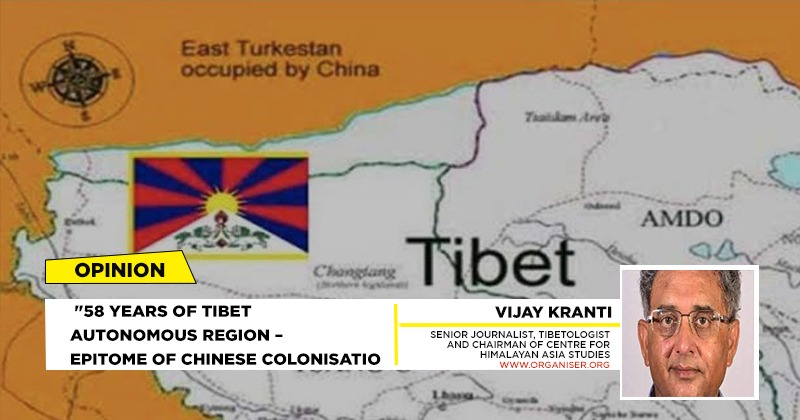
September 1, this year, marks the 58th anniversary of China’s decision to break up and reorganise the geography of its occupied Tibet in 1965. Discovering that strong resistance from the Tibetan masses against the Chinese rule over their country was refusing to die despite all political and military measures since Tibet’s ‘Peaceful Liberation’ in 1951, Mao decided to break Tibet into many pieces to create what we see today as the “Tibet Autonomous Region” (TAR). The remaining parts of the original Tibet, which belonged to the erstwhile eastern Tibetan provinces of Kham and Amdo, were merged into adjoining Chinese provinces of Yunnan, Sichuan, Qinghai and Gansu.

Mao Altered Demography

Mao had at least three special reasons behind this step. One was addressed to the international community which has been raising alarm over the consistently deteriorating human rights situation in Tibet. Afraid of the probability of Tibetan occupation becoming a major international issue, he created TAR, just a third of the original Tibet, to present it as the ‘Real Tibet’.

The second reason was to keep TAR within the confines of the Tibetan Plateau in order to have a stronger administrative and military control over it. And the third reason was a personal and emotional one for Mao. It was in the areas of Kham and Amdo where Mao’s PLA received strong resistance and non-cooperation from the self-respecting Khampas, Golokpas and other Tibetan communities as Mao’s communist ‘Long March’ from Yunnan and Sichuan passed through their regions to reach the heart of China.

Therefore, Mao had good reasons to take away these areas from the main Tibetan body to contain the intensity of Tibet’s resistance potential against Chinese colonial occupation. Moreover, by assimilating these sparsely populated Tibetan regions into adjoining populous Chinese provinces, he wanted them to be reduced to meaningless minorities in their new home provinces. China’s official demographic data shows Tibetans in these regions form less than two to four per cent of these provinces.

In October 1950, just a year after the success of Mao’s communist revolution in China, his mighty and resourceful People Liberation Army (PLA) defeated the poorly equipped and outnumbered Tibetan army on the eastern Tibetan front at Chamdo in Kham. Following this victory, it was an easy game for Beijing to force the Dalai Lama’s representatives to sign on the dotted lines of its “17-Point Agreement” on May 23, 1951. Although signed under duress by the Tibetan delegation, who did not carry any formal authority from the Dalai Lama Government of Tibet to sign any agreement on its behalf, yet this ‘Agreement’ came handy for China to announce to the world the “Peaceful Liberation” of Tibet.

Even though the agreement was titled as “The Agreement of the Central People’s Government and the local Government of Tibet on Measures for the Peaceful liberation of Tibet”, the very first of the 17 points made it clear that Tibet was an independent country before this ‘liberation’. This point read: “The Tibetan people shall be united and drive out the imperialist aggressive forces from Tibet; that the Tibetan people shall return to the big family of the motherland – the People’s Republic of China”.
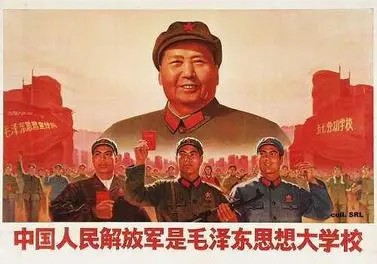
Violating 17 Points of Agreement

What followed in the coming years simply proved that it was none other than the Chinese Communist Party (CCP) and its PLA which had entered Tibet as ‘imperialists’ and the people of Tibet refused to have any union with the People’s Republic of China (PRC). As the invader, CCP and PLA started breaking all the 17 points of their own drafted agreement, open resistance from the ordinary Tibetan people and armed resistance of innumerable communities across Tibet, especially the Eastern provinces of Kham and Amdo, lead to the final explosion of 1959. As the Chinese PLA General’s plans to arrest the Dalai Lama unfolded in March 1959, Dalai Lama managed to escape to neighbouring India after an arduous two-week journey through high mountain passes of Himalayas. According to the report of the International Commission of Jurists of the United Nations, the PLA shot down more than 80, 000 Tibetans in Lhasa and surrounding areas to suppress the uprising of Tibetan masses in that month.

Since then Tibetan resistance against Chinese occupation has refused to die despite all Chinese claims of economic development and building of a massive infrastructure in TAR. In the initial decades, Mao’s sincere Marxist belief was that once Tibetans’ faith in religion i.e. Buddhism is broken, it would be easy to convert them into ‘patriotic Chinese’ nationals. That explains why Tibet’s monasteries, temples and religious social system had to go through severe destruction during the fateful decade of Cultural Revolution.

But a non-stop chain of public uprisings and resistance against China’s rule in Tibet over following decades only proved that the impact of this policy was just opposite of what Mao and his fellow administrators of Tibet had expected. That realisation among the CCP leadership led to the adoption of a new strategy which is aimed at occupying the Tibetan religious system from within. Official sponsorship of searching reincarnations of high ranking Lamas like the Panchen Lama and the Karma Pa during 1990s and new laws of making the CCP’s formal official approval compulsory for every reincarnate Tulku (termed as the ‘Living Buddhas’ by the CCP) since 2007 is indication of this new policy.

Following President Xi Jinping becoming the ‘Paramount Leader’ of China in 2013, this policy has now expanded to CCP’s exclusive claims over search and installation of the next Dalai Lama after the present one passes away. On August 31, 2005 while celebrating the 40th anniversary of establishment of TAR, the then President and General Secretary HU Jintao and the Politburo had announced their commitment to transform TAR in the 21st century by setting the goal of strengthening state security and moving the TAR from “basic stability” to “enduring peace and stability”.

China’s New Gateway to South Asia 

While the Tibetan regions, assigned to other Chinese provinces, have been practically gobbled up and digested by the sea of host Han populations, Xi’s war scale development of roads, railways, military installations and new expansive modern towns across Tibet to host millions of fresh Han settlers from all over China reflects a new policy of making Tibet into China’s new fortress and China’s new gateway to South Asia, Indian Ocean, Bay of Bengal and the Arabian Sea. Xi’s commitment to dominate Asia to finally dominate the entire world appears to be giving final shape to Chairman Mao’s vision of making “Tibet as China’s palm and Ladakh, Sikkim, Nepal, Bhutan and NEFA (now Arunachal Pradesh) as its fingers”.

Topics: Tibet Autonomous RegionChinese Communist Party58 Years of Tibet Autonomous RegionDalai LamaChinese colonial occupationPeople Liberation Army17-Point AgreementPeoples Republic of ChinaCultural RevolutionXi JinpingPresident Xi JinpingTibet
Vijay Kranti
Vijay Kranti
Senior Journalist, Tibetologist and Chairman of Centre for Himalayan Asia Studies and Engagement [Read more]
Share1TweetSendShareSend
✮ Subscribe Organiser YouTube Channel. ✮
✮ Join Organiser's WhatsApp channel for Nationalist views beyond the news. ✮
Previous News

X to roll out audio, video calls feature, announces Elon Musk

Next News

Jammu & Kashmir: Indian army starts “Paigam-e-Shopian” Radio station to reach out to youths

Related News

As Beijing tightens its grip ahead of June 4, dissidents inside China face surveillance and intimidation while activists abroad keep alive the memory of the 1989 Tiananmen crackdown

Tiananmen at 37: How China suppresses remembrance of the massacre through fear, censorship and surveillance

Tiananmen Square Massacre: When Tanks Met Students—The Night China Crushed Its Democratic Hope!

Tiananmen Square Massacre: When Tanks Met Students—The Night Communist China Crushed Its Democratic Hope!

Organised protest ecosystems driven by ideology, identity politics and digital mobilisation are increasingly testing democratic systems in India and the United States

Protest Industry: Why democracies like India and US are under persistent threat

Former Chinese defence ministers Li Shangfu and Wei Fenghe at the centre of Xi Jinping’s widening military purge amid growing Taiwan tensions and CCP upheaval

Taiwan Panic Inside PLA? Xi’s brutal purge of top generals raises questions beyond corruption and loyalty

China’s economic slowdown pushes migrant workers into homelessness as Beijing reshapes the narrative through new terminology.

China rebrands ‘homelessness’ as ‘dispersed persons’ to hide rising economic distress and urban poverty

Tibet Museum Exhibition showcases 1947 documents claiming Tibet’s sovereign status

Load More

Latest News

India Deploys 12 Nuclear Warheads: Heralds doctrinal shift to script strategic deterrence against multi-front threat

J&K: Zojila tunnel clears key hurdle; Signals new era of connectivity for Ladakh

How Cockroach politics is hollowing out Bharatiya democratic culture

RSS centenary year is a time for renewed resolve and greater commitment to nation-building: Dr Mohan Bhagwat

Ex-DMK Minister Senthil Balaji (Right Side-File Photo)

Tamil Nadu: CBI books Rs 397 cr transformer tender scam from ex-DMK Minister Senthil Balaji’s tenure (2021-2023)

Border Security Force (BSF) officials inspect the Single Row Fencing (SRF) at a Border Out Post area (India-Bangladesh border)

Infiltration and Border Management: Saving the Siliguri corridor

External Affairs Ministry spokesperson Randhir Jaiswal, slams Pakistan over the recent killings in POJK

‘Hope Pakistan is held accountable’: India reacts after 20 killed in Pakistan Occupied Jammu & Kashmir

China’s anti-BLA offensive hits snag as UN members demand proof

UN Setback for China and Pakistan: US and allies stall move to ban Baloch Liberation Army

West Asia Conflict: Collective response to energy crisis

Atul Limaye Ji Sah Sarkaryavah, Rashtriya Swayamsevak Sangh while addressing a Pramukh Jan Gosthi Rashtriya at Raipur, Chhattisgarh

Chhattisgarh: Society must lead its own transformation through collective initiative: Atul Limaye

Load More
  • Privacy
  • Terms
  • Cookie Policy
  • Refund and Cancellation
  • Delivery and Shipping

© Bharat Prakashan (Delhi) Limited.
Tech-enabled by Ananthapuri Technologies

  • Home
  • Search Organiser
  • Bharat
    • Assam
    • Bihar
    • Chhattisgarh
    • Jharkhand
    • Maharashtra
    • View All States
  • World
    • Asia
    • Africa
    • North America
    • South America
    • Europe
    • Australia
  • Editorial
  • Operation Sindoor
  • Opinion
  • Analysis
  • Defence
  • Culture
  • Sports
  • Business
  • RSS @ 100
  • Entertainment
  • More ..
    • Sci & Tech
    • Vocal4Local
    • Special Report
    • Education
    • Employment
    • Books
    • Interviews
    • Travel
    • Health
    • Politics
    • Law
    • Economy
    • Obituary
  • Subscribe Magazine
  • Read Ecopy
  • Advertise
  • Circulation
  • Careers
  • About Us
  • Contact Us
  • Policies & Terms
    • Privacy Policy
    • Cookie Policy
    • Refund and Cancellation
    • Terms of Use

© Bharat Prakashan (Delhi) Limited.
Tech-enabled by Ananthapuri Technologies