The Uniform Civil Code is a constitutional remedy offered by Article 44 to address India’s gender, religious, and societal disparities. With the world’s fifth-largest economy and a population that has just surpassed China, India bears increased responsibility to ensure the well-being and progress of all people, especially women, since it accounts for nine per cent of the global female population. Furthermore, it is India’s duty to put in place the safeguards guaranteed by the Indian Constitution to end masculine dominance in all spheres of life. India bears a comparable level of responsibility for global policies, laws, and treaties. Moreover, a glance back in history reveals that many nations were able to resolve conflicts caused by social diversity centuries ago by enacting a Uniform Civil Code, and therefore became today’s socio-economic powerhouses. Therefore, it is significant to know about the existing system of Uniform Civil Codes globally, as well as India’s obligations and responsibilities in maintaining gender equality under global policies, laws, and treaties.
India’s Global Obligations
According to the United Nations, 27.3 per cent of Indian women between the ages of 20 and 24 marry before attaining the age of 18. According to a 2018 study of women aged 15 to 49, 18.4 per cent of women in India were victims of domestic violence. Most of the women’s challenges stem from diverse societal and religious constraints, as well as personal laws. Therefore, our country is subject to specific obligations under international laws and treaties because of its severe disparities.
The Universal Declaration of Human Rights (UDHR) is a significant international accord among these. It was adopted by the United Nations in 1948 to preserve human rights and freedom and was ratified by India’s Constituent Assembly in 1949. Article 16 of the Declaration grants men and women equal rights in marriage, although many religious personal laws in India do not treat women equally. As a result, it is India’s responsibility under the UDHR to ensure gender equality in the country. Further, the International Covenant on Civil and Political Rights (ICCPR), a treaty aimed at eradicating human discrimination, is another example. India accepted the Covenant in 1993, and the National Human Rights Commission was constituted. It urges international governments to put an end to unfairness and injustice against individuals. But the 1997 ICCPR report states that women in India have ‘not been freed from discrimination’. In addition, the convention promotes religious equality in all states. However, religions are not treated equally under Indian civil laws. Some religions are given greater importance than others. Therefore, as a signatory to the treaty, India is bound to eliminate existing inequalities and comply with the provisions.
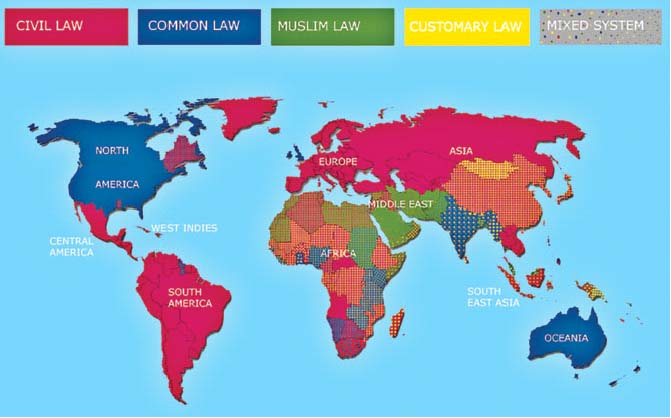
In addition to Saudi Arabia, many countries, including Turkey, Egypt, Malaysia, and Nigeria, follow a mixed legal system that lifts restrictions on women
The other global convention aimed at eliminating all forms of discrimination against women is the Convention on the Elimination of All Forms of Discrimination Against Women (CEDAW). India is bound to carry out the treaty’s obligations as it ratified CEDAW on July 9, 1993. Another global policy framed by United Nations was the Sustainable Development Goals Agenda 2030, of which the fifth goal pertains to gender equality that urges all states to ensure equal rights for women in society. Furthermore, India has been elected for a second term as a member of the United Nations Human Rights Council for 2022-2024. In the Council, India indicated that it would advocate for global human rights based on the principles of Samman, Samvad, and Sahyog, signalling our global vision of inclusivity. Besides, several international organisations have frequently urged India to abolish discriminatory legal systems. For example, the United Nations Human Rights Committee has repeatedly requested India to implement Uniform Civil Code. However, India has responded to numerous foreign organisations’ queries by stating that it does not meddle with religious personal laws. But how long can India ignore these realities as an emerging superpower? Along with this, it is important to understand the system of uniform civil laws existing in other states.
Muslim countries having equal laws
Several Muslim-majority countries have constitutional provisions or legal frameworks that emphasise equality and non-discrimination. Some of these countries include:

1. Indonesia
Marriage Age: The legal age of marriage was raised to 19 for both males and females
Polygamy: Personal law imposes stricter conditions for the practice of polygamy
Divorce: Now, both spouses have equal rights to initiate divorce proceedings
Inheritance: Personal law introduced reforms to ensure gender equality in inheritance rights
Women’s Rights: Personal law has been reformed to protect the rights of women in various aspects of family life

2. Tunisia
Women’s Rights: The Code of Personal Status (CPS) grants women greater rights and protections compared to traditional interpretations of Shariah
Polygamy: While polygamy is allowed in certain circumstances under Shariah, the CPS imposes stricter conditions for its practice
Marriage Age: The CPS sets the legal age of marriage at 18 for both males and females, with no exceptions
Divorce: The CPS grants women the right to dissolve their marriages without requiring the consent of their husbands. Divorce cases are handled by family courts

3. Turkey
Civil Marriage: Civil marriage introduced as an
alternative to religious marriage ceremonies
Age of Consent: The legal age of marriage in Turkey was raised to 18 for both males and females, with no exceptions
Gender Equality: Personal law emphasises gender equality
Divorce: No-fault divorce introduced, allowing both spouses to initiate divorce without providing specific reasons
Inheritance: Inheritance laws are based on civil laws rather than strict adherence to traditional Islamic inheritance rules

4. Jordan
Age of Marriage: The minimum age of marriage in Jordan is 18 years for both males and females
Consent and Guardianship: The Personal Status Law emphasizes the importance of consent in marriage.
Polygamy: While polygamy is permitted under Shariah, Jordanian personal law imposes stricter conditions and restrictions
Divorce Procedures: Personal law establishes clear procedures for divorce
Women’s Rights: Personal law has introduced reforms to promote gender equality and protect women’s rights in various aspects of family life

5. Kazakhstan
Age of Marriage: The minimum age of marriage is 18 years for both males and females, with no exceptions
Polygamy: While polygamy is allowed under certain circumstances in Shariah, personal law prohibits polygamy altogether
Consent and Guardianship: Personal law emphasises the importance of consent in marriage
Divorce Procedures: Clear procedures for divorce established, including judicial involvement
Women’s Rights: Personal law has introduced reforms to promote gender equality and protect women’s rights in various aspects of family life

6. Azerbaijan
Marriage Age: The minimum age of marriage in Azerbaijan is 18 years for both males and females, with no exceptions
Consent and Guardianship: Personal law emphasises the importance of consent in marriage
Gender Equality: Personal law promotes gender equality in marriage, divorce, and inheritance
Polygamy: Personal law strictly prohibits polygamy
Divorce Procedures: Clear procedures for divorce established, including judicial involvement
Inheritance: Inheritance laws are governed by the Civil Code rather than strict adherence to traditional Islamic inheritance rules
The uniform laws that are implemented in many states globally are not uniform in nature. Islamic and non-Islamic states have different systems of civil laws. Islamic nations such as Saudi Arabia, Iran, and the United Arab Emirates lack a unified system of civil code like that found in European countries such as France and Germany. Sharia is the unified civil law of Islamic states. Besides, there can be seen two sorts of uniform civil laws in Islamic states itself. The states such as Turkey and Albania, for example, have modified Sharia law, but states such as Saudi Arabia, Senegal, Indonesia, and Mali have unified civil laws based on traditional Sharia.
France and Germany pioneered the global model of uniform civil code in the 19th century. This system was put in place in Germany in 1900 following the country’s unification. Germany was once separated into tiny states with conflicting customary laws, which were later codified into a single civil law. Currently, states are also negotiating for a European Civil Code, which would unify personal law across Europe. Moreover, a single civil law system has superseded the old conventional rules on contract law, tort law, adoption, and marriage in China. In 1898, Japan’s Uniform Civil Code went into effect, which re-regulated the inheritance rights under the country’s feudal era’s male-dominated family system. The Uniform Civil Code, which came into effect in 1977 in Afghanistan, an Islamic country with multiple tribal customs, deals with family, marriage, polygamy, child custody, and divorce. It permits women to choose their husbands without parental permission. Articles 70 and 71, contrary to customary Islamic law, established the marriage age for men and women at 16 and 17, respectively. Besides, Article 61 mandated the registration of all marriages.
There is no such thing as Uniform Civil Law in Saudi Arabia, although Sharia is considered Uniform Civil Law. The Quran is to be the source of the country’s laws, according to the 1992 Constitution. It is applicable to all communities throughout the country. Sharia is the legal system in Egypt and Iraq. Further, there is no gender equality in India’s neighbour state, Bangladesh. According to Human Rights Watch, men in Bangladesh have more rights to marital property than women. The Hindu girls do not have the right to divorce. However, Christian women are permitted to divorce to some extent. As a result, minorities in Bangladesh who get into awful marriages are bound to stay in it for the rest of their lives and live in poverty.
But today, many African and West Asian countries are on the path to reform. However, extremists in India insist on adhering to uncivilised rules and male domination with the support of the opposition. Although states such as Saudi Arabia, an Islamic country governed by the norms of the Quran and Sunnah, are ready for change, a segment of the people in India, which acknowledges freedom and equality as fundamental rights in its constitution, is gearing up to fight against it. Such activities will only serve to degrade India’s reputation globally.