Uniform Civil Code: The Goan experience, reason for social harmony
September 12, 2026
  • Read Ecopy
  • Circulation
  • Advertise
  • Careers
  • About Us
  • Contact Us
Android AppiPhone AppArattai
Organiser
  • ‌
  • Bharat
    • Assam
    • Bihar
    • Chhattisgarh
    • Jharkhand
    • Maharashtra
    • View All States
  • World
    • Asia
    • Europe
    • North America
    • South America
    • Africa
    • Australia
  • Editorial
  • International
  • Opinion
  • RSS @ 100
  • More
    • World Hindu Congress 2026
    • Op Sindoor
    • Analysis
    • Sports
    • Defence
    • Politics
    • Business
    • Economy
    • Culture
    • Special Report
    • Sci & Tech
    • Entertainment
    • G20
    • Azadi Ka Amrit Mahotsav
    • Vocal4Local
    • Web Stories
    • Education
    • Employment
    • Books
    • Interviews
    • Travel
    • Law
    • Health
    • Obituary
  • Subscribe
    • Subscribe Print Edition
    • Subscribe Ecopy
    • Read Ecopy
  • ‌
  • Bharat
    • Assam
    • Bihar
    • Chhattisgarh
    • Jharkhand
    • Maharashtra
    • View All States
  • World
    • Asia
    • Europe
    • North America
    • South America
    • Africa
    • Australia
  • Editorial
  • International
  • Opinion
  • RSS @ 100
  • More
    • World Hindu Congress 2026
    • Op Sindoor
    • Analysis
    • Sports
    • Defence
    • Politics
    • Business
    • Economy
    • Culture
    • Special Report
    • Sci & Tech
    • Entertainment
    • G20
    • Azadi Ka Amrit Mahotsav
    • Vocal4Local
    • Web Stories
    • Education
    • Employment
    • Books
    • Interviews
    • Travel
    • Law
    • Health
    • Obituary
  • Subscribe
    • Subscribe Print Edition
    • Subscribe Ecopy
    • Read Ecopy
Organiser
  • Home
  • Bharat
  • World
  • Operation Sindoor
  • Editorial
  • Analysis
  • Opinion
  • Culture
  • Defence
  • International Edition
  • RSS @ 100
  • Magazine
  • Read Ecopy
Home Bharat

Uniform Civil Code: The Goan experience, reason for social harmony

Over the years, the people of Goa have been living in harmony with each other regardless of religion. One of the major reasons for this is the Common Civil Code, which governs all residents of the coastal State irrespective of their religion and gender

Adv Amogh ArlekarAdv Amogh Arlekar
Jul 17, 2023, 07:00 pm IST
inBharat
Follow on Google News
Facebook
Twitter
WhatsAppTelegramEmail

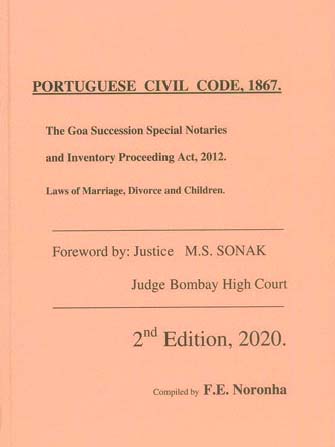
Goa was liberated from the Portuguese on December 19, 1961. Fourteen years after India attained independence, Goa was finally liberated and integrated to India. The freedom heralded a new dawn with new possibilities for Goans. But to ensure uniformity in law, the Goans had a strange relic of their past which benefitted them, the Portuguese Civil Code of 1867. By a Decree of November 18, 1869, the Civil Code of 1867 was extended, as of July 1, 1870, to the Overseas Provinces of Portugal. Thus, the Civil Code of 1867 became applicable also in Goa, Daman and Diu. After liberation, by virtue of the Goa, Daman and Diu (Administration) Act 1962, all laws in force in these territories, including the Civil Code, were kept in force after they were integrated with the Indian Union.

Since then, several legal acts of the Indian Union concerning Civil Law matters, such as the Indian Contract Act 1872 and the Indian Transfer of Property Act 1882, were extended to Goa, Daman and Diu and the corresponding provisions of the Civil Code were repealed. The remaining provisions of the code, notably those concerning Family and Succession Law, Property Law (except its transfer) and Tort Law, remained in force.

A Reason for social Harmony

Over the years, the people of Goa have been living in harmony with each other regardless of religion. The Common Civil Code is a big reason for this harmony. Here are some salient features of the Common Civil Code in Goa

1. Equal Rights: The Common Civil Code ensures equal rights and privileges to all individuals, irrespective of their religious beliefs. It recognises the principle of gender equality, granting women the same inheritance rights as men. This provision has played a significant role in empowering women and fostering gender equality within the state.

2. Marriages: the registration of marriages is made compulsory under the code so that the disputes which may arise can be resolved by the law. Consent of men and women is required before marriage. The code allows for a prenuptial agreement which can alter the ratio of the distribution of assets.

3. Communion of Assets: Under the 1867 Code, a communion of assets is, by default, constituted among married couples, comprising all their assets brought to the marriage or acquired after it (article 1108). Those assets are to be administered by the husband (article 1117). Consent of both spouses is nevertheless required for the disposition by any of them of immovable property integrating the communion (article 1119). Furthermore, if the couple becomes separated or divorced, each of them is entitled to half of the common assets (articles 1121 and 1123). The regime of general communion of assets was also called in Article 1108 marriage as per the custom of the realm.

4. Secularism: The Common Civil Code in Goa promotes the principle of secularism by treating all citizens equally, regardless of their religious background. It upholds the idea that personal laws should not infringe upon the principles of justice, equality, and human rights.

5. Legal Certainty: The implementation of a Common Civil Code in Goa has provided legal certainty and predictability. It eliminates confusion and discrepancies arising from multiple personal laws, thereby streamlining the legal system.

People from all communities reside in Goa and have flourished in the state. None of the religious or tribal communities have faced any discrimination because of the Civil Code in Goa. The peaceful coexistence of all communities in Goa is a shining example of how communities can coexist peacefully with a UCC.

Goa’s experience with the Common Civil Code demonstrates that a UCC is not only feasible but also beneficial for a diverse society. Extending this model to the rest of India is essential for social cohesion, gender justice, legal certainty, and national integration. It is time for India to transcend religious boundaries and embrace a Uniform Civil Code that upholds the principles of justice, equality, and individual rights for all citizens. By doing so, we will pave the way for a stronger, more united India.

Topics: Indian Contract Act 1872Goa was liberated from the PortugueseUniform Civil CodePortuguese Civil Code of 1867Common Civil Code demonstrates that a UCC
Share3
Tweet
SendShareSend
✮ Subscribe Organiser YouTube Channel. ✮
✮ Join Organiser's WhatsApp channel for Nationalist views beyond the news. ✮
Previous News

Chirag Paswan demands six Lok Sabha seats, one Rajya Sabha before taking a call to join NDA

Next News

‘Conversion to another religion does not change person’s caste’ says Kerala High Court

Related News

VHP Central Joint Secretary Vijay Shankar Tiwari

“Sharia cannot be placed above Constitution; citizenship also comes with duties”: VHP’s Vijay Shankar Tiwari

UCC Panel Seeks Stakeholder Views During Raipur Consultation

Chhattisgarh Advances UCC Consultation: Religious entities, social representatives, statutory bodies submit suggestions

Dimagi Naxals: Identifying danger with precision

Chief Minister of West Bengal Suvendu Adhikari

West Bengal: After UCC, CM Suvendu Adhikari targets ‘Conversion’ and ‘Land Jihad’ with tough new laws in state

VHP International President Alok Kumar ji addressing the media

VHP to launch nationwide campaign seeking freedom of Hindu Temples from government control

CM Dhami Announces Special Agniveer Cell, 10% Reservation in State Jobs for Retired Agniveers

Uttarakhand: CM Dhami unveils first dedicated Agniveer cell, homestay grants and job benefits for ex-servicemen

Load More

Latest News

AI Generated Representative Image

BRICS Summit 2026 | Bajra, Ragi & Rajma: Food served to leaders reflect India’s millets, spices & culinary heritage

Andhra Pradesh: Sadiq Khan admits cyanide killing of Sowjanya’s husband; property motive eclipses Islam conversion

BRICS Summit 2026: New Delhi Declaration to be issued today; India seals diplomatic win amid West Asia crisis

Deoria Horror: Hindu Youth Manish ‘Monu’ Singh allegedly lured to death by Islamist China Ansari

PM Modi holds series of bilateral meetings;(From Left to Right): Malaysia PM Anwar Ibrahim, Ethiopian PM Abiy Ahmed Ali and Iran President Masoud Pezeshkian

BRICS Summit: PM Modi flags maritime security, seafarers safety with Iran President; Holds series of bilateral talks

The shifting economic weight of G7 and BRICS reflects the emergence of a more multipolar global order.

G7 and BRICS: How the global economic balance is shifting from western world to a rising global south

Mukul Kanitkar, senior RSS Functionary at Makhanlal Chaturvedi National University of Journalism and Communication on the occasion of a special lecture to commemorate Swami Vivekananda’s historic Chicago address

Modernity belongs to tools and technology, not culture; culture moves through continuity: Mukul Kanitkar

Ganeshotsav 2026: Majestic Lalbaugcha Raja unveiled, setting Mumbai aflutter with devotion

Speaking at the BRICS Business Forum, Putin took a sharp swipe at G7

BRICS Summit 2026: President Putin takes swipe at G7; BRICS drives 40% of Global GDP while west contributes only 18%

Skill India 2.0: From Training Millions to Linking Skills With Jobs and Wages (This image is generated from AI)

Skill India Decade: 7.67 crore trained, Rs 34,000 crore push for the next phase

Load More
  • Privacy
  • Terms
  • Cookie Policy
  • Refund and Cancellation
  • Delivery and Shipping

© Bharat Prakashan (Delhi) Limited.
Tech-enabled by Ananthapuri Technologies

  • Home
  • Search Organiser
  • Bharat
    • Assam
    • Bihar
    • Chhattisgarh
    • Jharkhand
    • Maharashtra
    • View All States
  • World
    • Asia
    • Africa
    • North America
    • South America
    • Europe
    • Australia
  • Editorial
  • Operation Sindoor
  • Opinion
  • Analysis
  • Defence
  • Culture
  • Sports
  • Business
  • RSS @ 100
  • Entertainment
  • More ..
    • Sci & Tech
    • Vocal4Local
    • Special Report
    • Education
    • Employment
    • Books
    • Interviews
    • Travel
    • Health
    • Politics
    • Law
    • Economy
    • Obituary
  • Subscribe Magazine
  • Read Ecopy
  • Advertise
  • Circulation
  • Careers
  • About Us
  • Contact Us
  • Policies & Terms
    • Privacy Policy
    • Cookie Policy
    • Refund and Cancellation
    • Terms of Use

© Bharat Prakashan (Delhi) Limited.
Tech-enabled by Ananthapuri Technologies