Uniform Civil Code: Nothing religious about it
June 4, 2026
  • Read Ecopy
  • Circulation
  • Advertise
  • Careers
  • About Us
  • Contact Us
Android AppiPhone AppArattai
Organiser
  • ‌
  • Bharat
    • Assam
    • Bihar
    • Chhattisgarh
    • Jharkhand
    • Maharashtra
    • View All States
  • World
    • Asia
    • Europe
    • North America
    • South America
    • Africa
    • Australia
  • Editorial
  • International
  • Opinion
  • RSS @ 100
  • More
    • Op Sindoor
    • Analysis
    • Sports
    • Defence
    • Politics
    • Business
    • Economy
    • Culture
    • Special Report
    • Sci & Tech
    • Entertainment
    • G20
    • Azadi Ka Amrit Mahotsav
    • Vocal4Local
    • Web Stories
    • Education
    • Employment
    • Books
    • Interviews
    • Travel
    • Law
    • Health
    • Obituary
  • Subscribe
    • Subscribe Print Edition
    • Subscribe Ecopy
    • Read Ecopy
  • ‌
  • Bharat
    • Assam
    • Bihar
    • Chhattisgarh
    • Jharkhand
    • Maharashtra
    • View All States
  • World
    • Asia
    • Europe
    • North America
    • South America
    • Africa
    • Australia
  • Editorial
  • International
  • Opinion
  • RSS @ 100
  • More
    • Op Sindoor
    • Analysis
    • Sports
    • Defence
    • Politics
    • Business
    • Economy
    • Culture
    • Special Report
    • Sci & Tech
    • Entertainment
    • G20
    • Azadi Ka Amrit Mahotsav
    • Vocal4Local
    • Web Stories
    • Education
    • Employment
    • Books
    • Interviews
    • Travel
    • Law
    • Health
    • Obituary
  • Subscribe
    • Subscribe Print Edition
    • Subscribe Ecopy
    • Read Ecopy
Organiser
  • Home
  • Bharat
  • World
  • Operation Sindoor
  • Editorial
  • Analysis
  • Opinion
  • Culture
  • Defence
  • International Edition
  • RSS @ 100
  • Magazine
  • Read Ecopy
Home Bharat

Uniform Civil Code: Nothing religious about it

The controversy over Uniform Civil Code (UCC) is nothing but political and vote bank politics has certainly marred the social welfare legislation for decades now in independent India. There is, of course, vested interest in a particular community also

R VenkataramanR Venkataraman
Jun 18, 2023, 09:00 am IST
in Bharat, Opinion
Follow on Google News
FacebookTwitterWhatsAppTelegramEmail

The controversy over Uniform Civil Code (UCC) is nothing but political and vote bank politics has certainly marred the social welfare legislation for decades now in independent India. There is, of course, vested interest in a particular community also.

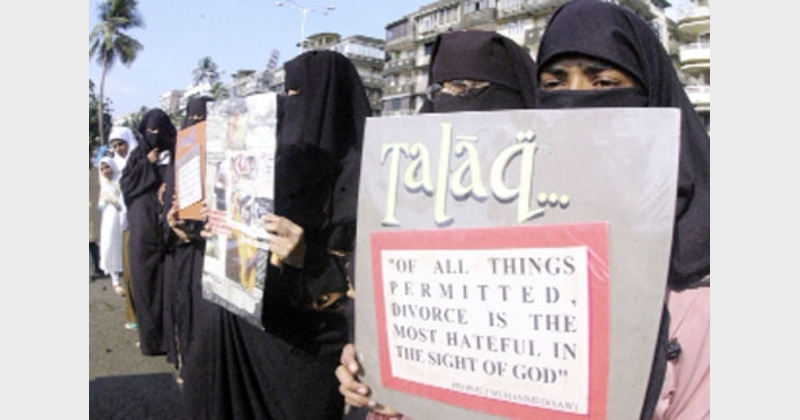
UCC does not mean a person should perform, during marriage, saptapadi (the sacred seven steps) or nikah or any other ritual. Nor a person would be compelled to marry in a certain manner. But after marriage nobody can just say talaq and abandon a woman. So, UCC is not just about marriage where personal laws or customs can play a role. Say for example, a Janjati person can marry according to a particular Janjati customs and practices, but, when that person divorces, can he just abandon his wife?

UCC does not certainly say marry in a particular manner. It is only about divorce, maintenance, inheritance, custody of children, adoption and remarriage. The UCC, as enshrined in the Article 44 of the Constitution of India, is nothing but empowerment of Indian women, irrespective of religion, language, place of birth, race, colour, etc. For, the “State”, under Article 15 of the Constitution “shall not discriminate against any citizen on grounds only of religion, race, caste, sex, place of birth or any of them”.

If one carefully reads the above, on the basis of “sex” too the State cannot discriminate any citizen. But willy-nilly, Article 44, somehow, may be in the wisdom of the founding Fathers of our Constitution, went to find a place in the “Directive Principles of State Policy” chapter of the Constitution, where as Article 15 remains in the Fundamental Rights Chapter of the Constitution.

Now what is Uniform Civil Code (UCC)? Matters like marriage may not come under it as it depends on the customs and rites of an individual’s religion. But divorce, maintenance, adoption, custody of children and even dignity of the gender and gender justice is UCC, which is nothing but empowerment of women.

I was a law student in the year 1985 when the decision of the Supreme Court in Shah Bano case came. “A Common Civil Code will help the cause of national integration by removing disparate loyalties to law which having conflicting ideologies”, the SC then had observed. Hell broke loose. I was travelling to my native village in Tamil Nadu from Delhi (I was a law student of Delhi University’s Campus Law Centre) and travel by train took (still takes) about three nights, two days and a morning. It was a ‘mini Bharat Darshan’ as the train used to travel through about seven states. I could see protest meetings, especially by Muslims, at every State and on reaching my native village, the same night, there was a protest meeting by the Muslim community with copies of the judgment torn off and burnt. My village is a Muslim majority village. I thought for a while, only as a rational law student: “what is wrong with the judgement?” After all, Shah Bano who was given the irrevocable triple talaq was not given any maintenance and left to fend for herself. Under Section 125 Criminal Procedure Code (Cr.P.C.) petition, known as the maintenance case in common man’s language, she was ordered to be given Rs. 500 as alimony. Even that amount, in 1985, was not enough for a woman to keep herself up and live with dignity, for, Article 21 which guarantees Right to Life, by interpretation in various judgments of the various High Courts and the Supreme Court, the final court of the country, is held to be Right to Life includes Right to Life with Dignity.

Then 10 years later, in 1995, as an accredited Supreme Court correspondent of The Telegraph I reported Justice Kuldeep Singh’s judgment in what came to be known as the Sarala Mudgal case. “It appears that…the rulers of the day are not in a mood to retrieve Article 44 from the cold storage where it is lying since 1949,” Justice Singh wrote in that judgment “requesting” the Government of the day to consider implementing Article 44 of the Constitution of India. Later, Justice KT Thomas of the Supreme Court, now retired, called for Uniform Civil Code for gender equality and gender justice. In July last year the Supreme Court again favoured UCC in a case of an unwed Christian mother who challenged the Delhi High Court order to reveal the name of the father of her child when she sought guardianship of the child. In a passport case it was held that Mother’s name was enough to get a passport issued for her child.

The Law Commission has in the past in several reports recommended for the same in different words. However, it has been argued that Article 44 of the Constitution is “Directive Principles” and hence un-enforceable. But look at the language “The State ‘Shall’” which is mandatory. So the ruling party now need not even “look for a debate”. It need not go for vote bank politics. Although the issue has been politicised since the Constituent Assembly. Dr Ambedkar wanted this provision though he had scant respect for Hindu law as in his opinion upper caste Hindus would dominate Independent India. The provision was thus put to cold storage under a “deceptively” worded “directive principles of State Policy”. When a government wants to implement a non-enforceable it becomes like right to education, right to know, etc. all are directive principles.

(The writer is a senior journalist and writes on legal issues)

Topics: Constitution of IndiaUniform Civil CodeUCCShah Bano CaseArticle 44Empowerment of Indian women
ShareTweetSendShareSend
✮ Subscribe Organiser YouTube Channel. ✮
✮ Join Organiser's WhatsApp channel for Nationalist views beyond the news. ✮
Previous News

Gentle cleansers kill viruses just like harsh soaps: Research

Next News

Jharkhand: Locals in Garhwa alleged as many as 14, including a CRPF personnel for inciting conversion

Related News

More than 1,000 temple trustees and Hindu organisations across Maharashtra have opposed the proposed Act, alleging it threatens temple land rights and traditional religious institutions. In this regard, a memorandum was submitted to Maharashtra CM Devendra Fadnavis on May 15 by Maharashtra Mandir Mahasangh

Maharashtra Devasthan Inams Abolition Draft Act, 2026: Not just ‘Inam’, but sacred heritage

The Uniform Civil Code debate in Assam has reignited questions around equality, cultural identity and constitutional reform in India

Equality Without Assimilation: Why Assam’s UCC debate goes beyond legal uniformity

Assam CM Himanta Biswa Sarma

Assam Passes UCC: Congress party’s proposed amendment over second wife rejected

New Delhi, May 24 (ANI): Union Home Minister Amit Shah speaks during Janjatiya Sanskriti Samagam, at Red Fort, in New Delhi on Sunday. (ANI Photo/Naveen Sharma)

Janjati Sanskritik Samagam | “No need to fear UCC”: Amit Shah reassures tribals, pre-empts conspiracy narrative

UCC Bill 2026 tabled in Assam Assembly

Assam Govt introduces UCC in assembly: Bill aims to curb polygamy, requires registration of all live-in relationship

Assam cabinet clears UCC bill

Assam: Himanta Biswa’s first cabinet clears UCC bill, adopts BJP Sankalpa Patra as government’s guiding framework

Load More

Latest News

B. Nagendra, Congress MLA and former minister in Karnataka

Karnataka: CBI files chargesheets against Nagendra, Congress leader, ex-minister, 29 others in Valmiki Corporation scam

Representative Image (This is an AI generated image)

From Class 10 to Ayurvedic Doctor: Central Sanskrit University unveils new pathway to BAMS

Heera Group founder Nowhera Shaik (File Photo)

Telangana: ED arrests Nowhera Shaik’s aide in Heera Group Sharia-compliant Rs 3000 Cr investment scam

Governor of Karnataka Thaawarchand Gehlot administered the Oath of Office and Secrecy to Chief Minister D.K. Shivakumar on June 3, 2026

DK Shivakumar takes oath as Karnataka CM, invokes Ajjayya in ceremony

TMC Leader Abhishek Banerjee attacked in Sonarpur

The Judgement Beyond the Ballot: Bengal’s Sonarpur, political memory, and accountability

Change of Guard in Punjab BJP: Challenges, opportunities and the road ahead

Sacrilege, state interference and the Sikh question in Punjab

After Schools, Vande Mataram Must For West Bengal Madarsas

West Bengal Madrasas Sing Vande Mataram: 1,600 madrasas comply with state govt order despite opposition criticism

Image of Dawood Aide Huzaifa, who is believed to be a close associate of Munna Jhingada

Dawood aide Huzaifa held in Mumbai crackdown; Probe focuses on Pakistan-linked recruitment network

Islamists to Launch Keralam’s First Sharia Gym in Palakkad — No Music, Hijab Must; A ‘Taliban’-Inspired Fitness Club

Load More
  • Privacy
  • Terms
  • Cookie Policy
  • Refund and Cancellation
  • Delivery and Shipping

© Bharat Prakashan (Delhi) Limited.
Tech-enabled by Ananthapuri Technologies

  • Home
  • Search Organiser
  • Bharat
    • Assam
    • Bihar
    • Chhattisgarh
    • Jharkhand
    • Maharashtra
    • View All States
  • World
    • Asia
    • Africa
    • North America
    • South America
    • Europe
    • Australia
  • Editorial
  • Operation Sindoor
  • Opinion
  • Analysis
  • Defence
  • Culture
  • Sports
  • Business
  • RSS @ 100
  • Entertainment
  • More ..
    • Sci & Tech
    • Vocal4Local
    • Special Report
    • Education
    • Employment
    • Books
    • Interviews
    • Travel
    • Health
    • Politics
    • Law
    • Economy
    • Obituary
  • Subscribe Magazine
  • Read Ecopy
  • Advertise
  • Circulation
  • Careers
  • About Us
  • Contact Us
  • Policies & Terms
    • Privacy Policy
    • Cookie Policy
    • Refund and Cancellation
    • Terms of Use

© Bharat Prakashan (Delhi) Limited.
Tech-enabled by Ananthapuri Technologies