Pakistani Taliban is a volcano waiting to erupt
September 13, 2026
  • Read Ecopy
  • Circulation
  • Advertise
  • Careers
  • About Us
  • Contact Us
Android AppiPhone AppArattai
Organiser
  • ‌
  • Bharat
    • Assam
    • Bihar
    • Chhattisgarh
    • Jharkhand
    • Maharashtra
    • View All States
  • World
    • Asia
    • Europe
    • North America
    • South America
    • Africa
    • Australia
  • Editorial
  • International
  • Opinion
  • RSS @ 100
  • More
    • World Hindu Congress 2026
    • Op Sindoor
    • Analysis
    • Sports
    • Defence
    • Politics
    • Business
    • Economy
    • Culture
    • Special Report
    • Sci & Tech
    • Entertainment
    • G20
    • Azadi Ka Amrit Mahotsav
    • Vocal4Local
    • Web Stories
    • Education
    • Employment
    • Books
    • Interviews
    • Travel
    • Law
    • Health
    • Obituary
  • Subscribe
    • Subscribe Print Edition
    • Subscribe Ecopy
    • Read Ecopy
  • ‌
  • Bharat
    • Assam
    • Bihar
    • Chhattisgarh
    • Jharkhand
    • Maharashtra
    • View All States
  • World
    • Asia
    • Europe
    • North America
    • South America
    • Africa
    • Australia
  • Editorial
  • International
  • Opinion
  • RSS @ 100
  • More
    • World Hindu Congress 2026
    • Op Sindoor
    • Analysis
    • Sports
    • Defence
    • Politics
    • Business
    • Economy
    • Culture
    • Special Report
    • Sci & Tech
    • Entertainment
    • G20
    • Azadi Ka Amrit Mahotsav
    • Vocal4Local
    • Web Stories
    • Education
    • Employment
    • Books
    • Interviews
    • Travel
    • Law
    • Health
    • Obituary
  • Subscribe
    • Subscribe Print Edition
    • Subscribe Ecopy
    • Read Ecopy
Organiser
  • Home
  • Bharat
  • World
  • Operation Sindoor
  • Editorial
  • Analysis
  • Opinion
  • Culture
  • Defence
  • International Edition
  • RSS @ 100
  • Magazine
  • Read Ecopy
Home Opinion

Pakistani Taliban is a volcano waiting to erupt

To address the threat emerging from TTP, Pakistan needs to realise that a multidimensional approach is required that goes beyond kinetic operations

Manish RaiManish Rai
Jan 31, 2023, 10:00 pm IST
inOpinion, Jammu and Kashmir
Follow on Google News
Facebook
Twitter
WhatsAppTelegramEmail

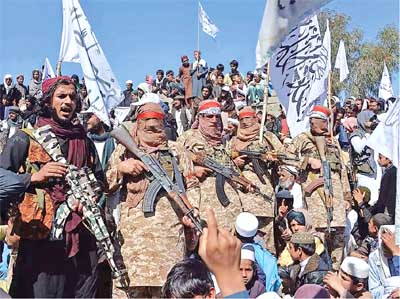
In June this year, Tehreek-e-Taliban Pakistan (TTP) declared an indefinite ceasefire to facilitate peace talks being brokered by the Afghan Taliban. But there have been regular clashes between TTP and Pakistan security forces since then, although both sides confirmed that the truce is still on. Recently, questions were raised over the fate of peace talks after some media publications reported that armed militants had returned to their former stronghold in Swat, Dir, and parts of the tribal districts of Khyber-Pakhtunkhwa province. Also, recently the Pakistan army said that five soldiers and at least four fighters died in a gun battle when security forces raided a hideout in Boyya, North Waziristan. TTP confirmed the clash and accused the government of bad faith, saying troops had recently attacked them in six districts, including Peshawar, the capital of Khyber Pakhtunkhwa province. Whether or not the negotiations progress, an imminent escalation of violence appears most likely. It has the potential to spread from the frontier into the urban areas, particularly given the fragile political and economic situation in the country.

Also, there are not many bright prospects for peace talks in the long term. The main sticking points are demands by the TTP to reverse FATA’s merger with Khyber Pakhtunkhwa province. Imposition of Sharia law in the area and the withdrawal of Pakistan’s military forces from the border region. These main demands of TTP are next to impossible to be fulfilled by the Pakistani deep state. The Taliban’s victory in Afghanistan emboldened the TTP, once one of the world’s most deadly terror groups. To intensify its insurgency against Islamabad. But it has also given it the confidence to expect a more deferential treatment from Islamabad that parallels that of the US toward the Afghan Taliban. Hence its highly unlikely that TTP will negotiate on any of its core demands. The Pakistani Taliban is trying to portray itself politically on the same lines as the Afghan Taliban but is essentially anti-Pakistan in its stance. The outfit has repeatedly refused to acknowledge the Durand Line; in this, they are getting tacit support from the Afghan Taliban.

It’s a matter of fact that TTP is the largest terrorist organisation in Pakistan. They may not be able to control large swaths of territory in tribal areas as they used to do till 2014. But certainly, it can launch a new wave of terrorist attacks across Pakistan if not checked in time

The alignment of interests between the Afghan Taliban and TTP goes deeper as the Afghan Taliban and TTP are Pashtun. It is thus alarming that, at the same time, the Afghan Taliban continues to challenge Pakistani territorial integrity by rejecting the Durand Line. The TTP is concurrently pressing for a reversal of the merger of the former Federally Administered Tribal Areas (FATA) and Khyber Pakhtunkhwa (KP). Together, these efforts could bring the idea of a mostly Pashtun-inhabited tribal borderland with a potential associated separatist movement into the mainstream.

Another source of the TTP’s aggressive stance is the perceived weakness of its opponent, i.e., the Pakistani State, which has been experiencing high levels of socio-economic and political instability. Mired in their own domestic problems, the Pakistani Government and military officials have come across as beleaguered, desperate for a peace deal to curtail violence. This perception is evident from the tones taken by the TTP’s chief, Mufti Noor Wali Mehsud, and spokesperson Muhammad Khurasani in their public statements since last October when these negotiations became public. For example, the TTP attributes the country’s problems like inflation and taxes, rising ethnic division, and government mismanagement of natural calamities to the “State cruel policies”, the corrupt practices of its civil and military leaders, and a lack of Sharia implementation.

The TTP’s links with transnational jihadi networks plus its demands to retain control of its weapons and de-merge FATA from KP, strongly suggests that the group intends to use the peace process to gain control of its old stronghold. In the past Afghan Taliban leaders like Mullah Umar and Sirajuddin Haqqani had repeatedly attempted to convince the TTP to focus on the Afghan Jihad and not to attack Pakistan. But these initiatives had always been futile because waging the Jihad against Pakistan forms the basis for TTP’s separate identity. These negotiations are most likely to be unproductive because TTP’s core has shown no indication of wanting to seek a peaceful resolution or of renouncing violence. The difficulties of negotiating a settlement with the TTP include its chequered history of violating previous agreements, such as the Malakand accord, and its fragmented nature. Peace negotiations often fail to work with a fragmented organisation because competing factions within the group will feel threatened if any political deal empowers their rivals. The TTP is not internally cohesive like the Afghan Taliban. And power struggles within different factions can result in heightened and prolonged violence as they will engage in outbidding and fratricidal violence. Internal competition can also result in defections, and in the TTP’s case, Islamic State Khorasan (ISK) has been and may continue to be an attractive alternative.

It’s a matter of fact that TTP is the largest terrorist organisation in Pakistan. They may not be able to control large swaths of territory in tribal areas as they used to do till 2014. But certainly, it can launch a new wave of terrorist attacks across Pakistan if not checked in time. The real operational strengths of the Pakistan Taliban are its affiliates and support networks, which still exist and are thriving inside Pakistan. Unlike the Afghan Taliban, the TTP has been designated as a foreign terrorist organisation by the US. The TTP is closer to the global jihadist agenda of targeting the far enemy. To address the threat emerging from TTP, Pakistan needs to realise that a multidimensional approach is required that goes beyond kinetic operations. In addition to building up military pressure on the TTP. Much effort and resources need to be poured into countering violent extremism (CVE) measures, deradicalisation programmes, and the potential reintegration of combatants in TTP-affected regions.

Topics: PakistanAfghan TalibanIslamic State Khorasanterrorist organisation in PakistanTehreek-e-Taliban PakistanTTP’s aggressive
Manish Rai
Manish Rai
The writer is a Political Analyst for West Asia and Af-Pak Region. [Read more]
Share12
Tweet
SendShareSend
✮ Subscribe Organiser YouTube Channel. ✮
✮ Join Organiser's WhatsApp channel for Nationalist views beyond the news. ✮
Previous News

Baloch people running out of patience

Next News

Budget 2023-2024: Great Expectations amid global challenges

Related News

Chinese President Xi Jinping and Prime Minister Modi at BRICS Summit, 2026

BRICS Summit: China inks declaration on Pahalgam attack & counter-terrorism; India’s win amid Beijing-Islamabad ties

‘Samuel Could Never Do This’: Mother Rejects Blasphemy Allegations Against Son in Lahore

Pakistan Blasphemy Case: Mother of Christian man Samuel Arif claims false implication, seeks justice

UN Experts Flag Balochistan ‘Pattern’ of Alleged Disappearances and Extrajudicial Killings

Balochistan Under UN Lens: Experts raise alarm over alleged disappearances, torture and killings

The Map of India shown in Afghanistan Cricket Board's promotional video

Afghanistan cricket promo irks occupying Pakistan; Kabul highlights PoJK, Gilgit-Baltistan as Indian territories

PM Modi calls for united global action to dismantle entire terror ecosystem, pushing SCO to reject double standards on terrorism

Dismantling the Global Terror Ecosystem: PM Modi pushes SCO towards coordinated counter-terrorism action

Former Prime Minister Imran Khan & Army Chief Asim Munir

Pakistan: Imran Khan’s sister files fresh contempt plea over denied prison visit & telephone conversation with sons

Load More

Latest News

AI Generated Representative Image

BRICS Summit: Not de-dollarisation, but derisking from dollar; India scripts pragmatic shield against external shocks

RSS Sarsanghchalak Dr Mohan Bhagwat, attended the 37th annual prize distribution ceremony ‘Swaraj’ at L.K. Singhania Education Centre

Education must go beyond livelihood and focus on holistic human development: Dr Mohan Bhagwat

(Left) Prime Minister Narendra Modi and Russian President Vladimir Putin (Right) Prime Minister Narendra Modi and Chinese President Xi Jinping in the backdrop of the Rameshwaram temple corridor in the backdrop of the BRICS 2026 summit

Bharat’s civilisational pride at BRICS 2026: Rameswaram temple corridor frames world leaders

The Bottle, the Broom & the Cockroach: How intoxication makes history and suffering disappear!

ABVP releases manifesto for upcoming DUSU elections

DUSU Elections 2026: ABVP releases student centric manifesto; ‘A- Awas, B- Bhagidari, V- Vishwas, P-Parinaam’

ED raid confirms PWD irregularities; Karnataka PWD Minister Satish Jarkiholi

PWD bribe allegations rock Karnataka as ED raids Satish Jarkiholi-Linked premises

BRICS Summit 2026: Iran-UAE talks amid West Asia conflict; Reflects India’s diplomatic clout for regional peace

Mamata Banerjee, former Chief Minister of Bengal

Will Mamata Banerjee fight Nandigram again? TMC rebels offer to stay out

FACT CHECK: ‘Poha For World Leaders’ Claim Blown Apart, Food Was For Journalists (Image generated using AI)

FACT CHECK: Were BRICS leaders served with ‘Poha’? viral claim is completely false

Chinese President Xi Jinping and Prime Minister Modi at BRICS Summit, 2026

BRICS Summit: China inks declaration on Pahalgam attack & counter-terrorism; India’s win amid Beijing-Islamabad ties

Load More
  • Privacy
  • Terms
  • Cookie Policy
  • Refund and Cancellation
  • Delivery and Shipping

© Bharat Prakashan (Delhi) Limited.
Tech-enabled by Ananthapuri Technologies

  • Home
  • Search Organiser
  • Bharat
    • Assam
    • Bihar
    • Chhattisgarh
    • Jharkhand
    • Maharashtra
    • View All States
  • World
    • Asia
    • Africa
    • North America
    • South America
    • Europe
    • Australia
  • Editorial
  • Operation Sindoor
  • Opinion
  • Analysis
  • Defence
  • Culture
  • Sports
  • Business
  • RSS @ 100
  • Entertainment
  • More ..
    • Sci & Tech
    • Vocal4Local
    • Special Report
    • Education
    • Employment
    • Books
    • Interviews
    • Travel
    • Health
    • Politics
    • Law
    • Economy
    • Obituary
  • Subscribe Magazine
  • Read Ecopy
  • Advertise
  • Circulation
  • Careers
  • About Us
  • Contact Us
  • Policies & Terms
    • Privacy Policy
    • Cookie Policy
    • Refund and Cancellation
    • Terms of Use

© Bharat Prakashan (Delhi) Limited.
Tech-enabled by Ananthapuri Technologies