G20: The Kashmir story - India is, what Pakistan can never be
June 6, 2026
  • Read Ecopy
  • Circulation
  • Advertise
  • Careers
  • About Us
  • Contact Us
Android AppiPhone AppArattai
Organiser
  • ‌
  • Bharat
    • Assam
    • Bihar
    • Chhattisgarh
    • Jharkhand
    • Maharashtra
    • View All States
  • World
    • Asia
    • Europe
    • North America
    • South America
    • Africa
    • Australia
  • Editorial
  • International
  • Opinion
  • RSS @ 100
  • More
    • Op Sindoor
    • Analysis
    • Sports
    • Defence
    • Politics
    • Business
    • Economy
    • Culture
    • Special Report
    • Sci & Tech
    • Entertainment
    • G20
    • Azadi Ka Amrit Mahotsav
    • Vocal4Local
    • Web Stories
    • Education
    • Employment
    • Books
    • Interviews
    • Travel
    • Law
    • Health
    • Obituary
  • Subscribe
    • Subscribe Print Edition
    • Subscribe Ecopy
    • Read Ecopy
  • ‌
  • Bharat
    • Assam
    • Bihar
    • Chhattisgarh
    • Jharkhand
    • Maharashtra
    • View All States
  • World
    • Asia
    • Europe
    • North America
    • South America
    • Africa
    • Australia
  • Editorial
  • International
  • Opinion
  • RSS @ 100
  • More
    • Op Sindoor
    • Analysis
    • Sports
    • Defence
    • Politics
    • Business
    • Economy
    • Culture
    • Special Report
    • Sci & Tech
    • Entertainment
    • G20
    • Azadi Ka Amrit Mahotsav
    • Vocal4Local
    • Web Stories
    • Education
    • Employment
    • Books
    • Interviews
    • Travel
    • Law
    • Health
    • Obituary
  • Subscribe
    • Subscribe Print Edition
    • Subscribe Ecopy
    • Read Ecopy
Organiser
  • Home
  • Bharat
  • World
  • Operation Sindoor
  • Editorial
  • Analysis
  • Opinion
  • Culture
  • Defence
  • International Edition
  • RSS @ 100
  • Magazine
  • Read Ecopy
Home Bharat

G20: The Kashmir story – India is, what Pakistan can never be

There is little gainsay in comparing and contrasting two nations created in August 1947. But yet, it is safe to conclude assertively that India is what Pakistan has never been

Nirendra DevNirendra Dev
Jan 24, 2023, 01:40 pm IST
in Bharat, Delhi
Follow on Google News
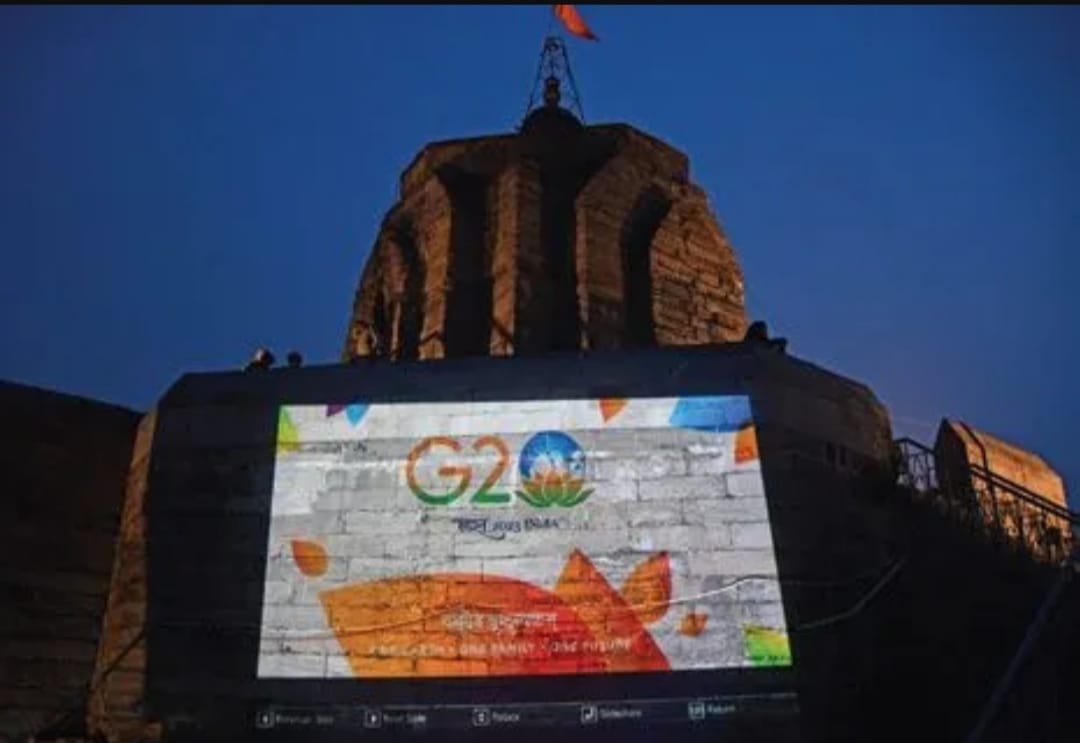
Shankaracharya Temple in Srinagar was illuminated with the logo of G20

Shankaracharya Temple in Srinagar was illuminated with the logo of G20

FacebookTwitterWhatsAppTelegramEmail

New Delhi: There is little gainsay in comparing and contrasting two nations created in August 1947. But yet, it is safe to conclude assertively that India is what Pakistan has never been.

Pakistan lost its Eastern wing, and a new nation called Bangladesh emerged; though following Islamic tenets, Dhaka, the capital of the ‘new creation’ of 1971, maintains warm and hospitable mutual relations. But in the context of the India-Pakistan relationship, Kashmir is the real issue that is speaking out at times, even out of context.

Well, for India, the G20 Summit later this year will provide a fantastic opportunity to tell the world that the state of Jammu and Kashmir has acceded to India, despite having a majority Muslim population.

Pakistan has been uncomfortable with this ‘historical fact’ because, for Islamabad, the basic ‘idea of Muslim nationhood’ has been a cause of the Kashmir problem. In contrast, the G20 mega event should be made used
to tell the world that the Indian Prime Minister in 1999, Atal Bihari Vajpayee went out of the way trying to establish communication with the people of Pakistan. Late Vajpayee had conveyed rather powerfully that Partition in 1947 was also a ‘fact of history’.

How did he do it? Vajpayee even visited the Minar-e-Pakistan in Lahore, a monument erected at a place where the Muslim League adopted the first ‘Pakistan Resolution’. But India’s gestures have never made the right impact in that country. One primary reason is ‘India bashing’ works as vital political oxygen, and the common masses have always been misled by the elites, both Pakistan’s civilian and military regime.

It is also another matter of fact that all successive Indian governments, including the present one led by Prime Minister Narendra Modi in the last 76 years, have tried to push ‘positivity’ in the bilateral ties. But Pakistan sustained its India phobia for reasons known and unknown. Even Modi’s unique gesture of visiting that country on the birthday of PM Nawaz Sharif was hardly allowed to have its desired results.

Worse, Islamabad power players reciprocated the gestures by Pathankot, Uri and Pulwama.

In 2019, India’s External Affairs Minister, Dr S Jaishankar, made a powerful speech during his interaction with Us intelligentsia and experts. “For many years India sought a solution (on Kashmir) while Pakistan was comfortable with continuing cross-border terrorism. The choice as this comment came back to power was clear. We had more of past policies and the prospect of further radicalization or we had a decisive change in the landscape and a change of direction towards de-radicalization,” Dr Jaishankar said at the Center for Strategic and International Studies, Washington.

Hence, it will be prudent to presume that Indian diplomats, political leaders and even intellectuals will do well to tell the G20 nations and the world that Pakistan, over the decades, has remained strictly “antagonistic” to India.

In fact, most of the world could be knowing this fact, but some of them, including the G20 members and some powerful nations in the region, need to be told that this is essential because Pakistan has “internatised” the Muslim League argument that Hindus and Muslims could not live together.

Of course, while pushing this argument, no one is suggesting that G20 should be used for finding faults with India’s western neighbour. But it has to be underlined that until and unless ‘effective’ pressure has been built on the ground, Pakistan will not take any corrective step in improving regular ties with India and will not stop its cross-border terrorism policy.

The global community is aware of this, yet it is still necessary to suggest that the ‘hydra-headed’ terror monster created by Pakistan is today threatening its own problems. Its economy is in shambles. But Pakistan’s challenges remain in the form of politicisation of the Army, rise in fundamentalism, the growing tentacles of ISI and growth in the narcotics trade.

Trying to build up our argument on this backdrop, it must be relevant here to recall what Ikram Saigol had said, “Explode the bomb (nuke), and be prepared to eat grass. Or decide against it and eat humble pie”.

The theory about ‘humble pie’ is almost there for Pakistan. The international community needs to understand that the fall of Pakistan as a nation economically and otherwise will have serious ramifications globally. Many of Pakistan’s woes remain a facet of Kashmir, and the terror angle as “easy availability” of small arms to hordes of unemployed youths has only patronised Jihadi terrorism.

In 2019 again, Dr Jaishankar diagnosed some of the problems vis-a-vis challenges in Kashmir.

“There are local vested interests, there are vested interests across the border. I mean if we actually managed to get development going in Kashmir, do understand that everything that the Pakistanis have planned for, for the last 70 years have come to naught. And therefore that’s not something they are going to let happen easily”.

So many are things deliberately misinterpreted by Pakistan. Even for Afghanistan, a wrong narrative was pushed. Pakistan falsely tried to argue that India’s development assistance did not contribute to peace in Afghanistan. But the US had caught the tricks during the stint of Donald Trump as the US President.

The US had also de-hyphenated India and Pakistan from Washington’s Afghanistan policy. Some other countries also need to do so.

In the ultimate, New Delhi will have to push the world to do the real walk the talk and take firm measures against the mischiefs of Pakistan. In 2016 the internet and social media were used to radicalize and to mobilize support for terror acts in Jammu and Kashmir. So, the Indian government’s argument is, if this is the case and one is walking into this situation, it would not be wise to allow the internet to be used by people whose intentions are “malevolent”.

Hence, while communicating with G20 partners and others, India’s case will be to make sure that there are enough changes on the ground so that Pakistan understands the need to change accordingly.


Topics: August 1947Jihadi terrorismPakistanDr. S. JaishankarG20G20 SummitKashmir story
Share4TweetSendShareSend
✮ Subscribe Organiser YouTube Channel. ✮
✮ Join Organiser's WhatsApp channel for Nationalist views beyond the news. ✮
Previous News

Maoist Funding: NIA filed chargesheet in Maoist terror funding; Hardcore Maoist Suraj surrendered in Bihar’s Munger

Next News

BBC Documentary on PM Modi: Muslim students organise screening at Hyderabad Central University; ABVP demands action

Related News

India’s Permanent Representative to the United Nations Ambassador Harish Parvathaneni

India slams Pakistan at UNSC for peddling false narratives on Jammu & Kashmir

Jameer Khan and Alla Bhakshu arrested in Pakistan-linked terror probe

Karnataka: Digital jihad trail exposed: Jameer Khan and Alla Bhakshu arrested, links traced to Pakistan

India slams Pakistan’s bid to hold elections in Gilgit-Baltistan, demands end to illegal occupation

As Khalistani networks seek new platforms beyond the West, Azerbaijan has emerged as a key venue for conferences, campaigns and narratives aligned with the Pakistan-Turkey axis against India.

Khalistan’s New Grazing Ground: Azerbaijan emerges as new hub for Turkey-Pakistan backed anti-India networks

Bangladesh’s reported JF-17 push has triggered fresh scrutiny after India’s Ops Sindoor exposed the vulnerabilities of Pakistani-Chinese defence systems and precision strike capabilities

Shadows of Operation Sindoor: Questions loom over Bangladesh’s JF-17 ambitions amid Sino-Pakistani tech vulnerabilities

Kawagoe Mosque Row: Pakistan faces embarrassment as Japan orders demolition of illegally built mosque

Load More

Latest News

The Vedic age saw remarkable women sages, known as Rishikas, who composed hymns and shaped India's spiritual and philosophical heritage

Rishikas of Vedic Age: How Gargi, Maitreyi & other women shaped ancient India’s spiritual and philosophical tradition

Police in AAP-Ruled state of Punjab lathi charge sit-in protesters

Punjab: ITI candidates seeking jobs lathi-charged outside PSPCL HQ; opposition slams AAP Govt over police action

From constables to DGP, India's police system follows a structured chain of command that governs law enforcement across the country

From Constable to DGP: Understanding India’s police hierarchy, powers & recruitment system

The terracotta dice that challenges historical assumptions and highlights India's millennia-old civilisational heritage

How a 4,500-year-old terracotta dice is reviving the debate on India’s civilisational continuity & Vedic heritage

The Porumamilla inscription and the ancient science behind a reservoir that survived 650 years

India’s 655-Year-Old Water Policy: The Porumamilla inscription that turned stone into a manual of hydrology

India’s Permanent Representative to the United Nations Ambassador Harish Parvathaneni

India slams Pakistan at UNSC for peddling false narratives on Jammu & Kashmir

Keralam: Pathanamthitta temple property occupied beyond lease period reclaimed by devotees

A series of high-level engagements signals New Delhi's growing focus on building interoperable security networks across the Indo-Pacific

India strengthens Indo-Pacific security architecture with new defence and maritime partnerships

Prime Minister Narendra Modi

“Makes every Indian proud”: PM Modi hails India’s 7.7 per cent GDP growth in FY 2025-26

Once known for maoist violence, Minpa now leads healthcare revolution with telemedicine services in Sukma

From Maoist Stronghold to Healthcare Hub: How Chhattisgarh’s Minpa is transforming through telemedicine & development

Load More
  • Privacy
  • Terms
  • Cookie Policy
  • Refund and Cancellation
  • Delivery and Shipping

© Bharat Prakashan (Delhi) Limited.
Tech-enabled by Ananthapuri Technologies

  • Home
  • Search Organiser
  • Bharat
    • Assam
    • Bihar
    • Chhattisgarh
    • Jharkhand
    • Maharashtra
    • View All States
  • World
    • Asia
    • Africa
    • North America
    • South America
    • Europe
    • Australia
  • Editorial
  • Operation Sindoor
  • Opinion
  • Analysis
  • Defence
  • Culture
  • Sports
  • Business
  • RSS @ 100
  • Entertainment
  • More ..
    • Sci & Tech
    • Vocal4Local
    • Special Report
    • Education
    • Employment
    • Books
    • Interviews
    • Travel
    • Health
    • Politics
    • Law
    • Economy
    • Obituary
  • Subscribe Magazine
  • Read Ecopy
  • Advertise
  • Circulation
  • Careers
  • About Us
  • Contact Us
  • Policies & Terms
    • Privacy Policy
    • Cookie Policy
    • Refund and Cancellation
    • Terms of Use

© Bharat Prakashan (Delhi) Limited.
Tech-enabled by Ananthapuri Technologies