
How Indian space sector is creating history day by day
June 7, 2026
  • Read Ecopy
  • Circulation
  • Advertise
  • Careers
  • About Us
  • Contact Us
Android AppiPhone AppArattai
Organiser
  • ‌
  • Bharat
    • Assam
    • Bihar
    • Chhattisgarh
    • Jharkhand
    • Maharashtra
    • View All States
  • World
    • Asia
    • Europe
    • North America
    • South America
    • Africa
    • Australia
  • Editorial
  • International
  • Opinion
  • RSS @ 100
  • More
    • Op Sindoor
    • Analysis
    • Sports
    • Defence
    • Politics
    • Business
    • Economy
    • Culture
    • Special Report
    • Sci & Tech
    • Entertainment
    • G20
    • Azadi Ka Amrit Mahotsav
    • Vocal4Local
    • Web Stories
    • Education
    • Employment
    • Books
    • Interviews
    • Travel
    • Law
    • Health
    • Obituary
  • Subscribe
    • Subscribe Print Edition
    • Subscribe Ecopy
    • Read Ecopy
  • ‌
  • Bharat
    • Assam
    • Bihar
    • Chhattisgarh
    • Jharkhand
    • Maharashtra
    • View All States
  • World
    • Asia
    • Europe
    • North America
    • South America
    • Africa
    • Australia
  • Editorial
  • International
  • Opinion
  • RSS @ 100
  • More
    • Op Sindoor
    • Analysis
    • Sports
    • Defence
    • Politics
    • Business
    • Economy
    • Culture
    • Special Report
    • Sci & Tech
    • Entertainment
    • G20
    • Azadi Ka Amrit Mahotsav
    • Vocal4Local
    • Web Stories
    • Education
    • Employment
    • Books
    • Interviews
    • Travel
    • Law
    • Health
    • Obituary
  • Subscribe
    • Subscribe Print Edition
    • Subscribe Ecopy
    • Read Ecopy
Organiser
  • Home
  • Bharat
  • World
  • Operation Sindoor
  • Editorial
  • Analysis
  • Opinion
  • Culture
  • Defence
  • International Edition
  • RSS @ 100
  • Magazine
  • Read Ecopy
Home Opinion

How Indian space sector is creating history day by day

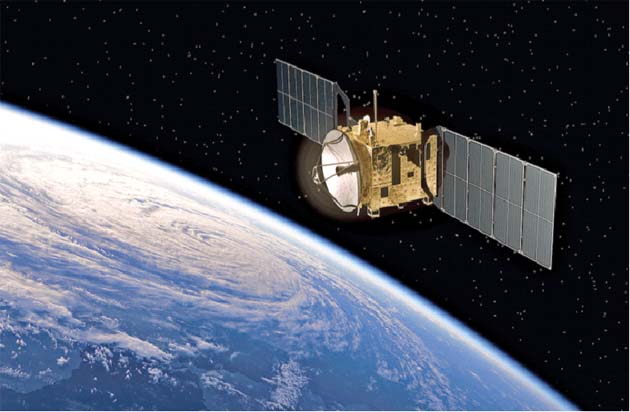
India started its journey in the space sector about five decades ago. Today, India is not only launching its own satellite, but also giving hope to other countries. Looking at the present condition, it could be said that in the next 25 years, India can dominate the space sector

Amit MishraAmit Mishra
Jan 17, 2023, 10:12 pm IST
in Opinion
Follow on Google News
FacebookTwitterWhatsAppTelegramEmail

When we think of space exploration, the Indian Space Research Organisation (ISRO) is often the first organisation which comes to mind. Headquartered in Bengaluru, ISRO is the primary space exploration agency of the Indian Government. In 1969, ISRO was established from the INCOSPAR programme and later became part of the DOS (Department of Space) and the Space Commission—that were created in 1972. Since then, there’s been no looking back. Despite all the hurdles and drawbacks, ISRO has consistently proven itself as a pioneer in space exploration worth its salt, and has developed and pioneered unique and cost-effective technologies that have earned a reputation and universal recognition making it as one of the world’s leading space organisations (ranking one of the best in the world next to NASA).

From launching Aryabhatta, India’s first satellite in 1975, to the successful Mars Orbiter Mission named Mangalyaan in 2013, which made India the first country to reach Mars on its first attempt with the cost of only $76 million, lesser than the budget of movies like Gravity ($100 Million) and Interstellar ($176 Million) are some of the amazing feats of the Indian Space Agency. And now the Indian government is showing its interest in expanding the boundaries of the Indian space arena by recommended that private companies and the Indian corporate world collaborate with Govt agencies and scientific institutes. And he allowed to take a still active and bigger role in the space industry.

Partnering with Private sector

To revamp and augment the space Industry, the government is driving several key initiatives and is ready to launch a new space policy. The Indian government’s Department of Space (DOS) has sought to partner with the private sector in the country’s space industry to increase the use of space technology and expand the space economy. By switching from a “Supply Based Model” to a “Demand Based Model” and employing New Space India Limited (NSIL) as an intermediary for customer requirements and commitments, ISRO will assist DOS in this endeavour. Additionally, NSIL will acquire control of DOS’s operational launch vehicles,  market launches, satellites, and other services.

Joining the link as narrated above, Indian Prime Minister Narendra Modi recently inaugurated the Indian Space Promotion and Authorisation Centre (IN-SPACe), a government agency aimed at promoting private investment and innovation in the space sector. PM Modi expressed hope and emphasised had Indian firms would emerge as leaders in the global space industry, similar to their success in the information technology sector. IN-SPACe will support the private sector and help it participate in building satellites, launching vehicles, carrying out launches, and providing space-based services.

Innovative space Ecosystem

The Indian government’s new space policy is envisaged to come into effect by early 2023 (the draft is already released), and it is expected to lead to the development of a vibrant and innovative space ecosystem in the country. The new space policy will allow for private sector participation in the space industry, with the Indian Space Research Organisation’s marketing arm facilitating commercial activities. It will also outline how non-government entities can work in the space sector and provide support for the private sector through the Indian National Space Promotion and Authorisation Centre (IN-SPACe). The policy will focus on the use of low earth orbit (LEO) satellites, which are cheaper than traditional satellites, and will encourage the private sector to manufacture satellites for various applications such as agriculture, healthcare, urban development, disaster management etc. The global space economy is estimated to be worth $423 billion dollars, with India constituting 2-3 per cent of the related and underlying market. The government is sanguine to tap into the full potential of the sector and expects to have its own SpaceX-like start-ups within the next two years.
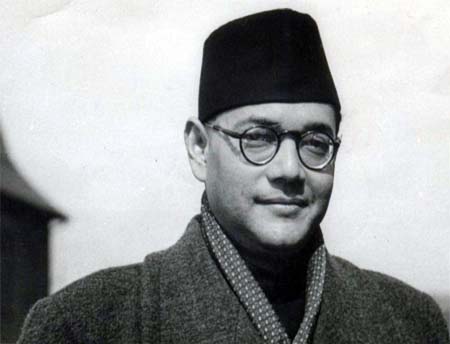
“Life loses half its interest if there is no struggle — if there are no risks to be taken” — Netaji Subhash Chandra Bose

The policy draft is under review before it can be officially and formally approved. Nonetheless, many of the provisions in the draft have already been implemented. This has allowed several start-ups to begin their operations without waiting for the final release of the policy. The policy has already attracted the attention of several start-ups, with the number of space start-ups in India increasing from just four in 2018 to over 250 in 2022. There are currently over 100 space start-ups in the country that have collectively raised over $245.35 million in funding.

One start-up that has already made a significant impact is Skyroot Aerospace. On 18th November, 2022, the Indian Space Research Organisation launched India’s first privately built rocket, called Vikram-S, from the Sriharikotala unchpad. The rocket was developed by Skyroot Aerospace (which became the first Indian private company to forge into outer space when its rocket reached an apogee of 89.5 km). Bellatrix, a Bengaluru-based aerospace start-up is working on developing low-cost propulsion systems for small satellites. The company has already raised $2 million in seed funding and plans to launch its first rocket by 2023. Satsure is another Indian start-up that is focused on developing small satellite platform. On November 26, 2022, the PSLV-C54 mission carried nanosatellites built by Indian start-ups Pixxel and Dhruva Space into space. The mission was a major milestone for both companies and has raised hopes that they will be able to make significant contributions to the development of the space industry in India.

The global space industry is currently valued at $400 billion and has the potential to become a $1 trillion industry by 2040, India is vying for a significant portion of the chunk by 2040. It is likely that the Indian space industry will have made significant progress by them. The country may have a robust space infrastructure, including multiple launch sites, a range of advanced rockets and satellites, and a skilled and experienced workforce by then. The current space policy shall take India on this path to glory.


Topics: Indian Space Promotion and Authorisation CentrePSLV-C54Skyroot Aerospacemanufacture satellitesIndian government's Department of SpacePrime Minister Narendra Modistart-upIndian Space Research OrganisationAryabhatta
ShareTweetSendShareSend
✮ Subscribe Organiser YouTube Channel. ✮
✮ Join Organiser's WhatsApp channel for Nationalist views beyond the news. ✮
Previous News

Relevance of Swami Vivekananda and his teachings

Next News

It’s for Nagas to make the year 2023 ‘historic’, says BJP leader M Chuba Ao

Related News

Israel to Install Statue of Chhatrapati Shivaji Maharaj; Israel’s Consul General in Mumbai, Yaniv Revach, met Maharashtra Chief Minister Devendra Fadnavis and sough his support in this regard

Chhatrapati Shivaji Maharaj’s legacy to reach Israel; Statue to be installed as symbol of India-Israel friendship

As Khalistani networks seek new platforms beyond the West, Azerbaijan has emerged as a key venue for conferences, campaigns and narratives aligned with the Pakistan-Turkey axis against India.

Khalistan’s New Grazing Ground: Azerbaijan emerges as new hub for Turkey-Pakistan backed anti-India networks

Myanmar President U Min Aung Hlaing and Prime Minister Narendra Modi

PM Modi pushes for democracy in Myanmar; Naypyidaw vows action against insurgents threatening India’s national security

Myanmar President U Min Aung Hlaing and Prime Minister Narendra Modi

India-Myanmar boosts trade via Rupee-Kyat mechanism; Pushes connectivity projects as gateway to Southeast Asia

Uttar Pradesh CM Yogi Adityanath warns those of dire consequences if they disrespect gau mata

Uttar Pradesh CM Yogi Adityanath says “Gaumata is Rashtramata”, warns against cow slaughter posts

Israel Prime Minister Benjamin Netanyahu and Prime Minister Narendra Modi(File Photo)

PM Netanyahu & Israel’s Bonhomie with India: The discomfort of Congress as Bharat-Israel bond deepens

Load More

Latest News

(Left) Victorious Indian Men-s hockey team who who won Gold in U-18 Asia Cup (Right) U-18 Women's hockey team who won bronze medal in the Asia Cup

U18 Asia Cup 2026: Indian Men’s hockey wins gold, women secure bronze medal; PM Modi & Amit Shah hail the teams

India’s semiconductor roadmap shifts from import dependence to silicon sovereignty, aiming for a self-reliant ecosystem by Viksit Bharat 2047

From Import Dependence to Silicon Sovereignty: India’s bold semiconductor roadmap for Viksit Bharat 2047

Keralam Chief Minister V.D. Satheeshan

Jamaat-e-Islami Hind Team Meets CM Satheeshan, Senior Ministers, fuel debate over influence in UDF government

Singapore acts against China-linked posts targeting Indian community, cites threat to social harmony

Singapore Invokes OCHA: Facebook, YouTube and X ordered to block anti-Indian content originating from China

Editors of the HAF Wikipedia page run propaganda and disinformation campaign against the organisation, India and Hindu cultural ethos

Wikipedia fuels propaganda against Hindu American Foundation: How anonymous writers demonise Hindu rights group?

Israel to Install Statue of Chhatrapati Shivaji Maharaj; Israel’s Consul General in Mumbai, Yaniv Revach, met Maharashtra Chief Minister Devendra Fadnavis and sough his support in this regard

Chhatrapati Shivaji Maharaj’s legacy to reach Israel; Statue to be installed as symbol of India-Israel friendship

IIGH Public Policy Seminar: Women’s dignity, safety & equal opportunity discussed

Representative Image

Decoding Hezbollah: How the terror group built a massive arsenal against Israel

Representative Image

Plastic, Traffic and Landslides: How rising tourist footfall is posing threat to the mountainous region

The Green Realignment: Why the US-India trade pact is a battle for climate and supply chain security

Load More
  • Privacy
  • Terms
  • Cookie Policy
  • Refund and Cancellation
  • Delivery and Shipping

© Bharat Prakashan (Delhi) Limited.
Tech-enabled by Ananthapuri Technologies

  • Home
  • Search Organiser
  • Bharat
    • Assam
    • Bihar
    • Chhattisgarh
    • Jharkhand
    • Maharashtra
    • View All States
  • World
    • Asia
    • Africa
    • North America
    • South America
    • Europe
    • Australia
  • Editorial
  • Operation Sindoor
  • Opinion
  • Analysis
  • Defence
  • Culture
  • Sports
  • Business
  • RSS @ 100
  • Entertainment
  • More ..
    • Sci & Tech
    • Vocal4Local
    • Special Report
    • Education
    • Employment
    • Books
    • Interviews
    • Travel
    • Health
    • Politics
    • Law
    • Economy
    • Obituary
  • Subscribe Magazine
  • Read Ecopy
  • Advertise
  • Circulation
  • Careers
  • About Us
  • Contact Us
  • Policies & Terms
    • Privacy Policy
    • Cookie Policy
    • Refund and Cancellation
    • Terms of Use

© Bharat Prakashan (Delhi) Limited.
Tech-enabled by Ananthapuri Technologies