ISRO: Semi-cryogenic engine in final phase, will boost GSLV’s lift capability
August 4, 2026
  • Read Ecopy
  • Circulation
  • Advertise
  • Careers
  • About Us
  • Contact Us
Android AppiPhone AppArattai
Organiser
  • ‌
  • Bharat
    • Assam
    • Bihar
    • Chhattisgarh
    • Jharkhand
    • Maharashtra
    • View All States
  • World
    • Asia
    • Europe
    • North America
    • South America
    • Africa
    • Australia
  • Editorial
  • International
  • Opinion
  • RSS @ 100
  • More
    • Op Sindoor
    • Analysis
    • Sports
    • Defence
    • Politics
    • Business
    • Economy
    • Culture
    • Special Report
    • Sci & Tech
    • Entertainment
    • G20
    • Azadi Ka Amrit Mahotsav
    • Vocal4Local
    • Web Stories
    • Education
    • Employment
    • Books
    • Interviews
    • Travel
    • Law
    • Health
    • Obituary
  • Subscribe
    • Subscribe Print Edition
    • Subscribe Ecopy
    • Read Ecopy
  • ‌
  • Bharat
    • Assam
    • Bihar
    • Chhattisgarh
    • Jharkhand
    • Maharashtra
    • View All States
  • World
    • Asia
    • Europe
    • North America
    • South America
    • Africa
    • Australia
  • Editorial
  • International
  • Opinion
  • RSS @ 100
  • More
    • Op Sindoor
    • Analysis
    • Sports
    • Defence
    • Politics
    • Business
    • Economy
    • Culture
    • Special Report
    • Sci & Tech
    • Entertainment
    • G20
    • Azadi Ka Amrit Mahotsav
    • Vocal4Local
    • Web Stories
    • Education
    • Employment
    • Books
    • Interviews
    • Travel
    • Law
    • Health
    • Obituary
  • Subscribe
    • Subscribe Print Edition
    • Subscribe Ecopy
    • Read Ecopy
Organiser
  • Home
  • Bharat
  • World
  • Operation Sindoor
  • Editorial
  • Analysis
  • Opinion
  • Culture
  • Defence
  • International Edition
  • RSS @ 100
  • Magazine
  • Read Ecopy
Home International Edition Technology

ISRO: Semi-cryogenic engine in final phase, will boost GSLV’s lift capability

Semi-cryogenic engine for its future space missions

WEBDESKWEBDESK
Nov 1, 2022, 02:17 pm IST
in Technology, Sci & Tech
Follow on Google News
FacebookTwitterWhatsAppTelegramEmail

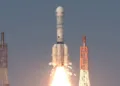
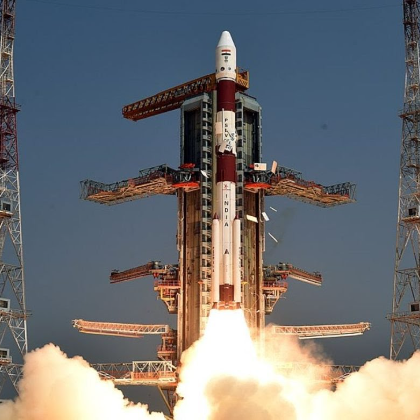
India’s Eminent Space Agency ISRO (Indian Space Research Organisation) has developed a semi-cryogenic engine for its future space missions. The new semi-cryogenic engine will be tasked to do much of the heavy-weight lifting for the Agency. It is an advancement in rocket technology that is superior to the current cryogenic engine which is currently under use by ISRO for GSLV (Geo-Synchronous Launch Vehicle) The GSLV is a three-stage heavy-lift launch vehicle used to launch heavy satellites into space.

Cryogenics is the study of the production and behaviour of materials at very low or extremely low temperatures (minus 150 degrees). A cryogenic engine provides a greater force with each kilogram of cryogenic propellant which is far more effective than the solid/liquid fuel propellant. The Cryogenic Engine uses liquid hydrogen and liquid oxygen as propellants. A propellant is a chemical mixture which is burned to provide thrust in rockets.

There are some disadvantages posed by cryogenic engines: the use of liquid hydrogen at extremely low temperatures is very difficult to store being the smallest gas. The cost of using liquid hydrogen is a prohibitive factor.

On the other hand, a semi-cryogenic engine uses refined kerosene instead of liquid hydrogen. It uses liquid oxygen as an oxidiser. Kerosene is much lighter than liquid fuel and can be stored at a normal temperature. The Kerosene combined with liquid oxygen provides more thrust to the rocket. Compressed Natural Gas (CNG) can also be used as fuel.

It also occupies less space which makes it possible to have more propellant in the fuel compartment or tank. The semi-cryogenic engine is more environment-friendly, cost-effective and more powerful compared to a cryogenic engine. It can carry a huge weight to a higher altitude. Moreover, the payload can be increased since the weight of the fuel will come down by 500kg. Under deep throttle, it will provide and work with much higher operability.

The Semi Cryogenic engine will also be used in the Gaganyaan Mission. India’s strategic partner Russia is offering its semi-cryogenic technology along with critical components for this mission. The chairman of ISRO, Sivan has stated that the technology will be transferred under the “Make in India Programme”. The engines will be built in India only.

There are a few disadvantages which come to the forefront regarding cryogenic propellants. The fuel used in the cryogenic engine is easily combustible and ignition can cause explosions. Secondly, cryogenic storage tanks must be developed to withstand extreme temperatures and pressure. The storage tanks will require thicker walls and strong alloys. Thirdly, cryogenic fuel is very toxic in nature and can be fatal if inhaled. It will provide higher levels of asphyxiation.

India is currently working on the Semi-Cryogenic Engine (SCE-200) as India’s Space program needs to move to the next level. The SCE-200 project was approved in 2009 for 1798 Crores. It is being developed by the Liquid Propulsion Systems Center one of the four main pillars of ISRO. The other three are the Vikram Sarabhai Space Center (VSSC), ISRO Inertial Systems Unit (IISU) and the Indian Institute of Space Science and Technology (IIST).

With the help, aid and assistance of Russia, the Indian Space Programme will witness growth and fame with leaps and bounds. India will be able to join the league of developed nations that pioneer in the domain of space.

Topics: ISROGSLVSemi-cryogenic engineFinal phase
Share1TweetSendShareSend
✮ Subscribe Organiser YouTube Channel. ✮
✮ Join Organiser's WhatsApp channel for Nationalist views beyond the news. ✮
Previous News

PM declares Mangarh Dham as national monument, says India’s past, present, future not complete without tribal community

Next News

Kerala: SDPI furthers PFI agenda, raises civil war threat

Related News

Mukesh Bansal & Skyroot: Investor who weaved wings to startup with Rs 12cr & fuelled India’s private space revolution

From Thumba's humble beginnings to private rocket launches, Atmanirbhar Bharat has transformed ISRO-led reforms into a thriving space ecosystem

From Thumba to the Space Economy: How Atmanirbhar Bharat is powering ISRO’s private space revolution

AI Generated Image

Bharat Beyond Western Lens: How science, tech, education, defence & infrastructure progress are powering nation’s rise

Skyroot’s Vikram-1 Reaches Orbit: India’s first private orbital-class rocket powers rise in the global space frontiers

India's first privately developed orbital rocket, Vikram-1, built by Skyroot Aerospace, is set for its historic maiden launch from Sriharikota on July 18

Vikram-1 Mission Aagaman: India’s first private orbital rocket to attempt historic satellite launch on July 18

Representative image made using AI

GAGAN: How India’s homegrown satellite navigation system is transforming aviation and strategic infrastructure

Load More

Latest News

Keralam BJP VP KS Radhakrishnan alleges two Christian Bishops mobilised youths for CJP agitation

DRDO calls MSMEs to build swarm drones; The game-changing tech to consolidate India’s capabilities in next-gen warfare

Balochistan & Enthno-Nationalist Armed Resistance: A nightmare for the Pakistani Army

Tamil Nadu: Supreme Court refuses to stay HC order on Thiruparankundram Deepam; TVK govt faces legal setback

Beyond the “Gaumutra” jibe

FCRA and NGOs: Ensuring accountability, protecting sovereignty

Tamil Nadu: Hindu Munnani’s protest stops meat waste dumping at historic Shiva temple in Tiruvallur

Devotees throng Baba Baidyanath Dham in Deoghar

Jharkhand: Devotees throng Baba Baidyanath Dham in Deoghar on first Monday of Shravan

FCRA and NGOs: Rewriting the rulebook

India-China border trade resumes after 6 years; Himalayan routes of Nathu La, Shipki La & Lipulekh signal reset in ties

Load More
  • Privacy
  • Terms
  • Cookie Policy
  • Refund and Cancellation
  • Delivery and Shipping

© Bharat Prakashan (Delhi) Limited.
Tech-enabled by Ananthapuri Technologies

  • Home
  • Search Organiser
  • Bharat
    • Assam
    • Bihar
    • Chhattisgarh
    • Jharkhand
    • Maharashtra
    • View All States
  • World
    • Asia
    • Africa
    • North America
    • South America
    • Europe
    • Australia
  • Editorial
  • Operation Sindoor
  • Opinion
  • Analysis
  • Defence
  • Culture
  • Sports
  • Business
  • RSS @ 100
  • Entertainment
  • More ..
    • Sci & Tech
    • Vocal4Local
    • Special Report
    • Education
    • Employment
    • Books
    • Interviews
    • Travel
    • Health
    • Politics
    • Law
    • Economy
    • Obituary
  • Subscribe Magazine
  • Read Ecopy
  • Advertise
  • Circulation
  • Careers
  • About Us
  • Contact Us
  • Policies & Terms
    • Privacy Policy
    • Cookie Policy
    • Refund and Cancellation
    • Terms of Use

© Bharat Prakashan (Delhi) Limited.
Tech-enabled by Ananthapuri Technologies