Revisiting Indian History: Unhappy scholars and children of 'Sickularism'
June 6, 2026
  • Read Ecopy
  • Circulation
  • Advertise
  • Careers
  • About Us
  • Contact Us
Android AppiPhone AppArattai
Organiser
  • ‌
  • Bharat
    • Assam
    • Bihar
    • Chhattisgarh
    • Jharkhand
    • Maharashtra
    • View All States
  • World
    • Asia
    • Europe
    • North America
    • South America
    • Africa
    • Australia
  • Editorial
  • International
  • Opinion
  • RSS @ 100
  • More
    • Op Sindoor
    • Analysis
    • Sports
    • Defence
    • Politics
    • Business
    • Economy
    • Culture
    • Special Report
    • Sci & Tech
    • Entertainment
    • G20
    • Azadi Ka Amrit Mahotsav
    • Vocal4Local
    • Web Stories
    • Education
    • Employment
    • Books
    • Interviews
    • Travel
    • Law
    • Health
    • Obituary
  • Subscribe
    • Subscribe Print Edition
    • Subscribe Ecopy
    • Read Ecopy
  • ‌
  • Bharat
    • Assam
    • Bihar
    • Chhattisgarh
    • Jharkhand
    • Maharashtra
    • View All States
  • World
    • Asia
    • Europe
    • North America
    • South America
    • Africa
    • Australia
  • Editorial
  • International
  • Opinion
  • RSS @ 100
  • More
    • Op Sindoor
    • Analysis
    • Sports
    • Defence
    • Politics
    • Business
    • Economy
    • Culture
    • Special Report
    • Sci & Tech
    • Entertainment
    • G20
    • Azadi Ka Amrit Mahotsav
    • Vocal4Local
    • Web Stories
    • Education
    • Employment
    • Books
    • Interviews
    • Travel
    • Law
    • Health
    • Obituary
  • Subscribe
    • Subscribe Print Edition
    • Subscribe Ecopy
    • Read Ecopy
Organiser
  • Home
  • Bharat
  • World
  • Operation Sindoor
  • Editorial
  • Analysis
  • Opinion
  • Culture
  • Defence
  • International Edition
  • RSS @ 100
  • Magazine
  • Read Ecopy
Home Analysis

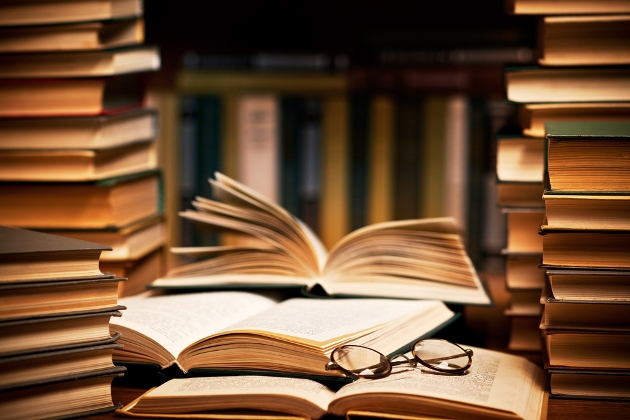
Revisiting Indian History: Unhappy scholars and children of ‘Sickularism’

The 'History of India' passed on to younger generations for decades and especially after Independence has been greatly influenced by external factors

Nirendra DevNirendra Dev
Jul 13, 2022, 06:05 pm IST
in Analysis
Follow on Google News
FacebookTwitterWhatsAppTelegramEmail

New Delhi: The ‘History of India’ passed on to younger generations for decades and especially after Independence has been greatly influenced by external factors. So, more than being ‘truthful’, Indians have been forced to know about themselves and the country according to what and how ‘outsiders’ wanted them to do.

The Indian history as it came down to generations of ours (those in the age group between the 40s and 55) and after were penned by foreign historians. The foreigners included Christians and Muslims and hence a deliberate attempt was made to downplay Hindu rulers and it frequently mocked Hinduism and Hindus and even Indian culture.

In fact, what we had under these two sets of historians was ‘rediscovery’ of Hinduism and India. Thus, any attempt to purify Hindu society or take it out from ‘superstition’ was also perceived and interpreted as a form of ‘Hinduism getting Christianised’.

Thus in terms of interpretation, even gigantic efforts by reformers like Raja Ram Mohan Roy were seen  and retold to the country as ‘influenced by the ideas of Church’. Christian historians of India in a liberal manner wrote the Indian history in their own way and not necessarily how the facts were and not to talk about some of the major events. How natives saw them unfold is hardly reflected in history books.

Both sets of historians wanted to project their respective religions as paragons of philanthropy and piousness (even in evil practices of unhappy marriages and divorce or Triple talaqs in case of Muslims). They also wanted to project Hinduism as something too ancient, unbelievable and guided by tribal instinct.

The sanctity of places like Varanasi and Somnath were hardly projected the manner they deserved. So, two great epics Ramayana and Mahabharata became mythical books and so even God Ram a ‘myth’. Remember sickularists like Lalu Prasad who readily dismissed Ayodhya claim of Hindus saying, “Where is the land patta, all these are andha-viswas (superstition)”.

The Muslim history writing of India were guided by what were written in Persian. These groups of Islamic scholars were good but they were Muslims first – and hence they even raised drunkards (who would be disgrace to Islam) as great intellectuals and people of eminence. The Persian historians thought of themselves as superior to Hindus or any other group of mankind and hence Hindu rulers were downplayed and simply ignored.

But having said that, it ought to mention that during their time some exceptions were always there and they did hail India, Hinduism and the people of India – the Hindus often genuinely.

In the 9th century AD, Salaiman Tafar of Iraq wrote in his ‘Safarnama’  that Hindus were a tolerant community and also that there was a ‘tolerant’ Hindu ruler of Gujarat. It should not be forgotten that even in early days those associated with Islam had famously described India as a land of wisdom.

But such observations were generally ignored by later time scholars and historians.

By the end of the 19th century and beginning of the 20th century, there was a great Hindu awakening. Some credit ought to be given to cyclonic monk Swami Vivekananda.

A group of semi-educated people had come in by then but they could be called ‘pious frauds’.  This was a challenging time and hence came the time for reforms and ultimately Hindu renaissance.

Gradually, nationalism had gained currency and patriotism was decided by a superb synthesis of Hinduism and Nationalism. All these gained currency when without realising the long term impact, an overwhelming section of Muslims and their leadership became too ‘keen’ to see the ‘division’ of India and creation of a new country for Muslims.

These individuals, scholars, political leaders and philosophers and poets focused more on glorification of Islam and Muslims and thus ‘mother India’ did not mean anyhing sacred or pious to them. Jinnah could be singled out for his mistakes, but the seeds of partition of India were sown long back.

On the other hand, those who started thinking for India realised the power of religion and Hindu identity. In the words of Mexican scholar, Octavio Paz ‘The nationalist tendencies were nourished by the ideas of religious reformers”. For Muslims as well, and sadly, politics became ‘indistinguishable’ from religion and Islamic identity.

Quoting expert MSN Menon’s piece written for ‘The Tribune’ in 1999 would be relevant here. “The Christian missionaries were no doubt over-confident. They first tried to convert emperor Akbar!  Then they tried to convert the Brahmin scholars of Madurai!  And finally they tried their hand on Gandhiji.

Their failure was abject. Gandhi had said: “The ‘Sermon on the Mount’ was good, but the Gita was better”. The church naturally turned its attention on the poor and the illiterate — the so-called Harijans, with whom
one need not discuss philosophy……It was a beaten church. It was the time when the marriage of the Cross and the Sword was coming apart, when Europe had taken to the study of Greek philosophy, proscribed earlier by the church. The church was really in retreat in Europe against the rise of the philosophers, its deadly enemies (Nietzche had said: “God is Dead.”)”.

The biggest myth perhaps spread by the British historians has been that the Aryans invaded India from
Europe and conquered the weaker races.

He further added, and importantly – “The church was thus under universal condemnation, though not

Christ himself. But it found refuge in the colonies, where the freebooters found the church a useful instrument
to advance their plunder”. (Link available:https://www.tribuneindia.com/1999/99feb23/edit.htm#4). There are a few more areas where real ‘history keeping’ has been neglected.

France-born India watcher, Berthet has said that though the Indian ocean has a long history with Europe, the history of coastal India was  grossly underwritten.

Great Works such as Kautilya’s Arthasastra and Bana’s Harshacharita weren’t given the importance they deserved.
Topics: Indian historyRewriting Indian HistoryLeftist historians
Share3TweetSendShareSend
✮ Subscribe Organiser YouTube Channel. ✮
✮ Join Organiser's WhatsApp channel for Nationalist views beyond the news. ✮
Previous News

#JudicialOverActivism: Judiciary in the Dock

Next News

VHP demands arrest of Ajmer Dargah cleric’s son for making derogatory statements against Hindu gods

Related News

The terracotta dice that challenges historical assumptions and highlights India's millennia-old civilisational heritage

How a 4,500-year-old terracotta dice is reviving the debate on India’s civilisational continuity & Vedic heritage

The Porumamilla inscription and the ancient science behind a reservoir that survived 650 years

India’s 655-Year-Old Water Policy: The Porumamilla inscription that turned stone into a manual of hydrology

West Bengal has played a foundational role in shaping modern India’s intellectual, cultural, and political identity, with Kolkata emerging as one of the earliest centres of education and reform

Bengal’s Enduring Legacy: How Kolkata became the birthplace of modern India’s education, reform & cultural renaissance

Union Home Minister Amit Shah and other leaders paid tributes to revolutionary Sukhdev Thapar on his birth anniversary

Sukhdev Thapar Birth Anniversary: Amit Shah and other leaders pay tribute to fearless revolutionary hero

Dr Ambedkar: The architect who prevented India from becoming a communist state

Dr BR Ambedkar (left); Mohd Ali Jinnah (right)

“Who is Jinnah to Speak About India?” — Dr Ambedkar’s Thundering Rebuke

Load More

Latest News

The Vedic age saw remarkable women sages, known as Rishikas, who composed hymns and shaped India's spiritual and philosophical heritage

Rishikas of Vedic Age: How Gargi, Maitreyi & other women shaped ancient India’s spiritual and philosophical tradition

Police in AAP-Ruled state of Punjab lathi charge sit-in protesters

Punjab: ITI candidates seeking jobs lathi-charged outside PSPCL HQ; opposition slams AAP Govt over police action

From constables to DGP, India's police system follows a structured chain of command that governs law enforcement across the country

From Constable to DGP: Understanding India’s police hierarchy, powers & recruitment system

The terracotta dice that challenges historical assumptions and highlights India's millennia-old civilisational heritage

How a 4,500-year-old terracotta dice is reviving the debate on India’s civilisational continuity & Vedic heritage

The Porumamilla inscription and the ancient science behind a reservoir that survived 650 years

India’s 655-Year-Old Water Policy: The Porumamilla inscription that turned stone into a manual of hydrology

India’s Permanent Representative to the United Nations Ambassador Harish Parvathaneni

India slams Pakistan at UNSC for peddling false narratives on Jammu & Kashmir

Keralam: Pathanamthitta temple property occupied beyond lease period reclaimed by devotees

A series of high-level engagements signals New Delhi's growing focus on building interoperable security networks across the Indo-Pacific

India strengthens Indo-Pacific security architecture with new defence and maritime partnerships

Prime Minister Narendra Modi

“Makes every Indian proud”: PM Modi hails India’s 7.7 per cent GDP growth in FY 2025-26

Once known for maoist violence, Minpa now leads healthcare revolution with telemedicine services in Sukma

From Maoist Stronghold to Healthcare Hub: How Chhattisgarh’s Minpa is transforming through telemedicine & development

Load More
  • Privacy
  • Terms
  • Cookie Policy
  • Refund and Cancellation
  • Delivery and Shipping

© Bharat Prakashan (Delhi) Limited.
Tech-enabled by Ananthapuri Technologies

  • Home
  • Search Organiser
  • Bharat
    • Assam
    • Bihar
    • Chhattisgarh
    • Jharkhand
    • Maharashtra
    • View All States
  • World
    • Asia
    • Africa
    • North America
    • South America
    • Europe
    • Australia
  • Editorial
  • Operation Sindoor
  • Opinion
  • Analysis
  • Defence
  • Culture
  • Sports
  • Business
  • RSS @ 100
  • Entertainment
  • More ..
    • Sci & Tech
    • Vocal4Local
    • Special Report
    • Education
    • Employment
    • Books
    • Interviews
    • Travel
    • Health
    • Politics
    • Law
    • Economy
    • Obituary
  • Subscribe Magazine
  • Read Ecopy
  • Advertise
  • Circulation
  • Careers
  • About Us
  • Contact Us
  • Policies & Terms
    • Privacy Policy
    • Cookie Policy
    • Refund and Cancellation
    • Terms of Use

© Bharat Prakashan (Delhi) Limited.
Tech-enabled by Ananthapuri Technologies