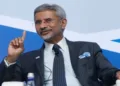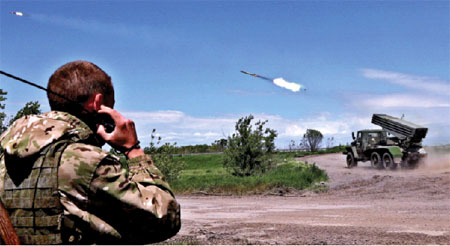
Last week, speaking at the GLOBSEC Forum in Slovakia’s Bratislava, External Affairs Minister Dr S Jaishankar argued that Europe has to grow out of the mindset that its problems are the world’s problems but the world’s problems are not Europe’s problems. This strong pushback by the minister came amid persistent efforts by the European countries to convince Bharat to take a tougher stance vis-a-vis Russia on its invasion of Ukraine with the suggestion that New Delhi could face similar challenges from China in the future. Bharat has pushed back strongly against such a posture underscoring that Europe has often done more to sustain Russian war efforts.
And this is the unambiguous reality that is faced by Europe today as it is trying to address one of the most seminal challenge in its recent history. After proclaiming for decades that the European Union was not in the business of geopolitics, finally the reality is dawning in Europe that power politics can only be ignored by it at its own peril. The Russian invasion of Ukraine has brought the challenges of Europe to the fore.
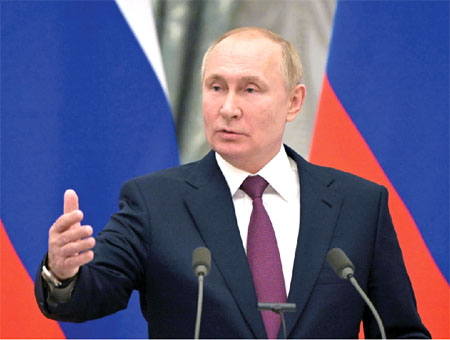
As the war in Ukraine grinds on and there are suggestions that this will be a long war of attrition, there are questions about the continuation of Europe’s resolve to support Ukraine as differences within Europe are quite striking
In response to the Russian actions, Europe has moved ahead with one of most remarkable shifts in its foreign and security policy posture that would have been unthinkable just a few months back. Russia has been relying on European disunity and unwillingness to take concerted action. But, faced with one of the most significant challenges since the end of the Cold War, the EU has come together to impose strong sanctions targeting the Russian financial sector as well as banning Russian state media and moving ahead with shipments of weaponry to Ukraine. Even Switzerland, the forever neutral state, has decided to freeze assets belonging to Russia’s President Putin, Prime Minister Mikhail Mishustin and Foreign Minister Sergey Lavrov as well as key Russian oligarchs. The European Union, in a show of defiance, also decided to move with the membership negotiations with Ukraine after the Ukrainian president formally sent an application to Brussels. And despite their longstanding commitment to neutral foreign and security policies, the Nordic countries of Finland and Sweden have fundamentally reassessed their positions in the aftermath of Russia’s invasion of Ukraine with their official applications for NATO membership last month.
The most striking development, however, has happened in Germany, with the European economic powerhouse now deciding to significantly increase its defence spending, recognising the unsustainability of its posture where its economic power has been a function of American security guarantees. Germany will now be boosting its military spending above 2 per cent of GDP and committing 100 billion euros to a fund for its armed services. In a major shift from its post-World War II policy, it has removed some restrictions on German-made weapons being sent to conflict zones, thereby enabling more third-party countries to send weapons to Ukraine as well. This is happening despite Germany’s heavy reliance on Russian gas, and the message is unmistakable that history is truly back in Europe.
But as the war in Ukraine grinds on and there are suggestions that this will be a long war of attrition, there are questions about the continuation of Europe’s resolve to support Ukraine as differences within Europe are quite striking. The Baltic countries, the UK and Poland have talked of categorical Russian defeat and the need to drive it out of Ukraine even as leaders in France, Germany and Italy have been more circumspect.
French President, Emmanuel Macron, has called for a ceasefire between Russia and Ukraine and urged the West not to “give in to the temptation of humiliation, nor the spirit of revenge”. The German Chancellor Olaf Scholz has engaged Putin to explore ways to enable Ukraine to export grain through the Black Sea. The road to partial EU embargo on Russian oil has been a long and tortuous one. While the EU has decided to block most Russian oil imports by the end of 2022 to punish Moscow for invading Ukraine, this ban will only impact two-thirds of oil imports by sea but not pipeline oil after Hungary opposed it publicly. Hungary’s Prime Minister, Viktor Orban, is a long time friend of Vladimir Putin and imports 65 per cent of its oil from Russia through pipelines. This was the sixth set of sanctions passed by the EU against Russia since the start of the conflict in February and it was extremely difficult to negotiate. Given Moscow’s reliance on energy imports, this is viewed as a significant measure but given the internal wrangling within the EU, it can also give sustenance to Putin about his Ukrainian ambitions.
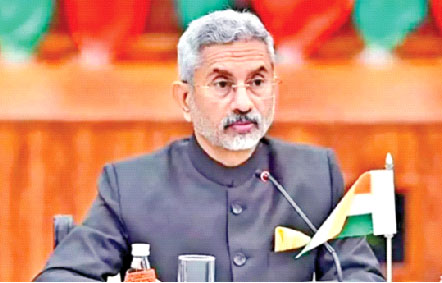
As the war drags on and the costs in terms of food and energy process continue to impact Europe, Putin would be hoping that the support to Ukraine in the West would get sapped sooner rather than later
To many, these divisions remain Putin’s strongest weapon in the long term. He had gone ahead and invaded Ukraine partly believing that Europe and the wider West would shy away from a fight. In the initial phase, he has been proven wrong as he has given a new lease of life to the NATO and a new sense of purpose to Trans-Atlantic unity. But as the war drags on and the costs in terms of food and energy process continue to impact Europe, he would be hoping that the support in the West would get sapped sooner rather than later. This was also underscored by the US Director of National Intelligence, Avril Haines, to the US Congress last month when she suggested that Putin “is probably counting on US and EU resolve to weaken as food shortages, inflation and energy prices get worse”.
Putin is well aware of these internal divisions within the EU and he will definitely try to exploit them in the coming days and months as he will try to reconfigure his war strategy. So far, he has had limited success on the battlefield and instead of weakening the European resolve, his actions have only strengthened it. But as this war of attrition continues, the appetite in western capitals to continue with the sacrifices needed to sustain Ukrainian support will also come under stress. And Putin will surely look this as an important opportunity to exploit this vulnerability.
For Europe, these challenges are going to get much tougher as the costs of supporting Ukraine will continue to rise. Instead of gratuitous advice to other nations on how their foreign policies should be conducted, it will have to work out its own policy choices and ensure that it is remaining true to the vision of the western liberal order. The world is changing rapidly and Europe, too, has had to evolve accordingly.
The old “empire of norms” is trying to find its footing in a global environment that is being redefined by the geopolitical contestation and jostling. Europe is no longer the centre of gravity of global politics and this necessitates a change in the way European policymakers engage with the wider world.