Reinterpreting the Glorious Past: Sense and Non-sense
June 8, 2026
  • Read Ecopy
  • Circulation
  • Advertise
  • Careers
  • About Us
  • Contact Us
Android AppiPhone AppArattai
Organiser
  • ‌
  • Bharat
    • Assam
    • Bihar
    • Chhattisgarh
    • Jharkhand
    • Maharashtra
    • View All States
  • World
    • Asia
    • Europe
    • North America
    • South America
    • Africa
    • Australia
  • Editorial
  • International
  • Opinion
  • RSS @ 100
  • More
    • Op Sindoor
    • Analysis
    • Sports
    • Defence
    • Politics
    • Business
    • Economy
    • Culture
    • Special Report
    • Sci & Tech
    • Entertainment
    • G20
    • Azadi Ka Amrit Mahotsav
    • Vocal4Local
    • Web Stories
    • Education
    • Employment
    • Books
    • Interviews
    • Travel
    • Law
    • Health
    • Obituary
  • Subscribe
    • Subscribe Print Edition
    • Subscribe Ecopy
    • Read Ecopy
  • ‌
  • Bharat
    • Assam
    • Bihar
    • Chhattisgarh
    • Jharkhand
    • Maharashtra
    • View All States
  • World
    • Asia
    • Europe
    • North America
    • South America
    • Africa
    • Australia
  • Editorial
  • International
  • Opinion
  • RSS @ 100
  • More
    • Op Sindoor
    • Analysis
    • Sports
    • Defence
    • Politics
    • Business
    • Economy
    • Culture
    • Special Report
    • Sci & Tech
    • Entertainment
    • G20
    • Azadi Ka Amrit Mahotsav
    • Vocal4Local
    • Web Stories
    • Education
    • Employment
    • Books
    • Interviews
    • Travel
    • Law
    • Health
    • Obituary
  • Subscribe
    • Subscribe Print Edition
    • Subscribe Ecopy
    • Read Ecopy
Organiser
  • Home
  • Bharat
  • World
  • Operation Sindoor
  • Editorial
  • Analysis
  • Opinion
  • Culture
  • Defence
  • International Edition
  • RSS @ 100
  • Magazine
  • Read Ecopy
Home Bharat

Reinterpreting the Glorious Past: Sense and Non-sense

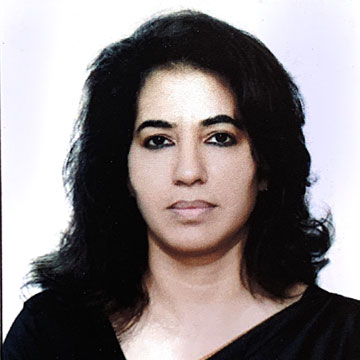
Dr. Priyanka MishraDr. Priyanka Mishra
May 25, 2022, 12:03 pm IST
in Bharat
Follow on Google News
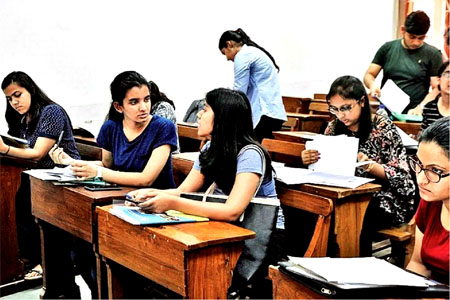
For students of higher education,educationists must write textbooks on Indian History with reliable narratives

For students of higher education,educationists must write textbooks on Indian History with reliable narratives

FacebookTwitterWhatsAppTelegramEmail

The Government should promote research on the Indian knowledge system and Sanatan Parampara to provide well researched books of History


The other day, it was a shocking conversation with a Ph.D. scholar. We were discussing relevance and legitimacy of classification of Indian History in three periods i.e. Ancient, Medieval and Modern Indian History. I was trying to make a case for an urgent need to rename these eras and asked the young researcher why we shouldn’t name medieval Indian history as Era of Invasion? He looked at me unfazed and immediately responded, “Aryans in the Ancient period were also invaders!”

Being a daughter of an eminent historian, World History and History of India were part and parcel of my childhood bedtime stories. Growing up, it was an interesting time when, as true argumentative Indian, I used to debate with my father about discriminating and lobsided treatment of our past events by downplaying marvelous achievements of Cholas and Pallavas of so-called ancient period and over emphasising on showcasing art and culture of so-called medieval period, as cultural milestone of Indian History. The debate always ended with me being branded as Rani Durgavati, a Gond Rani who fought for her kingdom in our native place in Central India.

Like the aforementioned Ph.D. student, many students have studied one-sided narratives of Indian History written by a handful of scholars with fake nationalist views and tunnel vision. Now that we see our soft power getting long awaited impetus, we must attend to various fault lines of Indian History with authentic researches and reliable narratives. Every year we are adding more and more students to the band of tunnel visioned students. glossing over Pre-Invasion Era

For instance, chronologically, Indian History is generally classified into three periods – Ancient India (Pre-history to AD 700), Medieval India (AD 700 – AD 1857), Modern India (AD 1857+)

This classification is one of these faultlines and doesn’t make any sense. Ours is a civilisation of more than 5,000 years. It is beyond comprehension as to why we should accept the idea of reducing a major part of our past as just Ancient (oblivion) History? This classification is ridiculous because we treat our more than 5,000 years old Sanatan History at par with approximately thousand years old medieval period and about hundred years old modern period. Given the challenge that the primary and secondary sources for Vedic and post–Vedic era are sparsely available in written form, in comparison to the time when invasion started, many scholars with tunnel vision have not given the pre-invasion era, deserving attention. They don’t take the Indian way of narrating oral history (vachik parampara) seriously. On the other hand, given court traditions of eulogising rulers, History writing of Delhi Darbar is rich with various written primary and secondary sources. We need to set the record straight. Convenience interpretation of such classification had resulted in disastrous consequences. It is unfortunate that writing of History in India with Western ideas and biased theories. continued even after Independence.

Why can’t ancient history be renamed as Vedic Kal or Sanatan Kal or Shastriya Kal or something else which clearly and suitably underlines the glory of that period? Do we have any ideological barrier to rename medieval history as Era of Invasion or post Vedic Kal?

Now, we must begin with garnering enough confidence to suitably rename classifications of our history. Why the ancient history can’t be renamed as Vedic Kal or Sanatan Kal or Shastriya Kal or something else which clearly and suitably underlines the glory of that period. Do we have any ideological barrier to rename medieval history as Era of Invasion or post Vedic Kal? It should also include the time of our struggle for freedom? In my opinion, the modern period must be named as the post-Independence period.

Disconnect With Our Ancient Past

It is not just renaming the eras. Currently, students are spending most of their formative years learning about the era of invasion and this exactly is the root cause of their appalling disconnect with our Citta, Manas and Kal, as aptly termed by Shri Dharmpalji. This is why they are in disbelief of our grand narrative. We have been influenced deeply by the incorrect narratives of our past that we feel so uncomfortable to own our past. Post-Independence, the idea of secularism has become so overwhelming and overbearing in our collective consciousness that we ourselves feel a deep sense of guilt when we wish to merely acknowledge the grandeur of our marvellous past, let alone celebrate it. Though I am not a historian, when I see the deep impression it has on my own worldview, I feel we must act immediately and must not take this issue casually. The students of such distorted history will only give cold shoulders to spiritual nationalism and will never defend the nationalist views when our rich past is ridiculed and reduced to as being a “bundle of myth”. Is it not being unfair to ourselves, to our traditions, to our culture?

I believe that India, Indians and Indianness survived and came out of a thousand years of invasion, with flying colours, credit goes to spiritual nationalism and national consciousness of Indians which kept the fighting spirit alive in the common population. Dr Kapil Tiwari, eminent scholar of Lok Parampara, aptly says that in post-Independence India, the kind of history which was being written or taught was constantly ignoring the fact that in India, History has been perceived as History of Life (Jeevan) not History of Time (Kal). The communist interpretation of History termed the History, which was infused with national consciousness, as being communal. They misunderstood this peculiar sense of Kal, and went to the extent of naming it as Myth.

Whether we admit it or not, Indians have deep seeded historical trauma of being oppressed for centuries altogether. If we are even remotely serious about coming out of this trauma, now is the time! It’s like now or never! If we wish to change the narrative, we also have to strive towards creating authentic research and writing books. The Government should be providing opportunities to repair the harm done not just by foreign invasions for more than 900 years but also by incorrect and faulty history narratives. It must be our priority to promote research around the Indian knowledge system and Sanatan Parampara to provide extensive reading materials and well researched books on History. We must also give extensive training to our young students, in public speaking and oratory skills, so that they can meticulously and confidently speak their minds. I firmly believe that such efforts of reinterpretation of our glorious past will pave our way to wake Citta and Manas within ourselves and will make us understand the sense of Kal of Indians. If we don’t wake up now, we will do great disservice to our nation.


Share3TweetSendShareSend
✮ Subscribe Organiser YouTube Channel. ✮
✮ Join Organiser's WhatsApp channel for Nationalist views beyond the news. ✮
Previous News

Organiser-Panchjanya Awards: Palki Sharma wins KR Malkani Award, Rohit Sardana posthumously gets AB Vajpayee Puraskar

Next News

Africa Day: Relevance of Swamiji’s Concept of Universal Brotherhood in Concurrent Times

Related News

Chandni Qureshi (centre) and Ayush Malik before his conversion; the image on the left purportedly shows Ayush, now known as Mohammad Ali, offering namaz

Exclusive | Chandni Qureshi, Pakistani cleric & secret nikah: Inside Shamli conversion case that triggered an SIT probe

Ceremonial lamp lighting at a seminar in Delhi University organised by Centre for Tribal Studies

Traditional tribal practices can help mitigate planetary crisis: Experts at Delhi University seminar

How India keeps cooking gas cheaper than most nations

The LPG Reality Check: Why India still has the world’s cheapest cooking gas

TMC leader Brahmananda Chakraborty arrested in Howrah after viral video shows him hiding under clothes, accused of cut money in PM Awas Yojana funds. (Image: X)

Hiding under a pile of clothes? TMC leader arrested in PM Awas Yojana ‘Cut money’ case as dramatic video goes viral

Pakistan Prime Minister Shehbaz Sharif face the brunt as Punjab draws excess water from Indus basin and Sindh suffers from scarcity

Pakistan: Indus water drifts to Punjab & erupts political rift; Acute crisis in Dadu canal & drought in Sindh

Cobra Commandos land in Manipur to curb insurgency and restore peace

CoBRA Commandos Deployed in Manipur: CRPF draws red line for insurgents, Promises decisive action

Load More

Latest News

Chandni Qureshi (centre) and Ayush Malik before his conversion; the image on the left purportedly shows Ayush, now known as Mohammad Ali, offering namaz

Exclusive | Chandni Qureshi, Pakistani cleric & secret nikah: Inside Shamli conversion case that triggered an SIT probe

Ceremonial lamp lighting at a seminar in Delhi University organised by Centre for Tribal Studies

Traditional tribal practices can help mitigate planetary crisis: Experts at Delhi University seminar

How India keeps cooking gas cheaper than most nations

The LPG Reality Check: Why India still has the world’s cheapest cooking gas

TMC leader Brahmananda Chakraborty arrested in Howrah after viral video shows him hiding under clothes, accused of cut money in PM Awas Yojana funds. (Image: X)

Hiding under a pile of clothes? TMC leader arrested in PM Awas Yojana ‘Cut money’ case as dramatic video goes viral

Pakistan Prime Minister Shehbaz Sharif face the brunt as Punjab draws excess water from Indus basin and Sindh suffers from scarcity

Pakistan: Indus water drifts to Punjab & erupts political rift; Acute crisis in Dadu canal & drought in Sindh

Cobra Commandos land in Manipur to curb insurgency and restore peace

CoBRA Commandos Deployed in Manipur: CRPF draws red line for insurgents, Promises decisive action

North 24 Parganas: A large crowd of Bangladeshis residing in West Bengal gathers at the Hakimpur border crossing in the Basirhat subdivision of North 24 Parganas district to cross over to Bangladesh

Unnatural Demographic Change: Hint that would create a heat

Odisha: RSS Sangh Shiksha Varg concludes in Sambalpur; Dr. Mahapatra cites century-long effort to unite hindu society

‘TMC Will Not Survive’: Sukhendu Sekhar Ray Warns of Bigger Revolt as Bengal Rebellion Threatens to Reach Parliament

‘TMC will not survive’: MP Sukhendu Sekhar Ray warns MLA revolt could soon engulf parliament

Former Chief Minister Siddaramaiah and his wife Parvathi is accused in MUDA site allotment case

Karnataka: Congress govt under fire over Yathindra’s appointment amid pending MUDA-linked controversy

Load More
  • Privacy
  • Terms
  • Cookie Policy
  • Refund and Cancellation
  • Delivery and Shipping

© Bharat Prakashan (Delhi) Limited.
Tech-enabled by Ananthapuri Technologies

  • Home
  • Search Organiser
  • Bharat
    • Assam
    • Bihar
    • Chhattisgarh
    • Jharkhand
    • Maharashtra
    • View All States
  • World
    • Asia
    • Africa
    • North America
    • South America
    • Europe
    • Australia
  • Editorial
  • Operation Sindoor
  • Opinion
  • Analysis
  • Defence
  • Culture
  • Sports
  • Business
  • RSS @ 100
  • Entertainment
  • More ..
    • Sci & Tech
    • Vocal4Local
    • Special Report
    • Education
    • Employment
    • Books
    • Interviews
    • Travel
    • Health
    • Politics
    • Law
    • Economy
    • Obituary
  • Subscribe Magazine
  • Read Ecopy
  • Advertise
  • Circulation
  • Careers
  • About Us
  • Contact Us
  • Policies & Terms
    • Privacy Policy
    • Cookie Policy
    • Refund and Cancellation
    • Terms of Use

© Bharat Prakashan (Delhi) Limited.
Tech-enabled by Ananthapuri Technologies