Universal Hindutva: Hindu Economic paradigm
October 4, 2026
  • Read Ecopy
  • Circulation
  • Advertise
  • Careers
  • About Us
  • Contact Us
Android AppiPhone AppArattai
Organiser
  • ‌
  • Bharat
    • Assam
    • Bihar
    • Chhattisgarh
    • Jharkhand
    • Maharashtra
    • View All States
  • World
    • Asia
    • Europe
    • North America
    • South America
    • Africa
    • Australia
  • Editorial
  • International
  • Opinion
  • RSS @ 100
  • More
    • World Hindu Congress 2026
    • Op Sindoor
    • Analysis
    • Sports
    • Defence
    • Politics
    • Business
    • Economy
    • Culture
    • Special Report
    • Sci & Tech
    • Entertainment
    • G20
    • Azadi Ka Amrit Mahotsav
    • Vocal4Local
    • Web Stories
    • Education
    • Employment
    • Books
    • Interviews
    • Travel
    • Law
    • Health
    • Obituary
  • Subscribe
    • Subscribe Print Edition
    • Subscribe Ecopy
    • Read Ecopy
  • ‌
  • Bharat
    • Assam
    • Bihar
    • Chhattisgarh
    • Jharkhand
    • Maharashtra
    • View All States
  • World
    • Asia
    • Europe
    • North America
    • South America
    • Africa
    • Australia
  • Editorial
  • International
  • Opinion
  • RSS @ 100
  • More
    • World Hindu Congress 2026
    • Op Sindoor
    • Analysis
    • Sports
    • Defence
    • Politics
    • Business
    • Economy
    • Culture
    • Special Report
    • Sci & Tech
    • Entertainment
    • G20
    • Azadi Ka Amrit Mahotsav
    • Vocal4Local
    • Web Stories
    • Education
    • Employment
    • Books
    • Interviews
    • Travel
    • Law
    • Health
    • Obituary
  • Subscribe
    • Subscribe Print Edition
    • Subscribe Ecopy
    • Read Ecopy
Organiser
  • Home
  • Bharat
  • World
  • Operation Sindoor
  • Editorial
  • Analysis
  • Opinion
  • Culture
  • Defence
  • International Edition
  • RSS @ 100
  • Magazine
  • Read Ecopy
Home World

Universal Hindutva: Hindu Economic paradigm

Prof P KanagasabapathiProf P Kanagasabapathi
Sep 8, 2021, 11:56 am IST
inWorld, Opinion
Follow on Google News
Facebook
Twitter
WhatsAppTelegramEmail
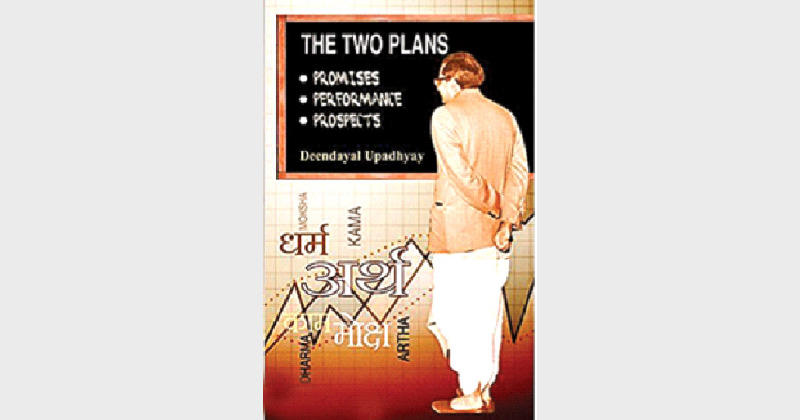
It is Hindu Economics that is driving the Indian economic systems Ever since the ancient times


The position of India as the premier economy continued uninterrupted for several centuries during the past two millennia. Figures show that India remained as the most sustainable economic power in the world. It was due to the wrong policies of the British that the Indian economy had to fall, beginning from the eighteenth century. This shows that Indian economy, by nature, is fundamentally strong with its original systems based on the Hindu orientations. 

India was a poor and underdeveloped economy at the time of Independence. Now seven decades later, we are the most potential economy in the world with very high growth rates. Almost all the multilateral organisations, research bodies and rating agencies unanimously agree that India is fast emerging as the most powerful nation. A few years back, London Business School estimated that India had 85 million entrepreneurs functioning at different levels. Now the situation is such that no major economic discourse at the global level can take place without the presence  of India.

How did we come to this position? How is that a country that was very poor is considered as the most potential nation in a period of just seven decades? A study of the economic history during the past decades shows that no other country in the world has made such a U-turn in a period of seventy years. How was  it possible? 

When we analyse the policies of the past decades, we come to know that there were confusions and contradictions in policy making during most of the period. Well before Independence, Mahatma Gandhi wanted to have a larger debate on the economic policies to be adopted after independence. But Nehru scuttled it repeatedly. Post 1947, the Nehruvian establishment went in for an alien ideology and adopted the socialistic approach, without much discussions. It was only when the socialism failed in the then USSR by the late 1980s, our ruling classes realised their foolishness. But by then we had already wasted four important decades, very crucial for the development of a country of India’s backgrounds. 

After Communism failed at the global level, the Indian policy makers wanted to go for an alternative. Even during the initial decades of Nehruvian growth, our growth rates were either comparable or better than those of the western countries. Later the growth rates picked up over the years, leaving the other advanced countries way behind. It makes one to wonder as to what the reason could be ? 

Field studies conducted in different parts of the country for the last twenty years and more reveal that the economic progress of India during the past seven decades has been largely due to our inherent strengths. Most of them are unique and play the critical role in the shaping and functioning of our economic systems. Family base, High savings, Self-employment base, Higher levels of entrepreneurship, the dominance of the non-corporate sector, community orientation  with higher social capital, society-driven and not state-dependent approaches and the presence of higher value systems are the important among them. 

It is the above features that support and sustain the economy to move forward continuously, in spite of many hurdles that the nation has been facing over the years. It is because of them that the nation was able to overcome the negative effects of the alien approaches. Even during the 2008 global economic crisis, India was able to escape it only due to the native economic systems.  
 

Prof P Kanagasabapathi
India-centric studies and is the author of Indian Models of Economy, Business and Management [Read more]
Share
Tweet
SendShareSend
✮ Subscribe Organiser YouTube Channel. ✮
✮ Join Organiser's WhatsApp channel for Nationalist views beyond the news. ✮
Previous News

BJP will bring population control act in Telangana if it comes to power after 2023 Assembly polls: Bandi Sanjay Kumar

Next News

Mohammad Hassan Akhund to lead the new Taliban regime, omits the Ministry of Women

Related News

Elderly man dies at unauthorised protest of CJP at Shivaji Park in Mumbai

CJP Protest in Mumbai’s Shivaji Park: Elderly man dies of heart attack at unauthorised demonstration

Indian Men's Hockey team which won gold medal in Asian Games 2026

Asian Games 2026: India retains men’s hockey gold, defeat Malaysia

Israeli passenger Tzvika Manes recounts how passengers overpowered Omani terrorist co-pilot Hamam al-Hammami during the Flydubai cockpit crisis.

“Crew were asking us to untie the terrorist”: Israeli passengers recall second threat during Flydubai hijack chaos!

Akhil Bharatiya Vanvasi Kalyan Ashram Addressing the press conference

Rajasthan: Vanvasi Kalyan Ashram passes resolution seeking ‘National Memorial Status’ for Mangarh Dham

Government approves five Centres of Excellence for Classical Assamese, Bengali, Marathi, Pali and Prakrit

Tamil Nadu: TVK faces student opposition over memorial for its five declared icons on Madras University ground

Load More

Latest News

Elderly man dies at unauthorised protest of CJP at Shivaji Park in Mumbai

CJP Protest in Mumbai’s Shivaji Park: Elderly man dies of heart attack at unauthorised demonstration

Indian Men's Hockey team which won gold medal in Asian Games 2026

Asian Games 2026: India retains men’s hockey gold, defeat Malaysia

Israeli passenger Tzvika Manes recounts how passengers overpowered Omani terrorist co-pilot Hamam al-Hammami during the Flydubai cockpit crisis.

“Crew were asking us to untie the terrorist”: Israeli passengers recall second threat during Flydubai hijack chaos!

Akhil Bharatiya Vanvasi Kalyan Ashram Addressing the press conference

Rajasthan: Vanvasi Kalyan Ashram passes resolution seeking ‘National Memorial Status’ for Mangarh Dham

Government approves five Centres of Excellence for Classical Assamese, Bengali, Marathi, Pali and Prakrit

Tamil Nadu: TVK faces student opposition over memorial for its five declared icons on Madras University ground

ECI controversy resembles Bangladesh regime change playbook; Is it a CIA conspiracy to destabilise India?

The Shrichakra Rangoli reflects the ancient Indian interplay of geometry, mathematics, spirituality and cosmic symbolism

Shrichakra Rangoli: How ancient India turned geometry, mathematics and cosmic thought into a sacred art form

The Rigveda’s cosmic wheel with 12 spokes and 360 divisions reflects the ancient Vedic understanding of time and its endless cycles

The Cosmic Wheel of Time: Decoding the Rigveda’s mysterious twelve spokes and 360 divisions

The Supreme Court has backed regulated green crackers ahead of Diwali while rejecting a blanket ban and stressing pollution, noise and public health concerns

Supreme Court backs green crackers ahead of Deepawali, says festive sentiments & public health must both be considered

Load More
  • Privacy
  • Terms
  • Cookie Policy
  • Refund and Cancellation
  • Delivery and Shipping

© Bharat Prakashan (Delhi) Limited.
Tech-enabled by Ananthapuri Technologies

  • Home
  • Search Organiser
  • Bharat
    • Assam
    • Bihar
    • Chhattisgarh
    • Jharkhand
    • Maharashtra
    • View All States
  • World
    • Asia
    • Africa
    • North America
    • South America
    • Europe
    • Australia
  • Editorial
  • Operation Sindoor
  • Opinion
  • Analysis
  • Defence
  • Culture
  • Sports
  • Business
  • RSS @ 100
  • Entertainment
  • More ..
    • Sci & Tech
    • Vocal4Local
    • Special Report
    • Education
    • Employment
    • Books
    • Interviews
    • Travel
    • Health
    • Politics
    • Law
    • Economy
    • Obituary
  • Subscribe Magazine
  • Read Ecopy
  • Advertise
  • Circulation
  • Careers
  • About Us
  • Contact Us
  • Policies & Terms
    • Privacy Policy
    • Cookie Policy
    • Refund and Cancellation
    • Terms of Use

© Bharat Prakashan (Delhi) Limited.
Tech-enabled by Ananthapuri Technologies