Vedic Knowledge: Father of Modern Knowledge
September 13, 2026
  • Read Ecopy
  • Circulation
  • Advertise
  • Careers
  • About Us
  • Contact Us
Android AppiPhone AppArattai
Organiser
  • ‌
  • Bharat
    • Assam
    • Bihar
    • Chhattisgarh
    • Jharkhand
    • Maharashtra
    • View All States
  • World
    • Asia
    • Europe
    • North America
    • South America
    • Africa
    • Australia
  • Editorial
  • International
  • Opinion
  • RSS @ 100
  • More
    • World Hindu Congress 2026
    • Op Sindoor
    • Analysis
    • Sports
    • Defence
    • Politics
    • Business
    • Economy
    • Culture
    • Special Report
    • Sci & Tech
    • Entertainment
    • G20
    • Azadi Ka Amrit Mahotsav
    • Vocal4Local
    • Web Stories
    • Education
    • Employment
    • Books
    • Interviews
    • Travel
    • Law
    • Health
    • Obituary
  • Subscribe
    • Subscribe Print Edition
    • Subscribe Ecopy
    • Read Ecopy
  • ‌
  • Bharat
    • Assam
    • Bihar
    • Chhattisgarh
    • Jharkhand
    • Maharashtra
    • View All States
  • World
    • Asia
    • Europe
    • North America
    • South America
    • Africa
    • Australia
  • Editorial
  • International
  • Opinion
  • RSS @ 100
  • More
    • World Hindu Congress 2026
    • Op Sindoor
    • Analysis
    • Sports
    • Defence
    • Politics
    • Business
    • Economy
    • Culture
    • Special Report
    • Sci & Tech
    • Entertainment
    • G20
    • Azadi Ka Amrit Mahotsav
    • Vocal4Local
    • Web Stories
    • Education
    • Employment
    • Books
    • Interviews
    • Travel
    • Law
    • Health
    • Obituary
  • Subscribe
    • Subscribe Print Edition
    • Subscribe Ecopy
    • Read Ecopy
Organiser
  • Home
  • Bharat
  • World
  • Operation Sindoor
  • Editorial
  • Analysis
  • Opinion
  • Culture
  • Defence
  • International Edition
  • RSS @ 100
  • Magazine
  • Read Ecopy
Home Opinion

Vedic Knowledge: Father of Modern Knowledge

WEBDESKWEBDESK
Aug 19, 2021, 10:05 am IST
inOpinion
Follow on Google News
Facebook
Twitter
WhatsAppTelegramEmail

                                                                                                                                                                              Pankaj Jagannath Jayswal


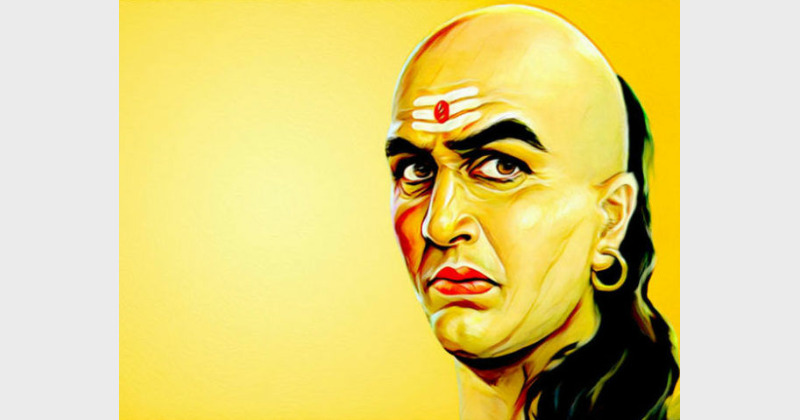
Acharya Chanakya brought all the various Indian kingdoms together under one central governance and created a nation called Aryavartha, which later became India.


Why was it that we Indians always look at what is wrong with India and never appreciate what is great about our country? As a nation, we have survived the test of time. Even though we are still a growing economy, we are not a failed nation. In the past, our country had achieved the peak of success for thousands of years. How many nations can boast of such a heritage?


It is proved that modern-day discoveries, inventions, theories, concepts are broadly based on Vedic knowledge/literature. Many scientists have studied Vedic literature to get in-depth insights into scientific, spiritual, psychological, behavioural knowledge.


The ancient Gurukul education system was honoured worldwide owing to its multi-dimensional, life and scientific management approach, various skills and knowledge imparted since childhood.


Developing leadership qualities, Management principles and concepts, teamwork, problem-solving techniques with ease and calm mind, understanding mind and its complexity, sharpens intellect and memory, seeing and managing ego, understanding soul spiritually and by scientific means, research and development, environment management were all part of Vedic education system apart from science, mathematics, social science, grammar in our ancient Gurukul system.


Then what went wrong that we went away from our Vedic culture and Gurukul education system? Universities like Takshshila and Nalanda were considered the topmost universities in the world. Today, our universities are not even in the top 100 universities worldwide. When we gained a higher position globally, i.e. socially, economically and spiritually, our virtues, Vedic knowledge, complacency, and careless attitude cost us dearly. Our enemies were conspiring to destroy us, first Mughals and then Britishers. Mughals had started setting narratives against our great culture as they wanted to capture our territories to exploit the people's economic resources and religious conversion. They succeeded to some extent by creating rift on a caste basis, coercion, loot…  


Later on, Britishers came, they realised that they need to destroy the culture and education system to get control for a longer time. They appointed Max Muller and Thomas Macaulay to make this happen. It actually did happen as they planned.


Max Muller, perhaps the most well known early Indologist and sanskritist, was the one who tried to set a narrative against Vedas and great Indian culture as desired by the British government. He and other Indologists wanted to control and convert the followers of Vedic culture. Therefore, they widely propagated that the Vedas were simply mythology. They intentionally misinterpreted Sanskrit texts to make the Vedas look primitive, and they systematically tried to make Indians ashamed of their own culture. Aryan invasion theory was one such creation of fake history by these Indologists. Thus, the actions of these Indologists seem to indicate that they were motivated by a racial race. Although later in life, Max Muller glorified the Vedas. He admitted the purely speculative nature of his Vedic chronology, and in his last work published shortly before his death, “The six systems of Indian Philosophy”, he wrote, “whatever be the date of Vedic hymns whether 1500 or 15000 B.C.E., they have their own unique place and stand by themselves in the literature of the world.”


Thomas Macaulay, who introduced English education in India, wanted to make the Indians into a race that was Indian in blood and colour, but English in taste, opinion, morals, and intellect.


However, if we study our great literature, we come to know what we have lost as generations, mentioning few facts…


Acharya Chanakya, a political thinker, was the first to visualise the concept of a ‘nation’ for the first time in human history. During his time, India was split into various kingdoms. He brought them all together under one central governance, thus creating a nation called ‘Aryavartha’, which later became India. He documented his lifelong work in his book, Kautilya’s Arthashastra and Chanakya Niti. For ages, rulers worldwide have referred to the Arthashastra for building a nation on sound economics based on spiritual values.


Management has been recognised as a science since the 1950s. One of the fathers of modern management is Peter Drucker. But didn’t ‘management’ exist in India even before the 1950s and the Drucker era? As a nation, we have over 5000 years to our credit. Did we not have management scientists in our country before the 20th century? In the ancient Indian scriptures — Ramayana, Mahabharata, the various Upanishads — we found brilliant discussions of management strategies.


Acharya Chanakya’s management philosophies/principles were used to make modern principles and are being used worldwide. The Vedic literature contains descriptions of advanced scientific techniques, sometimes even more sophisticated than those used in our modern technological world.


Modern metallurgists have not produced iron of comparable quality to the 22 foot high Iron Pillar of Delhi, which is the largest hand forged block of iron from antiquity.


Vedic Cosmology, Astrology, Space research, Planets and galaxies, medicinal science and surgery, nuclear theory, thermodynamics, energy concepts, environment management and many discoveries and innovations are part of Vedic literature.


We as Indians suffered a heavy loss economically, socially and spiritually owing to ignorance of our great Vedic literature. It is time to focus on Vedic knowledge so that our youngsters grow on all fronts, especially research and development, skills and knowledge building, to make India great again and lead the world with balanced growth.

Whatever I said above is a material knowledge of Vedic literature. The Vedas, however, have spiritual knowledge and more superior realised knowledge of saints as well.


The writer is an author, speaker, educationist, counsellor, electrical engineer.

 

Share
Tweet
SendShareSend
✮ Subscribe Organiser YouTube Channel. ✮
✮ Join Organiser's WhatsApp channel for Nationalist views beyond the news. ✮
Previous News

China Eyeing Afghanistan’s Rare Earth Metals Worth Trillions of Dollar

Next News

Samskrit Week Celebrations Begin Today (August 19), PM Narendra Modi Greets People

Related News

A representative image

Team Skill India set for biggest ever WorldSkills push, to compete in 11 new categories at WorldSkills Shanghai 2026

AI-generated representative image

Fragile Five to Fastest-Growing Major Economy – Incredible India’s Transformation in 12 Years

India joins 24 nations in global 6G push

India joins 24 nations in global 6G push, endorses call for secure and resilient networks

Ministry of Defence's ten-year defence diplomacy framework “RAKSHA”, at Kartavya Bhawan in New Delhi. (Source: AI generated Image)

RAKSHA: Ten years of Defence diplomacy turned a decade boosting export and global cooperation

(Left) Naga leader Dr. S. C. Jamir: (Right) RSS Sarsanghchalak Dr Mohan Bhagwat

Bridging Perspectives: Dr SC Jamir meets RSS’ Dr Bhagwat, highlights mutual respect, secularism, and Naga aspirations

Tiger Bright coffee from Koraput’s tribal farmers featured in BRICS Summit media kits in New Delhi

From Eastern Ghats to BRICS: Koraput Coffee puts Odisha’s tribal enterprise on global map

Load More

Latest News

A representative image

Team Skill India set for biggest ever WorldSkills push, to compete in 11 new categories at WorldSkills Shanghai 2026

AI-generated representative image

Fragile Five to Fastest-Growing Major Economy – Incredible India’s Transformation in 12 Years

India joins 24 nations in global 6G push

India joins 24 nations in global 6G push, endorses call for secure and resilient networks

Ministry of Defence's ten-year defence diplomacy framework “RAKSHA”, at Kartavya Bhawan in New Delhi. (Source: AI generated Image)

RAKSHA: Ten years of Defence diplomacy turned a decade boosting export and global cooperation

(Left) Naga leader Dr. S. C. Jamir: (Right) RSS Sarsanghchalak Dr Mohan Bhagwat

Bridging Perspectives: Dr SC Jamir meets RSS’ Dr Bhagwat, highlights mutual respect, secularism, and Naga aspirations

Tiger Bright coffee from Koraput’s tribal farmers featured in BRICS Summit media kits in New Delhi

From Eastern Ghats to BRICS: Koraput Coffee puts Odisha’s tribal enterprise on global map

The RSS has spent a century building influence through organisation, social networks and ideological formation beyond the electoral arena

RSS at 100: How the Sangh built a century-long network of influence beyond Indian politics

India on a Platter: BRICS Dinner Menu Celebrates Regional Culinary Heritage

BRICS Dinner Menu: From Khandvi, mushroom kebabs to pulao global leaders get a taste of Bharat’s culinary heritage

Exterior of the Lokayukta Building

Karnataka Lokayukta records 1,248 cases in four years, 887 linked to bribery

RSS Akhil Bharatiya Karyakarini Sadasya Dr Manmohan Vaidya at a Pramukh Jan Samvad Sangosthi organised by Kashi Mahanagar on the occasion of the RSS Centenary Year,

Entire society must unite with a sense of oneness; This Is the spirit of Sangh Work: Dr Manmohan Vaidya

Load More
  • Privacy
  • Terms
  • Cookie Policy
  • Refund and Cancellation
  • Delivery and Shipping

© Bharat Prakashan (Delhi) Limited.
Tech-enabled by Ananthapuri Technologies

  • Home
  • Search Organiser
  • Bharat
    • Assam
    • Bihar
    • Chhattisgarh
    • Jharkhand
    • Maharashtra
    • View All States
  • World
    • Asia
    • Africa
    • North America
    • South America
    • Europe
    • Australia
  • Editorial
  • Operation Sindoor
  • Opinion
  • Analysis
  • Defence
  • Culture
  • Sports
  • Business
  • RSS @ 100
  • Entertainment
  • More ..
    • Sci & Tech
    • Vocal4Local
    • Special Report
    • Education
    • Employment
    • Books
    • Interviews
    • Travel
    • Health
    • Politics
    • Law
    • Economy
    • Obituary
  • Subscribe Magazine
  • Read Ecopy
  • Advertise
  • Circulation
  • Careers
  • About Us
  • Contact Us
  • Policies & Terms
    • Privacy Policy
    • Cookie Policy
    • Refund and Cancellation
    • Terms of Use

© Bharat Prakashan (Delhi) Limited.
Tech-enabled by Ananthapuri Technologies