Vedic Knowledge: Father of Modern Knowledge
July 2, 2026
  • Read Ecopy
  • Circulation
  • Advertise
  • Careers
  • About Us
  • Contact Us
Android AppiPhone AppArattai
Organiser
  • ‌
  • Bharat
    • Assam
    • Bihar
    • Chhattisgarh
    • Jharkhand
    • Maharashtra
    • View All States
  • World
    • Asia
    • Europe
    • North America
    • South America
    • Africa
    • Australia
  • Editorial
  • International
  • Opinion
  • RSS @ 100
  • More
    • Op Sindoor
    • Analysis
    • Sports
    • Defence
    • Politics
    • Business
    • Economy
    • Culture
    • Special Report
    • Sci & Tech
    • Entertainment
    • G20
    • Azadi Ka Amrit Mahotsav
    • Vocal4Local
    • Web Stories
    • Education
    • Employment
    • Books
    • Interviews
    • Travel
    • Law
    • Health
    • Obituary
  • Subscribe
    • Subscribe Print Edition
    • Subscribe Ecopy
    • Read Ecopy
  • ‌
  • Bharat
    • Assam
    • Bihar
    • Chhattisgarh
    • Jharkhand
    • Maharashtra
    • View All States
  • World
    • Asia
    • Europe
    • North America
    • South America
    • Africa
    • Australia
  • Editorial
  • International
  • Opinion
  • RSS @ 100
  • More
    • Op Sindoor
    • Analysis
    • Sports
    • Defence
    • Politics
    • Business
    • Economy
    • Culture
    • Special Report
    • Sci & Tech
    • Entertainment
    • G20
    • Azadi Ka Amrit Mahotsav
    • Vocal4Local
    • Web Stories
    • Education
    • Employment
    • Books
    • Interviews
    • Travel
    • Law
    • Health
    • Obituary
  • Subscribe
    • Subscribe Print Edition
    • Subscribe Ecopy
    • Read Ecopy
Organiser
  • Home
  • Bharat
  • World
  • Operation Sindoor
  • Editorial
  • Analysis
  • Opinion
  • Culture
  • Defence
  • International Edition
  • RSS @ 100
  • Magazine
  • Read Ecopy
Home Opinion

Vedic Knowledge: Father of Modern Knowledge

WEBDESKWEBDESK
Aug 19, 2021, 10:05 am IST
in Opinion
Follow on Google News
FacebookTwitterWhatsAppTelegramEmail

                                                                                                                                                                              Pankaj Jagannath Jayswal


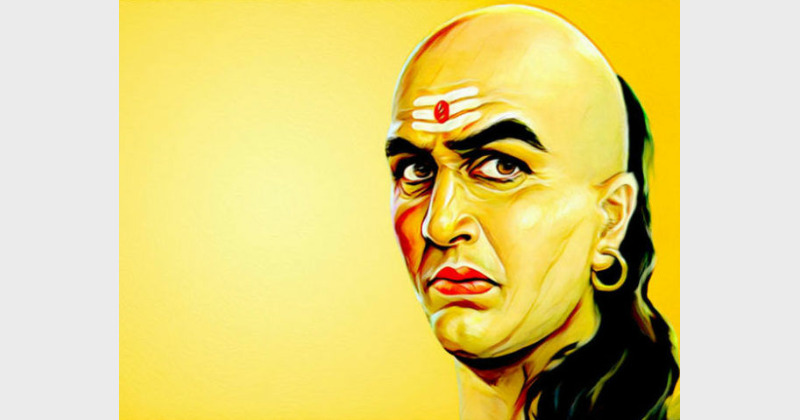
Acharya Chanakya brought all the various Indian kingdoms together under one central governance and created a nation called Aryavartha, which later became India.


Why was it that we Indians always look at what is wrong with India and never appreciate what is great about our country? As a nation, we have survived the test of time. Even though we are still a growing economy, we are not a failed nation. In the past, our country had achieved the peak of success for thousands of years. How many nations can boast of such a heritage?


It is proved that modern-day discoveries, inventions, theories, concepts are broadly based on Vedic knowledge/literature. Many scientists have studied Vedic literature to get in-depth insights into scientific, spiritual, psychological, behavioural knowledge.


The ancient Gurukul education system was honoured worldwide owing to its multi-dimensional, life and scientific management approach, various skills and knowledge imparted since childhood.


Developing leadership qualities, Management principles and concepts, teamwork, problem-solving techniques with ease and calm mind, understanding mind and its complexity, sharpens intellect and memory, seeing and managing ego, understanding soul spiritually and by scientific means, research and development, environment management were all part of Vedic education system apart from science, mathematics, social science, grammar in our ancient Gurukul system.


Then what went wrong that we went away from our Vedic culture and Gurukul education system? Universities like Takshshila and Nalanda were considered the topmost universities in the world. Today, our universities are not even in the top 100 universities worldwide. When we gained a higher position globally, i.e. socially, economically and spiritually, our virtues, Vedic knowledge, complacency, and careless attitude cost us dearly. Our enemies were conspiring to destroy us, first Mughals and then Britishers. Mughals had started setting narratives against our great culture as they wanted to capture our territories to exploit the people's economic resources and religious conversion. They succeeded to some extent by creating rift on a caste basis, coercion, loot…  


Later on, Britishers came, they realised that they need to destroy the culture and education system to get control for a longer time. They appointed Max Muller and Thomas Macaulay to make this happen. It actually did happen as they planned.


Max Muller, perhaps the most well known early Indologist and sanskritist, was the one who tried to set a narrative against Vedas and great Indian culture as desired by the British government. He and other Indologists wanted to control and convert the followers of Vedic culture. Therefore, they widely propagated that the Vedas were simply mythology. They intentionally misinterpreted Sanskrit texts to make the Vedas look primitive, and they systematically tried to make Indians ashamed of their own culture. Aryan invasion theory was one such creation of fake history by these Indologists. Thus, the actions of these Indologists seem to indicate that they were motivated by a racial race. Although later in life, Max Muller glorified the Vedas. He admitted the purely speculative nature of his Vedic chronology, and in his last work published shortly before his death, “The six systems of Indian Philosophy”, he wrote, “whatever be the date of Vedic hymns whether 1500 or 15000 B.C.E., they have their own unique place and stand by themselves in the literature of the world.”


Thomas Macaulay, who introduced English education in India, wanted to make the Indians into a race that was Indian in blood and colour, but English in taste, opinion, morals, and intellect.


However, if we study our great literature, we come to know what we have lost as generations, mentioning few facts…


Acharya Chanakya, a political thinker, was the first to visualise the concept of a ‘nation’ for the first time in human history. During his time, India was split into various kingdoms. He brought them all together under one central governance, thus creating a nation called ‘Aryavartha’, which later became India. He documented his lifelong work in his book, Kautilya’s Arthashastra and Chanakya Niti. For ages, rulers worldwide have referred to the Arthashastra for building a nation on sound economics based on spiritual values.


Management has been recognised as a science since the 1950s. One of the fathers of modern management is Peter Drucker. But didn’t ‘management’ exist in India even before the 1950s and the Drucker era? As a nation, we have over 5000 years to our credit. Did we not have management scientists in our country before the 20th century? In the ancient Indian scriptures — Ramayana, Mahabharata, the various Upanishads — we found brilliant discussions of management strategies.


Acharya Chanakya’s management philosophies/principles were used to make modern principles and are being used worldwide. The Vedic literature contains descriptions of advanced scientific techniques, sometimes even more sophisticated than those used in our modern technological world.


Modern metallurgists have not produced iron of comparable quality to the 22 foot high Iron Pillar of Delhi, which is the largest hand forged block of iron from antiquity.


Vedic Cosmology, Astrology, Space research, Planets and galaxies, medicinal science and surgery, nuclear theory, thermodynamics, energy concepts, environment management and many discoveries and innovations are part of Vedic literature.


We as Indians suffered a heavy loss economically, socially and spiritually owing to ignorance of our great Vedic literature. It is time to focus on Vedic knowledge so that our youngsters grow on all fronts, especially research and development, skills and knowledge building, to make India great again and lead the world with balanced growth.

Whatever I said above is a material knowledge of Vedic literature. The Vedas, however, have spiritual knowledge and more superior realised knowledge of saints as well.


The writer is an author, speaker, educationist, counsellor, electrical engineer.

 

ShareTweetSendShareSend
✮ Subscribe Organiser YouTube Channel. ✮
✮ Join Organiser's WhatsApp channel for Nationalist views beyond the news. ✮
Previous News

China Eyeing Afghanistan’s Rare Earth Metals Worth Trillions of Dollar

Next News

Samskrit Week Celebrations Begin Today (August 19), PM Narendra Modi Greets People

Related News

A section of the vast procession paying homage to Dr Syama Prasad Mookerjee

Dr Shyama Prasad Mookerjee: Exposing the mystery surrounding his death

India-Pak reconciliation appeal in an open letter by a section of Indians draws fire amid cross-border terror concerns

By enabling direct yen-rupee settlements, India and Japan are laying the foundation for a more efficient, resilient and strategically integrated economic partnership

Beyond De-Dollarisation: What India-Japan’s Yen-Rupee trade framework really means

(Left) J&K LG Manoj Sinha performing puja (Right) LG Manoj Sinha flags off the bus carrying pilgrims for the Amarnath Yatra

Amarnath Yatra 2026: LG Manoj Sinha flags off first batch of pilgrims amid tight security

Japanese Prime Minister Sanae Takaichi and Prime Minister Narendra Modi

Indo-Japan Summit: Tech & AI are the pillars of partnership; MoUs inked on defence, critical minerals & clean energy

With 55% of India’s ethanol production, UP is reshaping the sugar industry and driving national energy security

UP’s Sugarcane Revolution: How ethanol production transformed rural economy & strengthened India’s energy future

Load More

Latest News

A section of the vast procession paying homage to Dr Syama Prasad Mookerjee

Dr Shyama Prasad Mookerjee: Exposing the mystery surrounding his death

India-Pak reconciliation appeal in an open letter by a section of Indians draws fire amid cross-border terror concerns

By enabling direct yen-rupee settlements, India and Japan are laying the foundation for a more efficient, resilient and strategically integrated economic partnership

Beyond De-Dollarisation: What India-Japan’s Yen-Rupee trade framework really means

(Left) J&K LG Manoj Sinha performing puja (Right) LG Manoj Sinha flags off the bus carrying pilgrims for the Amarnath Yatra

Amarnath Yatra 2026: LG Manoj Sinha flags off first batch of pilgrims amid tight security

Japanese Prime Minister Sanae Takaichi and Prime Minister Narendra Modi

Indo-Japan Summit: Tech & AI are the pillars of partnership; MoUs inked on defence, critical minerals & clean energy

With 55% of India’s ethanol production, UP is reshaping the sugar industry and driving national energy security

UP’s Sugarcane Revolution: How ethanol production transformed rural economy & strengthened India’s energy future

(Left) Rajasthan Chief Minister Bhajan Lal Sharma lights the ceremonial lamp (Right) Pragya Pravah National Convenor J Nandakumar

Lokmanthan is an effort to reestablish the ancient tradition of dialogue: J Nandkumar, Pragya Pravah National Convenor

Keralam's Bloodiest Marad Massacre saw Foreign Funding! Yet 'Secular’ Fronts Now Opposes FCRA to Keep Foreign Tap Open

Keralam’s Bloodiest Marad Massacre saw Foreign Funding! Yet ‘Secular’ Fronts Unite to Pass Resolution Against FCRA

Dr Mohan Bhagwat at Sindhu Education Society, Nagpur

Partition-displaced were ‘struggling warriors’, not refugees; chose nation and Dharma over wealth: Dr Mohan Bhagwat

125-Year-old Gurdwara Sri Guru Singh Sabha Sahib in Farooqabad vandalised by Islamists

‘Highly deplorable and targeted act of vandalism’: India slams Pakistan for demolition of 125-year-old Gurudwara

Load More
  • Privacy
  • Terms
  • Cookie Policy
  • Refund and Cancellation
  • Delivery and Shipping

© Bharat Prakashan (Delhi) Limited.
Tech-enabled by Ananthapuri Technologies

  • Home
  • Search Organiser
  • Bharat
    • Assam
    • Bihar
    • Chhattisgarh
    • Jharkhand
    • Maharashtra
    • View All States
  • World
    • Asia
    • Africa
    • North America
    • South America
    • Europe
    • Australia
  • Editorial
  • Operation Sindoor
  • Opinion
  • Analysis
  • Defence
  • Culture
  • Sports
  • Business
  • RSS @ 100
  • Entertainment
  • More ..
    • Sci & Tech
    • Vocal4Local
    • Special Report
    • Education
    • Employment
    • Books
    • Interviews
    • Travel
    • Health
    • Politics
    • Law
    • Economy
    • Obituary
  • Subscribe Magazine
  • Read Ecopy
  • Advertise
  • Circulation
  • Careers
  • About Us
  • Contact Us
  • Policies & Terms
    • Privacy Policy
    • Cookie Policy
    • Refund and Cancellation
    • Terms of Use

© Bharat Prakashan (Delhi) Limited.
Tech-enabled by Ananthapuri Technologies