Mahaajanah ?V: How scribes recognise and describe them: Sanskrit & Sanskriti
September 16, 2026
  • Read Ecopy
  • Circulation
  • Advertise
  • Careers
  • About Us
  • Contact Us
Android AppiPhone AppArattai
Organiser
  • ‌
  • Bharat
    • Assam
    • Bihar
    • Chhattisgarh
    • Jharkhand
    • Maharashtra
    • View All States
  • World
    • Asia
    • Europe
    • North America
    • South America
    • Africa
    • Australia
  • Editorial
  • International
  • Opinion
  • RSS @ 100
  • More
    • World Hindu Congress 2026
    • Op Sindoor
    • Analysis
    • Sports
    • Defence
    • Politics
    • Business
    • Economy
    • Culture
    • Special Report
    • Sci & Tech
    • Entertainment
    • G20
    • Azadi Ka Amrit Mahotsav
    • Vocal4Local
    • Web Stories
    • Education
    • Employment
    • Books
    • Interviews
    • Travel
    • Law
    • Health
    • Obituary
  • Subscribe
    • Subscribe Print Edition
    • Subscribe Ecopy
    • Read Ecopy
  • ‌
  • Bharat
    • Assam
    • Bihar
    • Chhattisgarh
    • Jharkhand
    • Maharashtra
    • View All States
  • World
    • Asia
    • Europe
    • North America
    • South America
    • Africa
    • Australia
  • Editorial
  • International
  • Opinion
  • RSS @ 100
  • More
    • World Hindu Congress 2026
    • Op Sindoor
    • Analysis
    • Sports
    • Defence
    • Politics
    • Business
    • Economy
    • Culture
    • Special Report
    • Sci & Tech
    • Entertainment
    • G20
    • Azadi Ka Amrit Mahotsav
    • Vocal4Local
    • Web Stories
    • Education
    • Employment
    • Books
    • Interviews
    • Travel
    • Law
    • Health
    • Obituary
  • Subscribe
    • Subscribe Print Edition
    • Subscribe Ecopy
    • Read Ecopy
Organiser
  • Home
  • Bharat
  • World
  • Operation Sindoor
  • Editorial
  • Analysis
  • Opinion
  • Culture
  • Defence
  • International Edition
  • RSS @ 100
  • Magazine
  • Read Ecopy
Home Bharat

Mahaajanah ?V: How scribes recognise and describe them: Sanskrit & Sanskriti

One meaning of the word Sanskrit is ?a spoken language (Bhasha) which brings users to the same level of consciousness?. And when we take this meaning, the word Sanskriti (culture) would mean ?endeavour of bringing about evenness or bringing everyone on the same level of consciousness.? This example depicts one more feature of Bhasha that meanings

Archive ManagerArchive Manager
Feb 27, 2021, 10:00 am IST
inBharat
Follow on Google News
Facebook
Twitter
WhatsAppTelegramEmail
 
When it is said Indian culture is ‘language-centric’, the indication is towards all such unique virtues or qualities of Sanskrit. Works of masters of yore from many Sanskrit phases, especially Vedic, epic and classical phases, are available. Not a half syllable may be moved without distorting the description
 
a_1  H x W: 0 x 
 
 
One meaning of the word Sanskrit is “a spoken language (Bhasha) which brings users to the same level of consciousness”. And when we take this meaning, the word Sanskriti (culture) would mean “endeavour of bringing about evenness or bringing everyone on the same level of consciousness.” This example depicts one more feature of Bhasha that meanings are highly context specific in Sanskrit. If a context is created by previous or initial sentence/expression, then sentence or expression which follows will hold the desired meaning in that context only.
 
Except for universality of forming syllables in their pronunciation forms in the human frame, there is no claim of universality of meaning in the Sanskrit language unless one attains to fourth (spiritual level of realising ultimate meaning known as Paraa). Any such claim by any language at Baikharee level will not let that language stay alive for long on a higher scale of time tending and nearing infinity. However, any such language might be running. But, every running object is not necessarily a living entity. Quite the contrary, Sanskrit expresses moment/eternity attributes in its entirety to the extent that the entirety can be captured by spoken/expressed language by human species.
 
But, ironically, the most lucid, expressive, flexible, live and rich in vocabulary is yet to be seen by the world intelligentsia (Mahaajanah) as the language that is best suited for international mutual communications. Even if some may have come to know yet, global humanity hesitates to accept Sanskrit ‘as it is’ because of its identification with a nation and its culture, namely, India. And, so long as nation-states’ confines define earthling’s functional identity they individually belong to, erasing this hesitation is a huge challenge. Behaving politically correct becomes the reason for not behaving correctly, i.e. on values and virtues. Let us hope and pray that upcoming enlightened generations of humanity (Mahaajanah) may overcome this ‘small-mindedness’ and accept things on their value as udaar charit/mahaajanah (enlightened ones) see whole earthlings as members of the family. Therefore, this is possible.
 
Speaking in the pure lingual sense we may say that purva (earlier) alone can explore mysteries of beyond (apurva- rahasya) and steer humanity in a direction keeping welfare of whole humanity in its focus. Here in this context purva and apurva are free from popularly understood meanings of East and West 
 
Making us touch the higher consciousness of pure silence may appear lofty ideal for the beginners. Still, they may experiment under the guidance of any adept master and verify that even rhythmic pronunciation of Sanskrit texts has a healing effect on the mind and body. This is objectively explainable and experientially observable that why/ how Sanskrit is endowed with this unique feature. Sanskrit and Sanskriti are the most valuable tools to guide the human mind in attaining higher consciousness levels and guard it against destructive tendencies. Positive and negative tendencies inevitably appear at every level of higher attainments as these do at lower levels until one’s mind becomes thoroughly disciplined. But in higher levels the volume of self-confidence to ignore negative and choose positive keeps becoming steadier and stable.
 
Self-control is the fruit of discipleship, and it flourishes in karunaa-drishti (compassionate-affection) of the one whose disciple (shraddhaalu) one may be. And, it is role and responsibility of every seeker’s/individual’s guru (Mahaajanah) to reveal contextually relevant meaning for that occasion’s/moment’s behaviour/dharma the moment in which it is needed or requested. It is through this transaction between guru and disciple that transmission of consciousness stays eternally flowing. But, rare are the ones who are open to receive.
 
Speaking in the pure lingual sense we may say that purva (earlier) alone can explore mysteries of beyond (apurva- rahasya) and steer humanity in a direction keeping welfare of whole humanity in its focus. Here in this context purva and apurva are free from popularly understood meanings of East and West.
 
Because, when one attains that level in consciousness where one begins to touch the mysteries of existence untouched by personality, by then such a one would already have crossed aforesaid popular identifications of East-West, North-South etc. . For example among living ones people like Pandit Vamdev Shashtri, Ms Maria Wirth… where will we place them (see them as), if not beyond confines of the popular or limited meaning of East and West!
 
Similarly, despite being born in India, many are fond of materialistic (Western) outlook, and there is no need to name any of them as this ‘chunk’ is not small. By the culture (Sanskriti) of transcendence alone, world humanity transforms into ‘su-Sanskrit beings’(Mahaajanah).
 
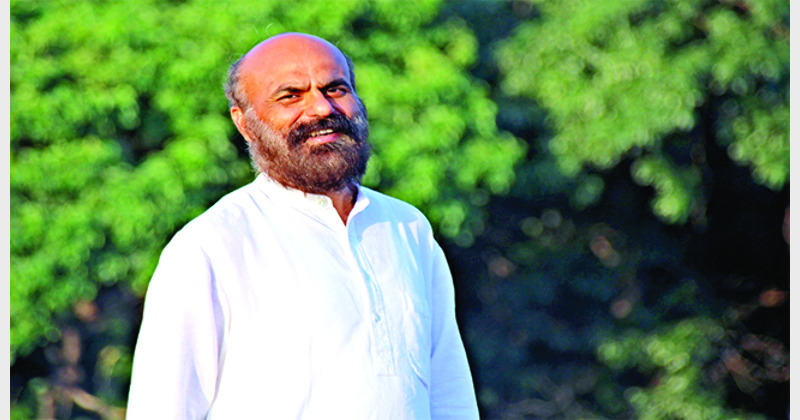
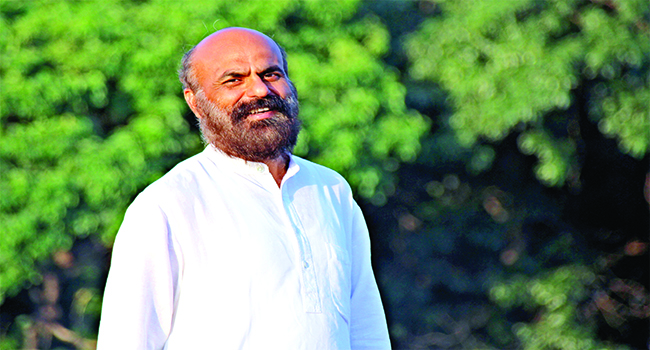
(The writer is the propounder of Sahaj Smriti Yog System of Self Realisation and founder of Darpan Foundation and Darpan Ashram)

 

Share
Tweet
SendShareSend
✮ Subscribe Organiser YouTube Channel. ✮
✮ Join Organiser's WhatsApp channel for Nationalist views beyond the news. ✮
Previous News

On Solid Ground

Next News

China puts on the shelf its agreement with the Vatican on selecting Chinese Catholic Bishops

Related News

Shyamlal Gupta 'Parshad'

Shyamlal Gupta ‘Parshad’ Birth Anniversary: The pen that gave Indian its flag a voice

PMMSY Completes 6 Years: How India’s Fisheries Sector is Transforming

Six Years of PMMSY: How India is building a modern and sustainable fisheries economy

One Inspection, All Schools Shut? CJP Saurav Das’s Noida Claim Gets Fact-Checked

Fact Check: CJP Saurav Das claims all Noida govt schools shut after one inspection; Education dept calls it false

ABVP has intensified its DUSU campaign, highlighting its long-standing presence on the Delhi University campus

DUSU Elections: ABVP’s campaign gains momentum; Students’ first choice since 1973

The widening Houthi offensive is testing Saudi Arabia’s security calculations as the conflict edges closer to its most sensitive frontiers

Mecca on Red Alert: Saudi Arabia issues first-ever air threat warning as Shia militant group Houthis escalate attacks

India’s “Nalanda Approach” uses engagement with SCO, BRICS and the Quad to strengthen strategic autonomy in a fragmenting world

The Nalanda Approach: How India connects a fragmenting world through SCO, BRICS and strategic autonomy

Load More

Latest News

Shyamlal Gupta 'Parshad'

Shyamlal Gupta ‘Parshad’ Birth Anniversary: The pen that gave Indian its flag a voice

PMMSY Completes 6 Years: How India’s Fisheries Sector is Transforming

Six Years of PMMSY: How India is building a modern and sustainable fisheries economy

One Inspection, All Schools Shut? CJP Saurav Das’s Noida Claim Gets Fact-Checked

Fact Check: CJP Saurav Das claims all Noida govt schools shut after one inspection; Education dept calls it false

ABVP has intensified its DUSU campaign, highlighting its long-standing presence on the Delhi University campus

DUSU Elections: ABVP’s campaign gains momentum; Students’ first choice since 1973

The widening Houthi offensive is testing Saudi Arabia’s security calculations as the conflict edges closer to its most sensitive frontiers

Mecca on Red Alert: Saudi Arabia issues first-ever air threat warning as Shia militant group Houthis escalate attacks

India’s “Nalanda Approach” uses engagement with SCO, BRICS and the Quad to strengthen strategic autonomy in a fragmenting world

The Nalanda Approach: How India connects a fragmenting world through SCO, BRICS and strategic autonomy

EPFO on WA now (This image is generated by AI)

EPFO Now on WhatsApp: How to join the official channel and get updates

(Left) Umar Khalid (Right) KPCC president B.K. Hariprasad

Umar Khalid Nationalist Row: BJP leader CT Ravi hits back at Hariprasad, accuses Congress of ‘Bharat Todo’ politics

UPI Charges: P2P Transfers to Remain Free, Govt Clarifies

Zero charges on person-to-person transactions: New UPI rules keep all P2P payments 100% free regardless of amount

Representative Image

India crossed 80 Lakh HPV vaccine doses despite a sustained misinformation campaign

Load More
  • Privacy
  • Terms
  • Cookie Policy
  • Refund and Cancellation
  • Delivery and Shipping

© Bharat Prakashan (Delhi) Limited.
Tech-enabled by Ananthapuri Technologies

  • Home
  • Search Organiser
  • Bharat
    • Assam
    • Bihar
    • Chhattisgarh
    • Jharkhand
    • Maharashtra
    • View All States
  • World
    • Asia
    • Africa
    • North America
    • South America
    • Europe
    • Australia
  • Editorial
  • Operation Sindoor
  • Opinion
  • Analysis
  • Defence
  • Culture
  • Sports
  • Business
  • RSS @ 100
  • Entertainment
  • More ..
    • Sci & Tech
    • Vocal4Local
    • Special Report
    • Education
    • Employment
    • Books
    • Interviews
    • Travel
    • Health
    • Politics
    • Law
    • Economy
    • Obituary
  • Subscribe Magazine
  • Read Ecopy
  • Advertise
  • Circulation
  • Careers
  • About Us
  • Contact Us
  • Policies & Terms
    • Privacy Policy
    • Cookie Policy
    • Refund and Cancellation
    • Terms of Use

© Bharat Prakashan (Delhi) Limited.
Tech-enabled by Ananthapuri Technologies