Incentivise Bharatiya Languages
June 9, 2026
  • Read Ecopy
  • Circulation
  • Advertise
  • Careers
  • About Us
  • Contact Us
Android AppiPhone AppArattai
Organiser
  • ‌
  • Bharat
    • Assam
    • Bihar
    • Chhattisgarh
    • Jharkhand
    • Maharashtra
    • View All States
  • World
    • Asia
    • Europe
    • North America
    • South America
    • Africa
    • Australia
  • Editorial
  • International
  • Opinion
  • RSS @ 100
  • More
    • Op Sindoor
    • Analysis
    • Sports
    • Defence
    • Politics
    • Business
    • Economy
    • Culture
    • Special Report
    • Sci & Tech
    • Entertainment
    • G20
    • Azadi Ka Amrit Mahotsav
    • Vocal4Local
    • Web Stories
    • Education
    • Employment
    • Books
    • Interviews
    • Travel
    • Law
    • Health
    • Obituary
  • Subscribe
    • Subscribe Print Edition
    • Subscribe Ecopy
    • Read Ecopy
  • ‌
  • Bharat
    • Assam
    • Bihar
    • Chhattisgarh
    • Jharkhand
    • Maharashtra
    • View All States
  • World
    • Asia
    • Europe
    • North America
    • South America
    • Africa
    • Australia
  • Editorial
  • International
  • Opinion
  • RSS @ 100
  • More
    • Op Sindoor
    • Analysis
    • Sports
    • Defence
    • Politics
    • Business
    • Economy
    • Culture
    • Special Report
    • Sci & Tech
    • Entertainment
    • G20
    • Azadi Ka Amrit Mahotsav
    • Vocal4Local
    • Web Stories
    • Education
    • Employment
    • Books
    • Interviews
    • Travel
    • Law
    • Health
    • Obituary
  • Subscribe
    • Subscribe Print Edition
    • Subscribe Ecopy
    • Read Ecopy
Organiser
  • Home
  • Bharat
  • World
  • Operation Sindoor
  • Editorial
  • Analysis
  • Opinion
  • Culture
  • Defence
  • International Edition
  • RSS @ 100
  • Magazine
  • Read Ecopy
Home Bharat

Incentivise Bharatiya Languages

One language can unite people. Two languages are sure to divide people. This is an inexorable law. Culture is conserved by language. Since Indians wish to unite and develop a common culture it is the bounden duty of all Indians to own up Hindi as their language. Any Indian who does not accept this proposal as

Archive ManagerArchive Manager
Sep 23, 2019, 02:25 pm IST
in Bharat
Follow on Google News
FacebookTwitterWhatsAppTelegramEmail


One language can unite people. Two languages are sure to divide people. This is an inexorable law. Culture is conserved by language. Since Indians wish to unite and develop a common culture it is the bounden duty of all Indians to own up Hindi as their language. Any Indian who does not accept this proposal as part and parcel of a linguistic State has no right to be an Indian. He may be a hundred per cent Maharashtrian, a hundred per cent Tamil or a hundred per cent Gujarathi, but he cannot be an Indian in the real sense of the word except in a geographical sense. If my suggestion is not accepted India will then cease to be India. It will be a collection of different nationalities engaged in rivalries and wars against one another”

– Dr Babasaheb B R Ambedkar, THOUGHTS ON LINGUISTIC STATES, PART II, CHAPTER III – THE PROS AND CONS OF A LINGUISTIC STATE


We have mastered the art of turning even obvious into controversies. External Affairs Minister S Jaishankar stating, “PoK (Illegally occupied region of Jammu, Kashmir & Ladakh by Pakistan) is part of India and we expect one day that we will have physical jurisdiction over it,” is neither new nor controversial. This has been the consistent position on Bharat since 1948 and our Parliament has also passed a resolution regarding the same; Jaishankar has just reiterated that intent. Of course, national opinion in this regard is on the same page, barring some usual naysayers, so opportune time to execute that intent is the only question.
 
What turned out of the statement made by Home Minister Amit Shah on Hindi Diwas is more dangerous and disastrous. Some prominent publications and news agencies termed it as a push for, ‘one nation, one language’, without mentioning anything of this sort in the actual report. Many people got carried away by the headlines and divisive forces were ready with the pamphlets and protests to vitiate the atmosphere. “Diversity of languages and dialects is the strength of our nation. But there is need for our nation to have one language, so that foreign languages don’t find a place. This is why our freedom fighters envisioned Hindi as ‘Raj Bhasha’.” Now this has been the stated national linguistic policy since the inception of Constitution. The occasion was Hindi Diwas, so the Home Minister naturally called for ‘introspection’ and warned that ‘the country that loses its language can’t preserve its culture’. Without undermining the importance of all Bharatiya languages, Hindi can still be a unifying force was the main pitch of speech. In almost exact words, Dr Babasaheb Ambedkar justified the role of Hindi; was he an enemy of other Bharatiya languages?
 
This may look amusing to defend the case for a national language in English but it is an unfortunate fact that this very foreign language imposed by the colonial powers has been the language of communication of Bharatiya elite – the key players in decision making process. On Prime Minister Narendra Modi’s strategy of effectively pushing for Bharatiya languages, while effectively using Hindi on international fora, many of these members of ‘Khan-Market gang’ were uncomfortable. Naturally, they are playing this ‘language
imposition’ card effectively.
 
None of the Bharatiya languages are of the post-Independence. In fact, we had many more languages and dialects in the pre-British era. When Adi Shankaracharya travelled from Kerala to Sharda Peeth or many traders who used to travel from eastern and coast to East-Asia and Africa, carrying goods from all parts of Bharat, they never faced a language issue. Sanskrit as a mother language, in the sense of origin and all other Bharatiya languages are equal in importance was the common understanding. Even Sangam and Sanskrit literature had a vibrant and lively interaction and literature of sages like Subramanya Bharathi is a testimony to that. The fear of ‘other’ was never a Bharatiya trait and that is why we do not find any linguistic conflict in Bharat in the pre-colonial era. Only after our ruling class started thinking about Bharat through the colonial prism, this problem of ‘we’ and ‘they’ begun. The political opposition to ‘Delhi’ as a power centre, many political parties from South thrived on anti-Hindi politics. English is acceptable as a second language after the mother-tongue but not any other Bharatiya language is a disastrous proposition as Dr Ambedkar had warned.
 
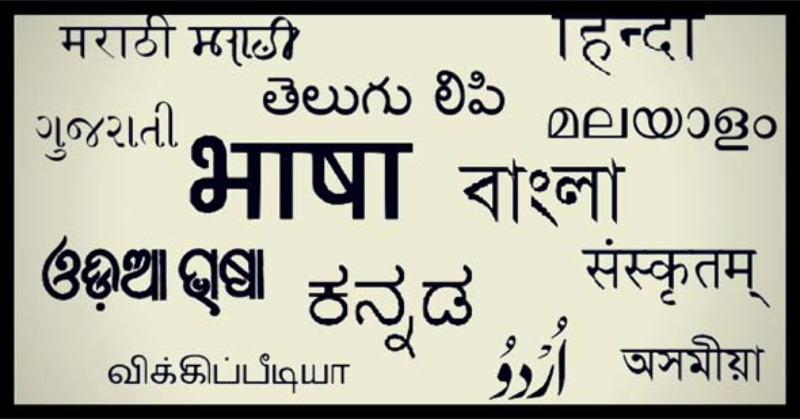
What we need is a policy for incentivising the usage of Bharatiya languages. Till now, English got incentivised as the language of opportunities. If countries like China and Japan can march ahead with their national languages, we can also do the same without English. Creating more and more opportunities for knowledge acquisition and employment in Bharatiya languages from the primary education level is the approach we need to adopt at the policy level.
 
The statement by Shri Amit Shah has provided us with a unique opportunity to revisit the entire understanding of national language and the future of all Bharatiya languages. Growing together for prosperous and powerful Bharat is our indigenous approach, inculcating the same at the societal level is necessary on language issue holds the key for our march ahead.
 
@PrafullaKetkar 
 
ShareTweetSendShareSend
✮ Subscribe Organiser YouTube Channel. ✮
✮ Join Organiser's WhatsApp channel for Nationalist views beyond the news. ✮
Previous News

The (Ig) Nobel Standard

Next News

Is there an End to this Misery?

Related News

New York anti-Hindu Bill fails to advance: How the bill fueled bias & espoused caste discrimination

Beyond Alignment: How India is Carving Its Own Strategic Space Amid Global Power Play

Beyond Alignment: How India is Carving Its Own Strategic Space Amid Global Power Play

Chinese President Xi Jinping, Russian President Vladimir Putin and Prime Minister Narendra Modi

China’s New Tone Towards India: Tactical shift or strategic necessity? What Beijing’s push for RIC ties really signals

Keralam’s 2026 Fiscal Health White Paper has unveiled a mounting debt burden of Rs 5.07 lakh crore, exposing deep structural challenges in the state’s economy

Keralam’s Financial Reality Check: White Paper exposes Rs 5.07 lakh crore debt crisis

Tamil Nadu: TVK government arrests YouTuber Maridhas; BJP alleges crackdown on dissent

‘Every grave or dargah is not automatically Waqf property’: Madras High Court’s landmark verdict

Load More

Latest News

New York anti-Hindu Bill fails to advance: How the bill fueled bias & espoused caste discrimination

Beyond Alignment: How India is Carving Its Own Strategic Space Amid Global Power Play

Beyond Alignment: How India is Carving Its Own Strategic Space Amid Global Power Play

Chinese President Xi Jinping, Russian President Vladimir Putin and Prime Minister Narendra Modi

China’s New Tone Towards India: Tactical shift or strategic necessity? What Beijing’s push for RIC ties really signals

Keralam’s 2026 Fiscal Health White Paper has unveiled a mounting debt burden of Rs 5.07 lakh crore, exposing deep structural challenges in the state’s economy

Keralam’s Financial Reality Check: White Paper exposes Rs 5.07 lakh crore debt crisis

Tamil Nadu: TVK government arrests YouTuber Maridhas; BJP alleges crackdown on dissent

‘Every grave or dargah is not automatically Waqf property’: Madras High Court’s landmark verdict

US Court strikes down Trump’s $100,000 H-1B fee as executive overreach; Lawmakers & Republicans welcome the verdict

Union Defence Minister Rajnath Singh

Uttar Pradesh: Defence land goes green; Rajnath Singh clears 250 MW solar project in Sitapur

Afghanistan Foreign Minister Amir Khan Muttaqi and External Affairs Minister Dr. S. Jaishankar(File Photo)

India extends gratis long-term business visas to Afghan traders; Slams Pakistan for “trade & transit terrorism”

How Modi's Zero-tolerance doctrine reshaped India's anti-terror policy (This is an AI generated image)

Twelve Years of Modi Government and the rise of India’s zero-tolerance doctrine against terrorism

Load More
  • Privacy
  • Terms
  • Cookie Policy
  • Refund and Cancellation
  • Delivery and Shipping

© Bharat Prakashan (Delhi) Limited.
Tech-enabled by Ananthapuri Technologies

  • Home
  • Search Organiser
  • Bharat
    • Assam
    • Bihar
    • Chhattisgarh
    • Jharkhand
    • Maharashtra
    • View All States
  • World
    • Asia
    • Africa
    • North America
    • South America
    • Europe
    • Australia
  • Editorial
  • Operation Sindoor
  • Opinion
  • Analysis
  • Defence
  • Culture
  • Sports
  • Business
  • RSS @ 100
  • Entertainment
  • More ..
    • Sci & Tech
    • Vocal4Local
    • Special Report
    • Education
    • Employment
    • Books
    • Interviews
    • Travel
    • Health
    • Politics
    • Law
    • Economy
    • Obituary
  • Subscribe Magazine
  • Read Ecopy
  • Advertise
  • Circulation
  • Careers
  • About Us
  • Contact Us
  • Policies & Terms
    • Privacy Policy
    • Cookie Policy
    • Refund and Cancellation
    • Terms of Use

© Bharat Prakashan (Delhi) Limited.
Tech-enabled by Ananthapuri Technologies