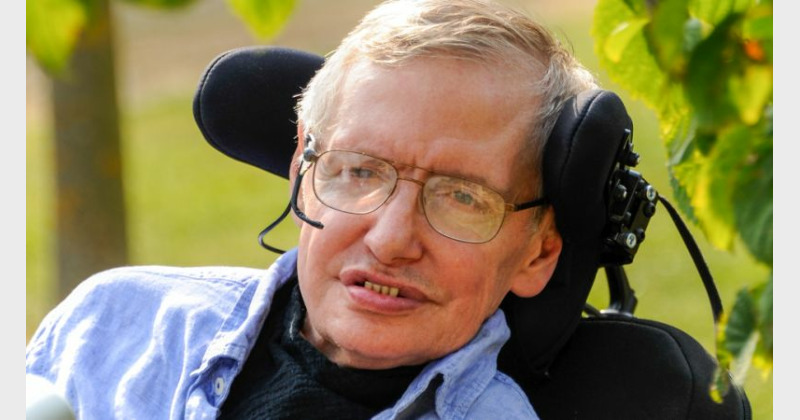
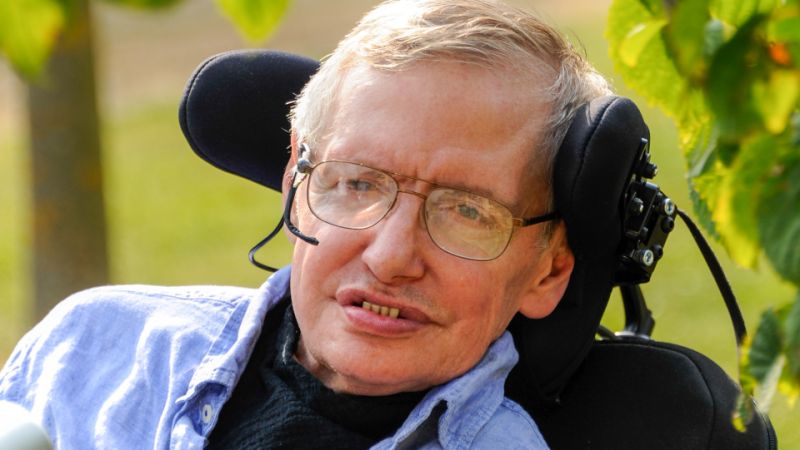
Study disproves Stephen Hawking, shows tiny black holes may not account for Dark Matter
August 14, 2026
  • Read Ecopy
  • Circulation
  • Advertise
  • Careers
  • About Us
  • Contact Us
Android AppiPhone AppArattai
Organiser
  • ‌
  • Bharat
    • Assam
    • Bihar
    • Chhattisgarh
    • Jharkhand
    • Maharashtra
    • View All States
  • World
    • Asia
    • Europe
    • North America
    • South America
    • Africa
    • Australia
  • Editorial
  • International
  • Opinion
  • RSS @ 100
  • More
    • Op Sindoor
    • Analysis
    • Sports
    • Defence
    • Politics
    • Business
    • Economy
    • Culture
    • Special Report
    • Sci & Tech
    • Entertainment
    • G20
    • Azadi Ka Amrit Mahotsav
    • Vocal4Local
    • Web Stories
    • Education
    • Employment
    • Books
    • Interviews
    • Travel
    • Law
    • Health
    • Obituary
  • Subscribe
    • Subscribe Print Edition
    • Subscribe Ecopy
    • Read Ecopy
  • ‌
  • Bharat
    • Assam
    • Bihar
    • Chhattisgarh
    • Jharkhand
    • Maharashtra
    • View All States
  • World
    • Asia
    • Europe
    • North America
    • South America
    • Africa
    • Australia
  • Editorial
  • International
  • Opinion
  • RSS @ 100
  • More
    • Op Sindoor
    • Analysis
    • Sports
    • Defence
    • Politics
    • Business
    • Economy
    • Culture
    • Special Report
    • Sci & Tech
    • Entertainment
    • G20
    • Azadi Ka Amrit Mahotsav
    • Vocal4Local
    • Web Stories
    • Education
    • Employment
    • Books
    • Interviews
    • Travel
    • Law
    • Health
    • Obituary
  • Subscribe
    • Subscribe Print Edition
    • Subscribe Ecopy
    • Read Ecopy
Organiser
  • Home
  • Bharat
  • World
  • Operation Sindoor
  • Editorial
  • Analysis
  • Opinion
  • Culture
  • Defence
  • International Edition
  • RSS @ 100
  • Magazine
  • Read Ecopy
Home Bharat

Study disproves Stephen Hawking, shows tiny black holes may not account for Dark Matter

An international research team including Dr Surhud More and Dr Anupreeta More from Inter-University Centre for Astronomy and Astrophysics (IUCAA), Pune has ruled out the possibility of primordial black holes being a major constituent of Dark matter. This finding disproves a theoretical claim of Prof Stephen Hawking

Archive ManagerArchive Manager
Apr 3, 2019, 05:04 pm IST
inBharat
Follow on Google News
Facebook
Twitter
WhatsAppTelegramEmail
Dr T V Venkateswaran
New Delhi, April 3 (India Science Wire): An international research team including Dr Surhud More and Dr Anupreeta More from Inter-University Centre for Astronomy and Astrophysics (IUCAA), Pune has ruled out the possibility of primordial black holes being a major constituent of Dark matter. This finding disproves a theoretical claim of Prof Stephen Hawking.
Dark matter
In the solar system, Mercury, the planet closest to the Sun, takes just 88 days to make one revolution around the sun, while Neptune, the farthest one, takes 165 years to make one round. In like manner, laws of gravity expect us to see stars closer to the centre of galaxies rotating faster than the stars on the edge. However, in most galaxies, the stars closer to the centre and the stars at the edge of the galaxies take almost same time to make one revolution. This implied that something invisible and enveloping the galaxies was giving an extra push to the outer stars, speeding them up. This entity has remained as one of the central unresolved puzzles in cosmology since 1930s. It is, no wonder, named `Dark Matter’.
The material is considered to be a ‘matter’ since it appears to have gravitational attraction and it is ‘dark’ because it does not seem to interact with light (or for that matter any part of the electromagnetic spectrum). Detailed surveys of the cosmos indicate that almost 85% of the total mass of the Universe is composed of dark matter. Thus, stars, galaxies, and atoms that we see all around are just the tip of the iceberg and the elusive dark matter makes up the bulk of the Universe.
Primordial black holes
Cosmologists have come up with various hypothesis and theories to explain the dark matter. Some postulate it to be composed of neutrinos, which are particles that have no charge but have tiny mass and, therefore, do not have interact with electromagnetic spectrum, but are gravitationally interacting. Some others have postulated they may be some new kind of elementary particles – `weakly-interacting massive particles (WIMPs)’, or `gravitationally-interacting massive particles’ (GIMPs), which are yet to be detected.
When the big bang hypothesis was proposed, two Soviet physicists, Yakov Borisovich Zel’dovich and Igor Dmitriyevich Novikov, showed that at the initial instant of the big bang, the densities would have been very high at many points, resulting in the formation of small black holes. They were named `primordial black holes’. Stephen Hawking investigated them in 1971. He computed that the mass of the primordial black holes could range from as low as one-hundredth of a milligram to as high as more than the mass of thousand Suns.
Gravitational lensing
Black holes are not radiant and will not be visible through any telescope. However, as first suggested by Albert Einstein, if by chance, a tiny primordial black hole eclipses a distant star, light rays of the star will bend around the black hole due to gravitational effect, resulting in the star appearing to be brighter than it originally is for a short while. Called `gravitational lensing’, this rare phenomena can occur only when the star, the black hole and the observer on the Earth are aligned in a straight line.
The research team, which was led by Masahiro Takada, Hiroko Niikura and Naoki Yasuda from Kavli Institute for the Physics and Mathematics of the Universe used the Hyper Suprime-Cam on the Japanese Subaru Telescope located in Hawaii to look for any tell-tale evidence of primordial black holes between Earth and Andromeda galaxy using gravitational lensing technique.
Looking for the flash
It would be absurd- like searching for a needle in haystack, if we keep looking at one star and hope some time or other an invisible primordial black hole will eclipse it. The research team, consequently, kept observing the entire disk of the Andromeda galaxy consisting of lakhs of stars. Now, there is a chance for some primordial black holes, if they do exist in sufficient numbers, eclipsing any of these stars becomes significant.
“The investigation is delicate and tricky. The eclipsed star may brighten up for a period of a few minutes or a few hours due to gravitational lensing, requiring the team to take multiple images to catch the flicker, if any” says Dr Anupreeta More, a member of the team.
For a whole night, the research team took 190 consecutive images of Andromeda galaxy. “If the Universe is filled with invisible teeny weeny primordial black holes, with masses lighter than the moon, as postulated by Stephen Hawking, then we should have seen at least 1,000 gravitational lensing events. We saw at most one such candidate event, if not none. This implies Prof Stephen Hawking’s theory that such black holes make up all of dark matter is wrong,” says Dr. Anupreeta.
“Previous studies had already ruled out the existence of large numbers of primordial black holes that could range in size from the mass of the Moon to about 10 solar masses. The present study rules out the presence of primordial black holes with masses comparable to the moon and sizes of about 0.1 millimetre too. This implies that at best the lunar mass primordial black holes can contribute 0.1 per cent of all dark matter mass” says Dr Surhud More, another member of the research team.
A report on the work has been published in Nature Astronomy. The team consisted of Hiroko Niikura, Masahiro Takada, Naoki Yasuda from Kavli IPMU, Robert H. Lupton (Princeton University), Takahiro Sumi (Osaka University), Surhud More (IUCAA, Kavli IPMU), Toshiki Kurita (Kavli IPMU, U of Tokyo), Sunao Sugiyama (Kavli IPMU, U of Tokyo), Anupreeta More (IUCAA, Kavli IPMU), Masamune Oguri (U of Tokyo, Kavli IPMU), Masashi Chiba (Tohoku University). (India Science Wire)
Share
Tweet
SendShareSend
✮ Subscribe Organiser YouTube Channel. ✮
✮ Join Organiser's WhatsApp channel for Nationalist views beyond the news. ✮
Previous News

The Apolitical Political Leader

Next News

Debunking the Malicious Propaganda

Related News

A representative image

India’s employment push gains ground: Youth jobs rise as startups, MSMEs and manufacturing expand

A representative image

From Landless to Homeowners: Centre pushes PMAY-G housing for 5.62 lakh rural families

Bastar Tiranga Yatra saw Chhattisgarh Deputy CM Vijay Sharma honour Naxal victims and highlight Bastar’s peace journey

Bastar Tiranga Yatra: Chhattisgarh Deputy CM Vijay Sharma honours Maoist victims, highlights Bastar’s peace journey

Students protesting in Ranchi

Jharkhand Students Protest enters day 20 in Ranchi: No plan to gherao CM house, students announce Tiranga march

During Partition, a large number of Hindus from East Pakistan were driven away from their homes and settle down in Assam

Horrors of Remembrance Day and Assam: The unaddressed wounds of 1947 partition

A historic milestone as Squadron Leader Bhawana Kanth becomes the IAF’s first woman Fighter Combat Leader

From Fighter Pilot to Combat Leader: Bhawana Kanth becomes first IAF woman officer to earn FCL qualification

Load More

Latest News

A representative image

India’s employment push gains ground: Youth jobs rise as startups, MSMEs and manufacturing expand

A representative image

From Landless to Homeowners: Centre pushes PMAY-G housing for 5.62 lakh rural families

Bastar Tiranga Yatra saw Chhattisgarh Deputy CM Vijay Sharma honour Naxal victims and highlight Bastar’s peace journey

Bastar Tiranga Yatra: Chhattisgarh Deputy CM Vijay Sharma honours Maoist victims, highlights Bastar’s peace journey

Students protesting in Ranchi

Jharkhand Students Protest enters day 20 in Ranchi: No plan to gherao CM house, students announce Tiranga march

During Partition, a large number of Hindus from East Pakistan were driven away from their homes and settle down in Assam

Horrors of Remembrance Day and Assam: The unaddressed wounds of 1947 partition

A historic milestone as Squadron Leader Bhawana Kanth becomes the IAF’s first woman Fighter Combat Leader

From Fighter Pilot to Combat Leader: Bhawana Kanth becomes first IAF woman officer to earn FCL qualification

Sindhis fleeing on the roof top of the train after partition (File Image)

Remembrance Day & 1947 Partition: Loss of Sindh was a civilizational erasure for Sindhi Hindus

PM Modi paid tribute to those affected by the 1947 Partition, recalling their courage, resilience and immense suffering

Partition Horrors Remembrance Day: PM Modi remembers partition victims, calls for harmony and brotherhood

From Guns to Handlooms: Former Naxal Women Walk the Ramp in Raipur

From Bastar’s forests to ramp: Surrendered women Maoists steal show at fashion event in Raipur

1947 Partition and Remembrance Day: When Congress preached unity but fueled the Islamist bloodbath

Load More
  • Privacy
  • Terms
  • Cookie Policy
  • Refund and Cancellation
  • Delivery and Shipping

© Bharat Prakashan (Delhi) Limited.
Tech-enabled by Ananthapuri Technologies

  • Home
  • Search Organiser
  • Bharat
    • Assam
    • Bihar
    • Chhattisgarh
    • Jharkhand
    • Maharashtra
    • View All States
  • World
    • Asia
    • Africa
    • North America
    • South America
    • Europe
    • Australia
  • Editorial
  • Operation Sindoor
  • Opinion
  • Analysis
  • Defence
  • Culture
  • Sports
  • Business
  • RSS @ 100
  • Entertainment
  • More ..
    • Sci & Tech
    • Vocal4Local
    • Special Report
    • Education
    • Employment
    • Books
    • Interviews
    • Travel
    • Health
    • Politics
    • Law
    • Economy
    • Obituary
  • Subscribe Magazine
  • Read Ecopy
  • Advertise
  • Circulation
  • Careers
  • About Us
  • Contact Us
  • Policies & Terms
    • Privacy Policy
    • Cookie Policy
    • Refund and Cancellation
    • Terms of Use

© Bharat Prakashan (Delhi) Limited.
Tech-enabled by Ananthapuri Technologies