Evidence of pre-modern iron technology found in Nagaland
July 3, 2026
  • Read Ecopy
  • Circulation
  • Advertise
  • Careers
  • About Us
  • Contact Us
Android AppiPhone AppArattai
Organiser
  • ‌
  • Bharat
    • Assam
    • Bihar
    • Chhattisgarh
    • Jharkhand
    • Maharashtra
    • View All States
  • World
    • Asia
    • Europe
    • North America
    • South America
    • Africa
    • Australia
  • Editorial
  • International
  • Opinion
  • RSS @ 100
  • More
    • Op Sindoor
    • Analysis
    • Sports
    • Defence
    • Politics
    • Business
    • Economy
    • Culture
    • Special Report
    • Sci & Tech
    • Entertainment
    • G20
    • Azadi Ka Amrit Mahotsav
    • Vocal4Local
    • Web Stories
    • Education
    • Employment
    • Books
    • Interviews
    • Travel
    • Law
    • Health
    • Obituary
  • Subscribe
    • Subscribe Print Edition
    • Subscribe Ecopy
    • Read Ecopy
  • ‌
  • Bharat
    • Assam
    • Bihar
    • Chhattisgarh
    • Jharkhand
    • Maharashtra
    • View All States
  • World
    • Asia
    • Europe
    • North America
    • South America
    • Africa
    • Australia
  • Editorial
  • International
  • Opinion
  • RSS @ 100
  • More
    • Op Sindoor
    • Analysis
    • Sports
    • Defence
    • Politics
    • Business
    • Economy
    • Culture
    • Special Report
    • Sci & Tech
    • Entertainment
    • G20
    • Azadi Ka Amrit Mahotsav
    • Vocal4Local
    • Web Stories
    • Education
    • Employment
    • Books
    • Interviews
    • Travel
    • Law
    • Health
    • Obituary
  • Subscribe
    • Subscribe Print Edition
    • Subscribe Ecopy
    • Read Ecopy
Organiser
  • Home
  • Bharat
  • World
  • Operation Sindoor
  • Editorial
  • Analysis
  • Opinion
  • Culture
  • Defence
  • International Edition
  • RSS @ 100
  • Magazine
  • Read Ecopy
Home Bharat

Evidence of pre-modern iron technology found in Nagaland

The researchers studied various chemical properties and compositions, quality and quantity of mineral iron content and other oxides to grasp the use of early iron technology in Nagaland

Archive ManagerArchive Manager
Apr 2, 2019, 01:46 pm IST
in Bharat
Follow on Google News
FacebookTwitterWhatsAppTelegramEmail


Rayies Altaf
 
New Delhi, April 1 (India Science Wire): The development of technology for extracting metals from ores has been critical in the growth of various civilizations. Smelting is one process that has evolved over time. Some regions and communities have contributed greatly in shaping and evolution of such technologies through their skills, knowledge and craft. Scientists, archaeologists and historians are exploring the history and evolution of such technologies to know more about the art and culture of communities.
 
In one such initiative, scientists from Nagaland University and the Indian Institute of Technology, Guwahati have studied the history and evolution of smelting inWui village of Tuensang district of Nagaland.The village is well known for its traditional art of iron-smelting and iron tool production since pre-colonial times.
 
In medieval times, spears forged from Wui were highly valued. Iron smelting was once the primary source of livelihood for Wui people. Smelting of Wui community was of exceptional quality and kings from even far off places such as Myanmar would get their weaponry specially made from Wui. The current scenario is, however, grim. Iron smelting is a dying art and people of Wui are struggling to preserve their traditional knowledge.
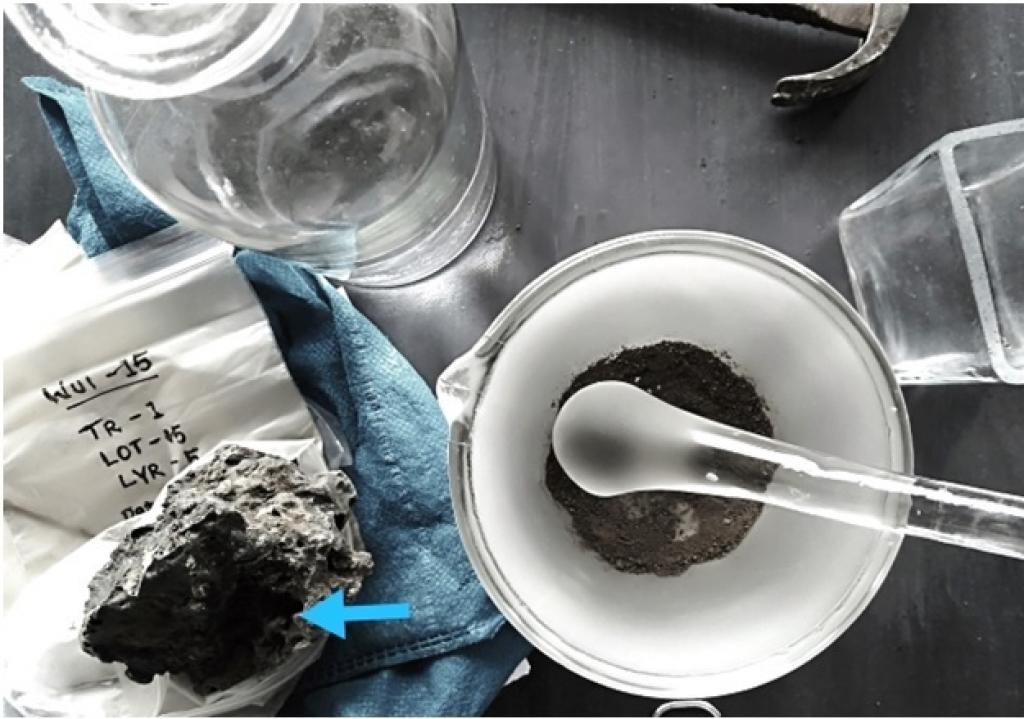
 

Preparing iron slag samples for studying its microstructures (Photo :TiatemjenTzudir) 
 
The researchers studied various chemical properties and compositions, quality and quantity of mineral iron content and other oxides to grasp the use of early iron technology in Nagaland. It emerged that iron ore used for smelting in early days was primary mined from this region. Thus it was, perhaps, a major source of iron-ore in Nagaland.
 
The researchers excavated two trenches at two different localities of the village. This was done on the assumption that the people from this area may have been engaged in iron-smelting for generations and, therefore, there was a high probability for extracting slag refuse from the deep layers of the trenches. This would be vital for understanding early metallurgical practice.
 
The first trench revealed a four-metre thick cultural deposit, revealing six layers. The excavation yielded cork-mark potteries, animal bones, glass beads, slag and good quality charcoal. The second trench too revealed a thick habitation deposit. Evidence from this trench included plain and cork-mark potteries, perforated roof tiles of slates, glass beads and charcoal. Charcoal from both trenches was carbon dated and their age ranged from 800-753 BCE to 980-1053 AD.
An analysis of microstructure iron slag and ore samples was done using X-ray diffraction. Hardness test was also done to understand microstructures in terms of its strength and hardness. Electrical furnace test was done on the iron ore sample to examine the chemical variations. All these tests provided detailed account of the presence of different mineral compositions.
 
TiatemjenTzudir, one of the co-authors of the study, said, “this research is part of an ongoing study and we are looking for further evidence for smelting and iron smithing for better understanding of technological and social processes involved in pre-modern iron production in Wui and other sites in Nagaland. It is among the first such research initiatives aimed at understanding the metal craft history of Wui community.”
 
The research team included TiatemjenTzudir and Tiatoshi Jamir (Nagaland University) and Sukanya Sharma (IIT-Guwahati). The study results have been published in journal Current Science.(India Science Wire)

 
ShareTweetSendShareSend
✮ Subscribe Organiser YouTube Channel. ✮
✮ Join Organiser's WhatsApp channel for Nationalist views beyond the news. ✮
Previous News

Jammu and Kashmir: National Conference President?s statement intended to create ‘separatist psyche’, writes Arun Jaitley

Next News

Church authorities demolish Hindu Temples, steal Idols in Andhra Pradesh

Related News

80 Years of Organiser: Celebrating 8 decades as Voice of the Nation; VP Radhakrishnan to join in commemorative event

Tamil Nadu: Madras HC allows temple entry to American woman, says Hindutva cannot be judged by name or nationality

Tamil Nadu CM Joseph Vijay (File Photo)

Tamil Nadu: TVK alleges DMK bid to poach its MLAs; DMK counters with horse-trading complaint against CM Joseph Vijay

Odisha Govt to provide error-free textbooks to students, rejects claim of 1,678 mistakes

Odisha government to provide error-free textbooks to students, rejects claim of 1,678 mistakes

US-Iran Conflict: Beyond the battlefield

Japan’s Domestic Transformation: The silent revolution behind its strategic rise

Load More

Latest News

80 Years of Organiser: Celebrating 8 decades as Voice of the Nation; VP Radhakrishnan to join in commemorative event

Tamil Nadu: Madras HC allows temple entry to American woman, says Hindutva cannot be judged by name or nationality

Tamil Nadu CM Joseph Vijay (File Photo)

Tamil Nadu: TVK alleges DMK bid to poach its MLAs; DMK counters with horse-trading complaint against CM Joseph Vijay

Odisha Govt to provide error-free textbooks to students, rejects claim of 1,678 mistakes

Odisha government to provide error-free textbooks to students, rejects claim of 1,678 mistakes

US-Iran Conflict: Beyond the battlefield

Japan’s Domestic Transformation: The silent revolution behind its strategic rise

A section of the vast procession paying homage to Dr Syama Prasad Mookerjee

Dr Shyama Prasad Mookerjee: Exposing the mystery surrounding his death

India-Pak reconciliation appeal in an open letter by a section of Indians draws fire amid cross-border terror concerns

By enabling direct yen-rupee settlements, India and Japan are laying the foundation for a more efficient, resilient and strategically integrated economic partnership

Beyond De-Dollarisation: What India-Japan’s Yen-Rupee trade framework really means

(Left) J&K LG Manoj Sinha performing puja (Right) LG Manoj Sinha flags off the bus carrying pilgrims for the Amarnath Yatra

Amarnath Yatra 2026: LG Manoj Sinha flags off first batch of pilgrims amid tight security

Load More
  • Privacy
  • Terms
  • Cookie Policy
  • Refund and Cancellation
  • Delivery and Shipping

© Bharat Prakashan (Delhi) Limited.
Tech-enabled by Ananthapuri Technologies

  • Home
  • Search Organiser
  • Bharat
    • Assam
    • Bihar
    • Chhattisgarh
    • Jharkhand
    • Maharashtra
    • View All States
  • World
    • Asia
    • Africa
    • North America
    • South America
    • Europe
    • Australia
  • Editorial
  • Operation Sindoor
  • Opinion
  • Analysis
  • Defence
  • Culture
  • Sports
  • Business
  • RSS @ 100
  • Entertainment
  • More ..
    • Sci & Tech
    • Vocal4Local
    • Special Report
    • Education
    • Employment
    • Books
    • Interviews
    • Travel
    • Health
    • Politics
    • Law
    • Economy
    • Obituary
  • Subscribe Magazine
  • Read Ecopy
  • Advertise
  • Circulation
  • Careers
  • About Us
  • Contact Us
  • Policies & Terms
    • Privacy Policy
    • Cookie Policy
    • Refund and Cancellation
    • Terms of Use

© Bharat Prakashan (Delhi) Limited.
Tech-enabled by Ananthapuri Technologies