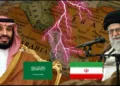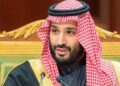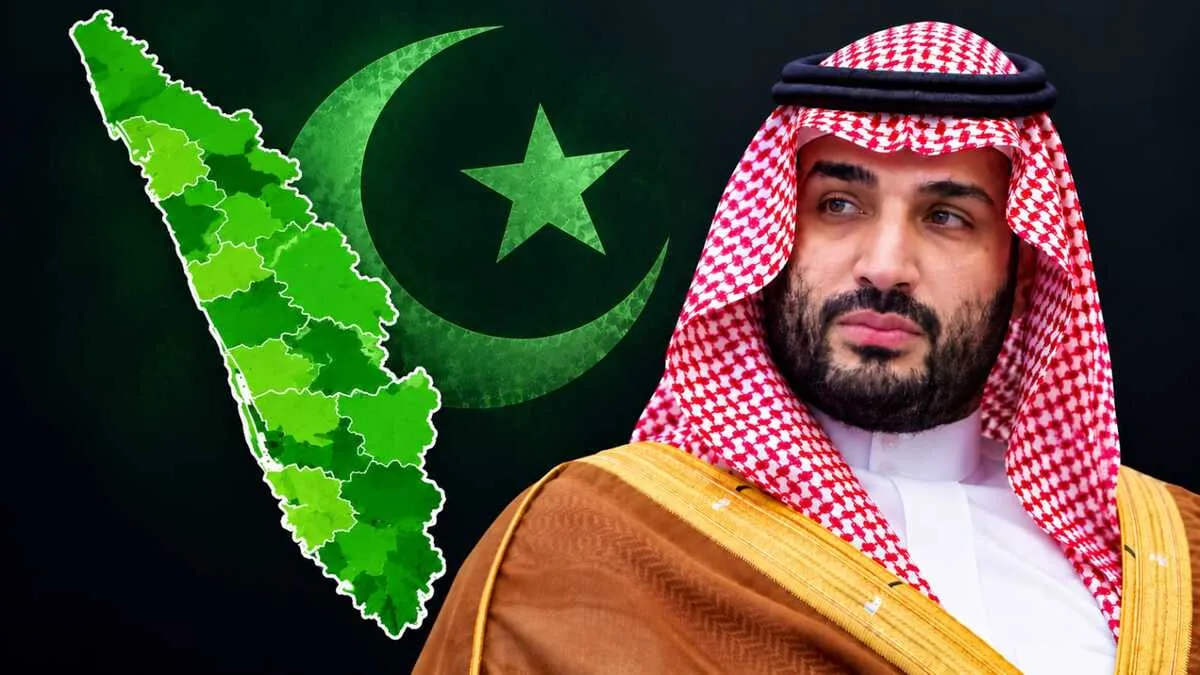
As Iran-backed Shia Houthi forces intensify attacks against Saudi Arabia, a striking ideological reaction is emerging in parts of Kerala’s Islamist discourse. Instead of viewing the attacks on the Kingdom as an assault on a country containing Islam’s two holiest cities, some hardline voices are portraying the confrontation through their opposition to Saudi Arabia’s leadership under Crown Prince Mohammed bin Salman.
The reaction is particularly visible in social-media ecosystems, where videos, commentary and posts can turn the Houthi offensive against Riyadh into an opportunity to attack the Saudi leadership and its programme of religious reforms and social change. The Houthis have recently intensified their military campaign against Saudi Arabia, while regional governments have publicly affirmed Riyadh’s right to defend itself.
The phenomenon requires understanding a much deeper ideological dispute. Saudi Arabia is not simply another West Asian state for Muslims. It contains Mecca and Medina, the two holiest cities in Islam, and the Kaaba in Mecca is the direction of prayer for Muslims worldwide.
For decades, the Kingdom was also associated with an exceptionally conservative religious establishment and strict regulation of public religious and social life. For sections of conservative Islamist opinion, particularly those influenced by older conceptions of Saudi religious practice, Mohammed bin Salman’s transformation of the Kingdom represents a profound departure from that model.
From religious conservatism to Salman’s Saudi transformation
The changes accelerated after Mohammed bin Salman became crown prince in 2017 and consolidated power around his Vision 2030 programme. They included reforms affecting religious policing, public morality, entertainment, women’s rights and the authority exercised by conservative religious institutions.
One of the most consequential changes came in 2016, when Saudi authorities sharply curtailed the powers of the Commission for the Promotion of Virtue and Prevention of Vice, commonly known as the religious police. Its officers lost powers to pursue, arrest and detain people and were directed largely towards reporting suspected violations to regular law-enforcement authorities.
The Kingdom subsequently permitted cinemas, expanded concerts and cultural events, and introduced forms of public entertainment that would previously have been extremely difficult to imagine in Saudi Arabia.
Even apparently small changes in religious administration became politically significant. In 2021, the Saudi Ministry of Islamic Affairs ordered mosques to restrict external loudspeakers primarily to the adhan, or call to prayer, and the iqamah, the call immediately preceding congregational prayer. The volume was also restricted to one-third of the loudspeaker’s maximum capacity. The ministry later clarified that external loudspeakers could be used for Friday and Eid prayers.
King Salman issued a royal decree appointing Shihana AlAzzaz as an Adviser at the Royal Court – a first for Saudi women – as well as the Chief of Saudi Authority for Intellectual Property 🇸🇦
Her excellency joins the ranks of other trailblazing Saudi women who have held key… pic.twitter.com/GP48sjEfDm
— Saud Salman AlDossary | سعود بن سلمان الدوسري (@999saudsalman) May 15, 2024
The shortening of mosque prayers also became a subject of controversy. During the COVID-19 pandemic, Saudi authorities instructed mosques to reduce the interval between the adhan and iqamah to 10 minutes and limited Friday sermons and prayers to 15 minutes. That particular measure was a pandemic precaution rather than a permanent reduction in the five daily prayers.
Saudi Arabia has simultaneously pursued a tougher policy against extremist organisations. The Kingdom designated the Muslim Brotherhood, Al-Qaeda, Al-Nusra Front, ISIS and the Houthis as terrorist organisations in 2014. That history is particularly relevant today because the organisation attacking Saudi territory is itself part of the Kingdom’s long-standing security confrontation with Islamist and Iran-aligned movements.
The transformation has been even more pronounced in relation to women.
In 2019, Saudi Arabia amended its passport regulations to allow women aged 21 and above to obtain passports and travel abroad without permission from a male guardian. The reforms also expanded women’s ability to register births, marriages and divorces and to exercise greater control over family documentation.
These changes significantly weakened the traditional male-guardianship system. They followed the 2018 decision allowing Saudi women to drive, another landmark reform associated with Mohammed bin Salman’s modernisation programme.
For conservative Islamist audiences accustomed to the older Saudi model, these developments represent more than social liberalisation. They amount to a challenge to an established understanding of how an Islamic state should regulate public morality, gender relations and religious practice.
Kerala’s conservative religious discourse highlights the contrasting social model
That ideological divide becomes particularly visible when Saudi Arabia comes under attack. Keralam has previously been identified by researchers and Indian agencies as an important arena for Islamist radicalisation and extremist propaganda, with several documented cases involving the recruitment of some Keralites into Islamist terrorist organisations. Against this backdrop, the reaction of certain Islamist voices in Keralam to the Houthi attacks on Saudi Arabia assumes particular significance. The contrast becomes even sharper when viewed against the Kingdom’s ongoing transformation under Mohammed bin Salman, particularly its reforms affecting religious practices, women and public life.
On 28 August 2026, the Kanthapuram faction of the Samastha Kerala Jamiyyathul Ulama, a Sunni Muslim clerical organisation, issued a directive asking mahallas, madrassas and religious institutions to ensure that women were not brought onto public stages or into public spaces in the presence of unrelated men during Islamic celebrations. The statement said that displaying young women before men and incorporating practices considered incompatible with Islamic norms were inappropriate.
On 30 August, Kanthapuram A P Aboobacker Musliyar defended the position at an Islamic conference in Kochi, saying women should remain confined to their homes and arguing that the Quran prescribed such a system of purdah. His remarks triggered a political and social controversy in Keralam.
The episode nevertheless brought into the open the continuing debate within Keralam over women’s participation in public life and the extent to which conservative religious interpretations should determine that participation.
The episode is significant in the context of Saudi Arabia’s transformation because the Kingdom has been moving in the opposite direction on several questions concerning women’s public participation. Saudi women have gained the right to obtain passports and travel without a male guardian’s permission, while reforms have also expanded their ability to handle civil-status matters independently.
The contrast is therefore striking because while Mohammed bin Salman’s Saudi Arabia has dismantled important elements of the traditional male-guardianship system, prominent religious voices in Keralam continue to invoke purdah and restrictions on interaction between men and women as religious requirements.
The same broader conservative religious environment has also produced highly segregated arrangements in some Muslim community programmes in the Gulf and Keralam-linked expatriate organisations, including separate facilities and programmes for men and women.
Keralam’s islamist radicalisation, extremist networks and the Hamas link
Keralam’s history also includes documented cases involving radicalisation and extremist organisations. The National Investigation Agency’s Kasargod ISIS case, registered in 2016, concerns of young people from Kasaragod were recruited into or supported the Islamic State; the NIA says the case involves criminal conspiracy, unlawful activities and membership or support for ISIS, with a chargesheet filed and investigation continuing.
The banned Popular Front of India (PFI) provides another important part of the state’s recent history. In the Palakkad RSS Karyakarta S K Srinivasan murder case, the NIA found that PFI cadres plotted and carried out the killing; in September 2025, the agency said its investigation had identified 71 terrorists and that the conspiracy was aimed at establishing Islamic rule in India by 2047. A Kerala High Court judgment in August 2026 also recorded allegations concerning PFI’s “Reporter Wing” and “Service Wing”, including reconnaissance of members of other communities and the targeting of Hindu leaders.
The same distinction is necessary when discussing “Love Jihad” and religious conversion. The organised attempts to convert Hindu women through relationships have generated repeated political and legal controversy in Keralam. The Keralam-linked Islamist landscape also attracted national attention on 27 October 2023, when former Hamas political bureau chief Khaled Mashal addressed a Malappuram rally through a recorded virtual appearance.
The event was organised by the Solidarity Youth Movement, the youth wing of Jamaat-e-Islami in Kerala; Mashal’s appearance generated a political controversy and the Keralam’s then left government said police would examine the matter.
News: 🇮🇳 Terrorist Organisation Hamas Leader Khaled Mashal virtually addressed a Pro-Palestine rally in Kerala.
The rally was organised by The Solidarity Youth Movement, which is the youth wing of Jamaat-e-Islami.
Allegedly many slogans were raised against Non-Muslims in the… pic.twitter.com/sJfOLr8Dl0
— NobleInsights (@NobleInsightss) October 28, 2023
It is this complex ideological background in Keralam, involving Sunni and Islamist groups, Salafi debates and documented extremist networks, that helps explain why some hardline Islamist voices oppose Mohammed bin Salman over his reforms and, in turn, express support for the Shia Houthi attacks on Saudi Arabia.
The Houthis are a Zaydi Shia movement that emerged in northern Yemen and have received extensive Iranian support, although they maintain their own political and military identity. They seized Sana’a in 2014, prompting the Saudi-led intervention in Yemen the following year.
For Muslims, an attack on Saudi Arabia can naturally be viewed through the significance of Mecca and Medina and the security of the Kingdom. But for hardline Islamist voices in Keralam opposed to Mohammed bin Salman’s reforms, the conflict can be interpreted differently, with the Saudi leadership itself becoming the principal object of hostility.
In this view, the Kingdom’s religious and social transformation becomes inseparable from the wider ideological dispute in Keralam, turning Mohammed bin Salman into a central target of criticism. The reaction to the Houthi attacks therefore reflects not merely a geopolitical conflict, but also a deeper disagreement over the direction in which Saudi Arabia is moving.