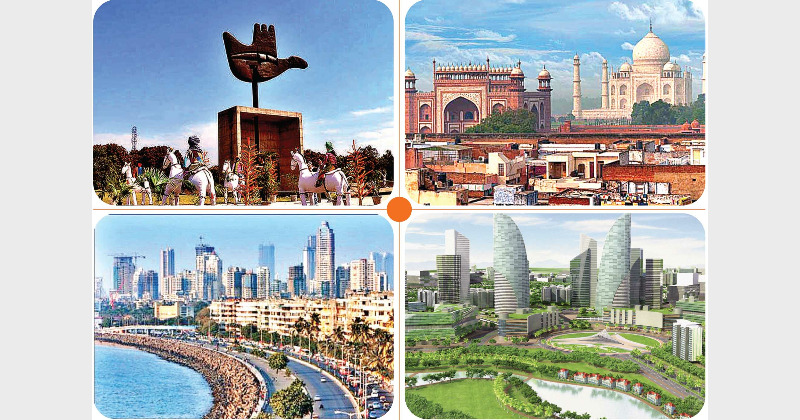
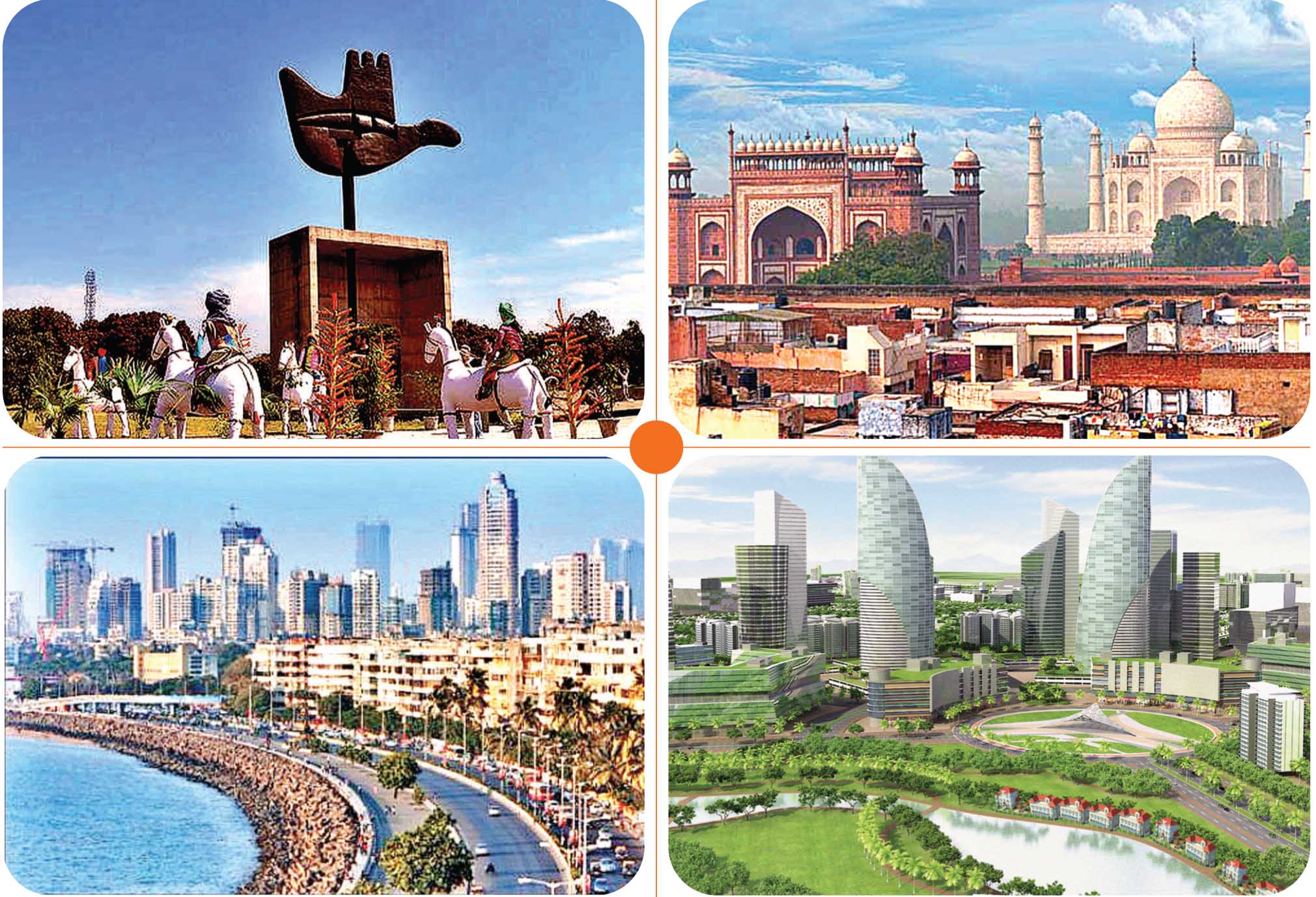
 Reckless urbanisation in the recent past has become a major threat to preserving our urban architecture heritage
Uma Sudhindra
“I think people care. If not, why do so many people spend money going on vacations to see architecture? They go to the Parthenon, to Chartres, to the Sydney Opera House or the Taj Mahal…. something compels them, and yet we live surrounded by everything but great architecture.”
Historic buildings, by their form, layout and materials used, create a sense of place and identity for towns and cities, thereby shaping the history of the place as well. This identity becomes more important in a world where new, stereotypical, steel and glass structures have sprouted without a thought to the city’s skyline. “There are 360 degrees, so why stick to one?” asked Zaha Hadid, the British architect.
Landmark buildings such as temples, churches, mosques, town halls, administrative offices and ancient bungalows that provide reference points in the local landscape are fast disappearing. In place of these historical legacies, we find singularly boring structures which look the same world over. So, the question then arises, what differentiates a city’s architecture from another?
A look at some of our old cities and towns show that historic areas have displayed advanced townscape qualities that evolved over a period of time and are tested ecologically sustainable urban models. They are wonderful opportunities for us to learn from to reorient contemporary approaches to urban planning. It has been said that, at it’s best, preservation engages the past in a conversation with the present over a mutual concern for future. It is this, unfortunately, that we have not seen happening in India. The result being, we have lost some of our architectural heritage. The identity and character of many historically important towns are altered forever. Take the example of Panipat in Haryana. A town where three major battles were fought that changed the course of Indian history, today has no testimony to those battles. In developing a hustling-bustling centre of textiles, we have lost out on preserving what is a quintessential part of our legacy. The strong feeling is that efforts to protect our heritage and legacy have been extremely weak and limited.
Indian cities are growing rapidly and exponentially to cater to mass urbanisation. The percentage of population shifting from rural to urban areas is detrimental to preserving historic or cultural monuments. In urban areas, it will be due to overpopulated space and in rural areas, it will be because of decreasing population. In both the cases, the end result is zero maintenance of historic areas. Uncontrolled development is transforming the nature of historic urban areas and their landscape.
While steps were taken to implement an improved system of planning and governance through JnNURM (Jawaharlal Nehru National Urban Renewal Mission) during 2005–2014, it did not take into account identifying, recording and utilising heritage resources as vital elements of urban planning. This meant that sustainable urban development process could not be optimised. Urban heritage is given symbolic importance, but scant attention is paid towards integrating it into the actual planning process. As a result, we see ecologically unorganised, aesthetically unappealing, historically imbalanced areas developing in all our towns and cities. The future generations will have very little to view, in terms of architectural legacy.
Efforts are being made by some cities towards including urban heritage in town planning. However, what is important is to disseminate the same. The following efforts become critical to ensure that our architectural legacy continues and we as a population do not lose it to mindless urbanisation.
Smart City Concept
The Smart Cities Mission concept being implemented in various cities across India must take into account the historic urban landscape in order to maintain and preserve our legacy. One look at the guidelines prescribed by the Government, does not mention historic urban architecture anywhere. And this is a major source of concern for people who love to see our architectural heritage preserved in our cities and towns. The Smart Cities Mission guidelines talk about Area Based Development in the following ways:
t Retrofitting—Identify an area of more than 500 acres and prepare a plan to make it more efficient and liveable with citizens’ participation (Connaught Place in Delhi, Bhendi Bazar in Mumbai).
t Greenfield—Introduce smart solutions in an area of 250 acres by using innovative planning (land pooling/land reconstitution in Outer Delhi, GIFT city in Gujarat).
t Redevelopment—Replace existing built-up area (50 acres) and prepare a new layout plan with enhanced infrastructure by way of mixed land use (Kidwai Nagar in Delhi).
t Pan City Development—Use technology, information and data to make existing city-wide infrastructure and services better. For example, initiating wastewater recycling and smart metering which can make a substantial contribution to better water management in the city.
This is exactly what the corporations and municipalities should have been doing as part of their governance responsibility. That has not happened in the last six decades and we have fallen prey to massive mishandling of the urbanisation process. While the government does not prescribe any particular model to be adopted by the Smart Cities, the approach is not ‘one-size-fits-all’. Each city must formulate its own concept, vision, mission, and plan (proposal) for a Smart City that is appropriate to its local context, resources and levels of ambition.
How to do it
Various good practices have existed around the world and in some of our cities to preserve our architectural heritage. These must be implemented.
1. Institutional Infrastructure for Urban Heritage.
2. Integration of Heritage in Urban Planning Landscape.
3. Revitalising Urban Historic Spaces.
4. Community Stakeholder Approach.
5. Create branding for such areas & build awareness.
So much of our future is based on so much of our past. The need of the hour is now, to start implementing these measures. The danger, otherwise is, we may lose the existing historic spaces also to out of control urbanisation. Ultimately, like Frank Gehry said, “The character of a civilization is encased in its structures.”
(The writer is on the board of Governors, IIM, Visakhapatnam)