New paradigm/Opinion : Toppling OBOR with OCOR
August 23, 2026
  • Read Ecopy
  • Circulation
  • Advertise
  • Careers
  • About Us
  • Contact Us
Android AppiPhone AppArattai
Organiser
  • ‌
  • Bharat
    • Assam
    • Bihar
    • Chhattisgarh
    • Jharkhand
    • Maharashtra
    • View All States
  • World
    • Asia
    • Europe
    • North America
    • South America
    • Africa
    • Australia
  • Editorial
  • International
  • Opinion
  • RSS @ 100
  • More
    • Op Sindoor
    • Analysis
    • Sports
    • Defence
    • Politics
    • Business
    • Economy
    • Culture
    • Special Report
    • Sci & Tech
    • Entertainment
    • G20
    • Azadi Ka Amrit Mahotsav
    • Vocal4Local
    • Web Stories
    • Education
    • Employment
    • Books
    • Interviews
    • Travel
    • Law
    • Health
    • Obituary
  • Subscribe
    • Subscribe Print Edition
    • Subscribe Ecopy
    • Read Ecopy
  • ‌
  • Bharat
    • Assam
    • Bihar
    • Chhattisgarh
    • Jharkhand
    • Maharashtra
    • View All States
  • World
    • Asia
    • Europe
    • North America
    • South America
    • Africa
    • Australia
  • Editorial
  • International
  • Opinion
  • RSS @ 100
  • More
    • Op Sindoor
    • Analysis
    • Sports
    • Defence
    • Politics
    • Business
    • Economy
    • Culture
    • Special Report
    • Sci & Tech
    • Entertainment
    • G20
    • Azadi Ka Amrit Mahotsav
    • Vocal4Local
    • Web Stories
    • Education
    • Employment
    • Books
    • Interviews
    • Travel
    • Law
    • Health
    • Obituary
  • Subscribe
    • Subscribe Print Edition
    • Subscribe Ecopy
    • Read Ecopy
Organiser
  • Home
  • Bharat
  • World
  • Operation Sindoor
  • Editorial
  • Analysis
  • Opinion
  • Culture
  • Defence
  • International Edition
  • RSS @ 100
  • Magazine
  • Read Ecopy
Home Bharat

New paradigm/Opinion : Toppling OBOR with OCOR

China has hurled a new stone in the peaceful water of Eurasia in the form of OBOR i.e. One Belt One Road. By the term one road he actually meant the famous Silk Road. China is trying to show that the Silk Road was his historical contribution

Archive ManagerArchive Manager
Jul 17, 2017, 02:07 pm IST
inBharat
Follow on Google News
Facebook
Twitter
WhatsAppTelegramEmail


China’s misplaced attempt to put its imperialistic stamp on the region with the OBOR project needs to be countered with cultural idiom that binds the region more strongly than it’s economic interests do.
 

Ravi Shankar  and Newton Mishra
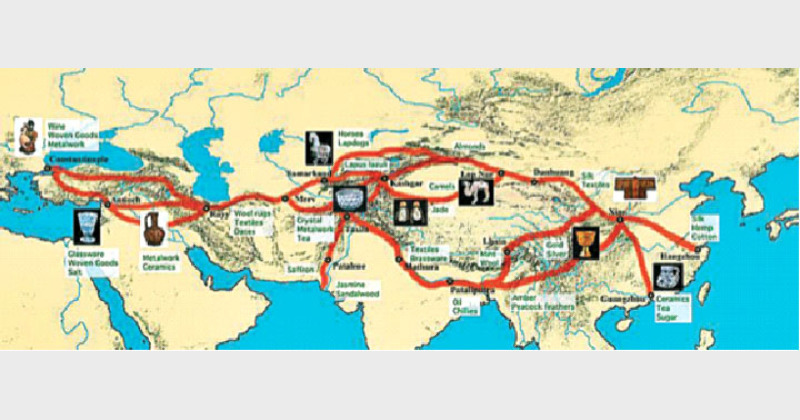
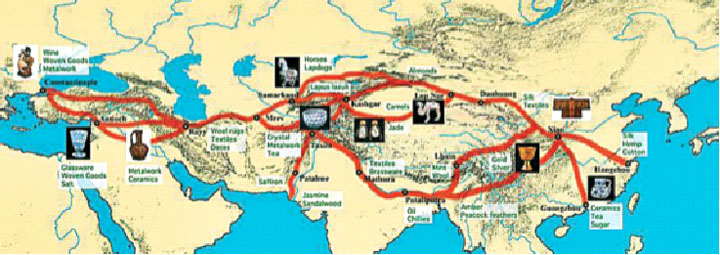
China has hurled a new stone in the peaceful water of Eurasia in the form of OBOR i.e. One Belt One Road. By the term one road he actually meant the famous Silk Road. China is trying to show that the Silk Road was his historical contribution to the world civilisation and he has every right to enjoy the benefits of this Road in the form of trade and diplomatic relations with the countries of this region. He actually wants to dominate the region to overpower India. However, it may be his greatest strategic failure to evoke the history of Silk Road as the history doesn’t support China’s claim. History empowers India to coin an old concept in a new form OCOR i.e. One Culture One Region. OCOR is the correct slogan for this region. India has the responsibility to create the proper environment and platform for OCOR.  
First of all, we have to break certain myths. First myth regarding the Silk Road is that it is a road. It is not. In fact, it was never named Silk Road in history. In the year 1877 a German geographer Ferdinend Von Rekthofan coined the term Silk Road and then it was supported in 1915 by another German geographer August Hermann who published books and Atlas on it. His essay, “The Silk Roads from China to the Roman Empire,” highlighted a common, but misleading sense attached to the silk-road notion: that its importance lay mainly in linking China to the Mediterranean basin, the “east” to the “west.”
Thus it is evident that Silk Road came in to existence only in the year 1877. But the trade in the Eurasian region had been flourishing since very ancient times. This region was mentioned by the Great Mauryan king Ashoka in 232 BC as Uttarapath. Though China is also claiming that this Road was developed in the Han Dynasty in 220 BC, but if we closely watch the maps of China in that period, surprisingly, China can be seen as a much smaller country. In fact, before Yuan Dynasty in the thirteenth century, China had never had  any say in the Eurasian region. The  Yuan dynasty was not a Chinese dynasty; it was the great Mongol Empire. China was only a part of that Empire and at that time the capital Beijing was also not the part of China.
The second myth of the Silk Road is that it has road for the business of silk. Silk was never the prime commodity to be traded. In fact, there were many things traded and many ideas transmitted across Eurasia, some of which (the domesticated horse, cotton, spices, chemicals, paper and gunpowder) had a far greater impact than silk. Moreover, long-distance exchanges continued after they no longer principally involved silk. The exchange of ideas is also much more important than the trade of commodities.
The third myth of Silk Road is that it was dominated by the Chinese traders. Again it were the Indian traders who actually travelled and traded in the entire Eurasian region. Multan was one of the biggest trading centres along this route. It was a trading hub even before the Mauryan Dynasty. The Hindu traders were at the heart of the Eurasian economics. They gave loans to farmers in the planting season, purchased their crops after harvesting, and facilitated the transport of the produce to the market. Every Ruler of the region had extended his protection to the Indian Hindu traders. The Uzbek Khans created a separate administrative post Yasavul-i-Hinduwan meaning Guardians of Hindus. Persian Safavid Empire also gave protection to the Hindu traders so that they can practice their rituals despite the protest of locale Muslims.
Now, after breaking these three myths, it is clear that the Chinese claim of OBOR has no grounds. It was India, not China, who developed this region as a trading hub, contributed culturally in the form of ancient Hindu and Buddhist thoughts to make this region a peaceful place. It was Indian philosophy that influenced China. But despite this commercial and cultural supremacy, India never tried to gain political advantage.
Today, Eurasia is witnessing a cultural vacuum that cannot be fulfilled by this OBOR type imperialistic concept. It needs a human and philosophical approach. Only India has the past of doing so. OCOR can be the new hope for the Eurasian countries which have recently got independence from the imperialism of communist Russia. India should initiate to form OCOR alike SAARC for the Eurasian countries. Pakistan, Afghanistan, Iran, and all the Eurasian countries should become its part. OCOR will provide only a common platform for the trade of the commodities and ideas. Its agenda can be developed on the theories of common points of all the different ideological beliefs of this region. The main goal will be to curb terrorism, war, insurgencies, violence and ideological hatred and to spread peace, harmony, ideological tolerance, and cultural unity. It can teach the rest of world the technique of living and progressing with the ideological differences leaving behind all the hatred, unrest and authoritarianism. This was the concept of India, and this is the only future of the mankind too.
(Ravi Shankar is Research Director at Center for Civilisational Studies, New Delhi; Newton Mishra is Co-Founder at India Internal andInternational Relationship Research Center, New Delhi)


 

Share
Tweet
SendShareSend
✮ Subscribe Organiser YouTube Channel. ✮
✮ Join Organiser's WhatsApp channel for Nationalist views beyond the news. ✮
Previous News

Swadeshi campaign : Swadeshi Economy is Rooted in Dharma

Next News

Analysis: Bengal becoming a Jihadi state

Related News

Representative Image

Odisha: Puri Jagannath temple Ratna Bhandar inventory on August 31 and September 1; Temple rituals to remain unaffected

AI Generated Image

Vande Mataram and the Politics of Appeasement: Is Congress repeating the Khilafat mistake of 1919?

Representative Image

The northern Afghanistan challenge for Taliban government in Kabul

Tamil Nadu: Madras HC says Trustees must administer temples, EOs cannot interfere in religious practices

For DPIIT-recognised startups, the two agreements could open different routes to growth.

DPIIT partners with PhonePe, Shell India to expand technology, market and investment support for startups

Hindu family found dead in Bangladesh

Bangladesh: Hindu school teacher & family found dead; Police suspect targeted attack amid spiking anti-Hindu violence

Load More

Latest News

Representative Image

Odisha: Puri Jagannath temple Ratna Bhandar inventory on August 31 and September 1; Temple rituals to remain unaffected

AI Generated Image

Vande Mataram and the Politics of Appeasement: Is Congress repeating the Khilafat mistake of 1919?

Representative Image

The northern Afghanistan challenge for Taliban government in Kabul

Tamil Nadu: Madras HC says Trustees must administer temples, EOs cannot interfere in religious practices

For DPIIT-recognised startups, the two agreements could open different routes to growth.

DPIIT partners with PhonePe, Shell India to expand technology, market and investment support for startups

Hindu family found dead in Bangladesh

Bangladesh: Hindu school teacher & family found dead; Police suspect targeted attack amid spiking anti-Hindu violence

National Permaculture Conference

Karnataka: National Permaculture Conference calls for shift to natural, regenerative & sustainable agriculture

Home Minister Amit Shah holds a review meeting on the security situatinon in Siliguri Corridor

Home Minister Amit Shah outlines Siliguri strategy; Calls for inter-departmental synergy to foster national security

Girls from a village in Mahoba Uttar Pradesh benefitted under the Jal Jeevan Mission (Photo: Organiser)

Jal Jeevan Mission 2.0: Centre holds national workshop to strengthen village-level water management

Veteran Acress Sowcar Janaki (File Photo)

Tamil Nadu: Sowcar Janaki, who acted across five languages and 450-plus films, passes away at 94

Load More
  • Privacy
  • Terms
  • Cookie Policy
  • Refund and Cancellation
  • Delivery and Shipping

© Bharat Prakashan (Delhi) Limited.
Tech-enabled by Ananthapuri Technologies

  • Home
  • Search Organiser
  • Bharat
    • Assam
    • Bihar
    • Chhattisgarh
    • Jharkhand
    • Maharashtra
    • View All States
  • World
    • Asia
    • Africa
    • North America
    • South America
    • Europe
    • Australia
  • Editorial
  • Operation Sindoor
  • Opinion
  • Analysis
  • Defence
  • Culture
  • Sports
  • Business
  • RSS @ 100
  • Entertainment
  • More ..
    • Sci & Tech
    • Vocal4Local
    • Special Report
    • Education
    • Employment
    • Books
    • Interviews
    • Travel
    • Health
    • Politics
    • Law
    • Economy
    • Obituary
  • Subscribe Magazine
  • Read Ecopy
  • Advertise
  • Circulation
  • Careers
  • About Us
  • Contact Us
  • Policies & Terms
    • Privacy Policy
    • Cookie Policy
    • Refund and Cancellation
    • Terms of Use

© Bharat Prakashan (Delhi) Limited.
Tech-enabled by Ananthapuri Technologies