The Moving Finger Writes: The Importance of Sanskrit?
July 22, 2026
  • Read Ecopy
  • Circulation
  • Advertise
  • Careers
  • About Us
  • Contact Us
Android AppiPhone AppArattai
Organiser
  • ‌
  • Bharat
    • Assam
    • Bihar
    • Chhattisgarh
    • Jharkhand
    • Maharashtra
    • View All States
  • World
    • Asia
    • Europe
    • North America
    • South America
    • Africa
    • Australia
  • Editorial
  • International
  • Opinion
  • RSS @ 100
  • More
    • Op Sindoor
    • Analysis
    • Sports
    • Defence
    • Politics
    • Business
    • Economy
    • Culture
    • Special Report
    • Sci & Tech
    • Entertainment
    • G20
    • Azadi Ka Amrit Mahotsav
    • Vocal4Local
    • Web Stories
    • Education
    • Employment
    • Books
    • Interviews
    • Travel
    • Law
    • Health
    • Obituary
  • Subscribe
    • Subscribe Print Edition
    • Subscribe Ecopy
    • Read Ecopy
  • ‌
  • Bharat
    • Assam
    • Bihar
    • Chhattisgarh
    • Jharkhand
    • Maharashtra
    • View All States
  • World
    • Asia
    • Europe
    • North America
    • South America
    • Africa
    • Australia
  • Editorial
  • International
  • Opinion
  • RSS @ 100
  • More
    • Op Sindoor
    • Analysis
    • Sports
    • Defence
    • Politics
    • Business
    • Economy
    • Culture
    • Special Report
    • Sci & Tech
    • Entertainment
    • G20
    • Azadi Ka Amrit Mahotsav
    • Vocal4Local
    • Web Stories
    • Education
    • Employment
    • Books
    • Interviews
    • Travel
    • Law
    • Health
    • Obituary
  • Subscribe
    • Subscribe Print Edition
    • Subscribe Ecopy
    • Read Ecopy
Organiser
  • Home
  • Bharat
  • World
  • Operation Sindoor
  • Editorial
  • Analysis
  • Opinion
  • Culture
  • Defence
  • International Edition
  • RSS @ 100
  • Magazine
  • Read Ecopy
Home Bharat

The Moving Finger Writes: The Importance of Sanskrit?

The month of August has come and gone and one only hopes that Sanskrit Week was fully observed by various states

Archive ManagerArchive Manager
Sep 13, 2014, 12:10 pm IST
in Bharat
Follow on Google News
FacebookTwitterWhatsAppTelegramEmail

Intro: Modi’s government is the first government in India which has sought if not to popularise Sanskrit as a mother of so many languages, at least to make people feel that it exists.?

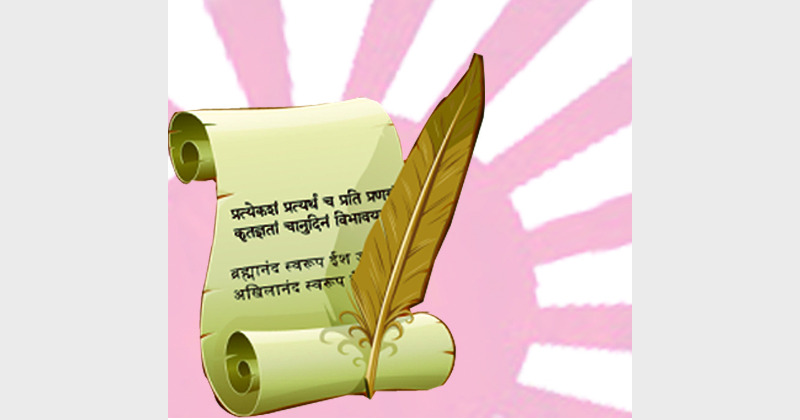
The month of August has come and gone and one only hopes that Sanskrit Week was fully observed by various states within their jurisdiction on the recommendation of the Centre. This must be the first government in India which has sought if not to popularise Sanskrit as a mother of so many languages, at least to make people feel that it exists.
But why seek to popularise Sanskrit? In the first place it is for all intents and purposes the mother of leading languages in India – a truth that cannot be ignored. In the second place it is a reminded to all Indians of their deep cultural heritage. To disown Sanskrit or to minimise its relevance is to be self-degrading. The British, in their way tried to undo its significance. Lord Macaulay wanted to stop printing of Sanskrit books in India. He even wanted to abolish the Sanskrit College in Calcutta.
Sanskrit indeed has seen many ups and downs throughout centuries past. By the closing years before Christ (BC) and the early years following AD great scholars had written classical works like Kumarasambhava and Raghuvamsha, Kiratarjuniya and Shishupala Vadha. One of the earliest known Sanskrit plays is Mrichchakatika (The Clay Cart) composed by Shudraka in 2nd century BC. Noted for their works are great names like Kalidasa, Bhasa, Shudraka and Ashwagosha. Some of the finest writers of the Classical Period include Jayadeva who authored Gita Govinda. Bharata was the one who defined the nine rasas, namely adbhuta, hasya, Shringara, Shanta, Bhibahtsa, Vira, Karuna, Bhaya and Raudra.
By the 12th Century AD, Sadly, Sanskrit began to decline, mostly for political reasons.
But the fact remains that this great language has been instrumental in defining the Hindu culture of the country by providing epics, philosophical works, such as the Bhagwad Gita, the Vedas and the Upanishads, works of grammar, Ayur Veda, yoga and even natya. And who hasn’t heard of Panchatantra, Gita Govinda and Hitopadesla? Importantly several works such as the Yoga-sutras of Patanjali and the Upanishads were translated into Arabic and Persian. According to Wikipedia over, 1,870 Sanskrit works are available for students should they desire to read, in addition to the philosophical works of Sankara, Ramanuja and Madhwa. To Swami Vivekananda Sanskrit is a “glorious language” which, he claimed to have been studying throughout his life. As he put it: “The very sound of Sanskrit words gives a prestige and a power and a strength to the (Indian) race.”
Sri Aurobindo, another great spiritual leader called Sanskrit “one of the most magnificent, most perfect literary instruments development by the human mind, at once majestic, sweet, flexible and strong…” Max Muller, a great European scholar first translated the Upanishads into German and later did a translation of the Hitopadesha, a collection of Indian fables also in German.
Muller’s connections with the East India Company and with Sanskritists based Oxford led Muller to a career in Britain where he eventually became the leading intellectual commentator on the culture of India. This led to complex exchanges between Indian and British intellectuals, especially through Mullar’s links with the Brahmo Samaj. Muller’s Sanskrit studies came at a time when scholars had started to see language development in relation to cultural development – a point that the Jayalalithaas of today may like to ponder over.
According to Vachaspati P Nandakumar, about 3,500 students are studying Sanskrit at the Institute of Hindu Dharmanagari in Indonesia. There are schools in Germany, Russia, even China where Sanskrit is being taught. One understands that Sanskrit is also being adopted as computer language.
The period between approximately the 6th to 1st century BC saw the composition and redaction of the two great epics, the Ramayana and the Mahabharata. The Ramayana, incidentally in twice as long as the Illiad and Odyssey put together.
To be proud of Sanskrit is every Indian’s privilege. Let us not involve it with politics.
(The writer is a senior journalist and former editor of Illustrated Weekly)
?


ShareTweetSendShareSend
✮ Subscribe Organiser YouTube Channel. ✮
✮ Join Organiser's WhatsApp channel for Nationalist views beyond the news. ✮
Previous News

Column: Himalayan Misadventure XXI?

Next News

Opinion: The Enemy Within

Related News

Flood situation in Assam

Assam flood situation worsens: 16 people lost lives, over 3.60 lakh people affected

CJP Protest in Delhi: Exposing western media’s fake narratives, selective reporting and ignorance

Tamil Nadu: Counterfeit currency syndicate with Malaysia, Pakistan links busted in Chennai; terror angle investigated

ABVP Commemorates the Birth Centenary of Its Architect Prof. Yashwantrao Kelkar with Special Recitation Programme 'Priya Kelkar Ji in Lucknow

ABVP commemorates architect Prof Yashwantrao Kelkar’s centenary, celebrates legacy of nation-building

Punjab Pharma Officer Exam Cheating Racket Exposed: 35 detained, candidates allegedly paid up to Rs 13 lakh

(Left) Congress leader Mohammed Nalapad (Right) Karnataka Minister Priyank Kharge

RSS Defamation Case in Karnataka: Court orders personal appearance Of Priyank Kharge, Mohammed Nalapad

Load More

Latest News

Flood situation in Assam

Assam flood situation worsens: 16 people lost lives, over 3.60 lakh people affected

CJP Protest in Delhi: Exposing western media’s fake narratives, selective reporting and ignorance

Tamil Nadu: Counterfeit currency syndicate with Malaysia, Pakistan links busted in Chennai; terror angle investigated

ABVP Commemorates the Birth Centenary of Its Architect Prof. Yashwantrao Kelkar with Special Recitation Programme 'Priya Kelkar Ji in Lucknow

ABVP commemorates architect Prof Yashwantrao Kelkar’s centenary, celebrates legacy of nation-building

Punjab Pharma Officer Exam Cheating Racket Exposed: 35 detained, candidates allegedly paid up to Rs 13 lakh

(Left) Congress leader Mohammed Nalapad (Right) Karnataka Minister Priyank Kharge

RSS Defamation Case in Karnataka: Court orders personal appearance Of Priyank Kharge, Mohammed Nalapad

BMS hosts 15th BRICS Trade Union Forum (TUF) Summit 2026 in Hyderabad; Calls for worker-centric global order

BRICS TUF Summit 2026: Shifting the labour discourse

Courtesy: T.C. Rajesh’s FB post

Keralam: CPM’s Deshabhimani daily drops ‘Vijayan, the thief’ article from Sunday supplement; text Surfaces on FB

Self-immolation by Lobsang Palden in front of UN Headquarters in New York, (inset) the activist shortly before immolating himself

China and Tibet: Immolation of ‘Imposed Unity’

Authorities attacked during anti-encroachment drive in Shivajinagar

Anti-Encrochment Drive in Karnataka: Officials attacked in Shivajinagar; BJP slams govt’s appeasement politics

Load More
  • Privacy
  • Terms
  • Cookie Policy
  • Refund and Cancellation
  • Delivery and Shipping

© Bharat Prakashan (Delhi) Limited.
Tech-enabled by Ananthapuri Technologies

  • Home
  • Search Organiser
  • Bharat
    • Assam
    • Bihar
    • Chhattisgarh
    • Jharkhand
    • Maharashtra
    • View All States
  • World
    • Asia
    • Africa
    • North America
    • South America
    • Europe
    • Australia
  • Editorial
  • Operation Sindoor
  • Opinion
  • Analysis
  • Defence
  • Culture
  • Sports
  • Business
  • RSS @ 100
  • Entertainment
  • More ..
    • Sci & Tech
    • Vocal4Local
    • Special Report
    • Education
    • Employment
    • Books
    • Interviews
    • Travel
    • Health
    • Politics
    • Law
    • Economy
    • Obituary
  • Subscribe Magazine
  • Read Ecopy
  • Advertise
  • Circulation
  • Careers
  • About Us
  • Contact Us
  • Policies & Terms
    • Privacy Policy
    • Cookie Policy
    • Refund and Cancellation
    • Terms of Use

© Bharat Prakashan (Delhi) Limited.
Tech-enabled by Ananthapuri Technologies