Intriguing history of Islamic dictators of Arabia
December 11, 2025
  • Read Ecopy
  • Circulation
  • Advertise
  • Careers
  • About Us
  • Contact Us
Android AppiPhone AppArattai
Organiser
  • ‌
  • Bharat
    • Assam
    • Bihar
    • Chhattisgarh
    • Jharkhand
    • Maharashtra
    • View All States
  • World
    • Asia
    • Europe
    • North America
    • South America
    • Africa
    • Australia
  • Editorial
  • International
  • Opinion
  • RSS @ 100
  • More
    • Op Sindoor
    • Analysis
    • Sports
    • Defence
    • Politics
    • Business
    • Economy
    • Culture
    • Special Report
    • Sci & Tech
    • Entertainment
    • G20
    • Azadi Ka Amrit Mahotsav
    • Vocal4Local
    • Web Stories
    • Education
    • Employment
    • Books
    • Interviews
    • Travel
    • Law
    • Health
    • Obituary
  • Subscribe
    • Subscribe Print Edition
    • Subscribe Ecopy
    • Read Ecopy
  • ‌
  • Bharat
    • Assam
    • Bihar
    • Chhattisgarh
    • Jharkhand
    • Maharashtra
    • View All States
  • World
    • Asia
    • Europe
    • North America
    • South America
    • Africa
    • Australia
  • Editorial
  • International
  • Opinion
  • RSS @ 100
  • More
    • Op Sindoor
    • Analysis
    • Sports
    • Defence
    • Politics
    • Business
    • Economy
    • Culture
    • Special Report
    • Sci & Tech
    • Entertainment
    • G20
    • Azadi Ka Amrit Mahotsav
    • Vocal4Local
    • Web Stories
    • Education
    • Employment
    • Books
    • Interviews
    • Travel
    • Law
    • Health
    • Obituary
  • Subscribe
    • Subscribe Print Edition
    • Subscribe Ecopy
    • Read Ecopy
Organiser
  • Home
  • Bharat
  • World
  • Operation Sindoor
  • Editorial
  • Analysis
  • Opinion
  • Culture
  • Defence
  • International Edition
  • RSS @ 100
  • Magazine
  • Read Ecopy
Home Bharat

Intriguing history of Islamic dictators of Arabia

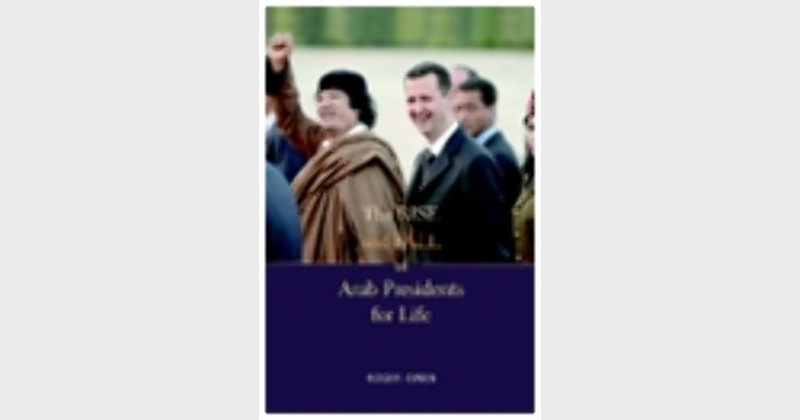
The Rise and Fall of Arab Presidents for Life, Roger Owen, Harvard University Press, Pp 248, $ 24.95THE system of Arab presidents staying in power for life or many decades had its origins in the leaders who came to power from the late 1960s onward and learned how to establish coup-proof regimes and thus hold the reigns of their nation as long as they lived.

Archive ManagerArchive Manager
Oct 6, 2012, 04:17 pm IST
in Bharat
Follow on Google News
FacebookTwitterWhatsAppTelegramEmail

Manju Gupta

$img_titleThe Rise and Fall of Arab Presidents for Life, Roger Owen, Harvard University Press, Pp 248, $ 24.95
THE system of Arab presidents staying in power for life or many decades had its origins in the leaders who came to power from the late 1960s onward and learned how to establish coup-proof regimes and thus hold the reigns of their nation as long as they lived.
This system began as a result of a necessary desire for sovereignty and independence that was marred from the start by its complicity with the unpleasant features of the post-colonial world that encouraged a particular form of authoritative control and which later institutionalised as “a mirror state” wherein presidents saw what they wanted and imagined themselves as omnipotent, indispensable and well loved by their subjects. In such a case, the president, his family and his cronies contrived to live in “a closed world of mutual delusion” in which everything was for the best and the opposition was confined to a few “usually foreign-inspired malcontents.” Here the president’s ego was boosted through flattery by naming streets, schools, etc. after him as seen in the case of President Hosni Mubarak of Egypt or present Basar al-Asad of Damascus who was surrounded by parliamentary supporters chanting his praise or Muammar Qaddafi listening to chants of “Allah, Libya, Mu’ammar wa bas.” Such happenings led to the ruler’s narcissism as seen in Qaddafi imaging himself as the champion of the Arabs or Yasser Arafat of Palestine seeing himself as the leader of the faithful. This ended with almost complete rejection as recently seen in Libya with Colonel Muammar Qaddafi’s death and in Egypt with the utter humiliation of President Hosni Mubarak.
This book is presented under three sections as it were – the first is the era of post-independence rootlessness leading to the creation of authoritarian political structures which are marred by brutality and domination by one man; the second is the period of presidents who survived to become more monarchical in their ways in order to establish family dynasties through the help of an inner circle or coterie of cronies and supporters and third is the increasing political and economic contradictions that these structures engendered, creating popular resentment and leading to their overthrow as in Egypt and Tunisia. It could also be due to a rambling discontent forcing the presidents to reform themselves as witnessed in Algeria, Syria, Sudan and Yemen.
The book introduces the various structures of power that emerged as the end of the colonial era. At this time, the desire to protect the fragile form of sovereignty almost always led to authoritarianism with usually one-party ruling over all to serve the purpose of the regime.
 The book examines the origins of the monarchic-republican system as presidents developed systems of personal power, considering themselves to be guardians of their country’s security.
The author discusses the essential components of presidential power typified by the notion of the ‘security state’ in terms of the role of the presidency; its associated elite of aides and cronies; the army and security services.
A look at the central government system in Tunisia, Syria, Egypt and Algeria before moving over to Sudan, Libya and Yemen where greater accommodation, negotiation and compromise were required.
The system of rule in Arab republics with weak presidents as seen in Lebanon and Iraq, the various forms of monarchical structures as in Jordan, Morocco, Bahrain and Oman, the politics of succession as seen in Syria,  the pan-Arab arena as seen in its global context and  the strengths and weaknesses of various presidential systems besides concentrating on the overthrow of presidents as of Qaddafi and Hosni Mubarak in 2011are examined in great detail.
This is an interesting book as it encapsulates the entire Arab world in a relatively brief text. Worth reading really!
(Harvard University Press,  79, Garden Street Cambridge, MA 02138, USA)
ShareTweetSendShareSend
✮ Subscribe Organiser YouTube Channel. ✮
✮ Join Organiser's WhatsApp channel for Nationalist views beyond the news. ✮
Previous News

Readers? Forum

Next News

The many facets of socio-political hegemony in Italy

Related News

(Left) Italy's Deputy Prime Minister and Foreign Minister Antonio Tajani (Right) External Affairs Minister S Jaishankar

Jaishankar calls Italy ‘one of India’s closest partners’ as both nations push joint initiative against terror financing

Gangotri Mandir: Testament to Timeless Spirituality

A representative image - Bus services reached Kutul village of Abujhmad, Image courtesy: CGdpr

Chhattisgarh: CM Vishnu Deo Sai launches second phase of Rural Bus Scheme

Russian President Vladimir Putin and Prime Minister Narendra Modi

Modi–Putin summit unveils blueprint for $1.5 trillion economic activity

Dr Vannirajan, Sanghchalak- Dakshin Kshetra; Dr Mohan Bhagwath, Sarsanghchalak-RSS; Sri Kumaraswamy, Sanghchalak- Uttar Tamil Nadu; Sri Chandrashekar - Sanghchalak- Chennai Mahanagar (Left-Right)

RSS core mission is national development, not power or political control: Dr Mohan Bhagwat at Chennai event on RSS 100

Prime Minister Narendra Modi

Eight per cent growth surge of Bharat shows power of Modi govt’s economic reforms

Load More

Comments

The comments posted here/below/in the given space are not on behalf of Organiser. The person posting the comment will be in sole ownership of its responsibility. According to the central government's IT rules, obscene or offensive statement made against a person, religion, community or nation is a punishable offense, and legal action would be taken against people who indulge in such activities.

Latest News

(Left) Italy's Deputy Prime Minister and Foreign Minister Antonio Tajani (Right) External Affairs Minister S Jaishankar

Jaishankar calls Italy ‘one of India’s closest partners’ as both nations push joint initiative against terror financing

Gangotri Mandir: Testament to Timeless Spirituality

A representative image - Bus services reached Kutul village of Abujhmad, Image courtesy: CGdpr

Chhattisgarh: CM Vishnu Deo Sai launches second phase of Rural Bus Scheme

Russian President Vladimir Putin and Prime Minister Narendra Modi

Modi–Putin summit unveils blueprint for $1.5 trillion economic activity

Dr Vannirajan, Sanghchalak- Dakshin Kshetra; Dr Mohan Bhagwath, Sarsanghchalak-RSS; Sri Kumaraswamy, Sanghchalak- Uttar Tamil Nadu; Sri Chandrashekar - Sanghchalak- Chennai Mahanagar (Left-Right)

RSS core mission is national development, not power or political control: Dr Mohan Bhagwat at Chennai event on RSS 100

Prime Minister Narendra Modi

Eight per cent growth surge of Bharat shows power of Modi govt’s economic reforms

Evicting illegal immigrants is the need of the hour

Illegal immigrants: Volators not victims

Representative image

India’s Latest GDP Surge: A quarter that quietly answers the “dead economy” club

Representative image

IMF praises UPI as world’s largest payment system, highlighting Modi govt’s digital vision outpacing Congress critics

RSS path Sanchalan

Karnataka: 518 path sanchalan of RSS held peacefully despite Congress hurdles; Narrative of communal tension foiled

Load More
  • Privacy
  • Terms
  • Cookie Policy
  • Refund and Cancellation
  • Delivery and Shipping

© Bharat Prakashan (Delhi) Limited.
Tech-enabled by Ananthapuri Technologies

  • Home
  • Search Organiser
  • Bharat
    • Assam
    • Bihar
    • Chhattisgarh
    • Jharkhand
    • Maharashtra
    • View All States
  • World
    • Asia
    • Africa
    • North America
    • South America
    • Europe
    • Australia
  • Editorial
  • Operation Sindoor
  • Opinion
  • Analysis
  • Defence
  • Culture
  • Sports
  • Business
  • RSS @ 100
  • Entertainment
  • More ..
    • Sci & Tech
    • Vocal4Local
    • Special Report
    • Education
    • Employment
    • Books
    • Interviews
    • Travel
    • Health
    • Politics
    • Law
    • Economy
    • Obituary
  • Subscribe Magazine
  • Read Ecopy
  • Advertise
  • Circulation
  • Careers
  • About Us
  • Contact Us
  • Policies & Terms
    • Privacy Policy
    • Cookie Policy
    • Refund and Cancellation
    • Terms of Use

© Bharat Prakashan (Delhi) Limited.
Tech-enabled by Ananthapuri Technologies