Myths in the making of Gods
August 2, 2026
  • Read Ecopy
  • Circulation
  • Advertise
  • Careers
  • About Us
  • Contact Us
Android AppiPhone AppArattai
Organiser
  • ‌
  • Bharat
    • Assam
    • Bihar
    • Chhattisgarh
    • Jharkhand
    • Maharashtra
    • View All States
  • World
    • Asia
    • Europe
    • North America
    • South America
    • Africa
    • Australia
  • Editorial
  • International
  • Opinion
  • RSS @ 100
  • More
    • Op Sindoor
    • Analysis
    • Sports
    • Defence
    • Politics
    • Business
    • Economy
    • Culture
    • Special Report
    • Sci & Tech
    • Entertainment
    • G20
    • Azadi Ka Amrit Mahotsav
    • Vocal4Local
    • Web Stories
    • Education
    • Employment
    • Books
    • Interviews
    • Travel
    • Law
    • Health
    • Obituary
  • Subscribe
    • Subscribe Print Edition
    • Subscribe Ecopy
    • Read Ecopy
  • ‌
  • Bharat
    • Assam
    • Bihar
    • Chhattisgarh
    • Jharkhand
    • Maharashtra
    • View All States
  • World
    • Asia
    • Europe
    • North America
    • South America
    • Africa
    • Australia
  • Editorial
  • International
  • Opinion
  • RSS @ 100
  • More
    • Op Sindoor
    • Analysis
    • Sports
    • Defence
    • Politics
    • Business
    • Economy
    • Culture
    • Special Report
    • Sci & Tech
    • Entertainment
    • G20
    • Azadi Ka Amrit Mahotsav
    • Vocal4Local
    • Web Stories
    • Education
    • Employment
    • Books
    • Interviews
    • Travel
    • Law
    • Health
    • Obituary
  • Subscribe
    • Subscribe Print Edition
    • Subscribe Ecopy
    • Read Ecopy
Organiser
  • Home
  • Bharat
  • World
  • Operation Sindoor
  • Editorial
  • Analysis
  • Opinion
  • Culture
  • Defence
  • International Edition
  • RSS @ 100
  • Magazine
  • Read Ecopy
Home General

Myths in the making of Gods

Archive ManagerArchive Manager
Jun 24, 2012, 12:00 am IST
in General
Follow on Google News
FacebookTwitterWhatsAppTelegramEmail

Dr Vaidehi Nathan

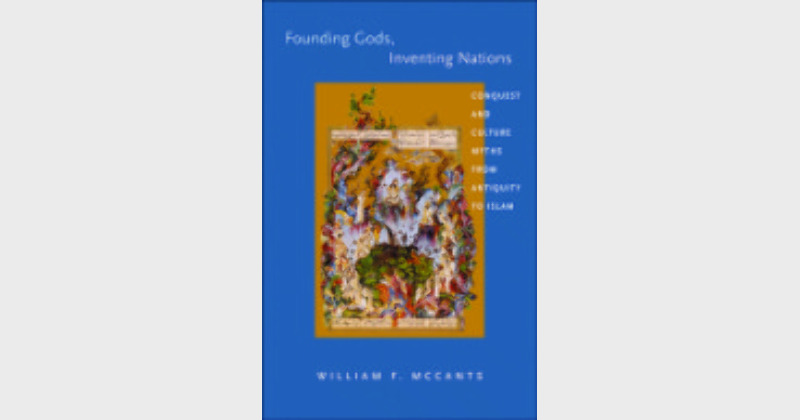
Founding Gods, Inventing Nations – Conquest and Culture Myths from Antiquity to Islam, William F Mccants, Princeton University Press,  Pp 179 (HB), $35

Hebrew, Islam and Christianity all three had the same origins. They shared their myths and forefathers. To begin with they all contested for the same geographic piece – the Near East the region lying beyond West Asia, for us. And they mutually fought pitched and gruesome battles, a war today Islam seems to be winning.
Islam, by all accounts is an invading religion. Its spread, right from the beginning, has been by the sword. And early on, when it established itself, the founders culled out accounts from the shared, common myth to modify it to give it a distinct twist as it were. This phenomenon of invented heritage lies at the core of William F Mccants’ Founding Gods, Inventing Nations – Conquest and Culture Myths from Antiquity to Islam. 
The Near East has been the conflict zone for centuries. Three major invasions can be sighted namely Greek, Roman and Arab. The conquerors and the conquered always reshaped their myths of civilisation’s origins to suit their positions. “The Greeks and Romans came to the Near East with a learned high culture, and native elites contested it, adopted it, or did something in between. But the conquering Arabs had no such comparable learned culture; consequently, the conquerors and conquered argued over the next three centuries about the content of not only “Islamic” but also “Arab” identity and scholarship.”
Says Mccants, “Although Qur’an is a “biblical” text in the sense that it draws heavily on the stories of the Bible, the Qur’anic conception of cultural origins is similar to that of the ancient Near Eastern authors: a beneficent sky god, Allah, gives culture—even ironsmithing—to humans. However this is not a revival of ancient mythology but the confluence of two Hellenistic developments.” Mccants fine-combs through the religious texts of the three religions, to describe the various theories presented by them on what all god gave. Magic, art, and science were all gifted. There are minor variations in each account to sound original.
Civilisation started, according to the Bible after the fall of Adam. However, “Mohammad draws on some version of these texts (perhaps oral) to prove his argument that God is the source of all civilization, an argument influenced by late-antique thought on divine providence. He makes this argument to justify either proselytizing among or conquest of non-Muslims, who have forgotten the source of civilization and thus deserve to lose it.” Mccants makes minute comparisons between the texts and makes several such observations on points of similarity and points of divergence. Then there is the eternal question ‘Who was First?’
Mccants says that the Iranians, a century after they were conquered by the Arabs started writing the histories of their pre-Islamic kings in Arabic. The kings were portrayed as inventors of arts and science of civilisation. Something similar happened in Greek and Roman conquests too. These, the author sees as an attempt to reiterate their national pride, though they accepted the conquerors. “Early Iranian Muslims preserved their culture myths in an Islamic frame-work to assimilate to the new order or to encourage the new order to assimilate to them… No matter what the framework, the culture myths were generally the same, underscoring the ambiguity of boasting about ancient cultural achievements…Later premodern conquests of the region did not lead to the same level of interest in culture myths.”
The book is an academic discussion on the way religions developed their “sources” to be passed on to the later generations. While they almost adopted the same material, shaping them to their convenience and need, the religionists themselves have squabbled over them. Who imposed what on who was decided by the shifting political power in the region.  William F Mccants  has delved deep into the subject, and analysed it scientifically. He does not pronounce conclusions, but presents the case. Serious, scholastic and heavy, the book has some of the translations of works the first time. Mccants is in the adjunct faculty at Johns Hopkins University.
(Princeton University Press, 41 William Street, Princeton, New Jersey 08540)


ShareTweetSendShareSend
✮ Subscribe Organiser YouTube Channel. ✮
✮ Join Organiser's WhatsApp channel for Nationalist views beyond the news. ✮
Previous News

Jagan Reddy tramples Congress

Next News

No rationale for communal reservation

Related News

Minister Vanni Arasu, CM Vijay Joseph (Left to right) (File Photo)

Tamil Nadu: VCK Minister Vanni Arasu mistakes NCC’s ‘jai hind, sriman’ for ‘jai shri Ram’, BJP hits back

Protesters affiliated to Cockroach Janta Party confronting a policeman on duty at Jantar Mantar protest sight

Cockroach Janta Party: Scientific dissection of cockroaches

Dr Suresh Hanagavadi conferred with Padmashri

Dr Suresh Hanagavadi: The remarkable journey of a doctor who revolutionised haemophilia care & patient advocacy

A discussion on anti-paper leak in Parliament

Public Examinations (Prevention of Unfair Means) Amendment Bill, 2026: Passing the trust test

(Left) Sanket Upadhyay (Right) Veteran BBC journalist Rehan Fazal

Veteran Journalist Rehan Fazal claims BBC India blocked RSS coverage, raising questions over editorial neutrality

Kanwar Yatra

When Faith Walks the Highways: A journey through the Kanwar yatra and the living soul of India

Load More

Latest News

Minister Vanni Arasu, CM Vijay Joseph (Left to right) (File Photo)

Tamil Nadu: VCK Minister Vanni Arasu mistakes NCC’s ‘jai hind, sriman’ for ‘jai shri Ram’, BJP hits back

Protesters affiliated to Cockroach Janta Party confronting a policeman on duty at Jantar Mantar protest sight

Cockroach Janta Party: Scientific dissection of cockroaches

Dr Suresh Hanagavadi conferred with Padmashri

Dr Suresh Hanagavadi: The remarkable journey of a doctor who revolutionised haemophilia care & patient advocacy

A discussion on anti-paper leak in Parliament

Public Examinations (Prevention of Unfair Means) Amendment Bill, 2026: Passing the trust test

(Left) Sanket Upadhyay (Right) Veteran BBC journalist Rehan Fazal

Veteran Journalist Rehan Fazal claims BBC India blocked RSS coverage, raising questions over editorial neutrality

Kanwar Yatra

When Faith Walks the Highways: A journey through the Kanwar yatra and the living soul of India

Bhojshala Campus

Bhojshala: The legacy of  a scholarly king

Boxer Lovlina protests against incorrect India map at a Glasgow restaurant

CWG silver medalist Lovlina flags incorrect India map in Glasgow restaurant; Protests missing Northeast & Kashmir

AI Generated Image

The Great E20 Myth: How pseudoscience is fuelling misinformation against Bharat’s ethanol revolution

The Politics of Strategic Retreat: Why PM Narendra Modi wins big by losing small

Load More
  • Privacy
  • Terms
  • Cookie Policy
  • Refund and Cancellation
  • Delivery and Shipping

© Bharat Prakashan (Delhi) Limited.
Tech-enabled by Ananthapuri Technologies

  • Home
  • Search Organiser
  • Bharat
    • Assam
    • Bihar
    • Chhattisgarh
    • Jharkhand
    • Maharashtra
    • View All States
  • World
    • Asia
    • Africa
    • North America
    • South America
    • Europe
    • Australia
  • Editorial
  • Operation Sindoor
  • Opinion
  • Analysis
  • Defence
  • Culture
  • Sports
  • Business
  • RSS @ 100
  • Entertainment
  • More ..
    • Sci & Tech
    • Vocal4Local
    • Special Report
    • Education
    • Employment
    • Books
    • Interviews
    • Travel
    • Health
    • Politics
    • Law
    • Economy
    • Obituary
  • Subscribe Magazine
  • Read Ecopy
  • Advertise
  • Circulation
  • Careers
  • About Us
  • Contact Us
  • Policies & Terms
    • Privacy Policy
    • Cookie Policy
    • Refund and Cancellation
    • Terms of Use

© Bharat Prakashan (Delhi) Limited.
Tech-enabled by Ananthapuri Technologies